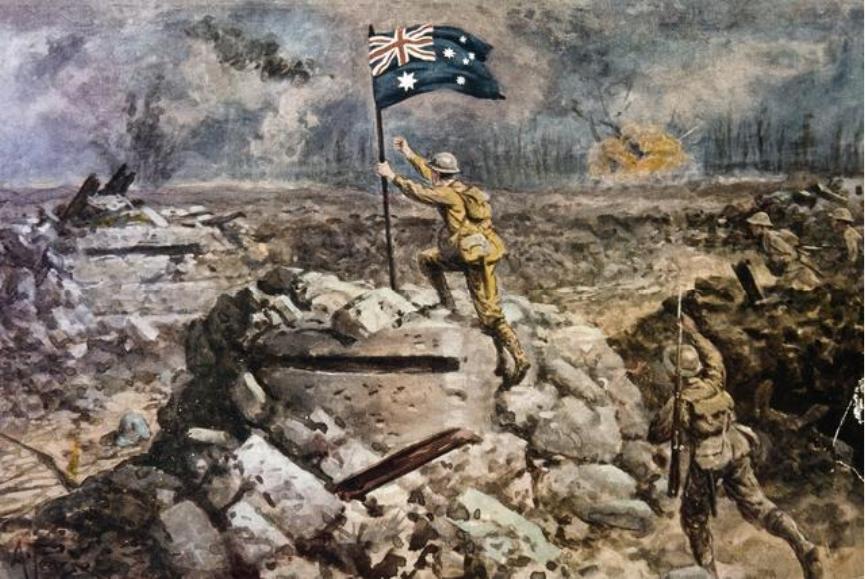
Why did Australian men volunteer for the AIF in World War I? To what
extent was unemployment a factor? How did being unemployed affect a
young man’s gender identity in 1914-18? You must discuss Australian
attitudes to the British Empire and to manliness and masculinity in the
decades leading to the Gr/eat War./
Yasmin Kent | HIS1001 | 08/10/2018
In August 1914, war was announced due to the conflict that arose between
Britain and Germany, Europe’s two major trading nations. Australia was in the
middle of an election campaign when the war was announced and both political
parties promised Australian support to Britain. When Labor won the Federal
Election, they became an enthusiastic ‘win-the-war’ party in the government
which brought in the initial pledge of 20,000 men. As the advertisement
campaigns created a rush of men enlisting all over the country, the new
Government soon assured an increase of 50,000 men. There were many
reasons as to why Australian men felt obligated to join the armed forces
including, however the most common reason was due to social pressure and
gender obligations. Men were seen as the ‘protectors’ and thus were expected to
work the hard jobs to put food on the table for their families, be strong and tough
in all situations, don’t be emotional and serve their country in coming wars when
called upon. Failure to meet these expectations meant they were masculine or
‘weak’ and were often ridiculed in society. Another motivation for men to join the
war was due to their patriarchal duty, as Australians were quite loyal to the
‘motherland’ because most were either from Britain or had ancestry there. Other
soldiers joined due to the promise of adventure, because their friends joined or
simply to earn a few extra shillings to support their family back home.
Australia thought of Britain as the ‘Mother Country’ and regarded itself as a
smaller version of Britain. Australians had a great sense of patriotism with