Macroeconomics
Chapter 9
Unemployment
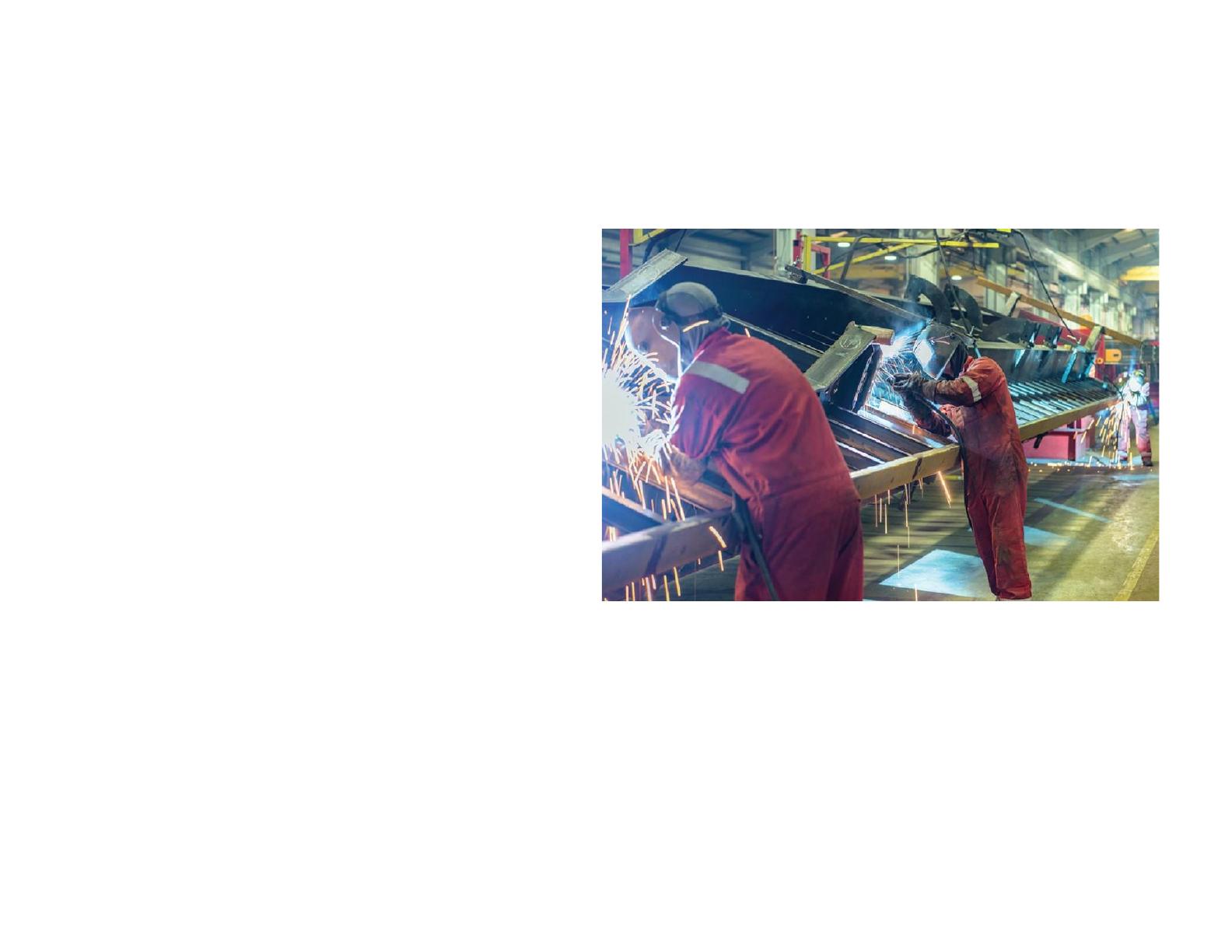
Former Inmates and Stoughton Trailers
Meet in a High–Pressure Economy
In the spring of 2019, the
unemployment rate was at
its lowest level since 1969.
Companies like Wisconsin’s
Stoughton Trailers were
struggling to find workers.
They decided to hire people
they wouldn’t have
considered before: former
prison inmates, and even
current inmates through a
work-release program.

Measuring Unemployment and Inflation
Last chapter, we learned about how to measure total
output—a critical first step in understanding the economy.
In this chapter, we continue along these lines, learning
about how to measure unemployment and inflation.
These are very important and commonly used
macroeconomic concepts; we want to solidify our
understanding of what they mean, so that we can talk
intelligently about them.

Measuring the Unemployment Rate, the Labor Force
Participation Rate, and the Employment-Population
Ratio
There are more than 300 million people in the United States and
monitoring and reporting on their activities regularly would be
very difficult and costly.
Instead, the U.S. Department of Labor reports estimates of
employment, unemployment, and other statistics related to the
labor force each month.
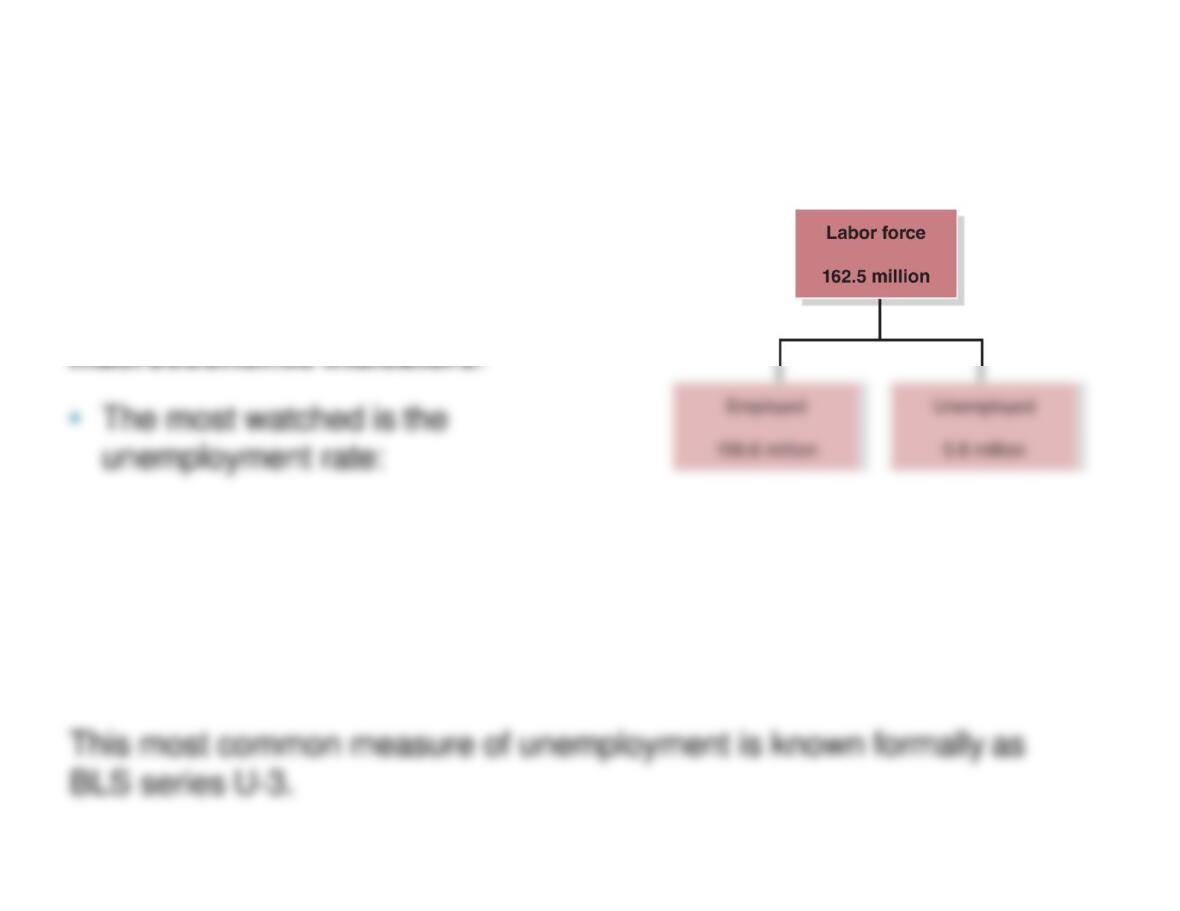
Labor force
Of these statistics, the most watched is known as the
unemployment rate

The Household Survey
Each month, the U.S. Census Bureau conducts the Current Population
Survey (a.k.a. the household survey).
•~60,000 households selected to be “representative”
•Household members of “working age” (16+ years old)
•Asked about employment during “reference week”
•Also asked about recent job search activities
People are then classified as:
•Employed:
•Unemployed:
•Not in the labor force
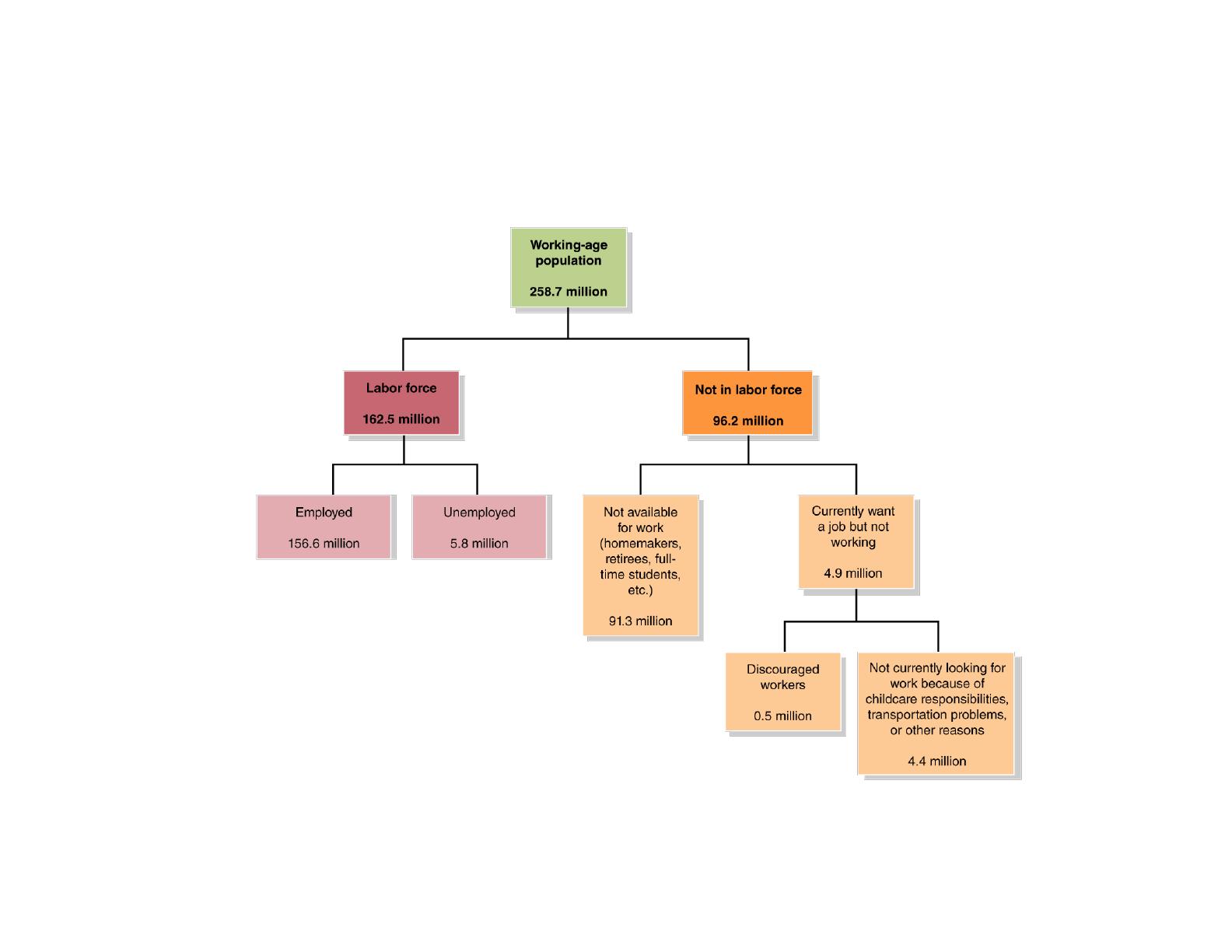
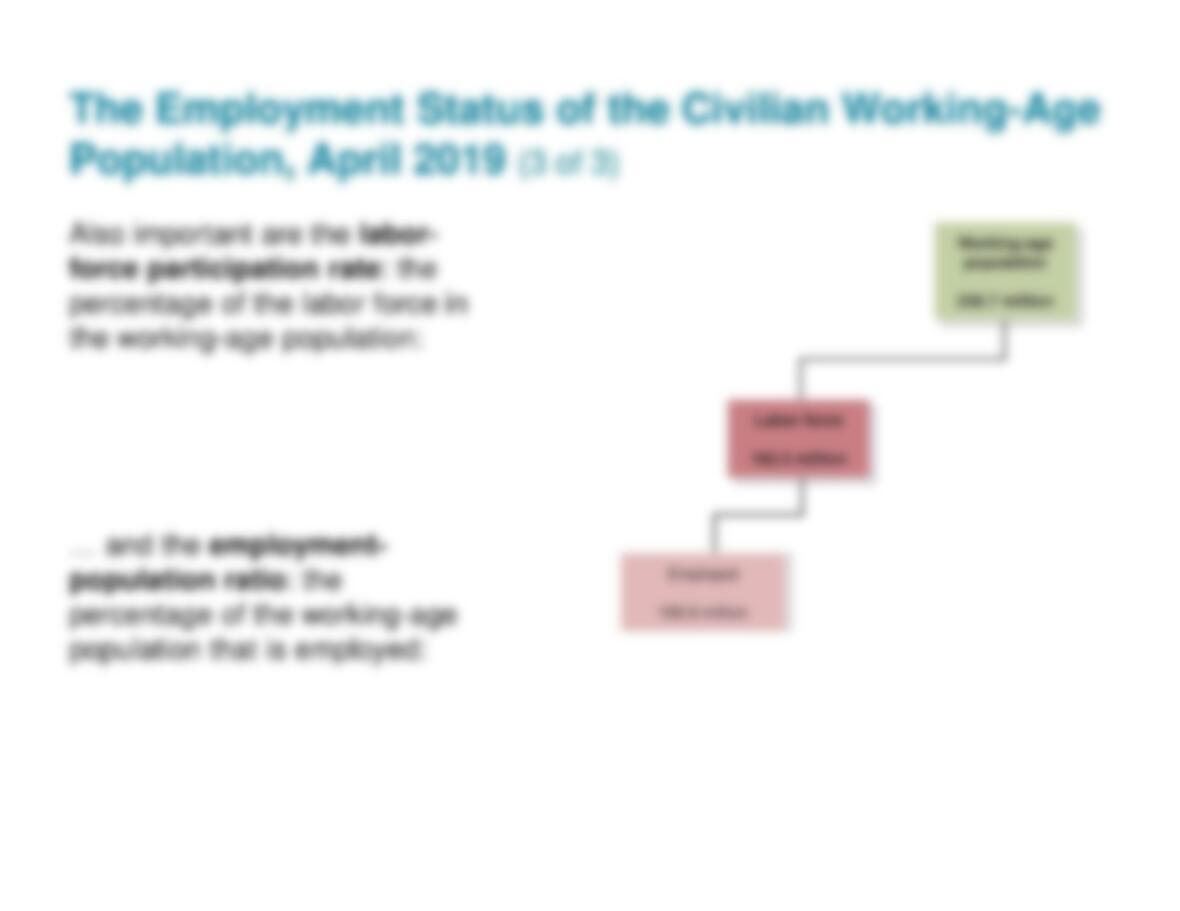
The Employment Status of the Civilian Working-Age
Population, April 2019 (1 of 3)
The Employment Status of the Civilian Working-Age
Population, April 2019 (2 of 3)
Based on the Household
survey estimates, we calculate
several important