Sakshi Sharma
DM15248
Section 2
The report covers the following aspects of Luxury Sector in
China: Growth of China’s Luxury Sector, Main reasons for
the growth, implications of this growth for MNC luxury
giants, the apparent slump in past 8 months, the
implications of this slump and what does the future look
like.
Luxury Sector in China
Luxury goods refer to products which are commonly characterized by its premium quality, craftsmanship,
recognisability, exclusivity and reputation. These high-end goods tend to satisfy socio-psychological needs in
greater form and bring esteem to the owner. Fondness for all forms of luxury like fashion products, accessories,
bags & cases, cosmetics & fragrances, vehicles, utility gadgets, beverages and interior decoration products etc.
has been seen since many centuries.
South East Asia has always been considered the pariah for the Western World Luxury giants that kept their
focus to European and North-American markets. With increase in per capita incomes in these nations, shifting
spending patterns and rise in number of millionaires, the pariah is now the “New World” for the luxury sector.
China has been away from all the glamour of the imported luxury till the onset of the new millennium. With the
year 2000, the Louis Vuitton, Gucci, Hermes etc found a new market for growth. The booming economy with
constant exchanges rates, the ever–present guanxi and likeliness for expensive gifts, China welcomed the luxury
giants with open arms.
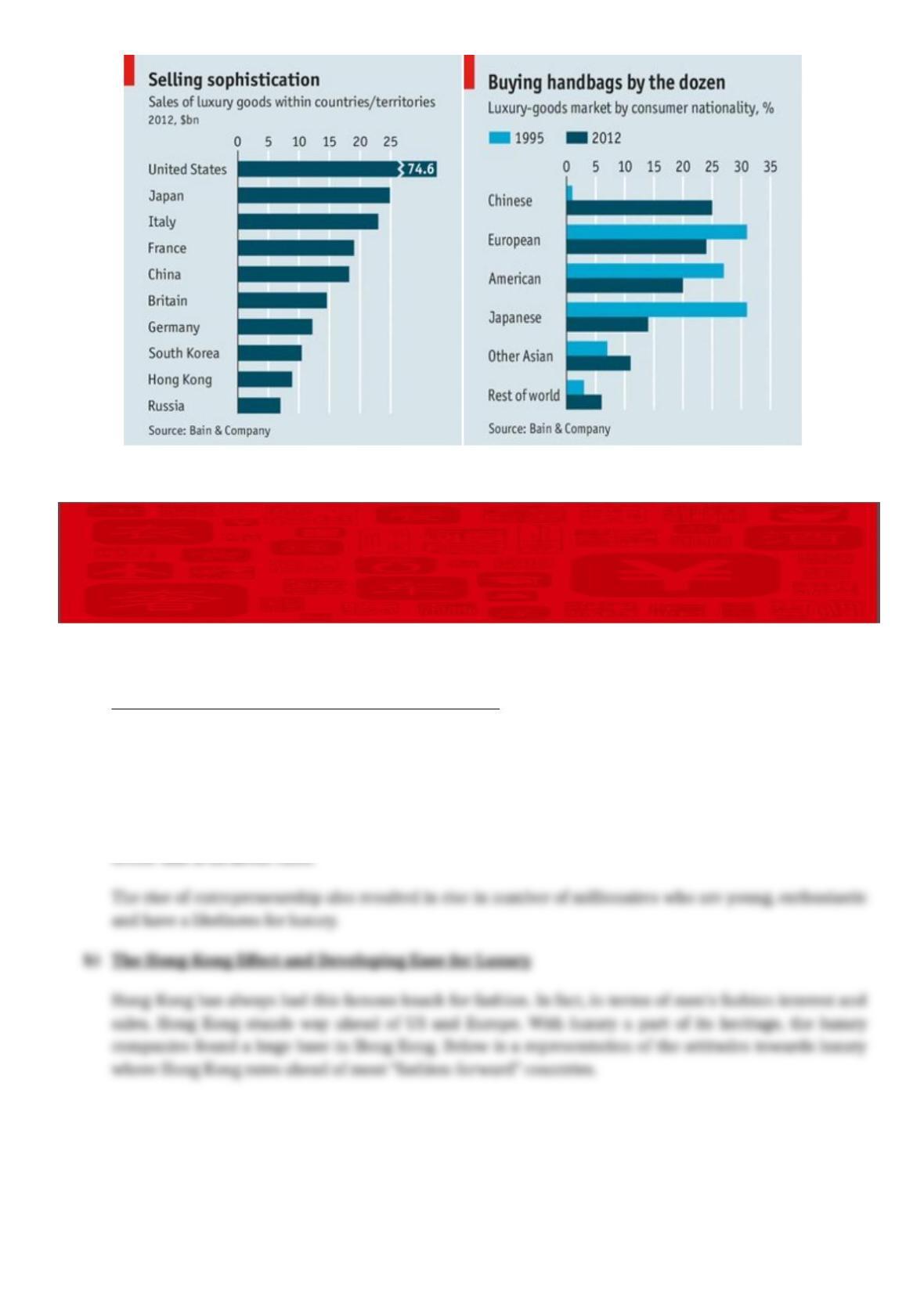
The following are the two charts developed by the Bain & Company that indicate the sales of luxury goods in
various countries in the year 2012. Also, it shows how much the Chinese customers invest in luxury-handbags
as compared to rest of the world.
“According to our latest research, luxury spending in the BRIC countries experienced a massive increase of
104% over the last five years, compared to just 18% in developed markets,“ said Fflur Roberts, Global Head of
Luxury Goods research at Euromonitor International. “Luxury spending in China is rising steeply despite a
government clampdown on extravagant consumption.“
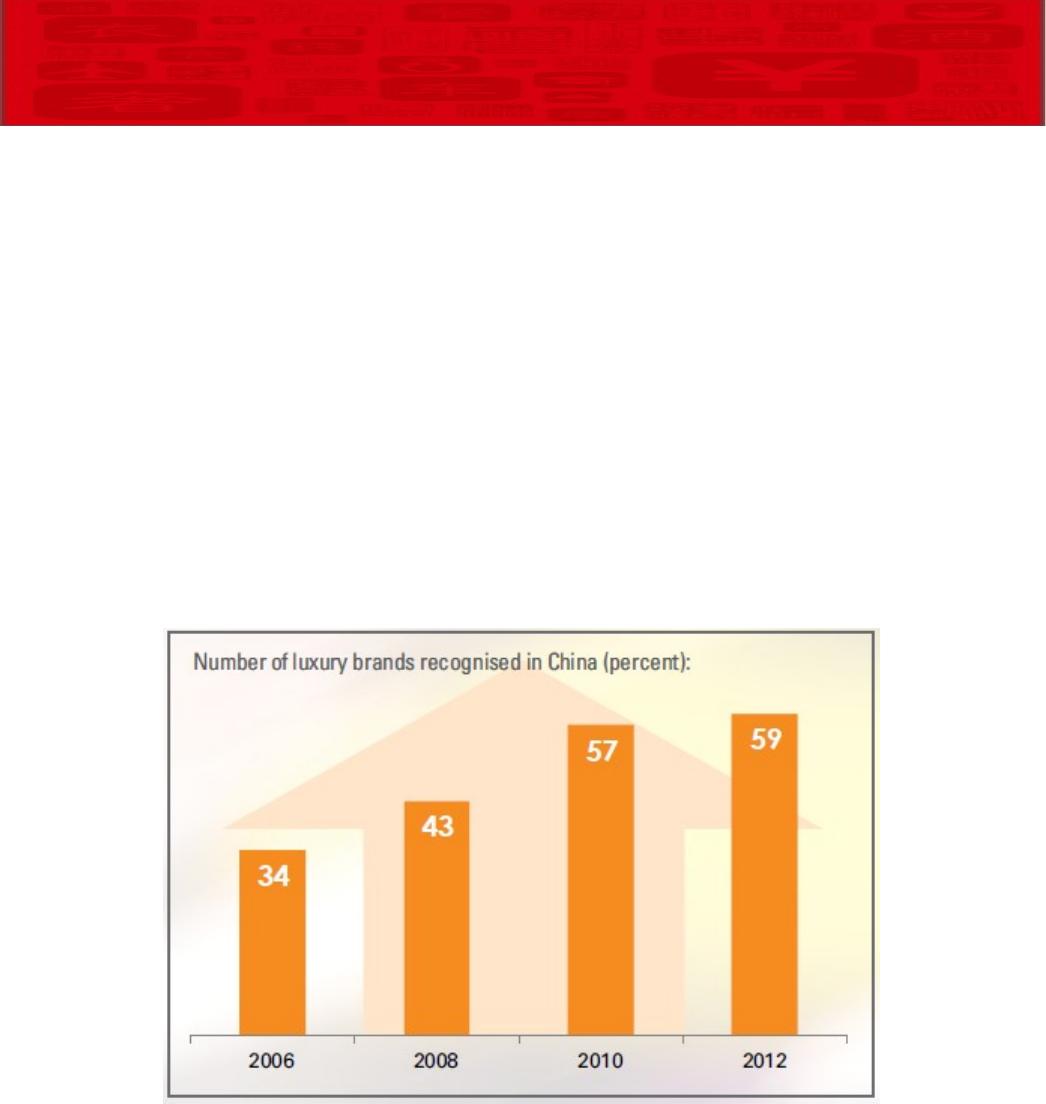
China overtook France and Italy to become the third largest consumer of luxury goods in the world in the year
early 2013. In the latest research conducted by McKinsey, it is believed that China will contribute about 20
percent of global luxury sales in 2015. Surprisingly, the luxury sector there grew at a rate of 16% during the
2009 global crisis.
Factors contributing to the growth of Luxury sector in China
a) Rising PCI and Increase in Number of Millionaires
With the growth rate of economy staying over 8% and the growth being focussed on certain specific
regions, there has been a steady rise of per capita income as a whole. However, the uniformity of this
growth is still doubted. Some regions saw a growth of 200% while some did not see growth at all. This,
however, has worked in favour of the luxury sector as with increased income, increased spending.
Higher the spending, higher the need for class and ability to flaunt it and what better can be for the