lululemon athletica inc.
1
lululemon
INTRODUCTION
Based in Vancouver, Canada, lululemon athletica inc. is an upstart company that
provides premium quality athletic apparel at a premium price. While the worldwide
economy has been in decline, lululemon has been producing financial gains in every
major measure of performance. Furnishing excellent examples of foundational strategic
management concepts, this case illustrates the power of entrepreneurial thought, vision,
and strategy to produce results in stark contrast to forces in the external environment.
The case describes lululemon’s niche strategy, inimitable corporate culture, and
leadership values, as well as conditions in the external environment. As details of
economic, competitive, and stakeholder pressures unfold in the case, it is evident that the
company is rapidly facing new challenges. Given the evolving situation, the question
arises as to whether lululemon can maintain and nurture the effectiveness of community-
centered and symbiotic relationships as it attempts to grow the business and expand
globally.
ANALYSIS
Define lululemon’s tangible and intangible resources. What is (are) the company’s
source(s) of strategic competitiveness? How does the company vision affect its
ability to achieve organizational objectives?
Intangible resources can be as important to an organization as tangible resources.
This is certainly the case for lululemon athletica inc. Both types of resources at lululemon
are identified and described in the table below.
Tangible
Financial
Resources Cash – valued at more than 50% of total assets
Credit line – but currently holding no debt
Business growth – substantially outpaces industry in
revenue and profitability
Returns – rising on equity and assets
Organizational
Resources Strategies – to achieve vision
Marketing systems and processes – to collect market
intelligence
Environmental scanning systems and capabilities – to
identify threatening and opportunistic trends and
make projections of anticipated outcomes
Market driven research and development processes – to
incorporate ideas from users into new product designs
Physical
Resources 175 stores in Canada, U.S., Australia, and New Zealand
Distribution centers in U.S. and Canada
Technological
Resources High tech fabrics – to produce high performance products
Silver thread technology – to enhance high tech product

lululemon athletica inc.
2
lululemon
features
E-commerce sales channel – to facilitate online and
global expansion
Intangible
Human
Resources Employee stewardship of company culture and vision –
shared values and customer relationships
Culture – embedded in associate’s behaviors and actions
In-depth knowledge of target audience – feedback
mechanisms flowing into product development
Focus on employee development – continuous training
Associate product knowledge – applied in store setting
Leadership – experience and skills of management team
Yoga instructor ambassadors –input and promotional
resources outside of the organization
Innovation
Resources Product design – ability to develop style and performance
features to meet specific target market needs
Unique store experience – interactive community hub for
multiple aspects of healthy living
Reputational
Resources Word-of-mouth, grassroots, lifestyle marketing
Associate-customer relationships – authentic connections
with enthusiasts
Product quality standards – enable premium pricing
Committed, cult-like brand following
Perception of brand exclusivity
In-store experience
Lululemon’s success demonstrates that the capacity to manage intellectual and
systems capabilities and to convert it into useful products and services creates value,
strengthens the company’s competitive position, and produces superior results. Intangible
resources are a superior source of capabilities and core competencies. Unlike most
tangible resources, they can be leveraged to create additional product and service
attributes that are attractive to customers. For example, knowledge gathered from
customers during in-store visits can be shared throughout the organization to develop
valued product characteristics and to deepen the relationships associates have with other
customers. Also, intangible resources are less visible and more difficult for competitors to
understand, purchase, imitate, or substitute for.
Core competencies, and ultimately competitive advantages, derive from the
organization’s tangible and intangible resources. When the firm formulates and
implements a value-creating strategy based on its available resources, strategic
competitiveness is achieved. At lululemon, strategic competitiveness results from a vision
and focused differentiation (niche product market) strategy built upon brand equity and
the power of the company’s culture. Virtually all of lululemon’s employees, ambassadors,
and guests participate in yoga and/or running, and the company’s unique feedback
collection methodologies ensure that the brand and culture are perpetuated.
lululemon athletica inc.
Lululemon’s vision is “To be a community hub to provide our guests with
knowledge, tools and the components for people to live longer, healthier and more fun
lives.” This statement informs stakeholders and gives shape to the intended future of the
company, challenging employees in the process. The alignment of capital market, product
market, and organizational stakeholders with the company’s vision is a testament to its
effectiveness.
Complete an analysis of competitive forces in the external environment using the
five forces model of competition and a competitor analysis. How big is the
impending competitive threat? Is lululemon prepared for changes in the
competitive environment?
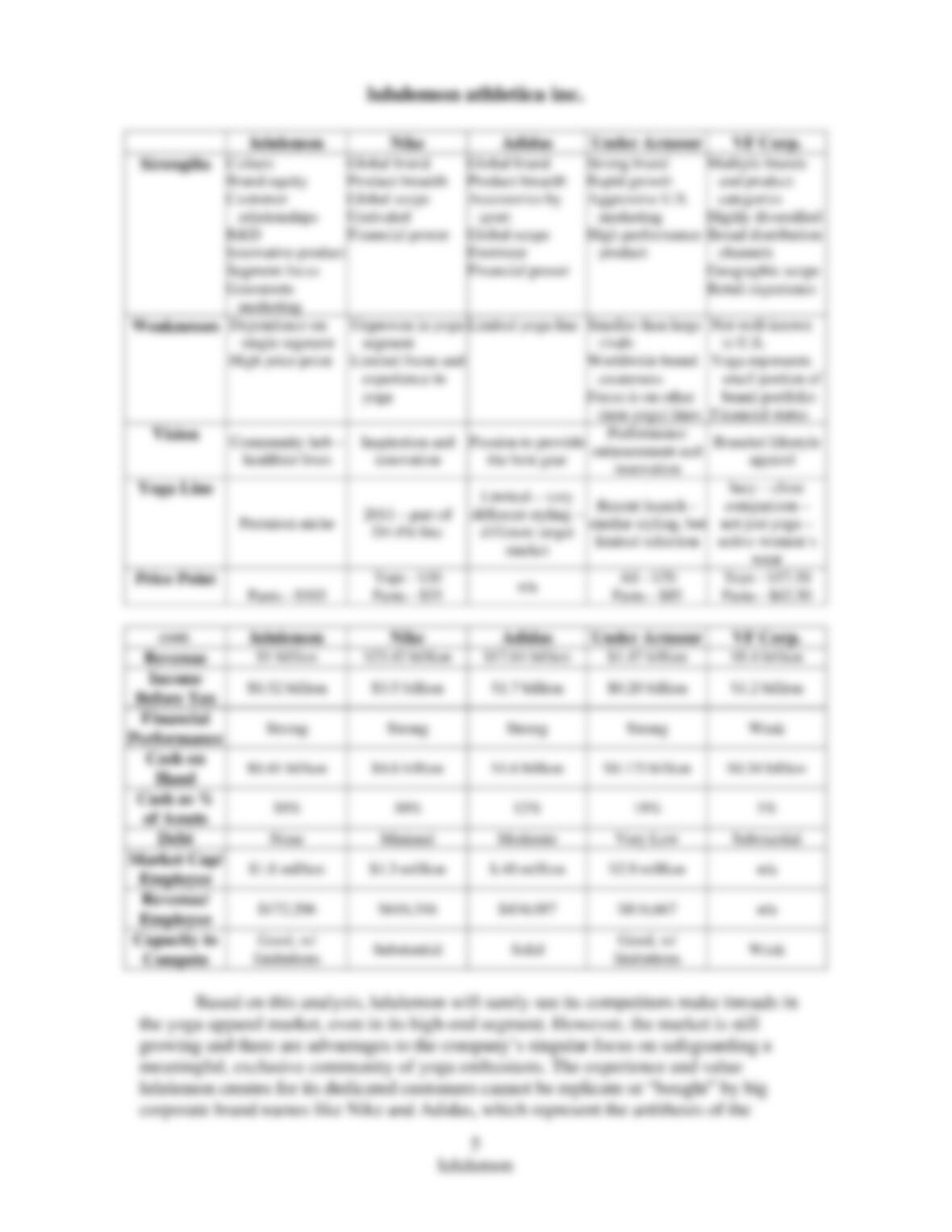
Lululemon is in the athletic apparel industry. Until recently, it has been
unchallenged in serving a distinct premium yoga niche for women. Because of increased
popularity of the sport and sustained above-average earnings in the segment, new
competitors are now seeking to capture a share of the growing market. And some of these
new competitors have substantial capacity to make an impact.
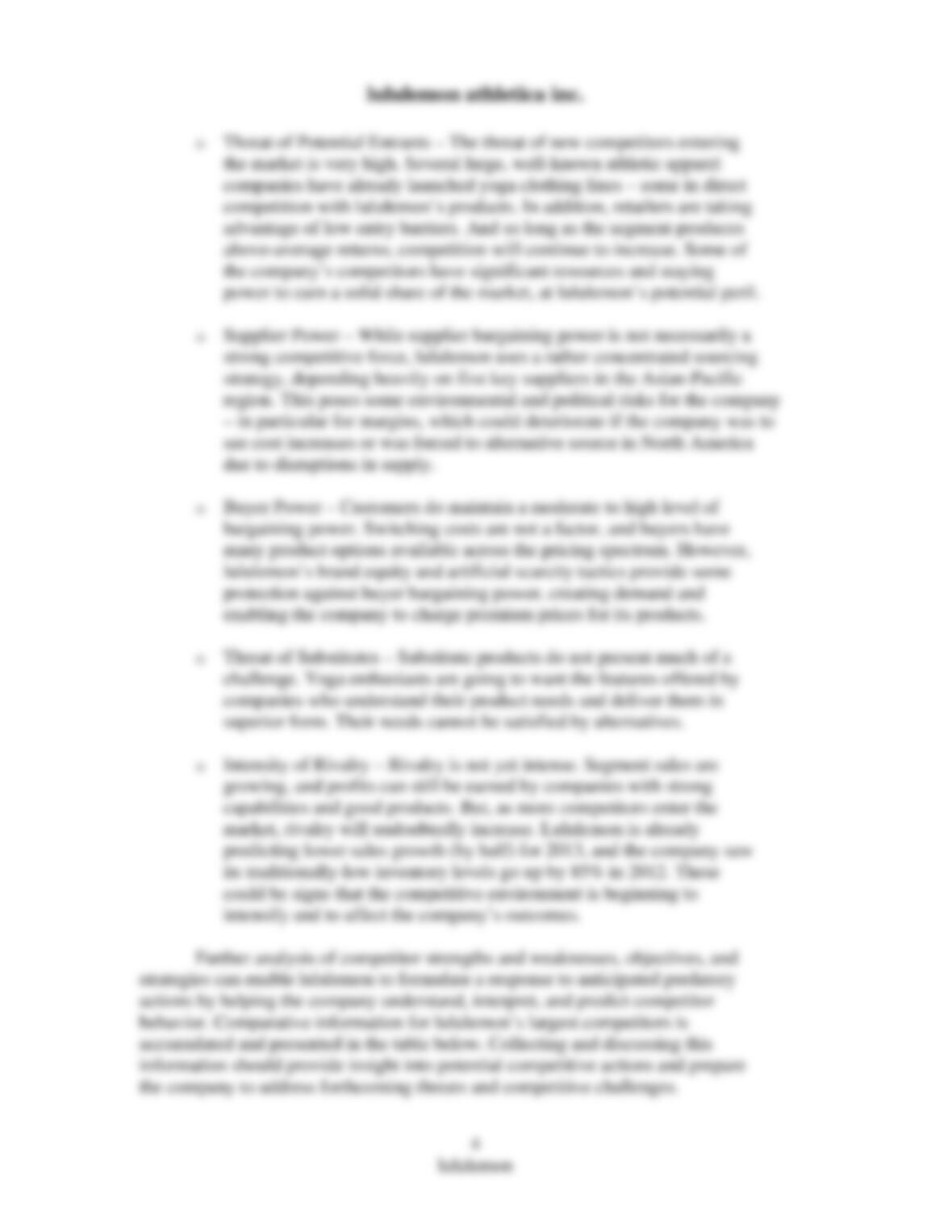
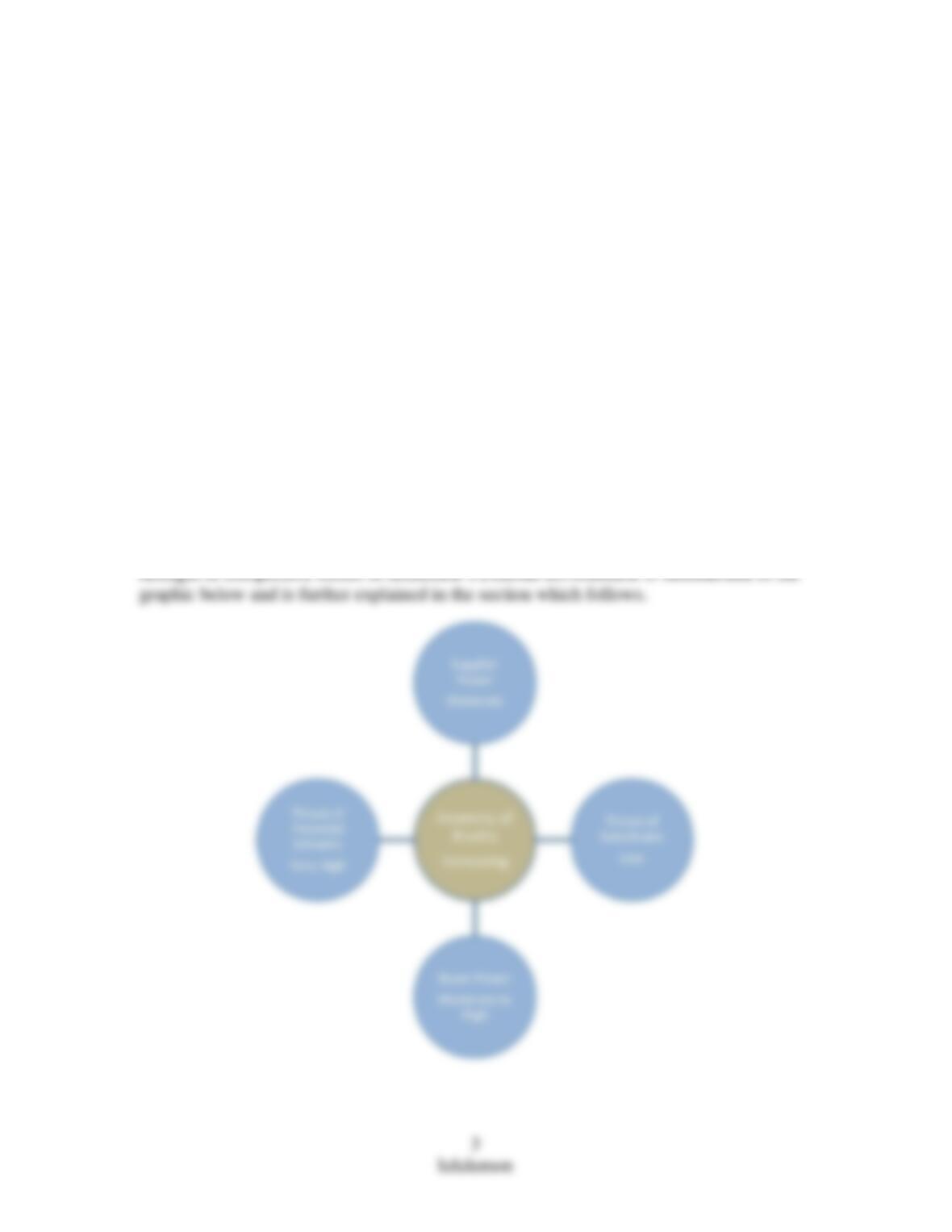
Analysis using the five forces model of competition reveals that the intensity of
rivalry in this segment of the sports apparel industry is beginning to increase. The