Chemical Sensory Perception

Gustation and Olfaction
Gustation- Taste, Olfaction Smell
Chemoreceptors– sense chemicals in the environment
Innate preferences for sweets-evolutionary drive to
identify foods that provide energy
Innate avoidance of bitter substances-evolutionary
drive to avoid poisons
We can learn to love bitter things if paired with
rewarding stimuli-espresso coffee, bittersweet chocolate

Five Tastes and Thousands of
Smells
Five basic tastes: Salt, Sour, Sweet, Bitter, Umami
Sweet can be activated by sugars, peptides, or amino acids
(aspartamene)
Artificial sweeteners can activate at much lower
concentrations
Umami-glutamate, guanosine monophosphate (GMP) and
inosine monophosphate (IMP)-brothy or meaty taste
New evidence suggests a sixth sense-carbs
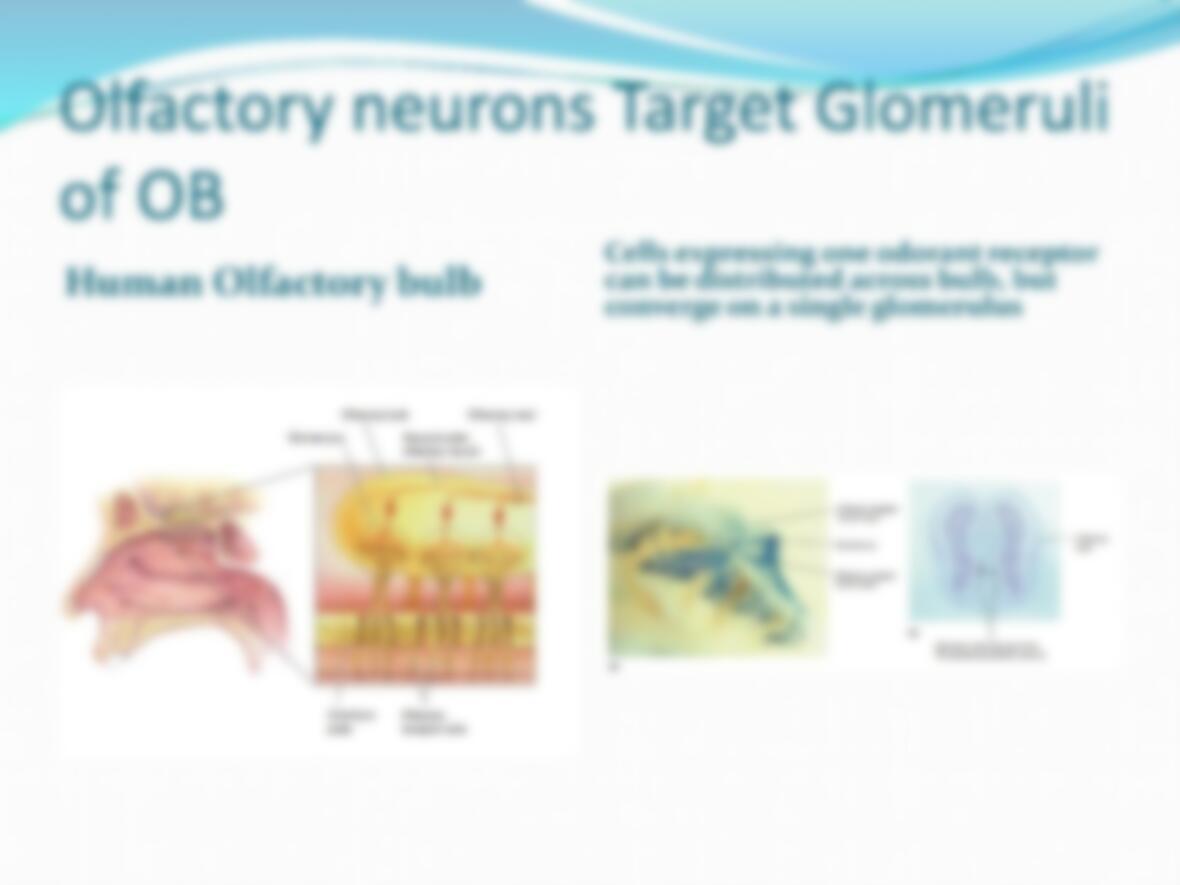
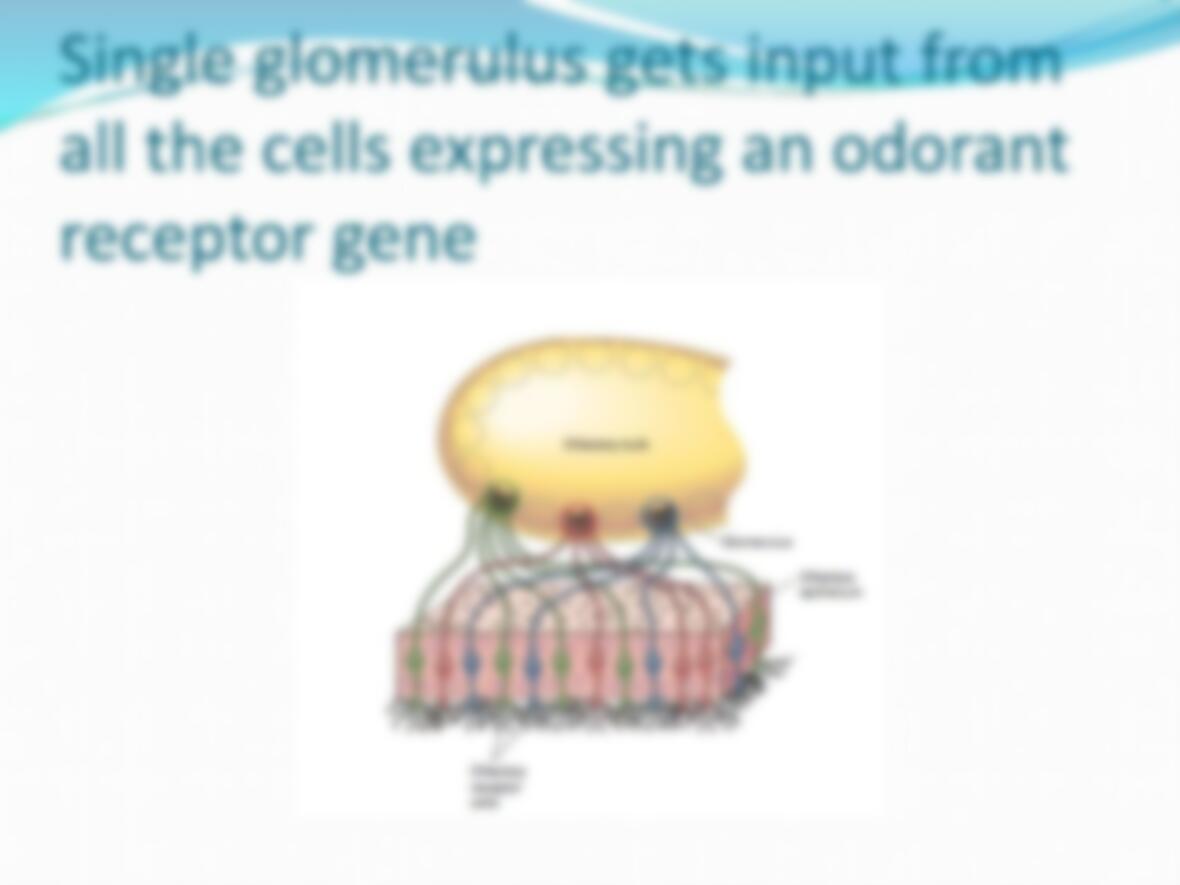
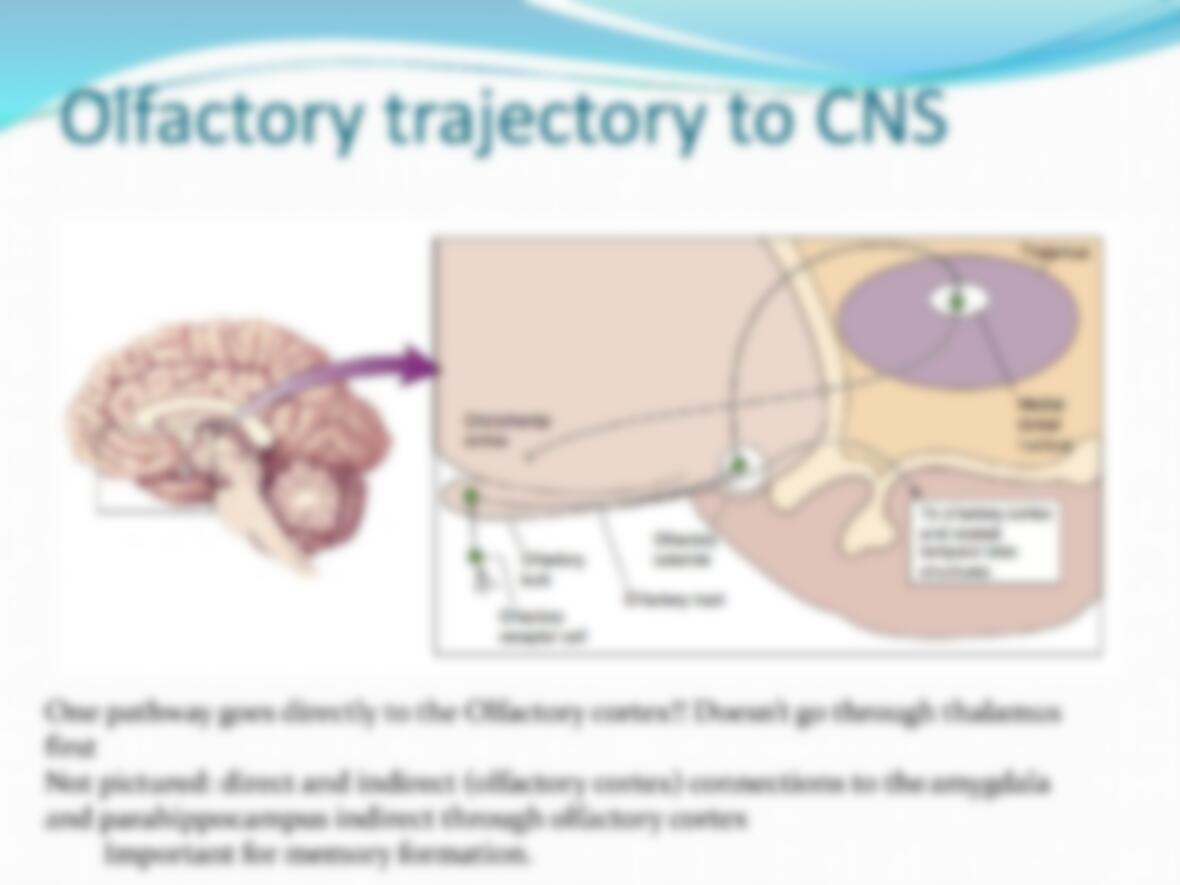
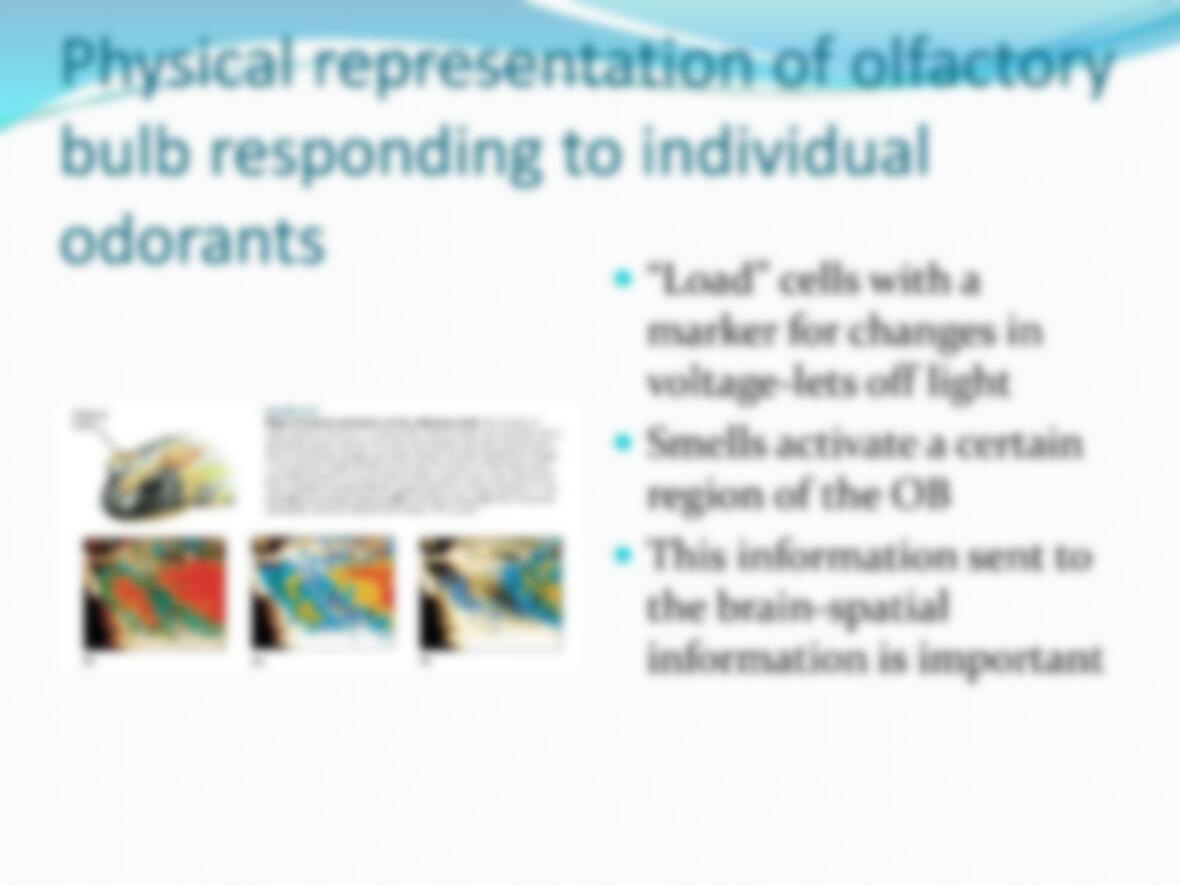
Smell is an important component of flavor
Integration of multiple sensations by the cortex result in a
particular flavor
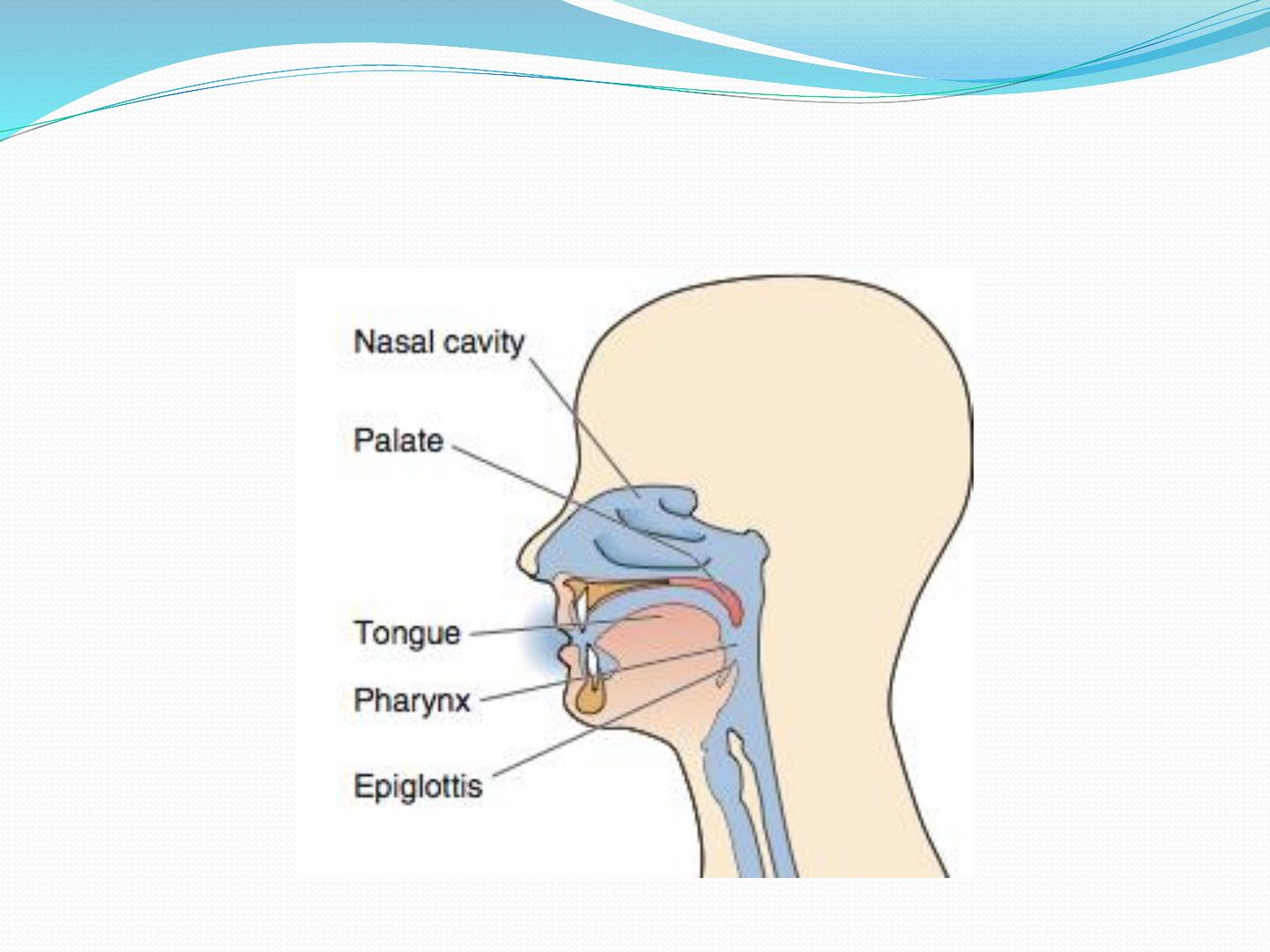
The Nasopharynx
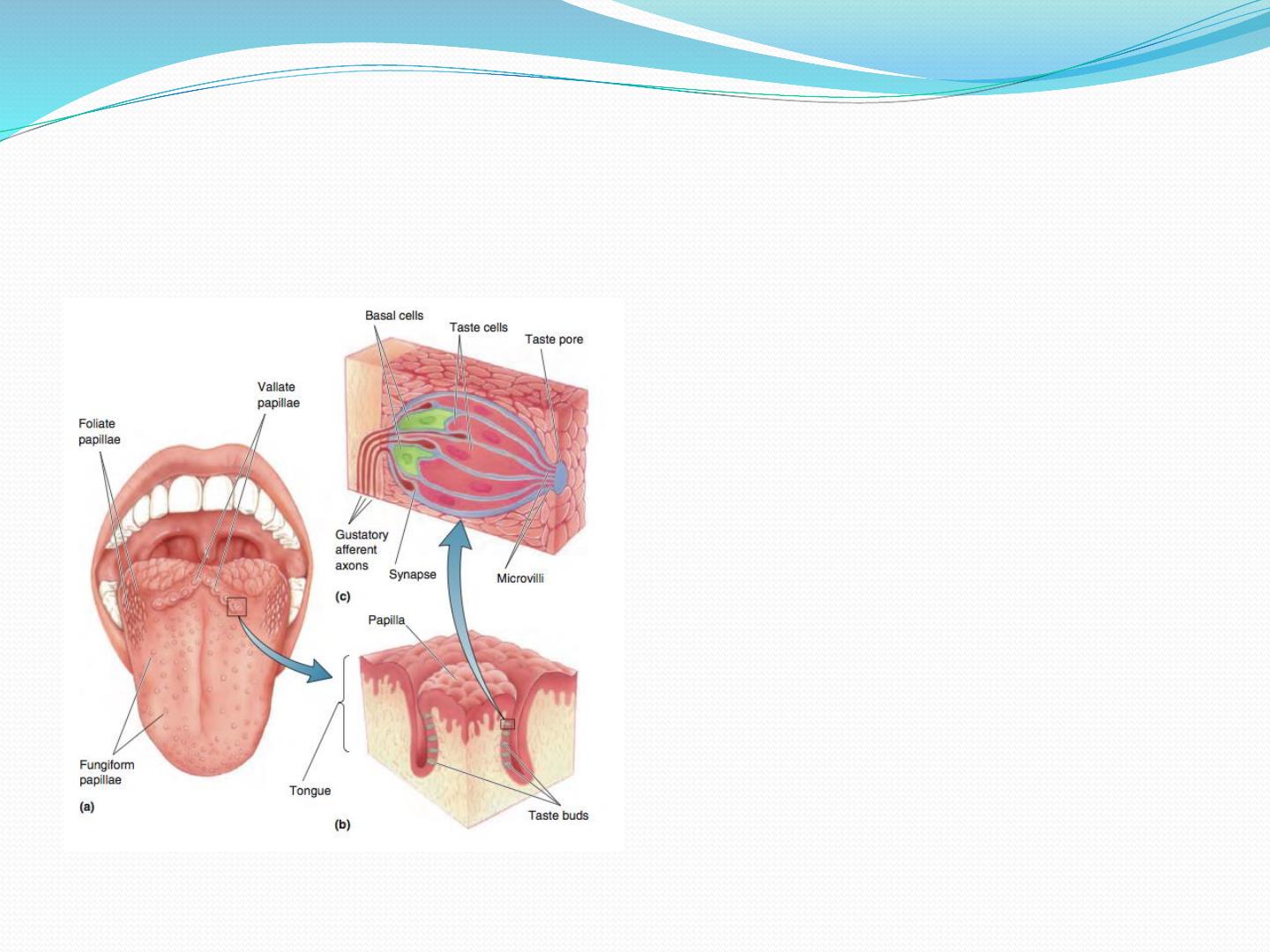
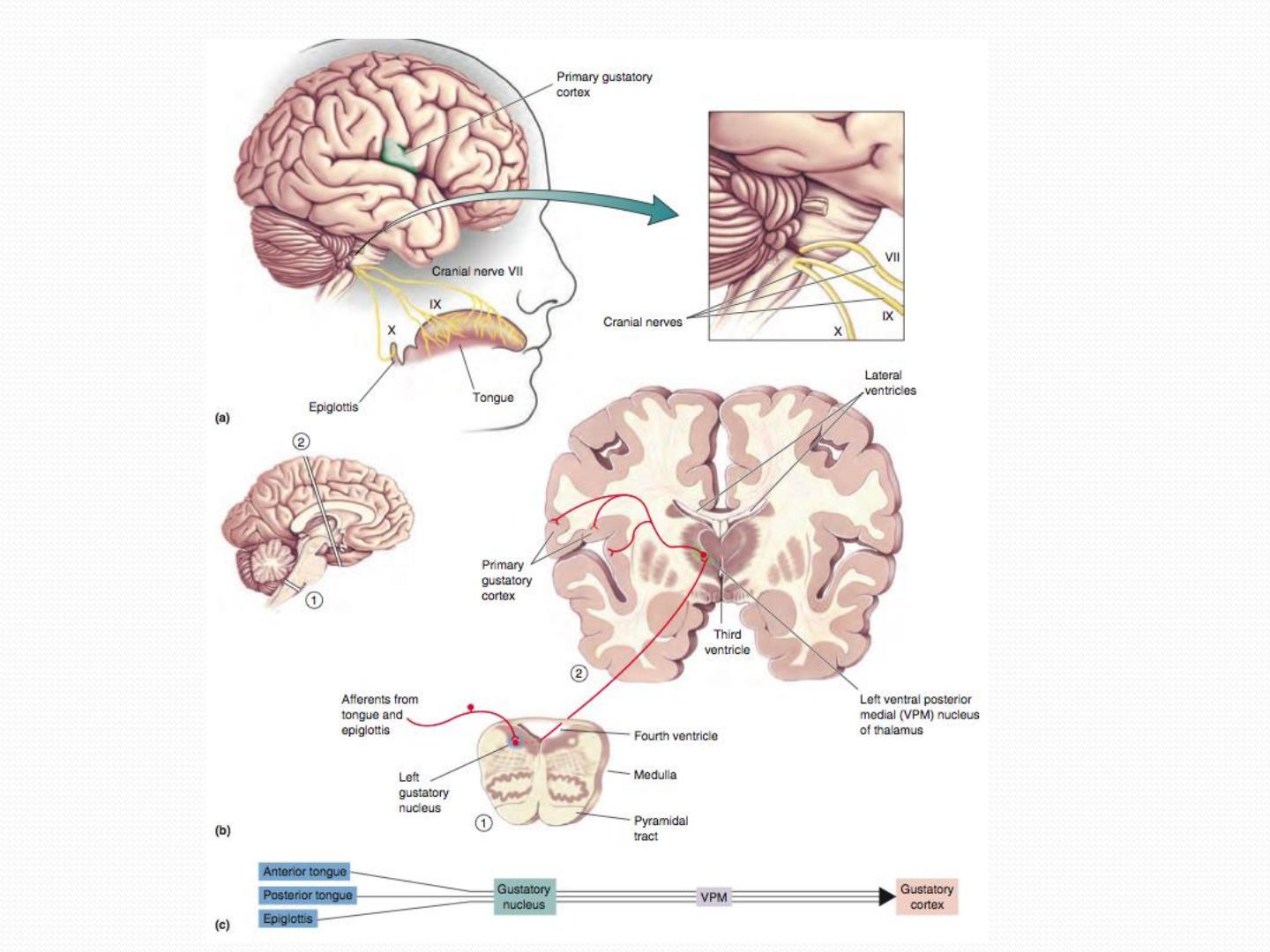
The Tongue as a sensory organ
1 Papilla can have
hundreds of taste buds
Each taste bud can have
50-150 receptors
A taste bud is NOT a
neuron, but it has polarity
and synapses on to
sensory axons
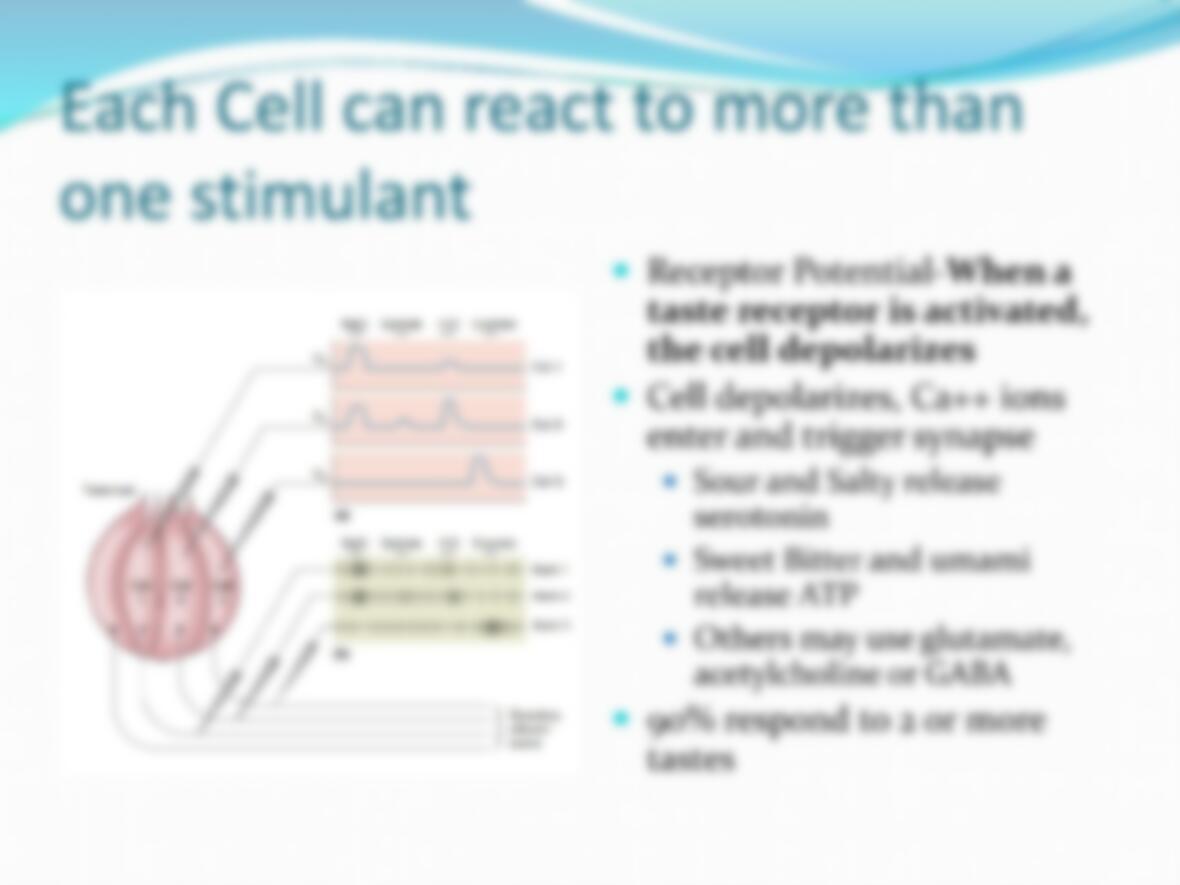
Neurotransmitter used
varies
Basal cells
Afferents of Sensory Axons
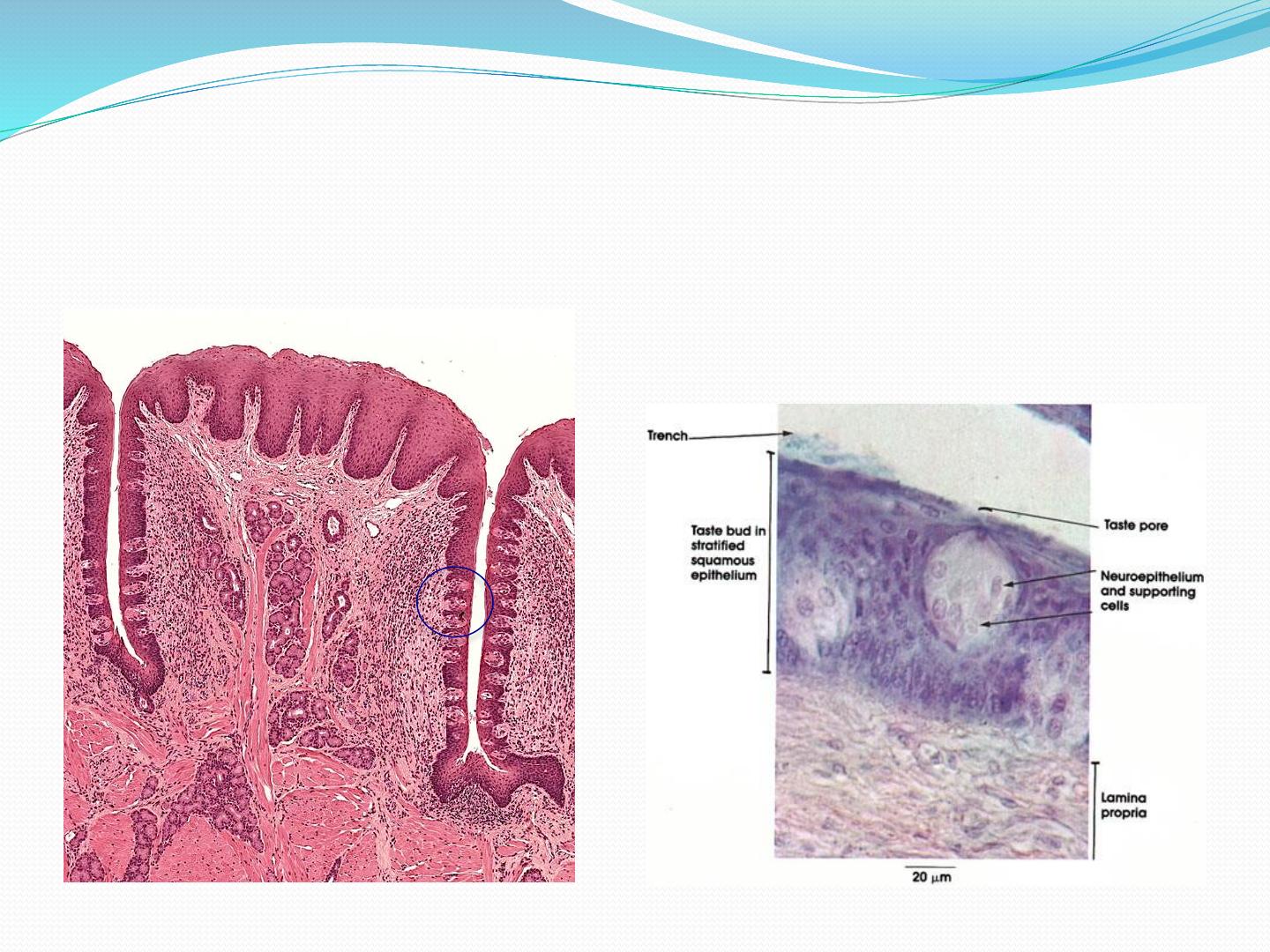
Histology of the tongue
Magnified view of a taste
bud
The Organs of Taste
Areas of sensitivity on the tongue
Tip of the tongue
Sweetness