2200
Transaction Analysis
Transaction Analysis
●Cash v. Accrual Accounting
○Accrual Accounting – based on GAAP
■Realization principle
we should record revenues when:
○The earnings process is complete or virtually complete.
○There is reasonable certainty as to the collectibility of the
asset to be received (usually cash).
It is not necessary to receive cash in order to record cash revenue.
The receipt of cash does not always indicate that revenue has been
earned.
Record revenue independent of the exchange of cash.
It is required that the receipt of cash be relatively assured in order
to record revenue.
■Matching concept
We should record expenses:
○In the same accounting period that the related revenue is
earned.
For most expenses, it is difficult to trace to a specific revenue so
they are recorded when they are incurred.
✶Accrual accounting must be used by all companies who sell securities
(stock) to the public.
○Cash Accounting – does NOT follow GAAP
■Record revenues when cash is received.
■Record expenses when cash is paid.
✶Cash accounting can be used by any company that does not sell stock to
the public. Cash accounting is also used by individuals to account for their
personal finances.
○If a company that does not sell stock to the public attempts to get a bank loan,
they are typically required to present their financial statements using accrual
accounting.
○This is typically required because cash accounting can be easily manipulated and
thus leads to misleading financial statements.
●Account
○Definition – Place where all increases and decreases in financial statement items
are recorded.
○The T-account has three distinct parts:
■Top → Place account name here
■Left side – Debit
■Right side – Credit
lOMoARcPSD|9327020
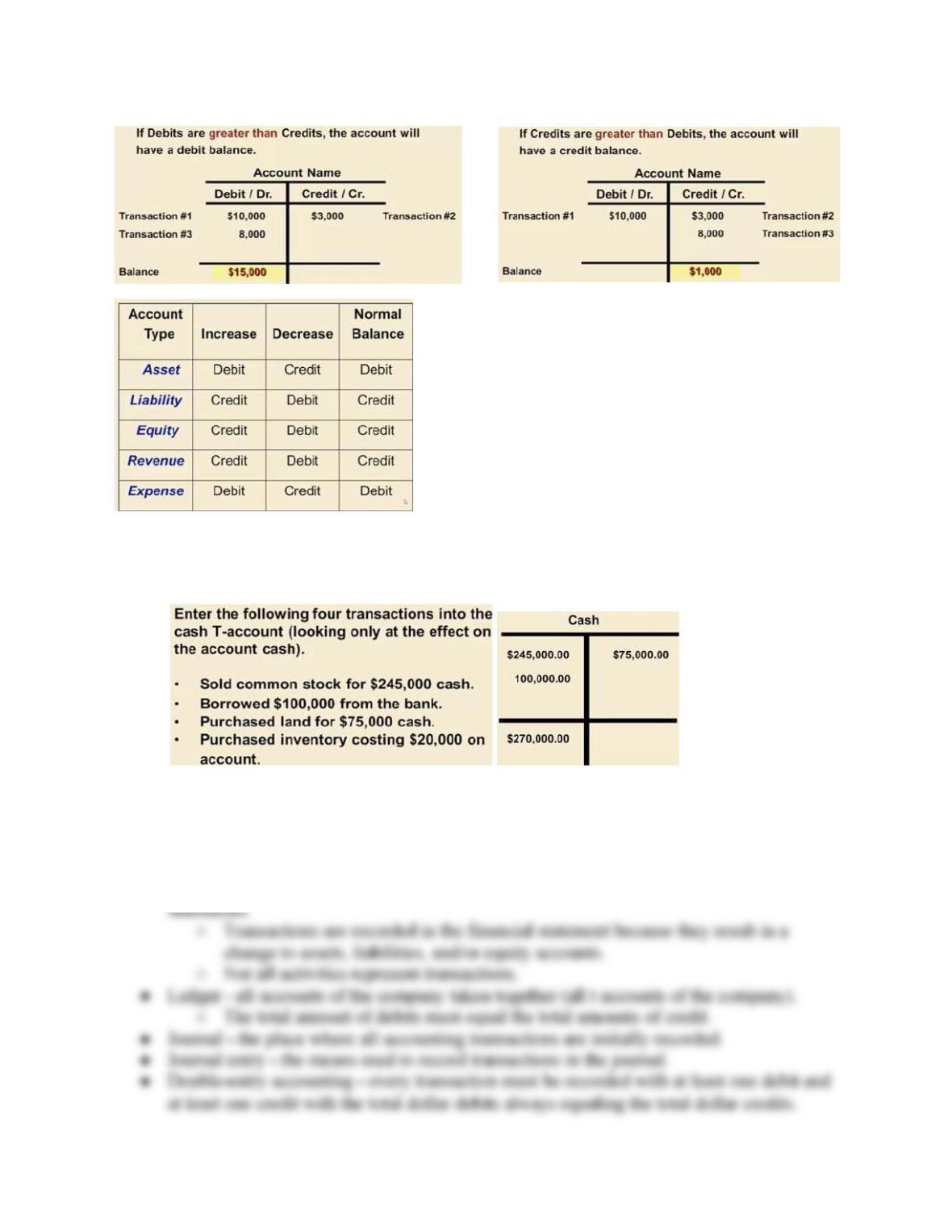
●All increases in assets belong to the debit side of the account.
●Normal balance – the same as the increase column, at what side of the t account the
beginning and ending account balance will be.
●245,000 – debit
●100,000 – debit
●75,000 – credit
●Ending balance = 270,000
●Accounting transactions are economic events that require recording in the financial
statements.
lOMoARcPSD|9327020