LECTURE 6
COMPACTING & FINISHING
Sung-Woo MOON, Ph.D, P.E
OCTOBER 17 , 2018
Nazarbayev University
Department of Civil Engineering
Lecture 06
ECE 404: Construction Technologies & Processes 2
•Consolidation
COMPACTION PROCESS
–Consolidation is the process by which soil particles are
packed more closely together under the application of
static loading
–It is achieved through gradual drainage of water from soil
pores (voids).
–Consolidation may require months or years to complete
•Compaction
–Compaction is the process by which soil particles are
packed more closely together by mechanical means.
–It is achieved through reduction of air voids.
–Compaction is accomplished in a matter of hours

Lecture 06
ECE 404: Construction Technologies & Processes 3
•Improvement of the engineering properties of soil
BENEFIT OF COMPACTION
–Increase load-bearing capacity (strength)
–Reduce compressibility →Reduce settling of soil
–Improve volume-change characteristics
•Provide stability
•Reduces water seepage, swelling and contraction
–Reduce permeability
–Prevent soil settlement and frost damage
Lecture 06
ECE 404: Construction Technologies & Processes 4
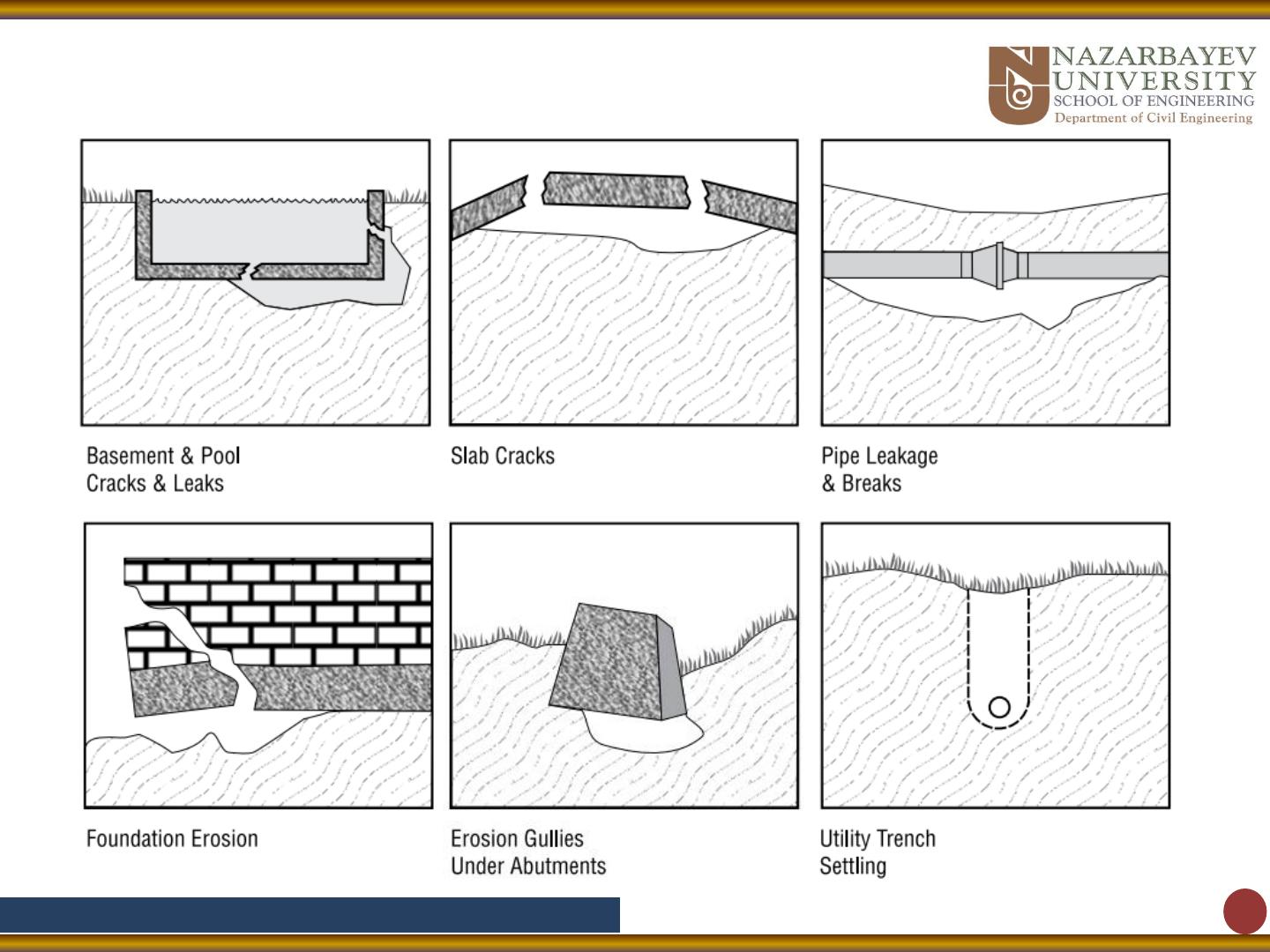
RESULTS OF POOR COMPACTION

Lecture 06
ECE 404: Construction Technologies & Processes 5
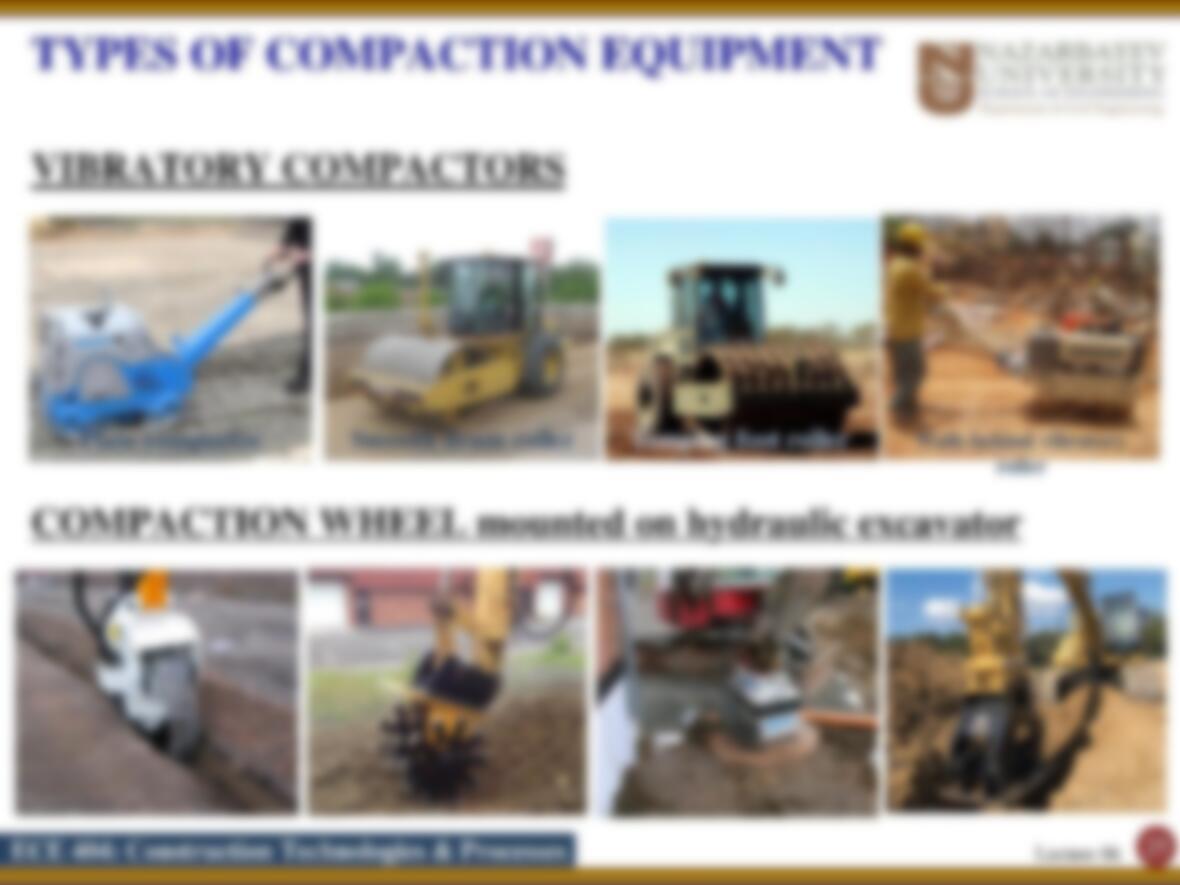
•The equipment and methods employed for compaction
in building construction are usually somewhat different
from those employed in heavy and highway construction
because of:
COMPACTION EQUIPMENT & METHOD
–The limited differential settlement that can be tolerated by a
building foundation
–The necessity for working in confined areas close to
structures
–The smaller quantity of earthwork involved

Lecture 06
ECE 404: Construction Technologies & Processes 6
•Soil physical and chemical properties
•Soil moisture content
•Compaction method employed
•Amount of compactive effort
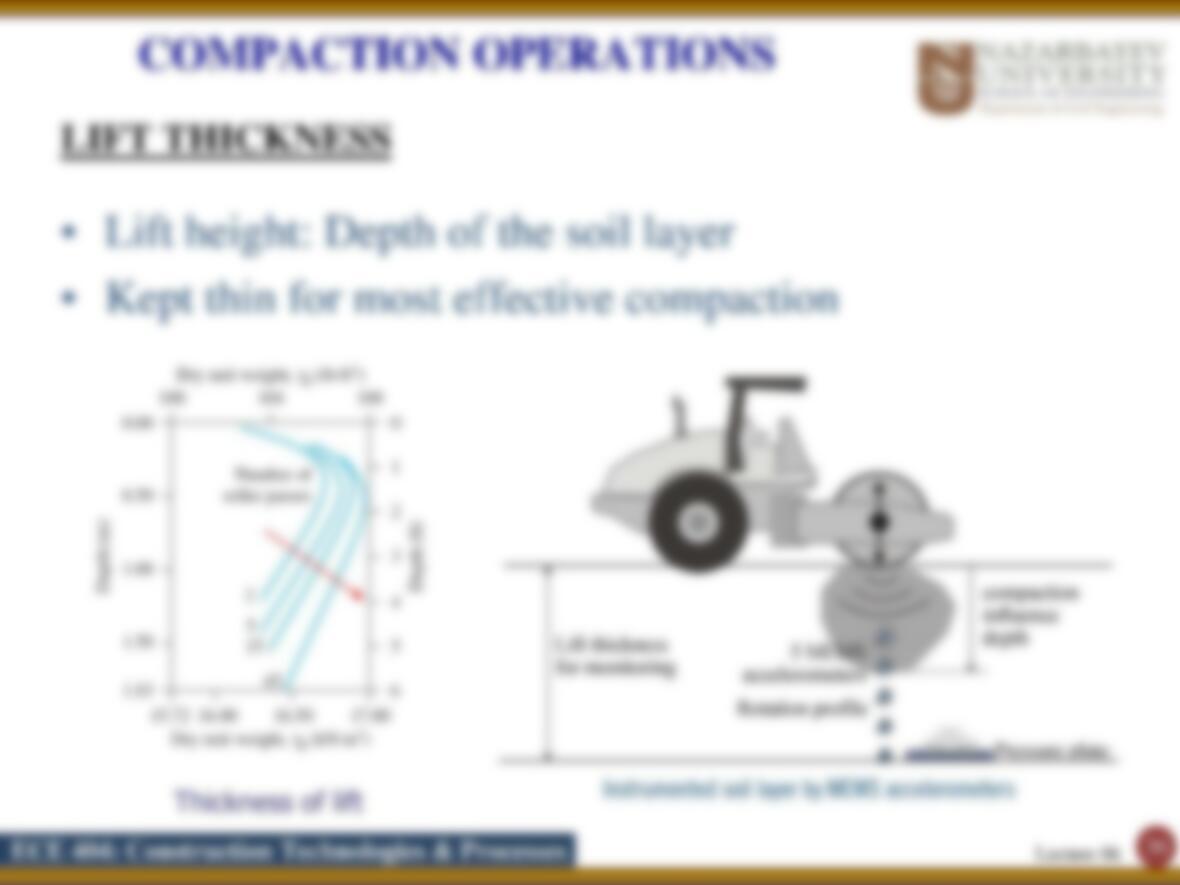
•Thickness of the soil layer being compacted (lift
thickness)
DEGREE OF COMPACTION
FACTORS TO AFFECT

Lecture 06
ECE 404: Construction Technologies & Processes 7
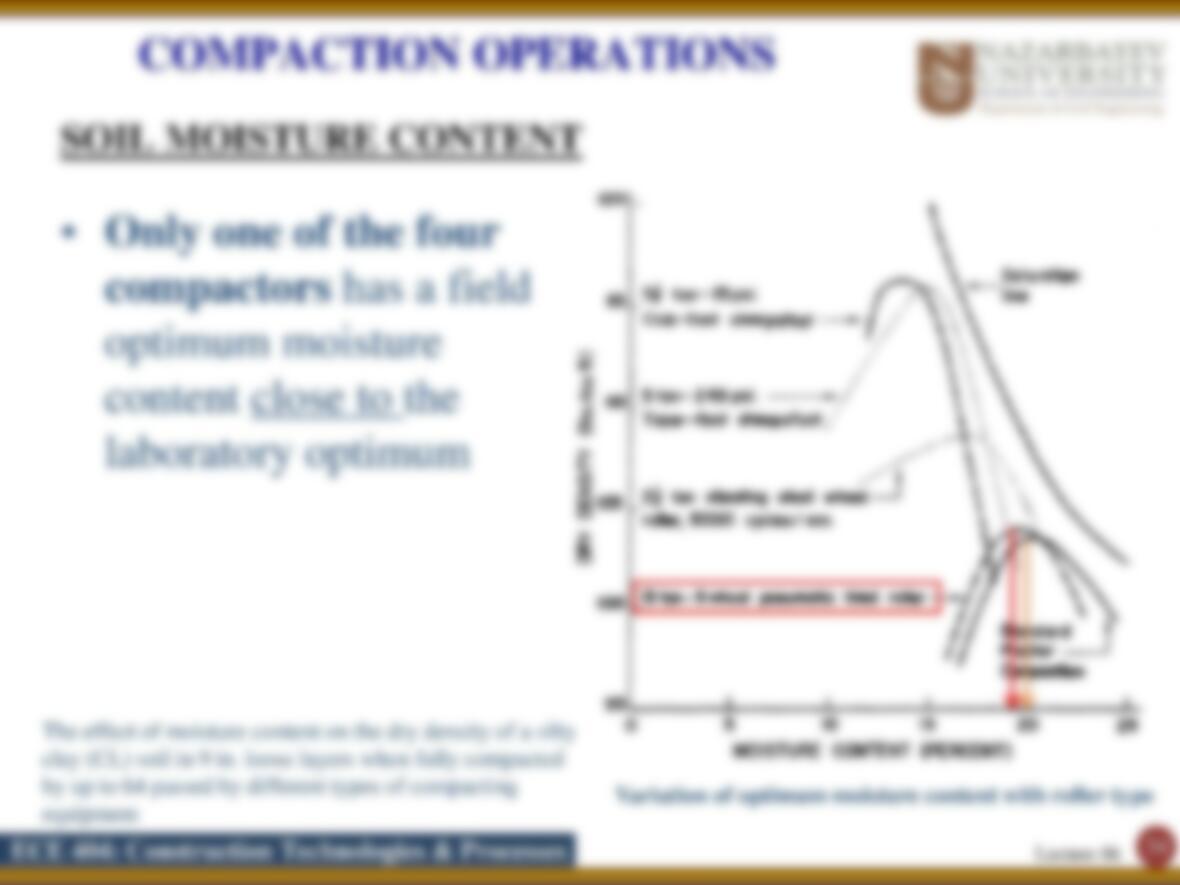
•Four Basic Compaction Forces
–Static weight
–Manipulation (or kneading)
–Impact
–Vibration
•All compactors utilize static weight
•Most compactors: static weight + one or more forces
–i.g. a plate vibrator combines static weight with vibration
•Manipulation of soil under pressure to produce
compaction is most effective in plastic soils
COMPACTION PROCESS
Lecture 06
ECE 404: Construction Technologies & Processes 8
•The forces involved in impact and vibration are
similar except for their frequency
•Impact or tamping involves blows delivered at low
frequencies:
–Usually about 10 cycles per second (Hz)
–It is most effective in plastic soils
•Vibration involves higher frequencies:
–May extend to 80 cycles per second (Hz) or more
–Vibration is particularly effective in compaction of
cohesionless soils such as sand and gravel
COMPACTION PROCESS
Lecture 06
ECE 404: Construction Technologies & Processes 9
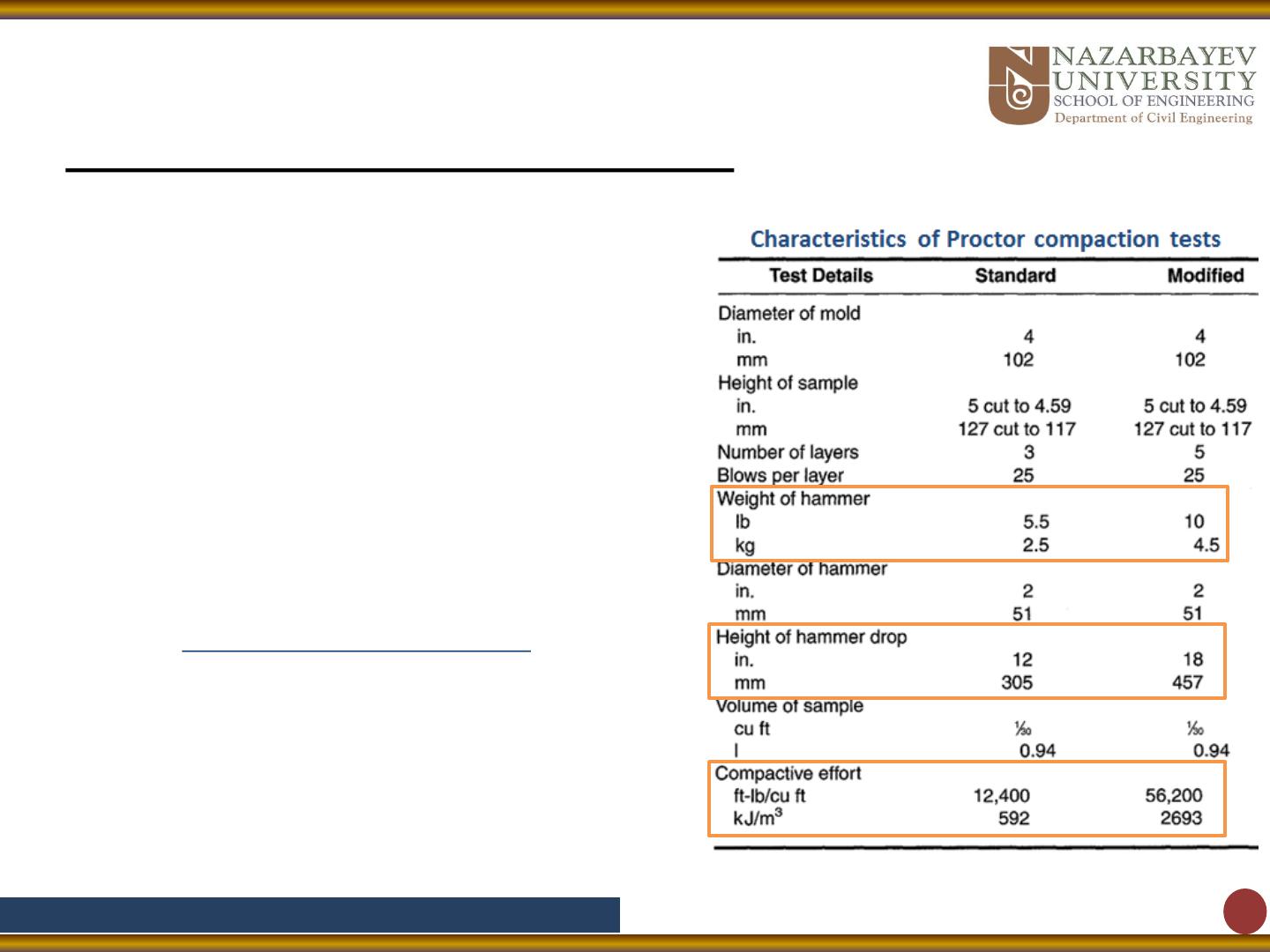
–Evaluate a soil’s moisture
density relationship under a
specified compaction effort
–Standard Proctor Test (ASTM
D 698, AASHTO T-99)
–Modified Proctor Test (ASTM
D 1557, AASHTO T-180)
•Use of high design loads
•Compactive effort: 4 times more
than standard one
COMPACTION
STANDARD LABORATORY TEST

Lecture 06
ECE 404: Construction Technologies & Processes 10
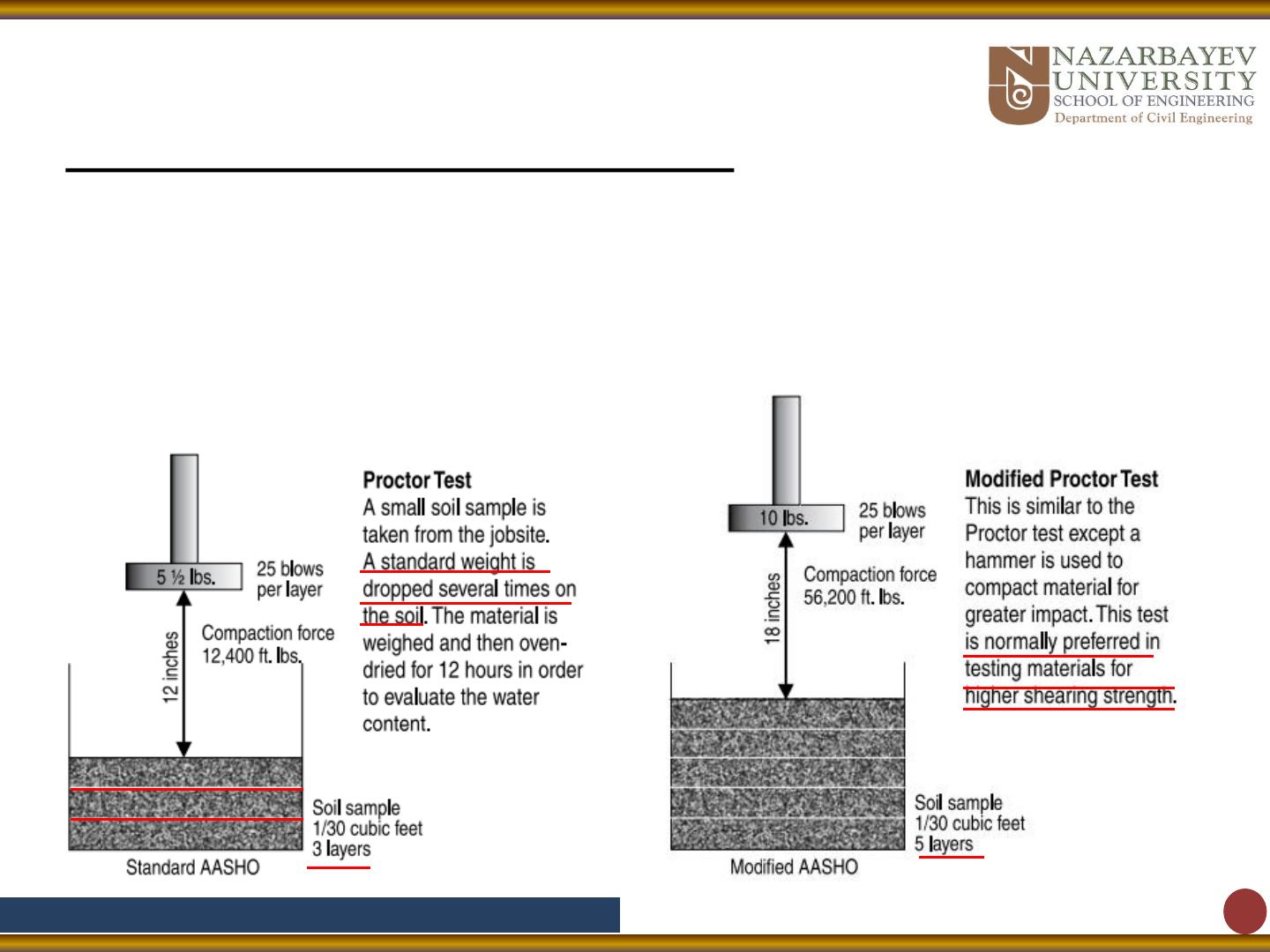
•Standard Proctor Test (ASTM D 698, AASHTO T–99)
COMPACTION
STANDARD LABORATORY TEST
Lecture 06
ECE 404: Construction Technologies & Processes 11
•Standard Proctor Test (ASTM D 698, AASHTO T–99)
COMPACTION
•Modified Proctor Test (ASTM D 1557, AASHTO T–
180)
STANDARD LABORATORY TEST
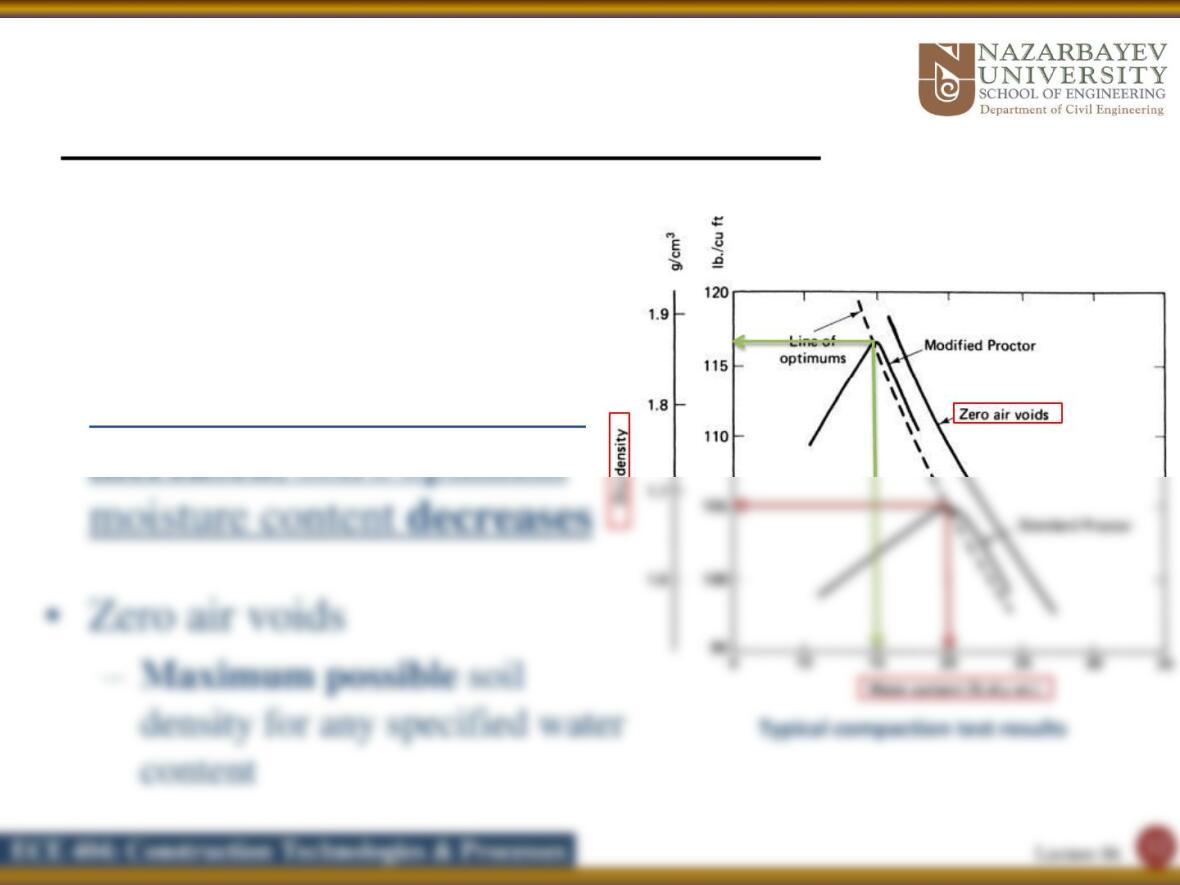
COMPACTION
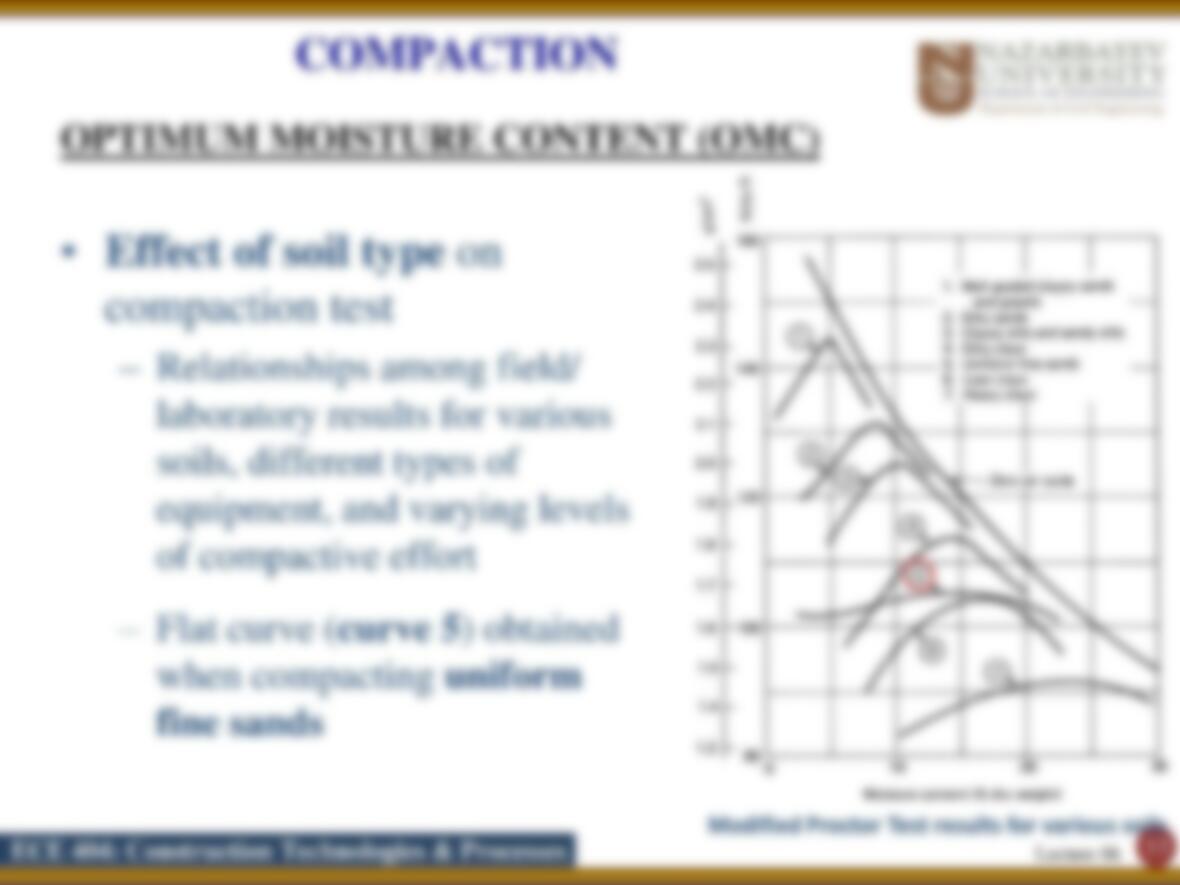
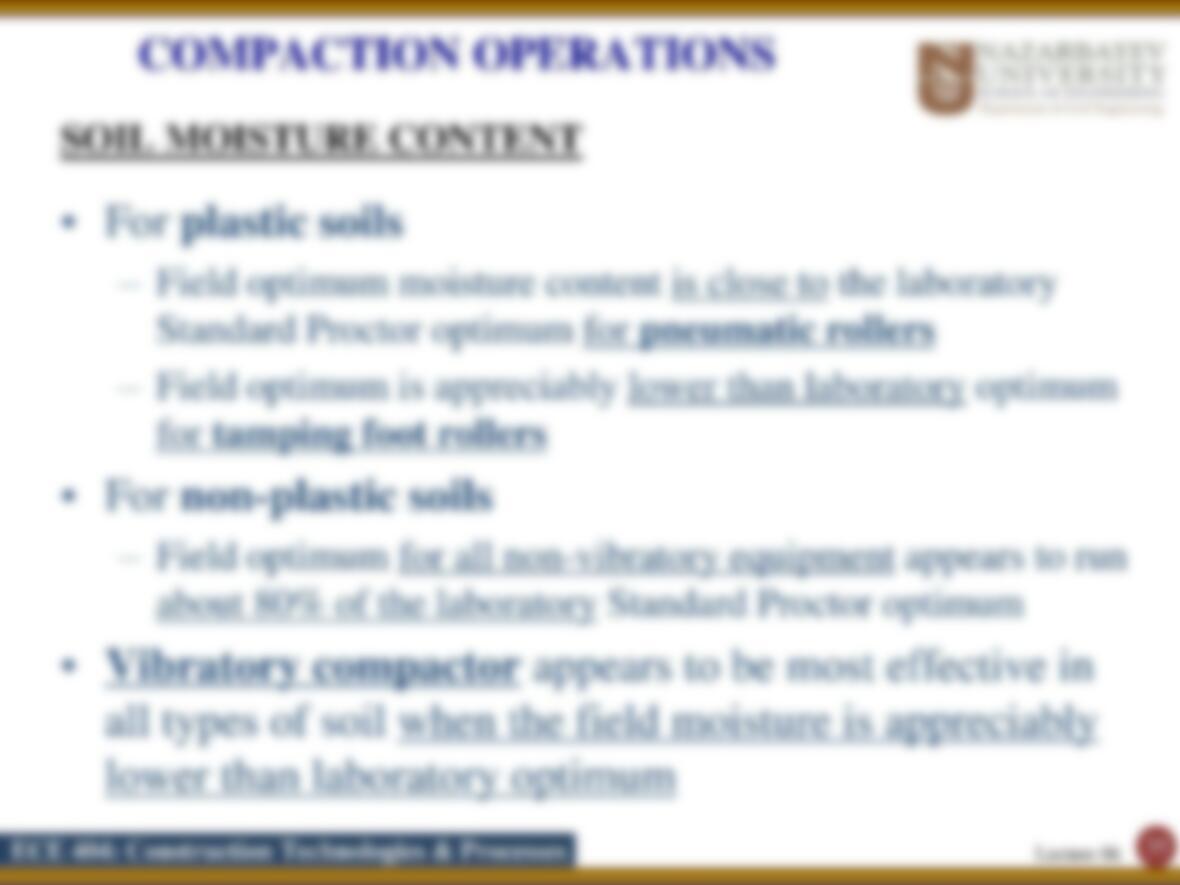
OPTIMUM MOISTURE CONTENT (OMC)
•As the compactive effort is
•Maximum dry unit weight
occurs at an optimum water
content (OMC)