Lecture 02
ECE 404: Construction Technologies & Processes 1
Lecture 01
ECE 404: Construction Technologies & Processes 1
LECTURE 2
BRIDGE CONSTRUCTION
Sung-Woo MOON, Ph.D, P.E
August 20 , 2018
Nazarbayev University
Department of Civil Engineering

Lecture 02
ECE 404: Construction Technologies & Processes 2
•Bridge is a permanent raised structure which
allows people or vehicles to cross an obstacle
such as a river and transfers the loads from the
service to the foundations at ground level
Incheon Bridge (Cable-stayed)
Indiana Jones and the Temple of Doom
INTRODUCTION

Lecture 02
ECE 404: Construction Technologies & Processes 3
•Planning and executing the construction of a bridge is
often very complicated
–Preliminary stage in bridge project involves selection of the
best bridge system from available alternatives
–Construction works obstruct existing traffics and normal
life in the area especially if it involves on-site works (i.e. in-
situ concreting works)
–Substantial works in form of tests are required before any
actual construction –soil tests, boreholes, wind speed and
direction, records of water level and velocity, etc.
INTRODUCTION

Lecture 02
ECE 404: Construction Technologies & Processes 4
•When designing a bridge system, the objectives of the
bridge construction and limiting factors have to be
taken into account
•Some considerations to select bridge type
–Site location and condition
–Economics
–Politic
–Ease of construction
–Aesthetics
–Safety : adjacent property, construction crew, highway
traffic, etc.
INTRODUCTION

Lecture 02
ECE 404: Construction Technologies & Processes 5
GENOA BRIDGE COLLAPSE
– When: 14 August, 2018
– 43 people killed
– Reason: Well-known loss of
superficial chemical resistance
of the concrete” because of sea
air and pollution from a nearby
steel plant

Lecture 02
ECE 404: Construction Technologies & Processes 6
•Bridges are differentiated into groups according
to many different factors
–Function: aqueduct, viaduct, highway, pedestrian etc
–Materials: steel, timber, reinforced concrete, composite, etc.
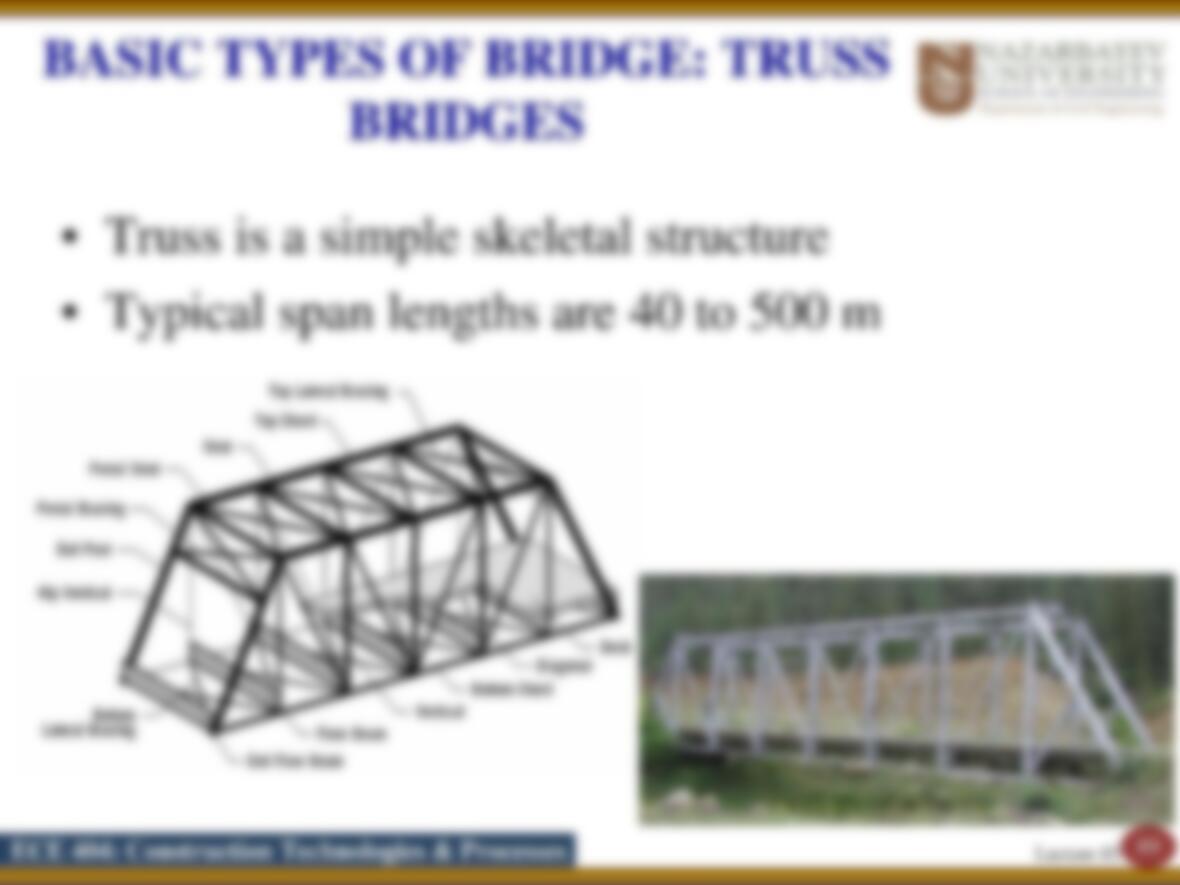
–Form of superstructure: truss, arch, suspension, etc.
–Inter-span relation: simple, continuous, cantilever, etc.
–Position of the bridge floor relative to the superstructure: deck,
through, half-through etc.
–Degree of redundancy: determinate, indeterminate
–Construction: solid slab/parallel beam, girders & trusses, etc.
–Load sharing: composite, hybrid, flexure, axial force, etc.
–Method of construction: pin-connected, riveted, welded etc.
CLASSIFICATION OF BRIDGE

Lecture 02
ECE 404: Construction Technologies & Processes 7
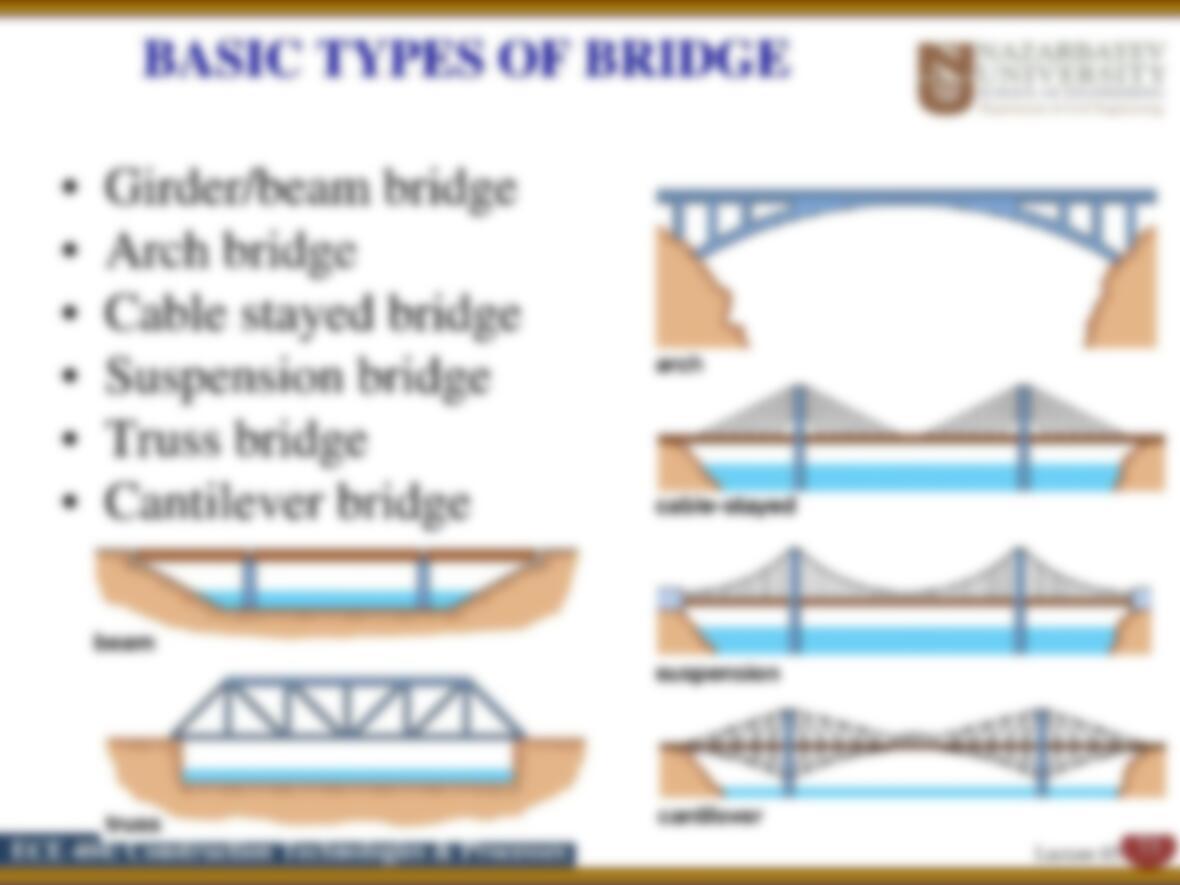
•Bridge types can mainly be classified according to:
–Materials
•Concrete (reinforced concrete, pre-stressed concrete, or post-
tensioned concrete), steel, timber, masonry, composite (deck
and girders)
–Functions
•Traffic, railway, pedestrian, river, monument, landmark
–Structural system
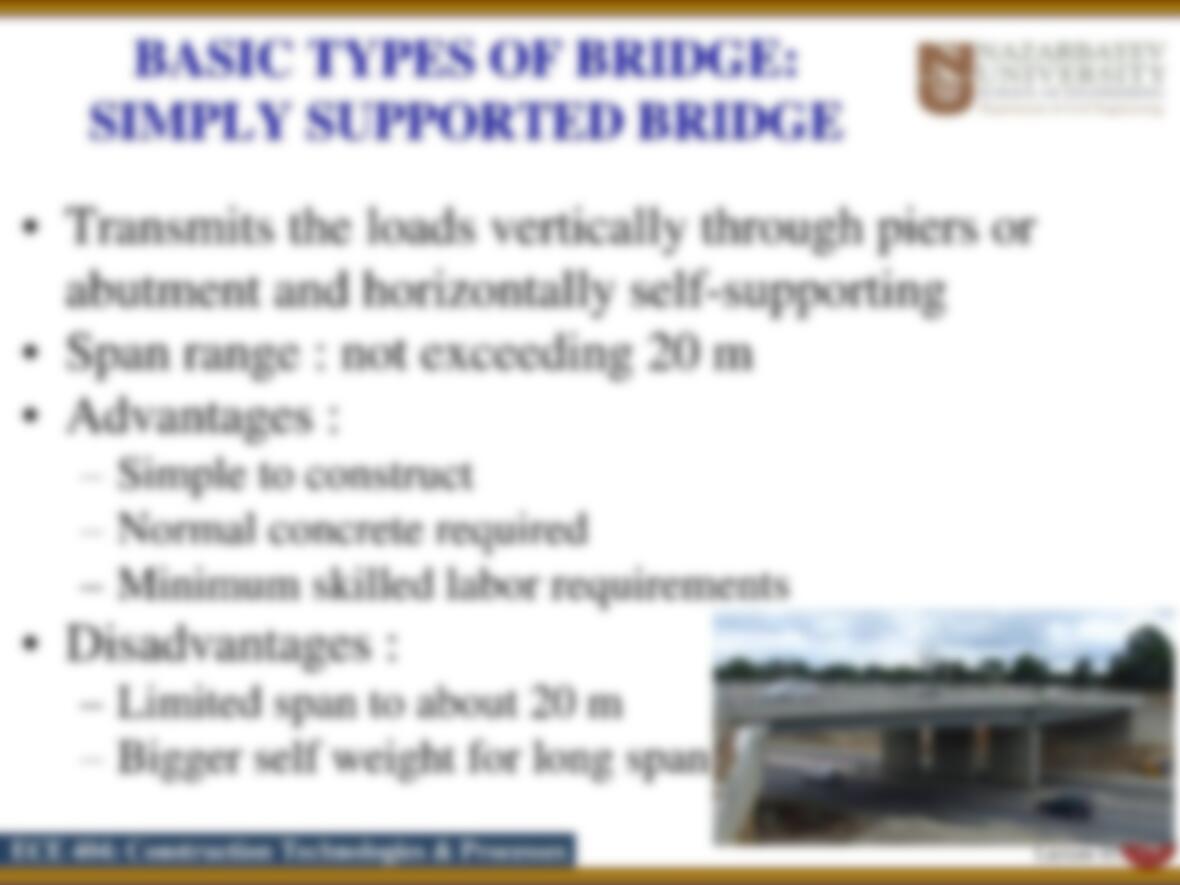
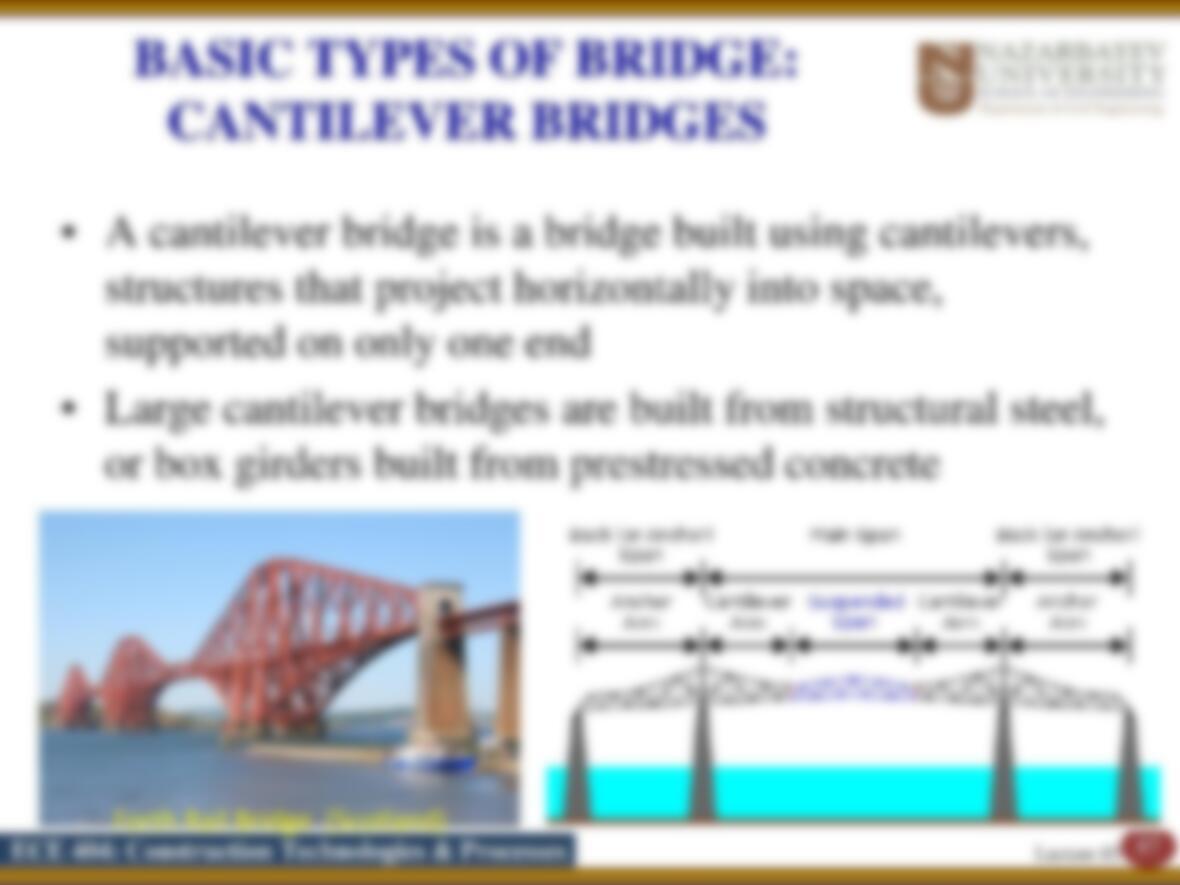
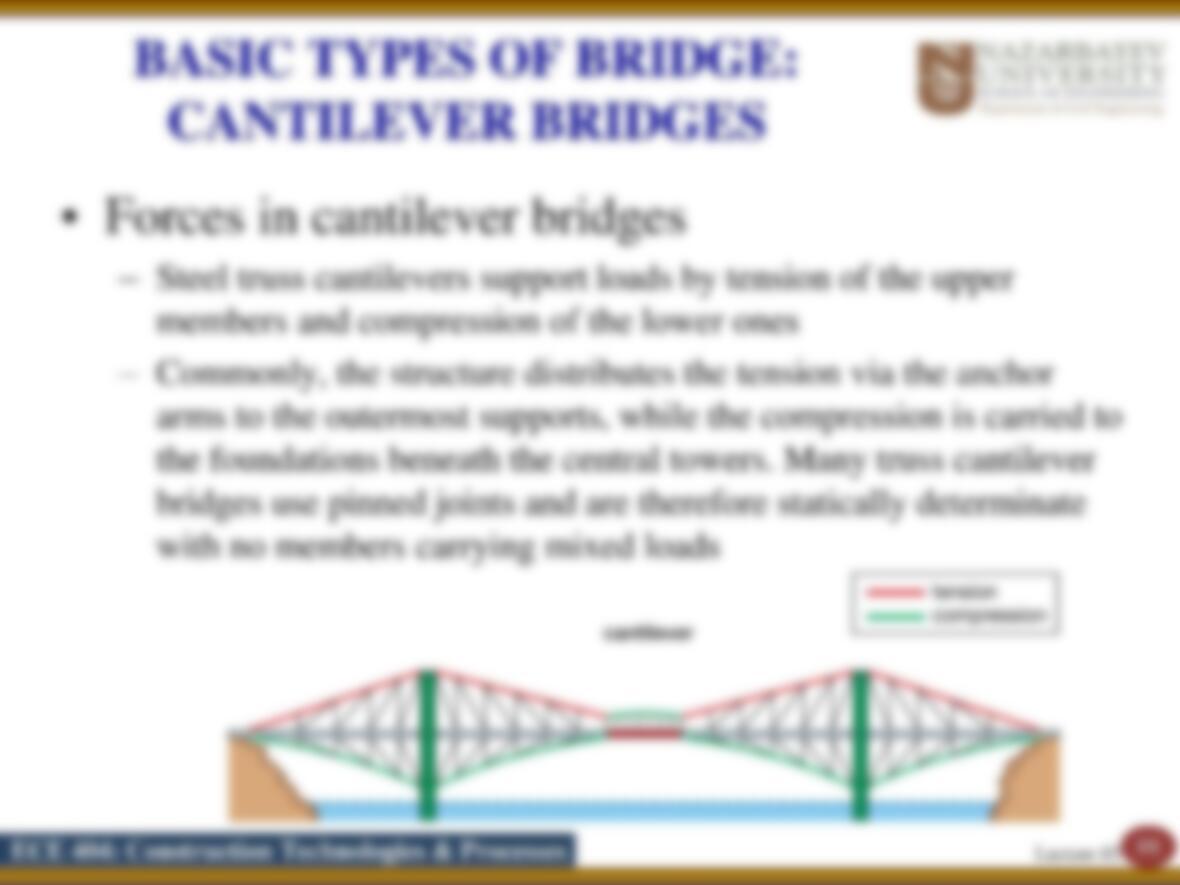
•Simply supported bridge, arch bridge, truss bridge, cantilever
bridge, suspension bridge, cable-stayed bridge, girder bridge
(box, beam), integral bridge, culvert
CLASSIFICATION OF BRIDGE

Lecture 02
ECE 404: Construction Technologies & Processes 8
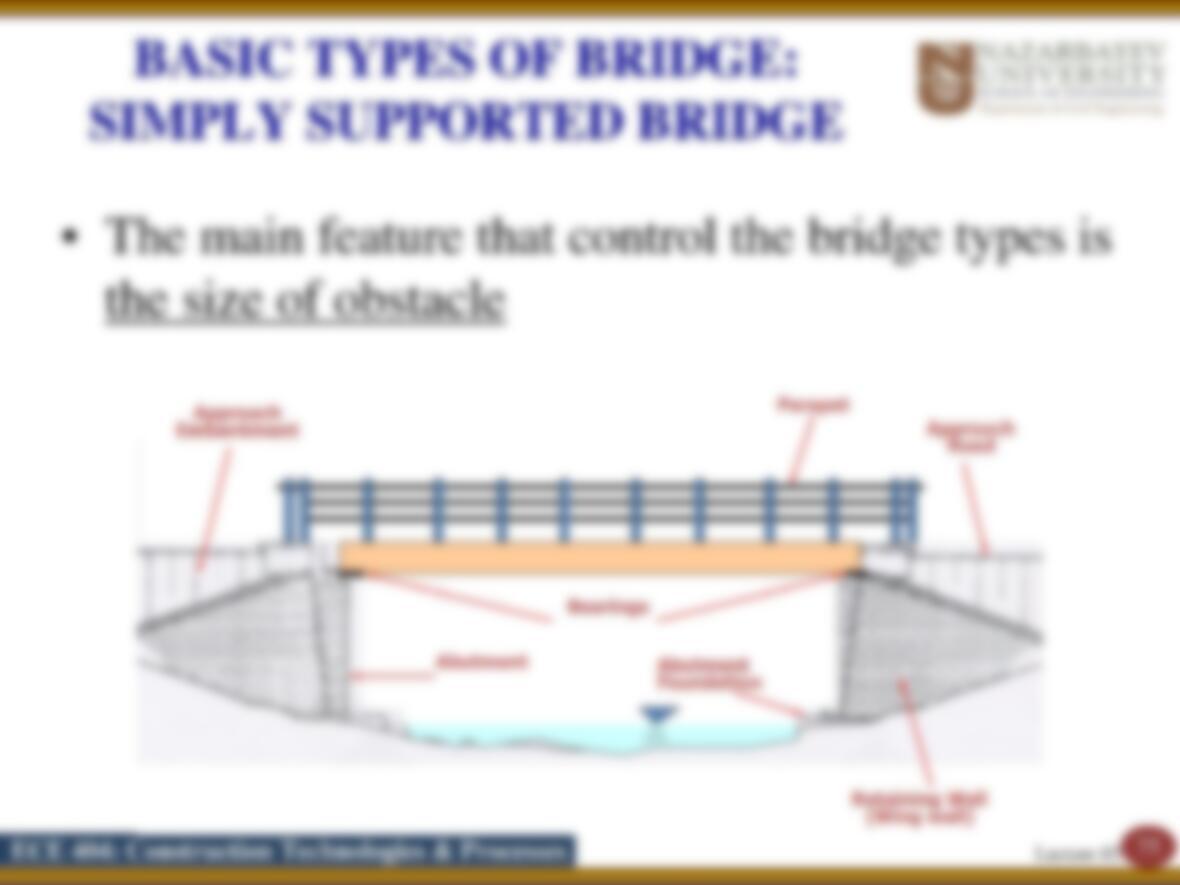
•Bridge type also governs by span size
–Span is the distance between two bridge supports
•Short – less than 30 m (100 ft)
•Intermediate – from 30 to 180 m (100 –600 ft)
•Long – greater than 180 m (400 –600 ft)
–Beam bridge –up to 60 m
–Arch bridge –240 –300 m
–Suspension bridge –up to 2,100 m
–This capability depends on how the structural system
can deal with the compression and tension forces
CLASSIFICATION OF BRIDGE
Lecture 02
ECE 404: Construction Technologies & Processes 9
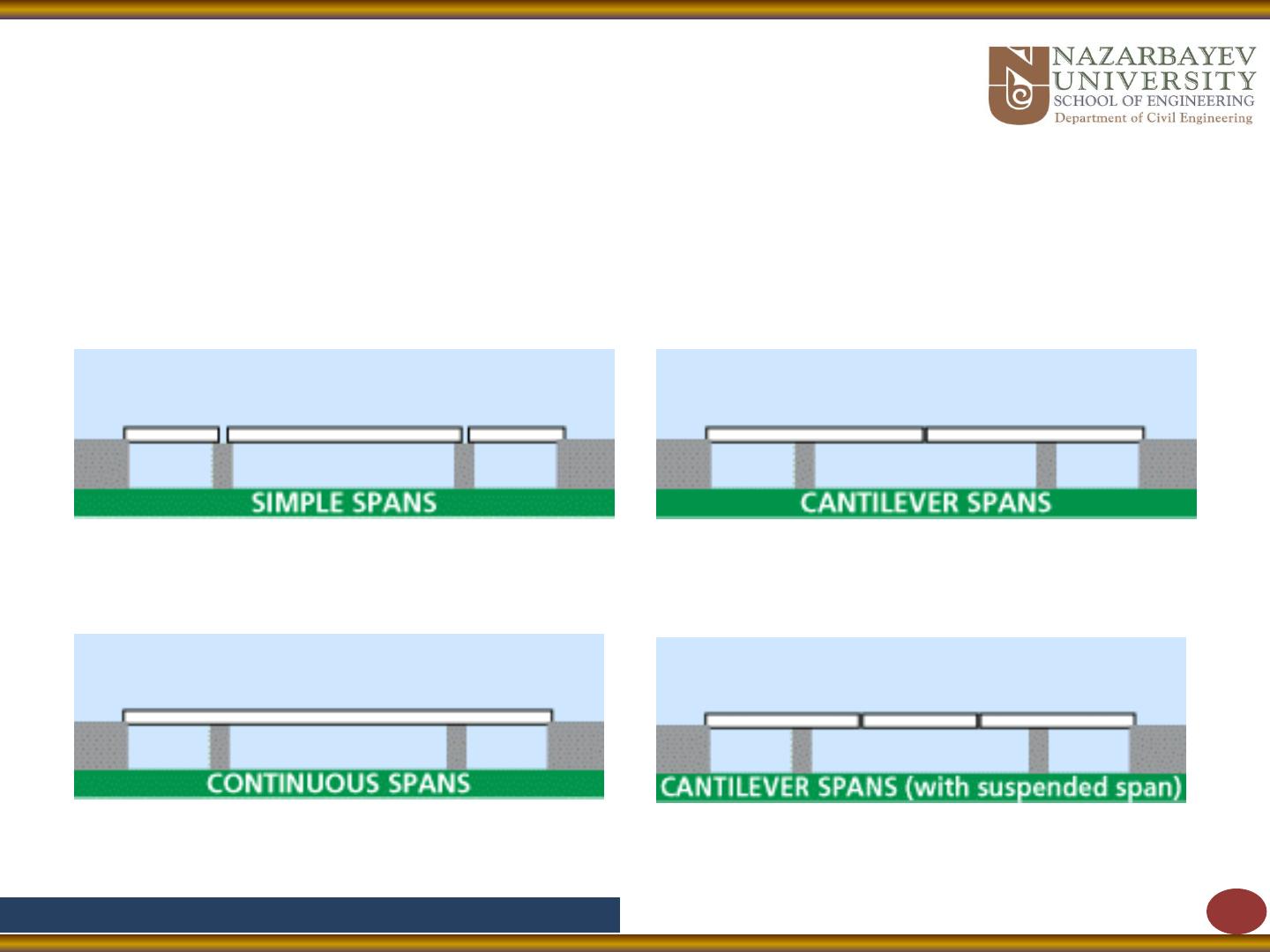
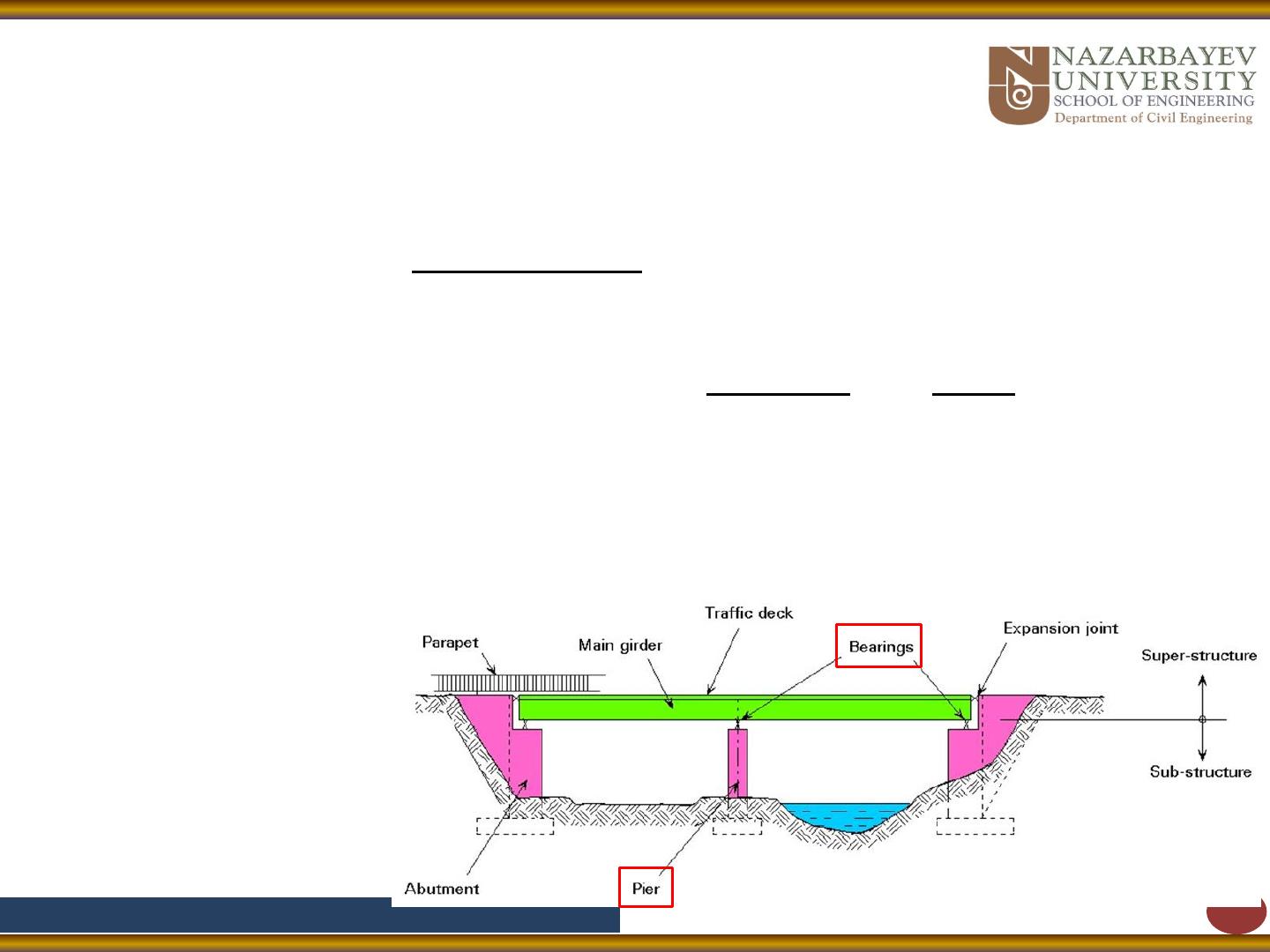
•General span type
CLASSIFICATION OF BRIDGE
Lecture 02
ECE 404: Construction Technologies & Processes 10
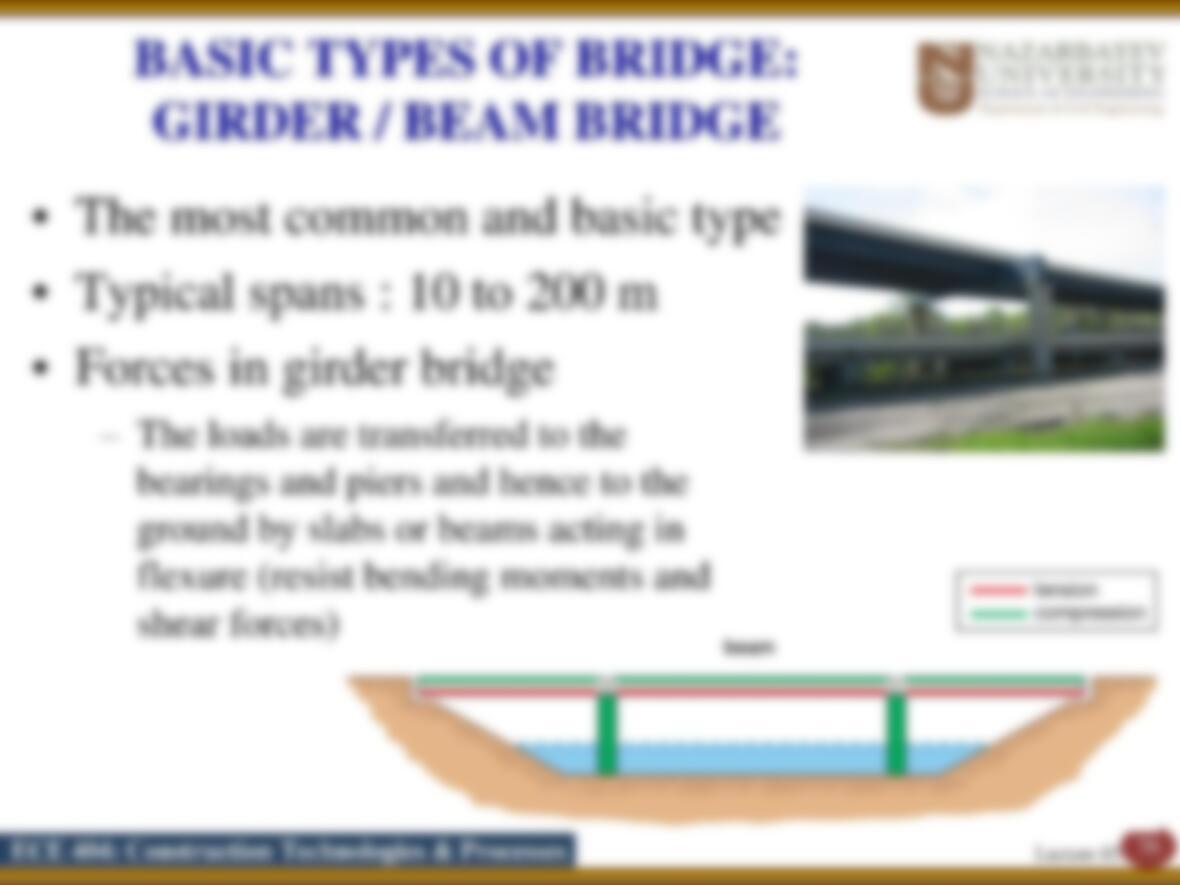
•Bridges which carry loads mainly in flexure
–Majority of bridges
–The loads are transferred to the bearings and piers and hence
to the ground by slabs or beams acting in flexure (resist
bending moments and shear forces)
–Shortest spans is it possible to adopt a slab without any form
of beam (girder bridge)
CLASSIFICATION OF BRIDGE: BY
CARRYING LOADS

Lecture 02
ECE 404: Construction Technologies & Processes 11
•Bridges which carry their loads mainly as axial forces
majority of bridges
–Primary axial forces are compressive (arches) and those in
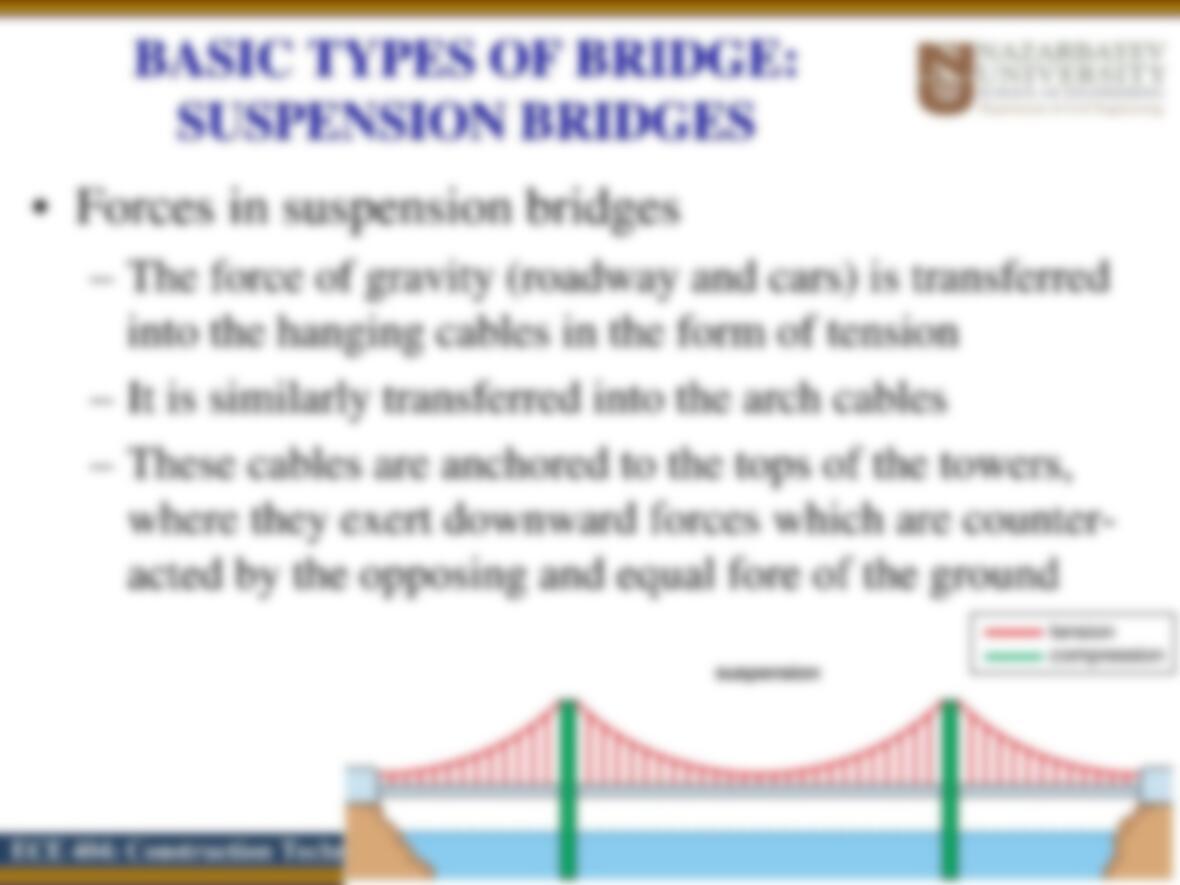
which these forces are tensile (suspension bridges and cable-
stayed bridges)
–Such forces normally have to be resisted by members
carrying forces of the opposite sense
–In most suspension bridges, flexure of the stiffening girder is
not a primary loading in that overstress is unlikely to cause
overall failure; however, in cable stayed bridges (particularly
if the stays are widely spaced) flexure of the girder is a
primary loading.
CLASSIFICATION OF BRIDGE: BY
CARRYING LOADS
CLASSIFICATION OF BRIDGE: BY