Assignment 2 Group
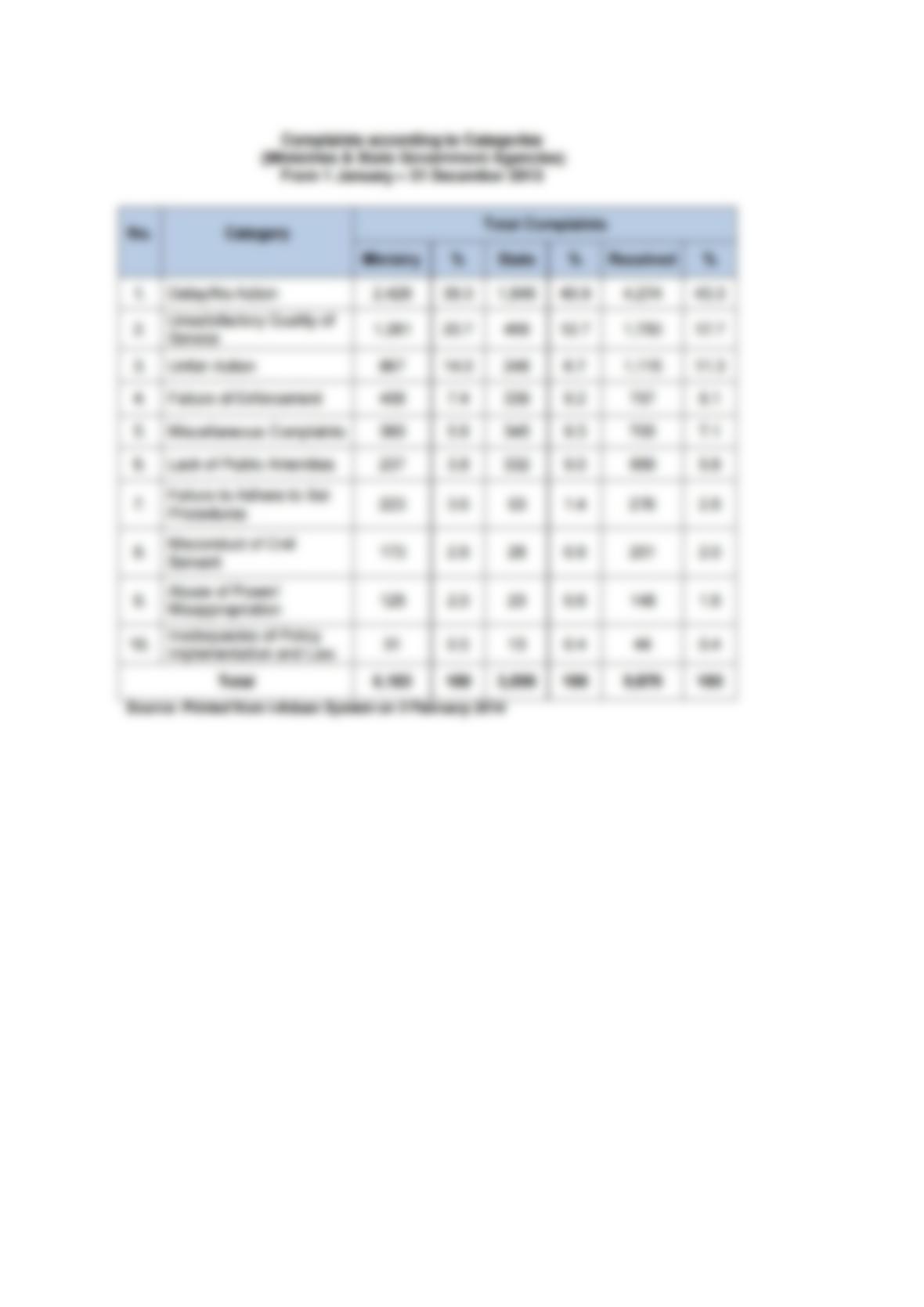
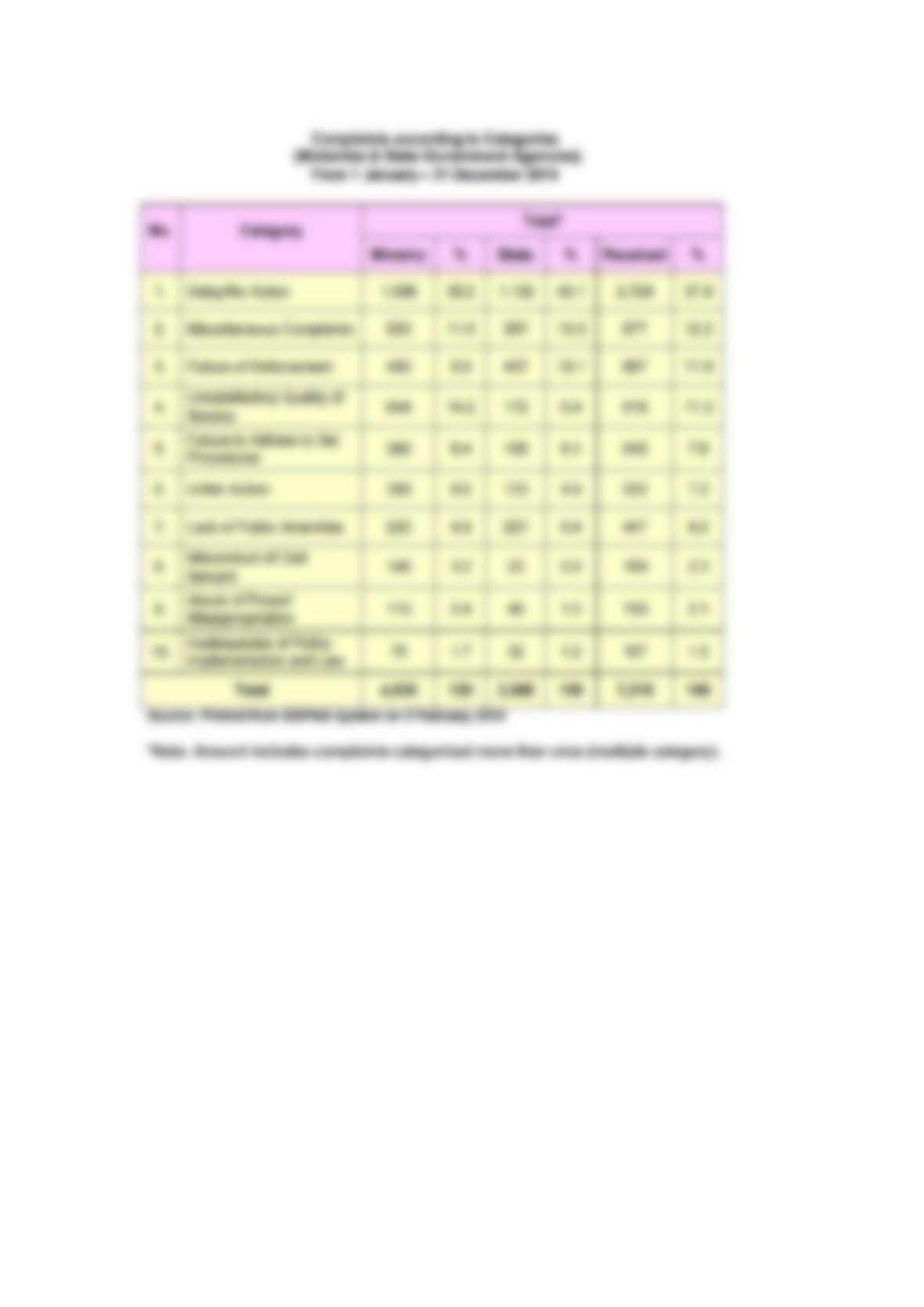
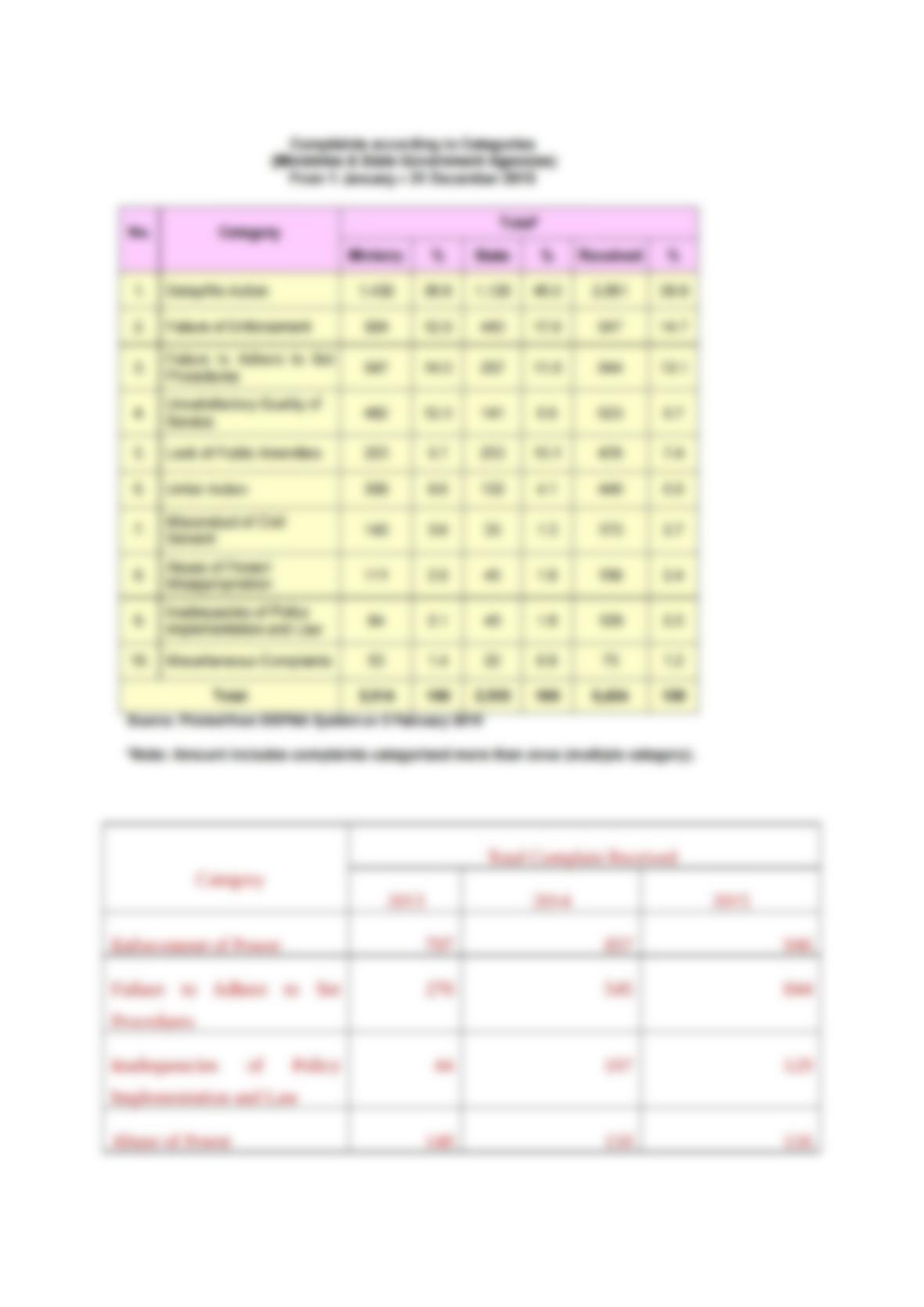
“Delays in taking action and failure in enforcement are the most frequent complaints made by
the public against the civil service. According to the Public Complaints Bureau (PCB), 36
percent of complaints received as of November last year were on late or no action by
government agencies and departments, 13 per cent were on lack of enforcement . Other
Complaints on government service filed adhere to procedures, unsatisfactory manpower
quality, lack of public amenities, unfair action, inadequacies in policy implementation, abuse
of power and staff misconduct,” (Fairuz Mohd Shahar, Civil service’s lack of action top
grouse, New Straits Times, 4 January 2016, pg 12)
Question: Suggest what types of leadership is required to remedy the public complaints
against the civil service. Provide examples.
Team Members Matrix
Magdalene John 820005
Sangeetha Kisna 820004
Jaya Krishnan 820003
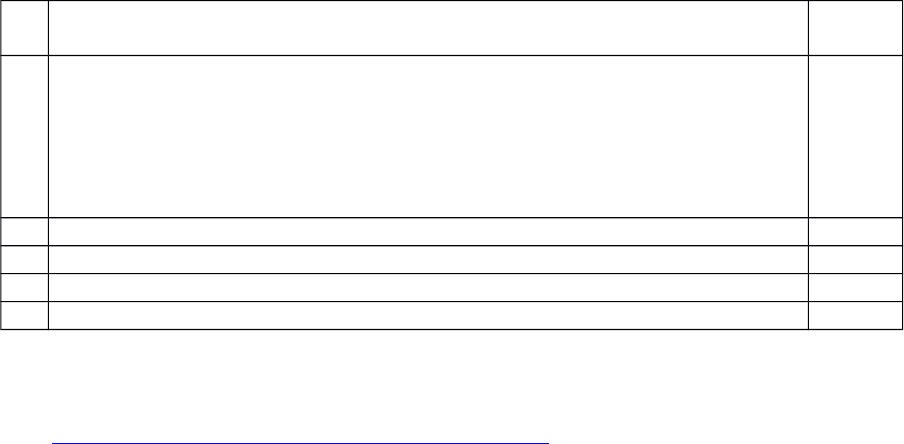
Table of Content
N
o
Topic Pg
1 Introduction
1.1 Public Complaints
1.2
1.3
1.4
1.5
2 Civil Service in Malaysia
3 Leadership Style
4 Comparison
Ref: h’ps://en.wikipedia.org/wiki/Civil_service_in_Malaysia
Public Complaint Bureau, Malaysia 2010

Overview:
While many commonwealth countries have adopted the Swedish
institution of
Ombudsman as an independent and impartial arbiter between the
government and the individuals to check the abuse and mal-
administration in the public sector, the
government in Malaysia has, instead, set up what is known as the Public
Complaints
Bureau (PCB).
Public Complaint Bureau falls under Jabatan Perdana Menteri. Although many alternatives
used and implemented, and complains been reducing, yet, it still unable to provide the service
at the best. This is partially due to lacking of enforcement; the leader shall educate the staffs
accordingly on the importance’ of handling complains. Later in this paper, we will discuss
further on the type of leadership to be followed, coherently the staffs to adapt to the
enforcement.
Introduction – Public Complaints Bureau
The establishment of Public Complaints Bureau (PCB) was officially announced on 23rd July
1971 with the objective of being a monitoring body to ensure effective, efficient and fair
administration. The functions of PCB were mainly as a link between the government and the
public and to provide an avenue for the public to air their complaints or grouses when dealing
with the Government agencies. The functions and responsibilities of PCB are further
enhanced in the Development Administration Circular No. 4 of 1992. The purpose of this
Circular is to create a public complaints management system which is able to resolve public
complaints immediately in a more effective and efficient manner. The circular also explains
the purpose and role to be taken by each Ministry/ State Government/ Federal Statutory body
and Local Authority in the management of public complaints.
1.1 Functions of PCB
Complaint that can be lodged to PCB are complaint on the dissatisfaction of public towards
any administrative action (including those made by Government agencies that have been
privatized or institutions that have a monopoly and also those that provide public existing
laws and regulations, abuse of power, maladministration, and other similar acts by the
government agencies. All complaints on Government administrations can be investigated
except those under the authority of the Anti- Corruption Agency (ACA), Legal Aid Bureau,

Court’s proceedings, Special Cabinet Committee on the Integrity Government Management
and the Public Accounts Committee.
The functions and responsibilities of PCB in the management of public complaints are as
follows:
To receive complaints on dissatisfaction towards any administrative actions;
To investigate all complaints received; To report certain complaints that are of major
public interest to the permanent Committee on Public Complaints (PCPC) for further
action;
Inform the decisions of PCPC to all relevant Government agencies for their remedial
actions;
To monitor the remedial measures taken by the relevant government Agencies as
feedback to the PCPC.
Besides that, PCB has provided an effective and efficient public complaint
management system based on the following criteria;
All complaints are to be resolved efficiently, effectively, fairly and expeditiously;
complaints are manage honestly, without prejudices and identity of the complainants
are to be kept confidential (unless authorized);
Remedial measures to be fair, objective and transparent
1.2 Organization Structure
Permanent committee on public complaints (PCPC) is chaired by the Chief Secretary to the
Government and members of the committee are:
1) The Director General of the Public Service Department
2) The Director General of the Anti-Corruption Agency
3) The Senior Deputy Sectary General of the Prime Minister’s Department

4) The Director General of the Malaysian Administrative Modernization and Management
Planning Unit of the Prime Minister’s Department (MAMPU)
1.3 Addressing Systemic Issues & Investigative Techniques
The Planning and Research Unit of the Public Complaints Bureau (PCB) is responsible for:
Formulating, implementing, monitoring and reviewing of the PCB Strategic Plan;
Formulating, implementing, monitoring and reviewing of public sector complaints
management systems;
Providing data and statistics on complaints managed by PCB;
Analysing data on public complaints and propose holistic solutions to resolve
complaints at the systemic level;
Monitoring performance of complaints management programmes and activities.
Normally, the desk officer will send the acknowledgement letter to the complainant once
PCB has registered the case in the PCB’s system. At the same time, a letter to the agency
complained will be send asking the agency to investigate the matter.
Agency will be given time-line to give feedback to PB. If the agency failed to reply within
the time line, a meeting will be held between PCB and the agency to discuss the case more
precisely. If the complaint could not resolved at the agency level, PCB will bring the case to
the attention of permanent Committee on Public Complaints (PCPC). The Committee is
highly empowered committee which is chaired by the Chief Secretary of the Government. All
PCPC’s decisions should be adhered by the agency concerned and the development of the
complaint should be informed to this committee more frequently. Meanwhile, desk officer
will keep on updating the development of the complaint to the complainant. Besides that, an
appreciation letter will be sent to the agency if the agency could solve the case immediately.
1.4 Public Awareness and Outreach

In order to provide the opportunity for the public to make complaints, PCB has carried out
pro-active programmes such as Mobile Complaints Counter (MCC), Integrated Mobile
Complaints Counter (IMCC) and Mesra Rakyat Programme (MESRA).
Mesra Rakyat Programme (MESRA)
This programme is a dialogue session between the public and the various State/ District
Government Department/ Agencies involving community leaders, residents association,
fisherman, mall scale farmers, retailers, and voluntary bodies with heads of departments. The
aim of this programme is to provide a channel for the public to air their grievances or lodge
complaints when dealing with these departments. The aim of this programme is in line with
the Public Service Administrative Development Circular Letter No. 1/ 2002.
Mobile Complaints Counter (MCC)
The MCC Programme is PCB’s programme where a counter is opened to the public to lodge
their complaints. It was first introduced in 1985 known as Circuit accordance to the Public
Service Development Administrative Service Circular No.4 of 1992. This programme has
been implemented throughout the country and the main focus of this programme is at the
rural areas / remote locations.
Integrated Mobile Complaints Counter (IMCC)
This programme was as a result of improvements made to the Mobile Complaints Counter
(MCC) with the aim to continue and extend this programme throughout the nation. IMCC is
carried out by PCB’s officers and officers from local departments or agencies. The IMCC
provides an opportunity for public to lodge complaints or to air their dissatisfactions with any
Government agencies and those have been privatized.
1.5 Parallel Complaint Redress System
As a central complaint management agency, PCB has been dealing with the people from all
walks of life (individuals, public/private sector, groups, Non-Government Organization and
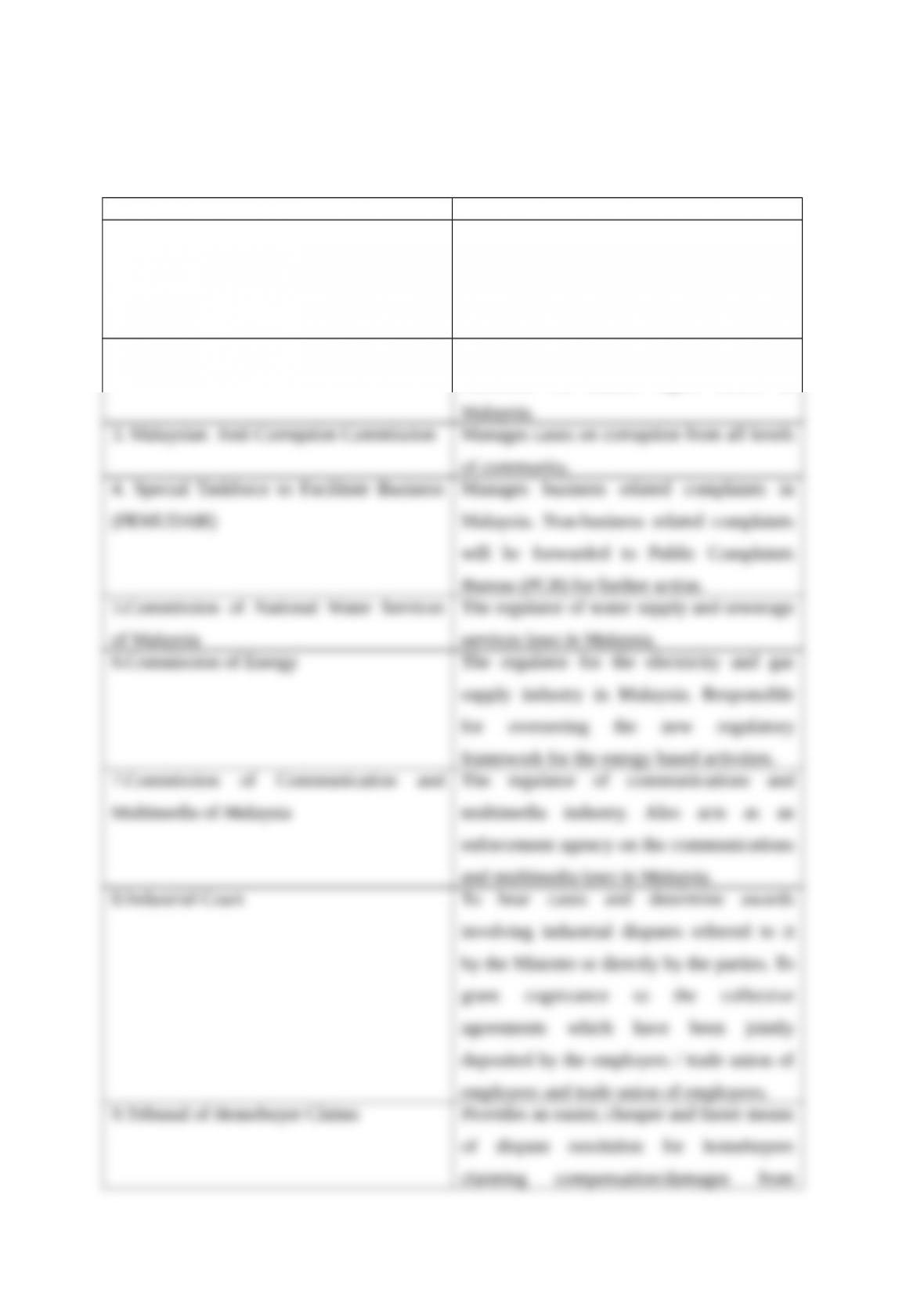
politicians). There are few parallel complaint redress agency with PCB. The agencies are as
below:
Institution Jurisdiction
1.National Consumer Complaints Centre Assists consumers to resolve their
complaints. Also works as intermediary
between consumers and sellers to solve
conflicts.
2. Human Rights Commission of Malaysia Promotes awareness and providing
education on human rights issues in
Total Complain Received