Macroeconomics Example Labor Market Problem Example #1
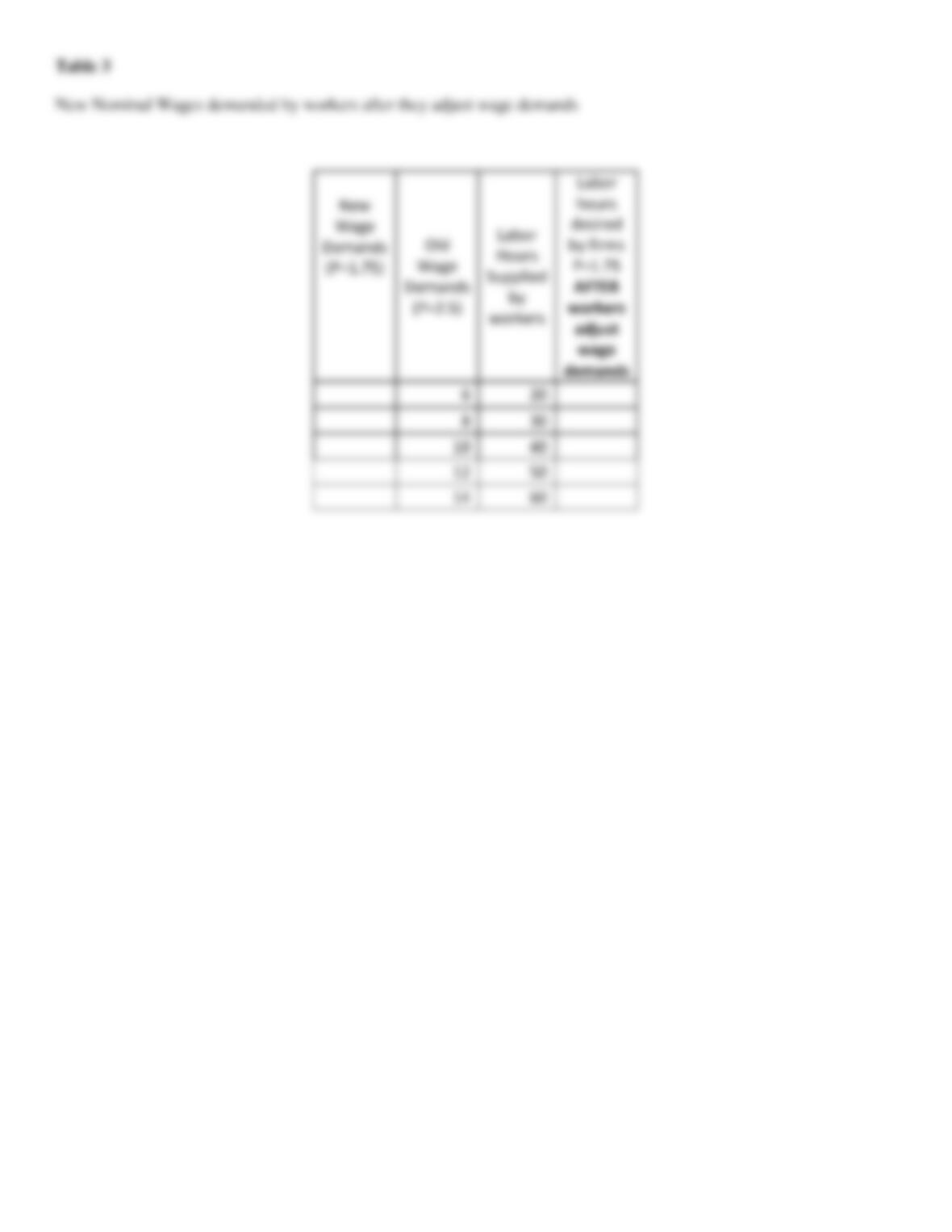
Note for Tuesday’s Super Quiz, you do not need to know how to answer part j) and thus do not need to
know how to calculate table 3 yet.
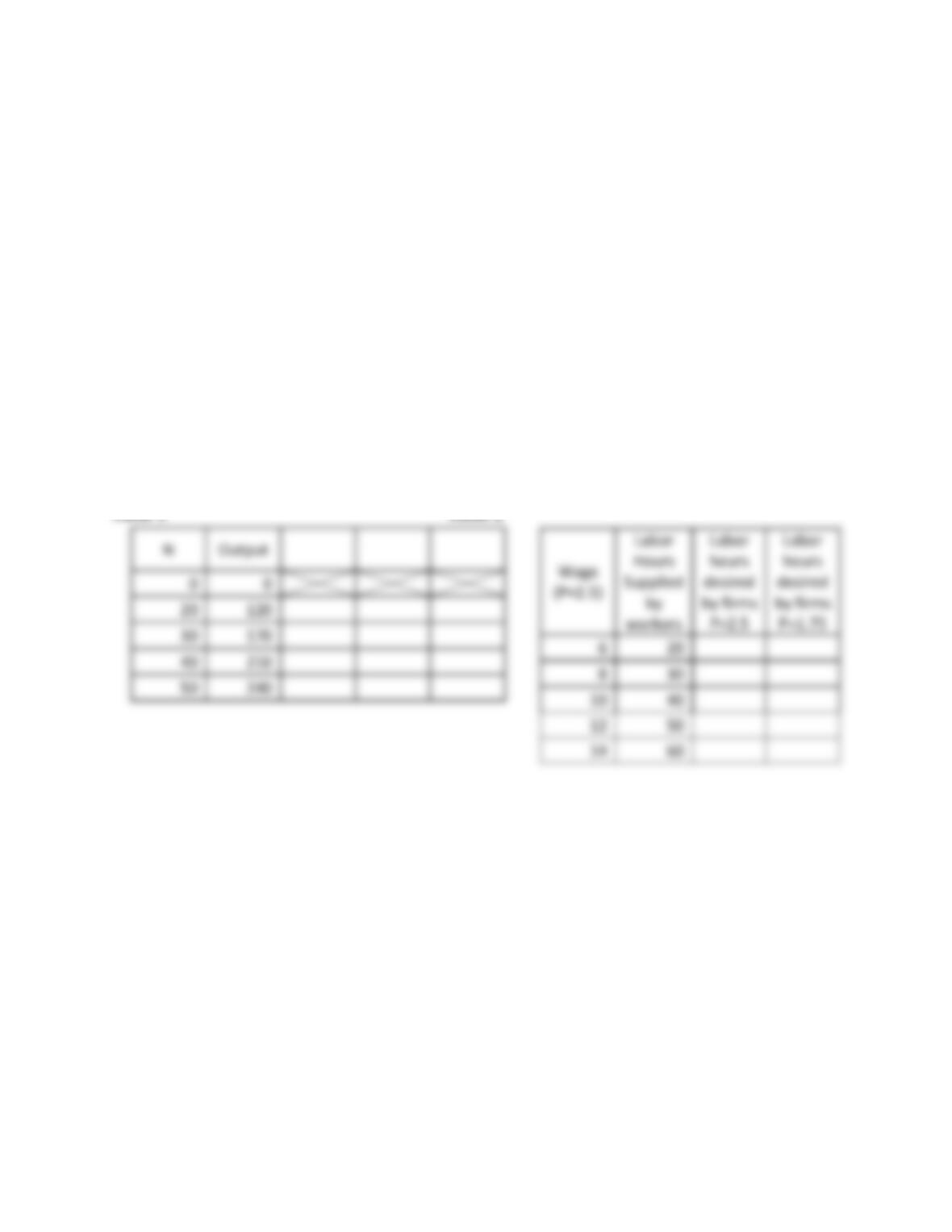
Suppose firm output in an economy is represented by the table 1 below. If the firm can sell each unit of output
for $2.5 (i.e. the Price level = 2.5) , use this information to complete table 1 so you can determine the hours
desired by firms in table 2.
a. What is the equilibrium wage rate when price level =2.5?
b. How many hours will the firm hire in your answer above?
c. In your answer in (a), this is a real wage of?
d. Why will workers get paid more than $2? EXPLAIN how this happens.
e. Suppose the price level falls to P=1.75. What is the new equilibrium wage rate if workers do
not adjust their wage demands?
f. In your answer above, how many hours will the firm hire?
g. In your answer in e) this is a real wage of?
h. Why did the firm hire fewer workers compared to your answer in b)?
i. Why did workers provide fewer hours of labor?
j. In the long run as workers adjust their wage demands to the deflation occurring, what nominal
wage will they now accept given your answer in a) and how many hours will be hired after the
workers adjust their wage demands?