1
Lab #8: Sexual Selection and Competition
Charles Darwin and Alfred Russel Wallace developed the Theory of Natural Selection to
explain how desirable traits influence fitness which in turn increases survivability and
drives the evolution of species. There were certain traits, however, that Darwin and
Wallace couldn’t explain. Traits that were common within species but detrimental to
survival.
In a famous example, Darwin spent years pondering the tail feathers of male peacocks,
wondering how something so detrimental to a peacock’s survival would be favored in
nature. Surely this large and colorful plumage would make it difficult to hide from
predators or to escape effectively as it would slow down movement. Moreover, a tail of
that size and design would take a great deal of energy to produce and maintain. A
peacock’s tail makes little sense from a survival standpoint.
To explain this seemingly detrimental feature Darwin began investigating the idea that
some traits exist in nature because they are favored by individuals of the opposite sex
or they are indirectly capable of influencing mate selection. This theory is known as
Sexual Selection. This theory explains why some traits persist within a species when
these traits are obviously detrimental to survival.
Sexual Selection: Theory that explains that some traits persist to further
reproduction even if they are detrimental to survival.
Sexual selection is only prevalent in sexually reproducing organisms, as the name
suggests. Often males and females of sexually reproducing species look different, a
phenomenon known as sexual dimorphism. This does not necessarily mean one sex
is bigger, stronger or brighter, just that they look different from one another, and are
easily discernible from one another.
Sexual Dimorphism: Male and Females of the same species look different
Sexual Selection can be broken down into two main parts. Traits that promote
competition within a sex of a species (intrasexual competition) and between the sexes
of a particular species (intersexual competition) are established within populations to
gain mating favor and successfully pass on genetic information into future generations.
Intrasexual competition: Competition between members of the same sex in
a species
In intrasexual competition, competition among members of the same sex arises. Most
common among male organisms in the animal kingdom (although sometimes present in
female members) this type of competition ascertains who has the “right” to mate with
available females. The most common form of intrasexual competition is perhaps the
most obvious: combat.
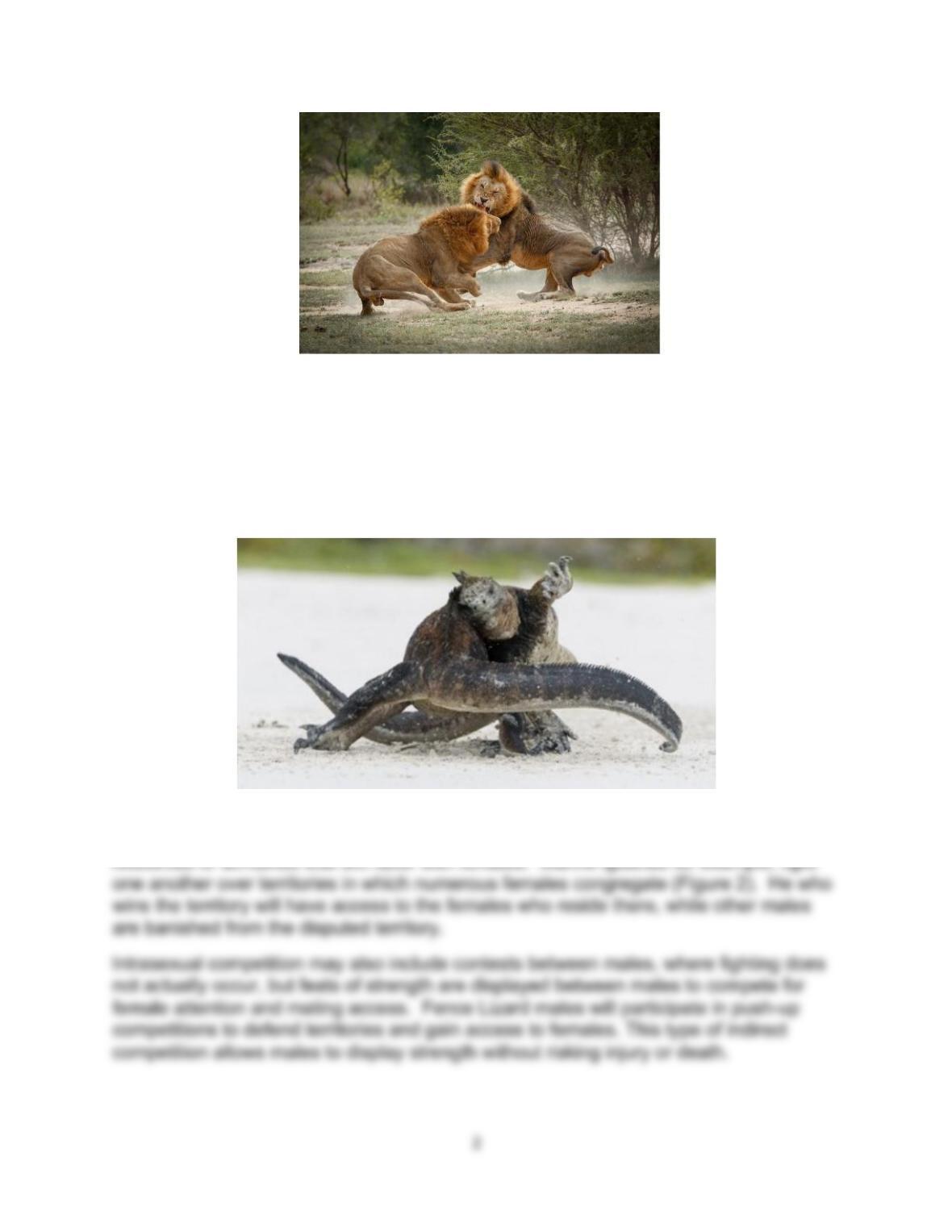
Figure 1: Male Lions fight for access to females in Kruger National Park (Courtesy of Kruger National Park)
Males of many species will physically fight other males for access to females. Male elk,
for example, will lock their large horns together while pushing against one another until
one male becomes fatigued and loses. Male lions will fight voraciously with one another
until one male surrenders or dies (Figure 1). Elephant seals will use their massive size
and sharp teeth to gorge and crush other males. To the winners of these battles goes
undisputed access to females, while the losers will not be able to mate.
Figure 2: Marine Iquanas (Amblyrhynchus cristatus) fighting for territory on an Ecuadorian Island (Courtesy: Great Big Canvas)
Other forms of intrasexual competition occur when males fight one another for access to