MPPM Final Exam Fawzi Mansour Hameed Al-Awj TP051384
BM036-3-3-MPPM 1 |
Page
MPPM Final Exam Fawzi Mansour Hameed Al-Awj TP051384
BM036-3-3-MPPM 2 |
Page
Answer for Q1
Job Evaluation: is a systematic process to determine the relative worth or size of jobs within an
organization.
The four (4) job evaluation methods are as follows:
First Method: Ranking
It is one of the simplest methods of job evaluation, where raters examine and compare each job’s
description with the other jobs under evaluation and determining its ranking (i.e. higher or lower)
in relation to it. And according to the results the jobs are arranged according to the value of each
job to the company.
Ranking principles
1. In ranking method company must first conduct a job analysis then create the job discerption for
each position.
2. Raters can start the evaluation according to ranking where they rank jobs not people.
Ranking Steps:
1. Information collection: This is the first step where information about each job is obtained by
doing an analysis.
2. Grouping the jobs: In this step it is usual to rank jobs in each department as per office staff,
field staff, assistants and so on.
3. Ranking Job: raters committee is being asked to rank each job by giving it a score, each rater
gives his/her scores separately.
MPPM Final Exam Fawzi Mansour Hameed Al-Awj TP051384
BM036-3-3-MPPM 3 |
Page
4. Rating combining after collecting the ranks given by the raters it is then combined, where 1st
all jobs are divided into groups by features, example (duties, responsibilities, skills, importance
etc).
Examples of Ranking:
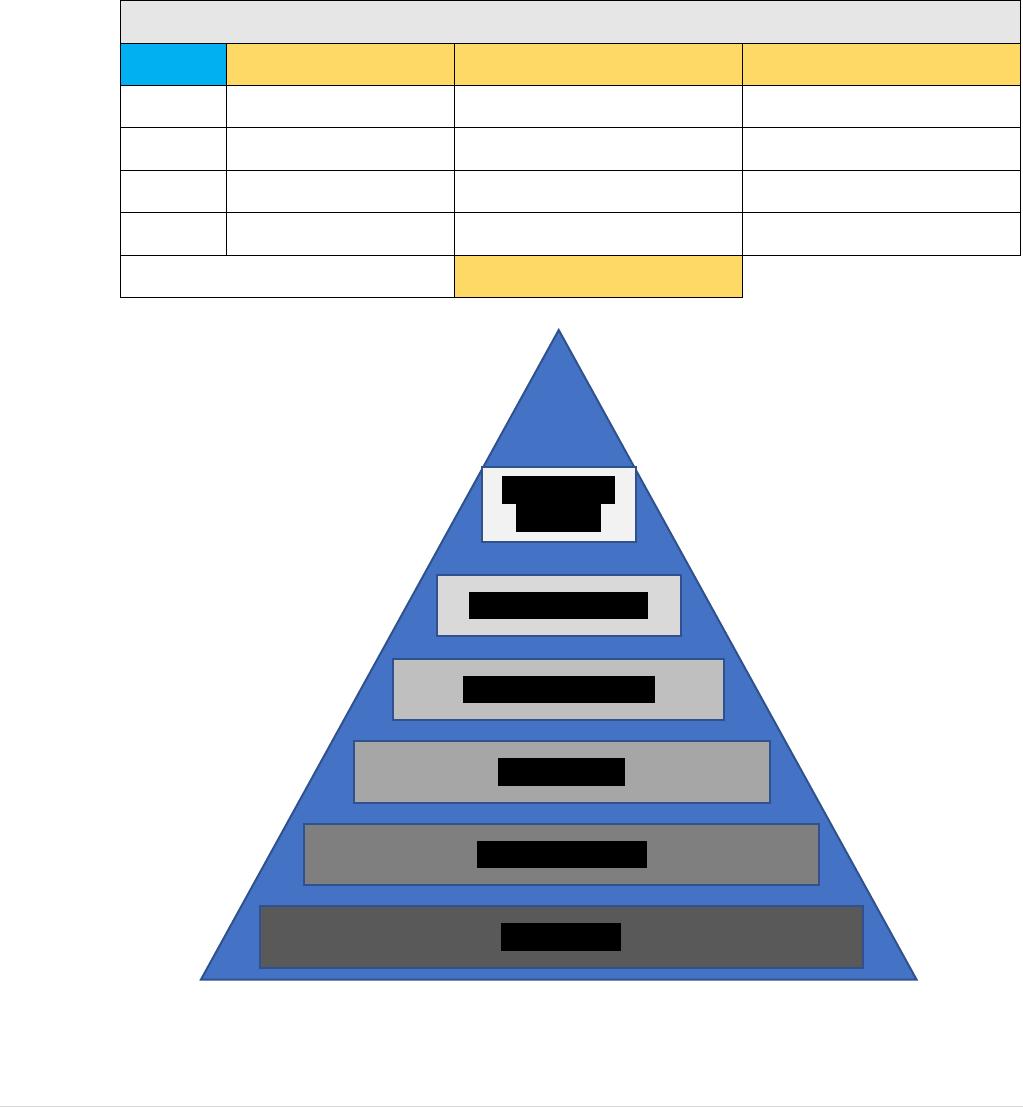
Job Ranking
Number
Job Title
Most Valued Job
Salary
1
Assembler
Tool Maker
RM3500
2
Electrician
Welder
RM2800
3
Welder
Electrician
RM2200
4
Tool Maker
Assembler
RM1500
Least Valued Job
Table (1) Example of Ranking
Figure (1) Ranking Pyramid
Receptionist
Department
Manager
Assistant Manager
Supervisor / Officer
Team Leader
Clerical Assistant
MPPM Final Exam Fawzi Mansour Hameed Al-Awj TP051384
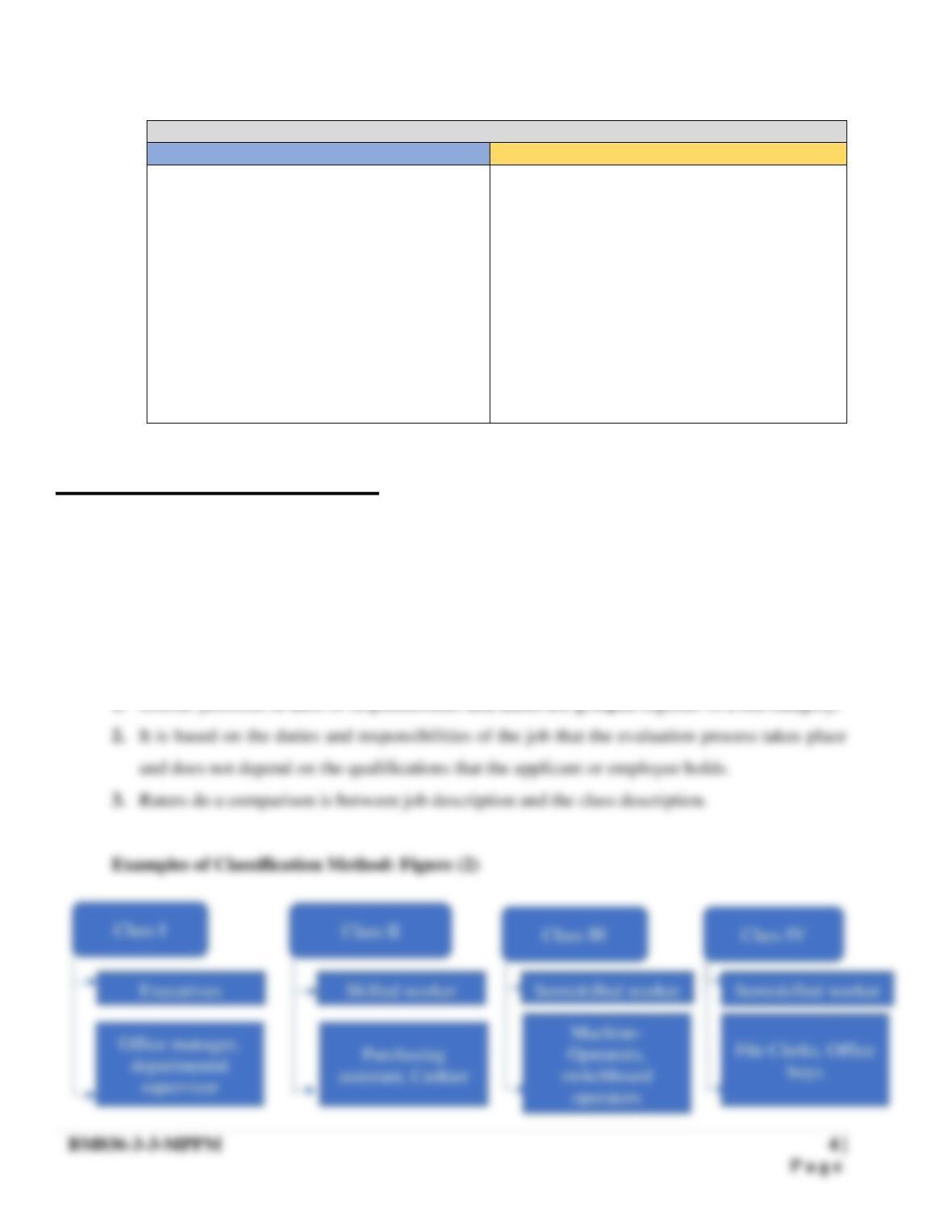
Ranking Strength and weakness:
Ranking
Strength
Weakness
1. Very simple procedure
2. Fast and time saver
3. Lower Cost
4. Very effective in small companies
5. Most commonly used
1. It is based on the opinions of the
raters.
2. May appear arbitrary and unfair to
employees.
3. Unreliable
4. Can be problematic depending on
complexity and number of jobs.
5. Can be legally challenged.
Table (2) Strength & Weakness of Ranking
Second Method: Classification
Classification method is also known as ‘grading method’. In this method job classes are created by
an authorized committee which has been appointed specially for this purpose, classes of jobs are
defined as a group of different jobs but with similarity in its difficulty and require similar level of
skills to be performed.
Classification principles: