ASSUMPTION UNIVERSITY
MARTIN DE TOURS SCHOOL OF MANAGEMENT & ECONOMICS
DEPARTMENT OF BUSINESS ECONOMICS
BG 2401/ECO 2201 MICROECONOMICS
COURSE SYLLABUS 2/2015
MSM&E’s Vision and Mission
Vision: Leading International Business School in ASEAN
Mission: Shaping Graduates towards Global Business Excellence
assumption University’s Uniqueness and identity
Uniqueness of the University: An International Catholic University
Identity of AU Students: Ethics
English proficiency
Entrepreneurial Spirit
Course information
Course Title: BG 2401/ECO 2201 Microeconomics
Prerequisite(s): N.A.
Class Time: According to Assigned Section
Class Room: According to Assigned Section
Instructor information
Lecture: Asst. Prof. Dr. Charoenchai A. roenbkk@gmail.com
A. Pallapa S. pallapa@gmail.com
A. Panjarat P. panjaratphumpradab@gmail.com
Dr. Charosporn C. om.charosporn@gmail.com
Discussion: Dr. Aung Kyaw San aungkyawsan@au.edu
Dr. Piyanan S. piyanan1968@yahoo.com
Dr. Issara S. bbb_40@hotmail.com
Dr. Yodying K. ykongtong@gmail.com
Dr. Charosporn C. om.charosporn@gmail.com
A. Pallapa S. pallapa@gmail.com
O>ce Hours: By appointment only
LMS: h@p://lms3.au.edu/course/view.php?id=399
Course Web: According to Assigned Section
Course description
Microeconomic concepts and theories in making decisions at individual and market levels,
focusing on pricing mechanism, demand and supply analysis, market equilibrium, individual
utility maximization, theory of the firm, including basic microeconomic theories regarding
BG 2401/ECO 2201 Microeconomics – 2/2015 (Course Outline)
1
perfectly and imperfectly competitive product market structures, and employment in the
labor market.
Course objective
Upon completing the course, students are able to:
Understand foundations of microeconomic theories and analyses.
Understand economic behaviors of individuals and firms, and how they are
inIuenced by government policies.
Understand economists’ way of thinking through the fundamentals of demand and
supply, economic cost and economic profit, as well as the relationships among
marginal, average and total variables.
Understand diKerent types of product market and employment in the labor market.
Lecture and Discussion Classes
The teaching and learning is divided into two types of classes: (1) lecture, and (2) discussion.
Each type of classes lasts for 90 minutes. The lecture will cover relevant concepts for the
course, while the discussion (with a few exceptions) will mainly focus on reviewing what you
have learned in the lecture. You can identify whether the class is a lecture or a discussion
from its instructor. See the list of lecture and discussion instructors on the first page.
Textbooks
Required: McConnell Campbell R., Brue Stanley L., and Flynn Sean M.
(2015). Microeconomics (20th ed.) Irwin: McGraw-Hill/Irwin.
Optional: Colander David. (2010). Microeconomics (8th ed.) Irwin:
McGraw-Hill/Irwin.
Marks allocation
Online quizzes 20%
Assignments: 15%
Midterm Exam: 30% On March 11, 2016
Final Exam: 35% On May 25, 2015
Total 100%
Exams and participation
Online quizzes: Online quiz is an internet base. Students are requested to
complete the random assigned questions via provided website
every week. Within each week students are given chance to
complete up to three a@empts. Marks are recorded with the
students’ highest score. Each section has diKerent URL (see
table below). Students must log in with URL addressed by
BG 2401/ECO 2201 Microeconomics – 2/2015 (Course Outline)
2
each instructor only. Quiz scores are collected from online
exercises students did throughout the semester.
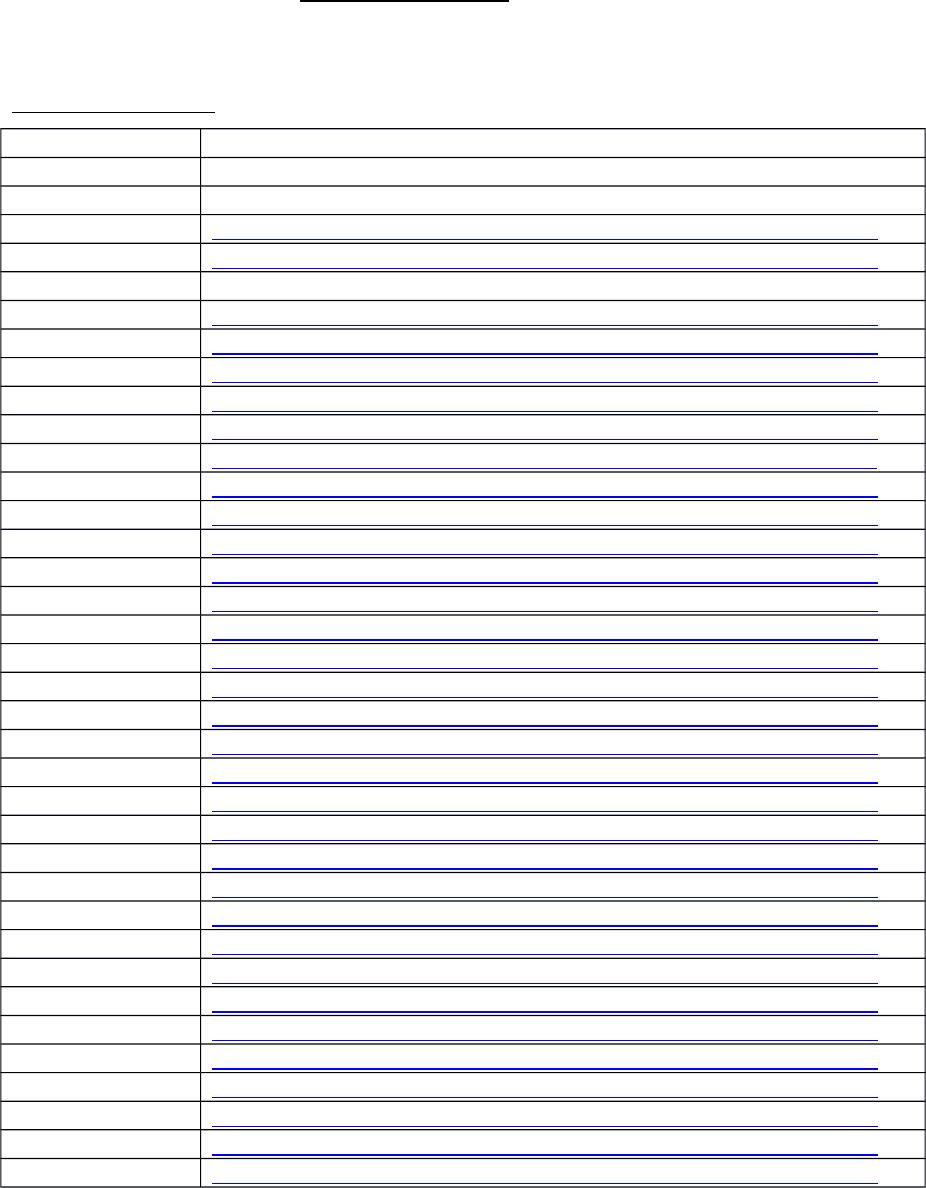
URL for each section
Section URL
401 http://connect.mheducation.com/class/a-microeconomics-section-401
402 http://connect.mheducation.com/class/a-microeconomics-section-402
403 http://connect.mheducation.com/class/a-microeconomics-section-403
404 http://connect.mheducation.com/class/a-microeconomics-section-404
405 http://connect.mheducation.com/class/a-microeconomics-section-405
406 http://connect.mheducation.com/class/a-microeconomics-section-406
407 http://connect.mheducation.com/class/a-microeconomics-section-407
408 http://connect.mheducation.com/class/a-microeconomics-section-408
409 http://connect.mheducation.com/class/a-microeconomics-section-409
410 http://connect.mheducation.com/class/a-microeconomics-section-410
411 http://connect.mheducation.com/class/a-microeconomics-section-411
412 http://connect.mheducation.com/class/a-microeconomics-section-412
413 http://connect.mheducation.com/class/a-microeconomics-section-413
414 http://connect.mheducation.com/class/a-microeconomics-section-414
415 http://connect.mheducation.com/class/a-microeconomics-section-415
416 http://connect.mheducation.com/class/a-microeconomics-section-416
417 http://connect.mheducation.com/class/a-microeconomics-section-417
418 http://connect.mheducation.com/class/a-microeconomics-section-418
419 http://connect.mheducation.com/class/a-microeconomics-section-419
420 http://connect.mheducation.com/class/a-microeconomics-section-420
421 http://connect.mheducation.com/class/a-microeconomics-section-421
422 http://connect.mheducation.com/class/a-microeconomics-section-422
423 http://connect.mheducation.com/class/a-microeconomics-section-423
424 http://connect.mheducation.com/class/a-microeconomics-section-424
425 http://connect.mheducation.com/class/a-microeconomics-section-425
426 http://connect.mheducation.com/class/a-microeconomics-section-426
427 http://connect.mheducation.com/class/a-microeconomics-section-427
428 http://connect.mheducation.com/class/a-microeconomics-section-428
429 http://connect.mheducation.com/class/a-microeconomics-section-429
430 http://connect.mheducation.com/class/a-microeconomics-section-430
431 http://connect.mheducation.com/class/a-microeconomics-section-431
432 http://connect.mheducation.com/class/a-microeconomics-section-432
433 http://connect.mheducation.com/class/a-microeconomics-section-433
434 http://connect.mheducation.com/class/a-microeconomics-section-434
800 http://connect.mheducation.com/class/a-microeconomics-section-800
901 http://connect.mheducation.com/class/a-microeconomics-section-901
Midterm Exam: Consists of 1 short-essay/calculation question and 30
multiple-choice questions. Midterm exam includes Chapters 1,
3, 6, and 7.
BG 2401/ECO 2201 Microeconomics – 2/2015 (Course Outline)
3
Final Exam: Consists of 2 short-essay/calculation questions and 40
multiple-choice questions. Final exam includes Chapters 9-14.
Assignments: There are 8 assignments to be given in discussion classes.
Marks are given in each assignment.
Policy on Makeup Quizzes
Quizzes’ score are collected from students’ performance throughout semester. They are
based on online exercises which are assigned every week. Three a@empts per week are
allowed for every student. The highest mark out of the three a@empts is recorded.
Consequently, there is no makeup quiz allowed for this semester.
Academic Integrity
The instructor and Assumption University value and enforce academic integrity. All students
must understand the meaning and consequences of cheating, plagiarism and other
academic oKences.
Plagiarism is defined in dictionaries as the “wrongful appropriation,” “close
imitation,” or “purloining and publication” of another author’s “language,
thoughts, ideas, or expressions,” and the representation of them as one’s
own original work. – Wikipedia
Any work submitted that is deemed plagiarized work (e.g. without citing the origin of the
idea or writing) will receive a ZERO for that submission. More importantly, your action is
subject to the university committee for academic integrity. The punishment, if found guilty,
is the same as what you will receive when you are found cheating in an exam. That is, you
will receive an F for the course.
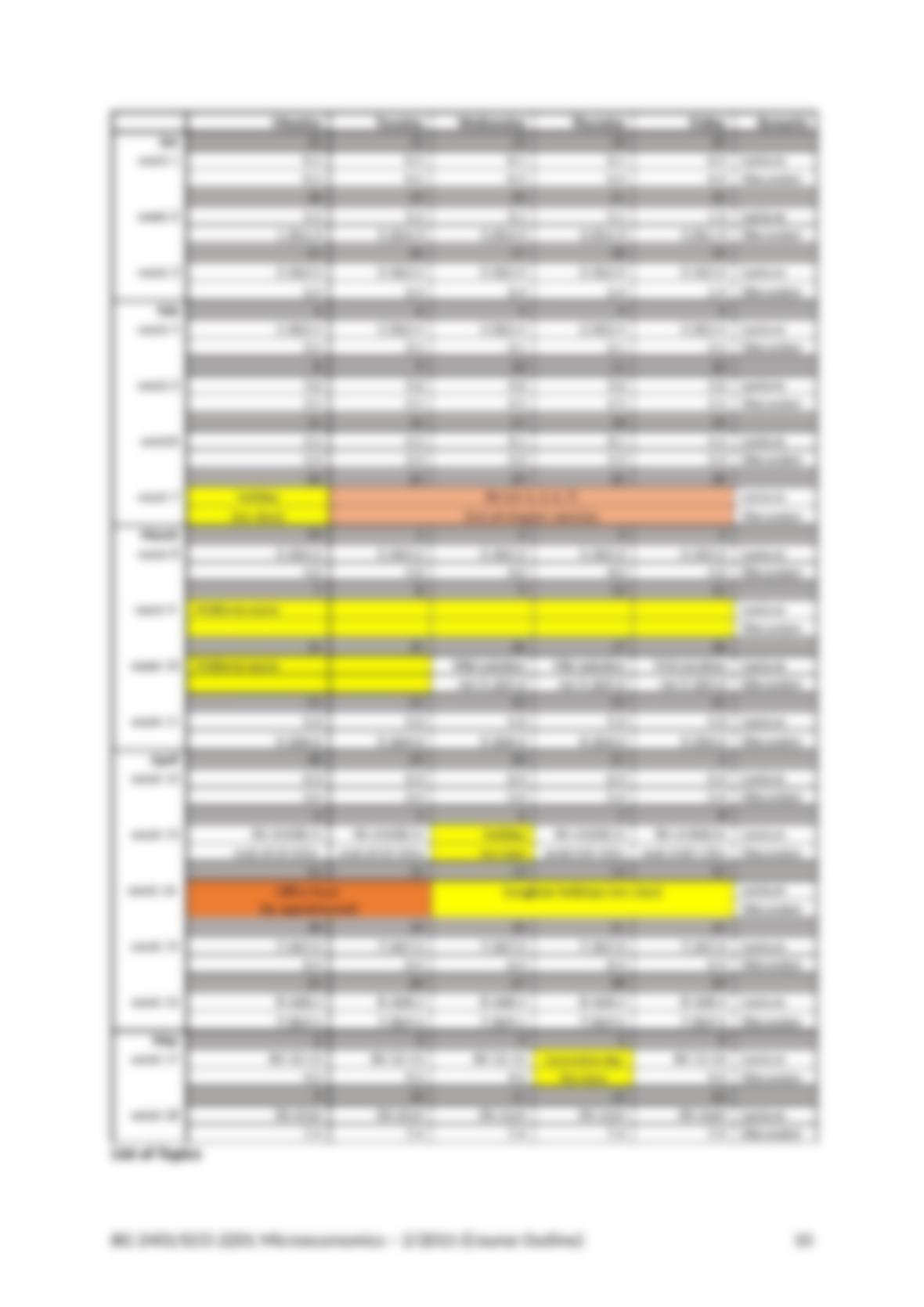
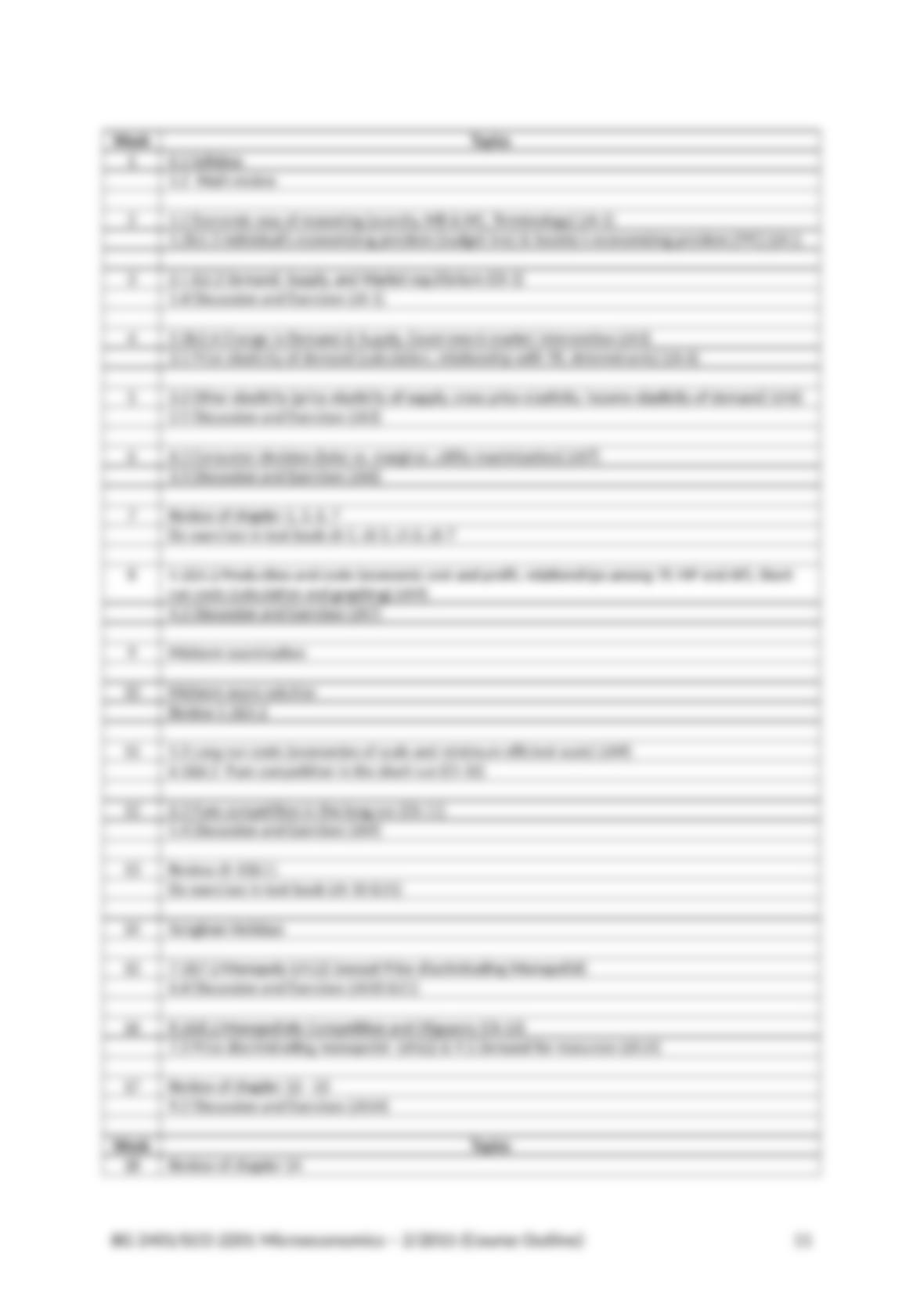
Course Schedule
Dates for topics to be covered are tentative and subject to changes.
Class 0: (4.5 hours)
Topics: Introduction
Syllabus
Math review
Class 1: (4.5 hours)