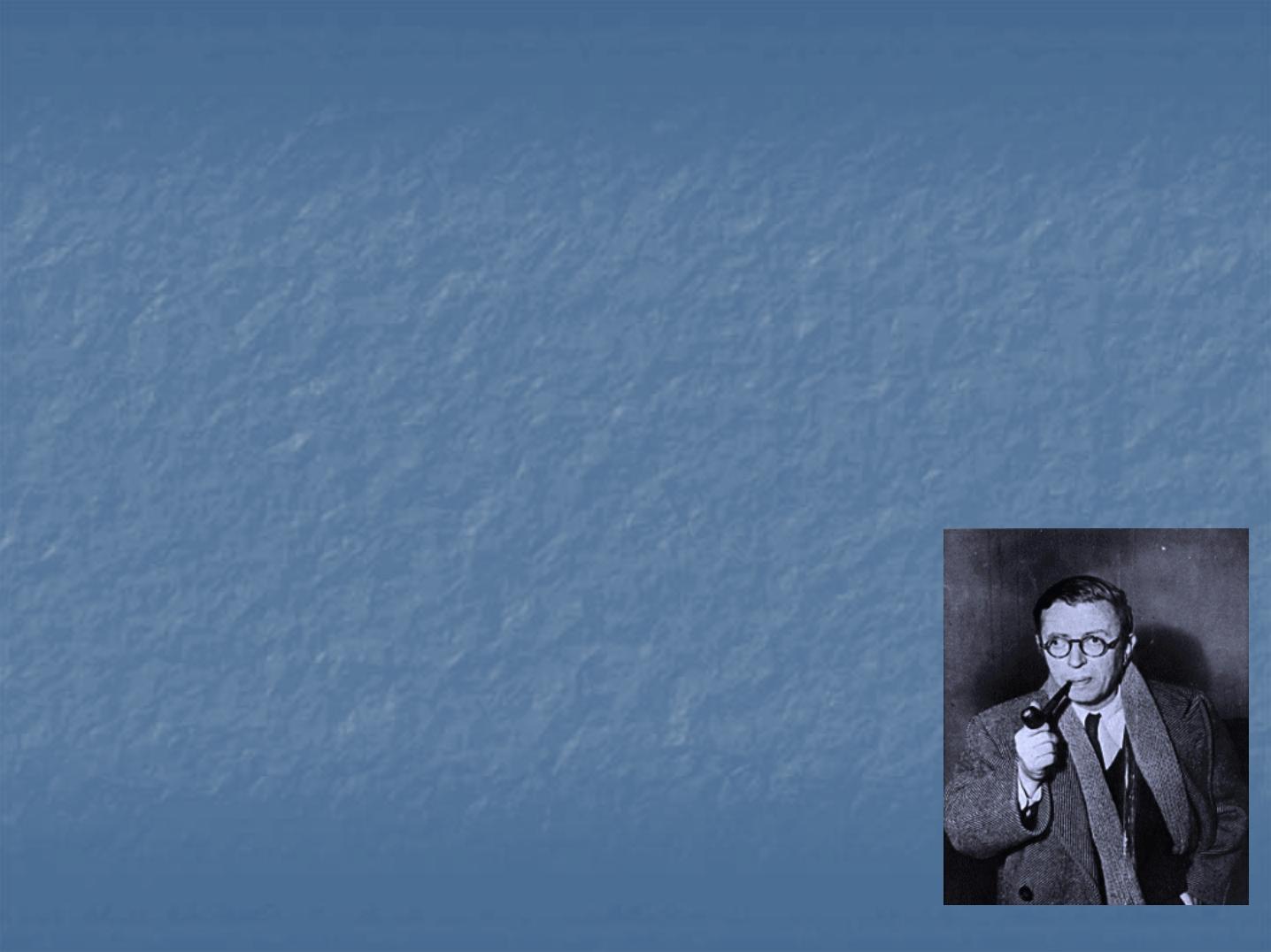
Jean
Jean–
–Paul Sartre
Paul Sartre’
’s
s
Existentialism
Existentialism
“
“No Excuses
No Excuses”
”

Sartre
Sartre’
’s Writings
s Writings
Novels
Novels
Nausea
Nausea
(1938)
(1938)
The Wall (1939)
The Wall (1939)
The Age of Reason
The Age of Reason
(1945);
(1945);
The Reprieve
The Reprieve
(1947);
(1947);
Troubled Sleep
Troubled Sleep
(1950) (3
(1950) (3
parts of a 4
parts of a 4–
–part series)
part series)
Plays
Plays
The Flies
The Flies
(1943)
(1943)
No Exit
No Exit
(1944)
(1944)
The Condemned of Altona
The Condemned of Altona
(1960)
(1960)
Biography & literary
Biography & literary
criticism
criticism
Baudelaire
Baudelaire
(1947)
(1947)
Saint Genet
Saint Genet
(1952)
(1952)
The Idiot of the Family
The Idiot of the Family
(on
(on
Flaubert) (1971)
Flaubert) (1971)
Autobiography:
Autobiography:
Words
Words
(1963)
(1963)
Philosophical works
Philosophical works
The Transcendence of the Ego
The Transcendence of the Ego
(1937)
(1937)
The Psychology of the
The Psychology of the
Imagination
Imagination
(1940)
(1940)
Being & Nothingness
Being & Nothingness
(1943)
(1943)
“
“Existentialism is a Humanism
Existentialism is a Humanism”
”
(1946)
(1946)
Search for a Method
Search for a Method
(1957)
(1957)
The Critique of Dialectical Reason
The Critique of Dialectical Reason
(Vol. I, 1960; Vol. II, 1985)
(Vol. I, 1960; Vol. II, 1985)
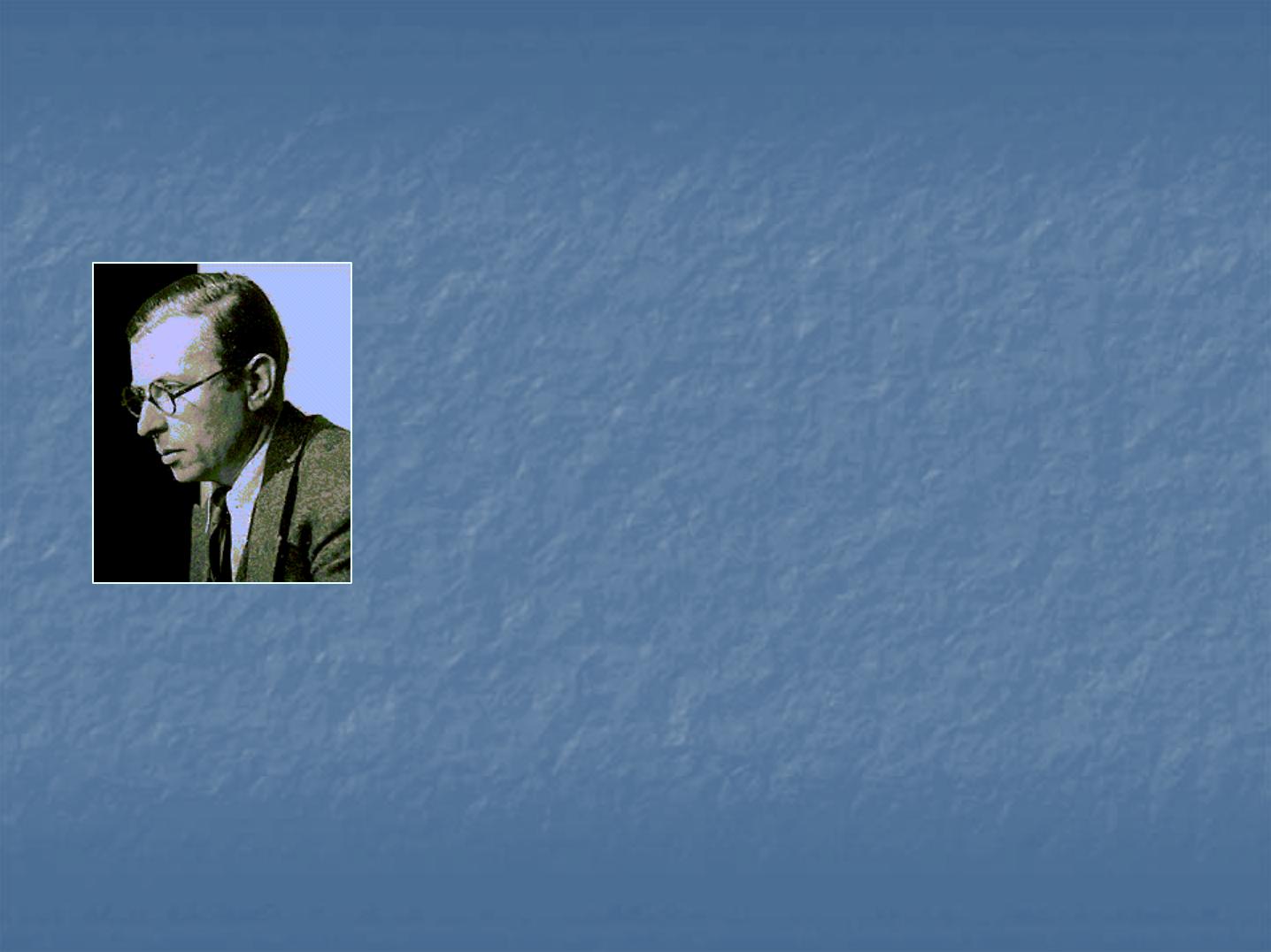
which he
REFUSED
on the grounds that
such honors could interfere with a
writer’s responsibilities to his readers.
In 1964 Sartre was awarded the
Nobel Prize for Literature…

Sartre did not believe in “bourgeois
marriage,” but…
he had an intimate life partnership
he had an intimate life partnership
from the late 1920s until his death
from the late 1920s until his death
in 1980 with . . . .
in 1980 with . . . .
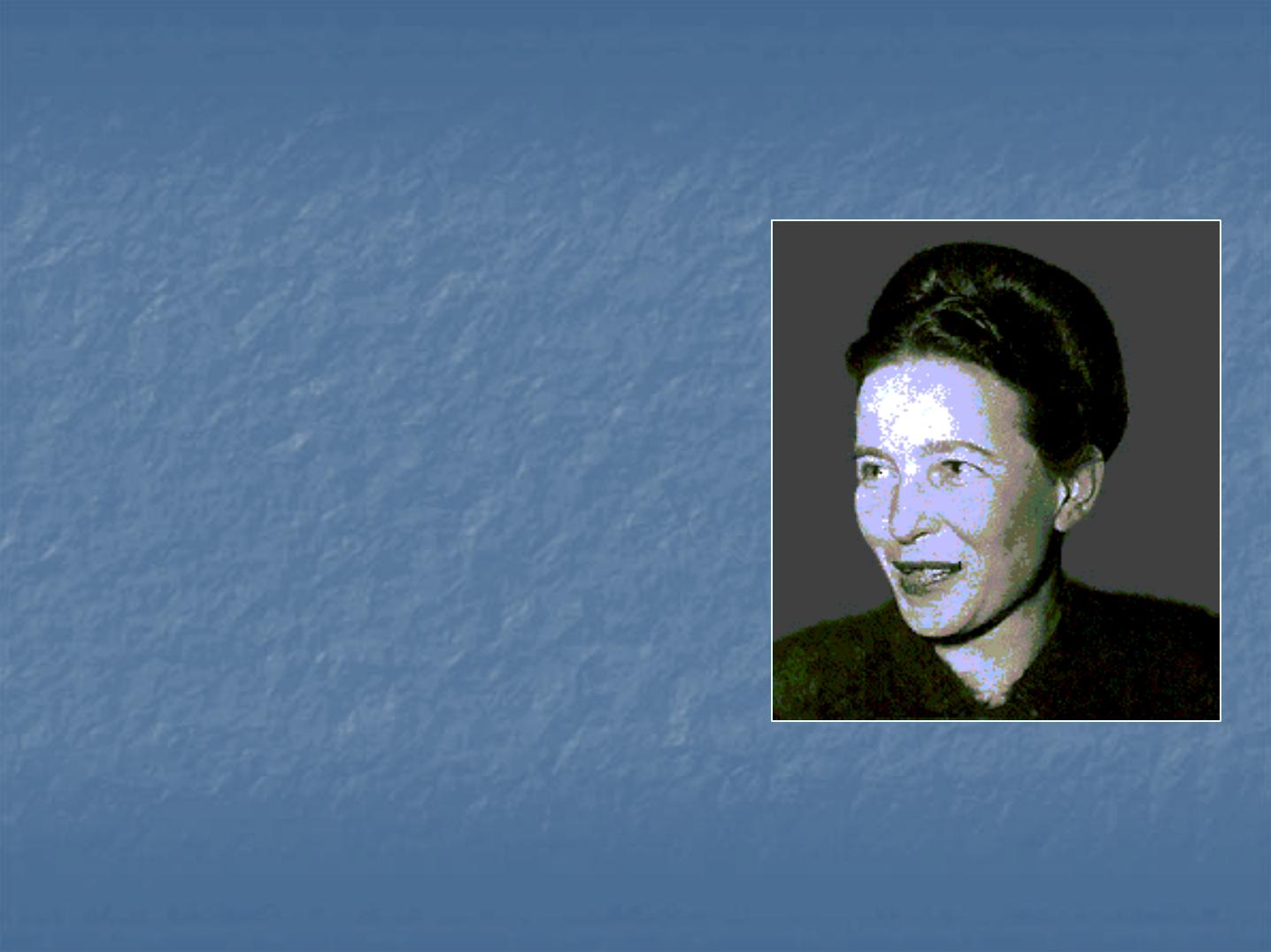
Simone de Beauvoir
Simone de Beauvoir
(1908
(1908–
–1986)
1986)
She, too, was an exponent of
Existentialism. Among her
numerous works are The
Mandarins (1955), a novel;
The Second Sex (1949–50), a
profound analysis of the status
of women; The Coming of Age
(1970), a study of society’s
treatment of the aged; and two
collections of memoirs,
Memoirs of a Dutiful Daughter
(1958) & The Prime of Life
(1960). “To make oneself an object, to make oneself passive, is a
very different thing from being a passive object.”

Existentialism before Sartre
Existentialism before Sartre
Soren Kierkegaard (1813
Soren Kierkegaard (1813–
–1855), Danish Christian Existentialist
1855), Danish Christian Existentialist
philosopher
philosopher
–
–Focused heavily on the experience of
Focused heavily on the experience of
faith
faith
–
–Came to the conclusion that belief in God could not be based on
Came to the conclusion that belief in God could not be based on
reason, the claims of religion are ultimately absurd
reason, the claims of religion are ultimately absurd
–
–But we must choose to believe
But we must choose to believe
something
something
in life; living a life of
in life; living a life of
atheism is just as or more absurd. This occurs with a
atheism is just as or more absurd. This occurs with a …
…
Leap of Faith
Leap of Faith
: We believe not because of reason, but because we
: We believe not because of reason, but because we
choose to do so.
choose to do so.
Existentialist themes: focus on absurdity of certain lifestyles
Existentialist themes: focus on absurdity of certain lifestyles and
and
belief systems, the necessity of our choosing who we want to be
belief systems, the necessity of our choosing who we want to be
without reason as a guide, individual choice, giving life our ow
without reason as a guide, individual choice, giving life our own
n
meaning, total engagement in a project we decide upon
meaning, total engagement in a project we decide upon

Existentialism before Sartre
Existentialism before Sartre
Friedrich Nietzsche (1844-1900), German/Swiss philosopher
• Belief system focused on the awareness that God does not exist
(“God is dead!”)
• Ethics is a human creation and should serve human needs
• God’s nonexistence, ethical conflict, individuality, the central role of