1
Accounting 408
Chapter (7)
Incremental Analysis (decision making)
Types of incremental analysis covered in chapter:
(1) Accept or reject an order to a special price. (special order)
(2) Make or buy component or finished products.
(3) Sell or process further a product.
(4) Retain or replace equipment
(5) Eliminate or not an unprofitable business segment
——————-——————————-—————————-——————-——————
(Accept or reject a special order)
Example (1) (7–1):
Hardy Fiber Company is the creator of Y-Go, a technology that weaves silver into its fabrics to kill
bacteria and odor on clothing while managing heat. Y-Go has become very popular as an undergarment
for sports activities. Operating at capacity, the company can produce 1,000,000 undergarments of
Y-Go a year. The per unit and the total costs for an individual garment when the company operates at
full capacity are as follows:
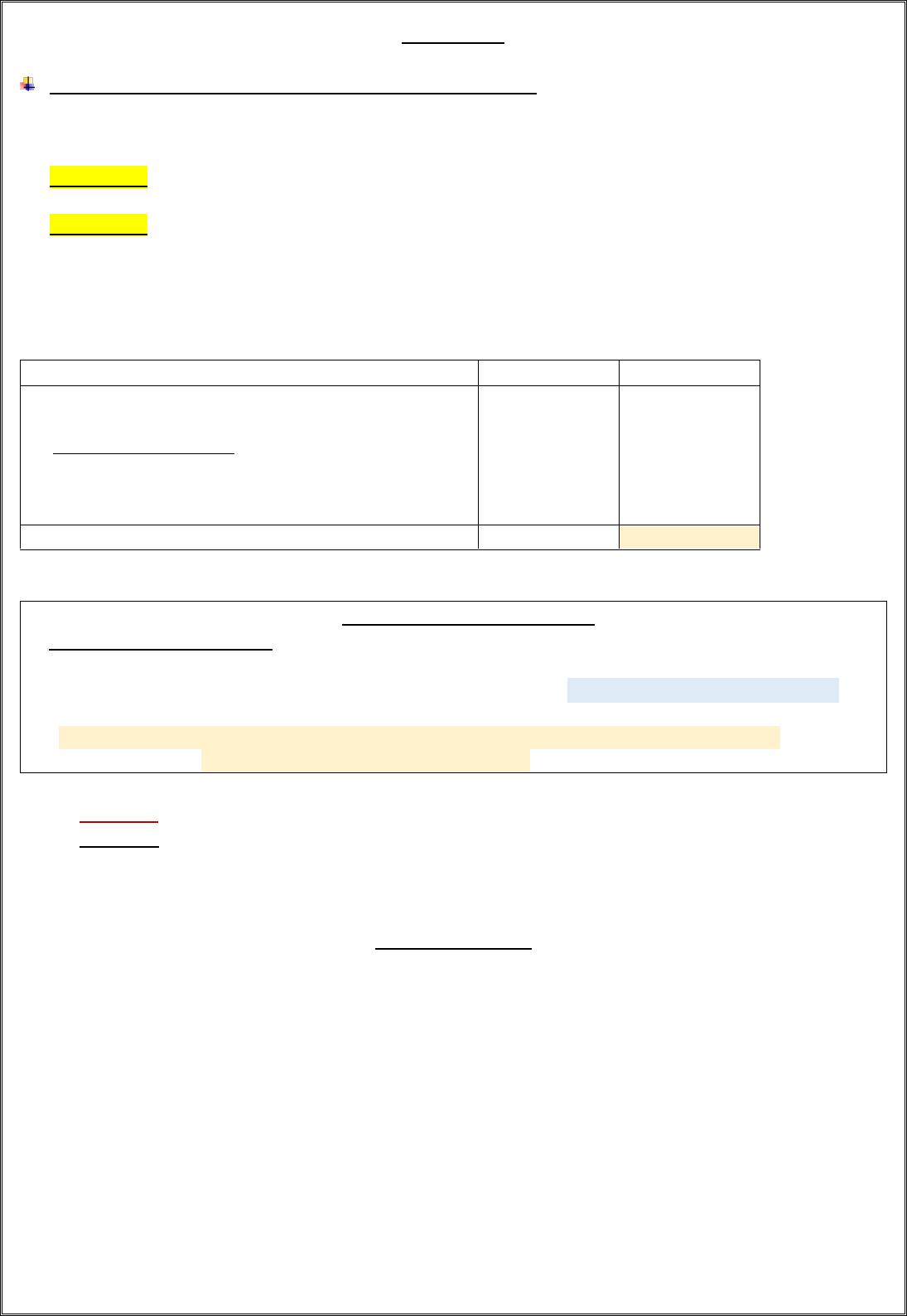
Per Undergarment
Total
Direct materials
Direct labor
Variable manufacturing overhead
Fixed manufacturing overhead
Variable selling expenses
$2.00
0.50
1.00
1.50
0.25
$2,000,000
500,000
1,000,000
1,500,000
250,000
Totals
$5.25
$5,250,000
The U.S. Army has approached Tough Fiber and expressed an interest in purchasing 200,000 Y-Go
undergarments for soldiers in extremely warm climates. The Army would pay the unit cost for direct
materials, direct labor, and variable manufacturing overhead costs. In addition, the Army has agreed
to pay an additional $1 per undergarment to cover all other costs and provide a profit. Presently, Tough
Fiber is operating at 70 percent capacity and does not have any other potential buyers for Y-Go. If
Tough Fiber accepts the Army’s offer, it will not incur any variable selling expenses related to this
order.
Instructions:
Using incremental analysis, determine whether Hardy Fiber should accept the Army’s offer.
SOLUTION
• Decision to accept or to reject is based on the special order’s (contribution margin).
• The contribution margin is calculated based on the special order’s number of units 200,000
undergarments, (DON’T USE the production units of the whole company 1,000,000 undergarments)
• Variable selling cost are (not related and not used, but used only if it mentioned in the example
that it is related to the decision), while fixed costs (selling & manufacturing are not used at all).
• If the result is: Positive (Accept), Negative (Reject).
2
SOLUTION
The incremental analysis for the special order as follows:
▪ Calculate the contribution margin (if we Reject the order), and (if we Accept the order).
▪ Contribution margin = revenues from the special order – variable manufacturing cost of special order.
▪ If Rejected:
– so, there is no revenues or costs, so both = zero.
▪ If accepted:
– Revenues = special order units x special order offered price per unit.
– Direct material = special order units x direct material cost price per unit.
– Direct labor = special order units x direct labor cost price per unit.
– V. manuf. overhead = special order units x V. manuf. overhead cost price per unit.
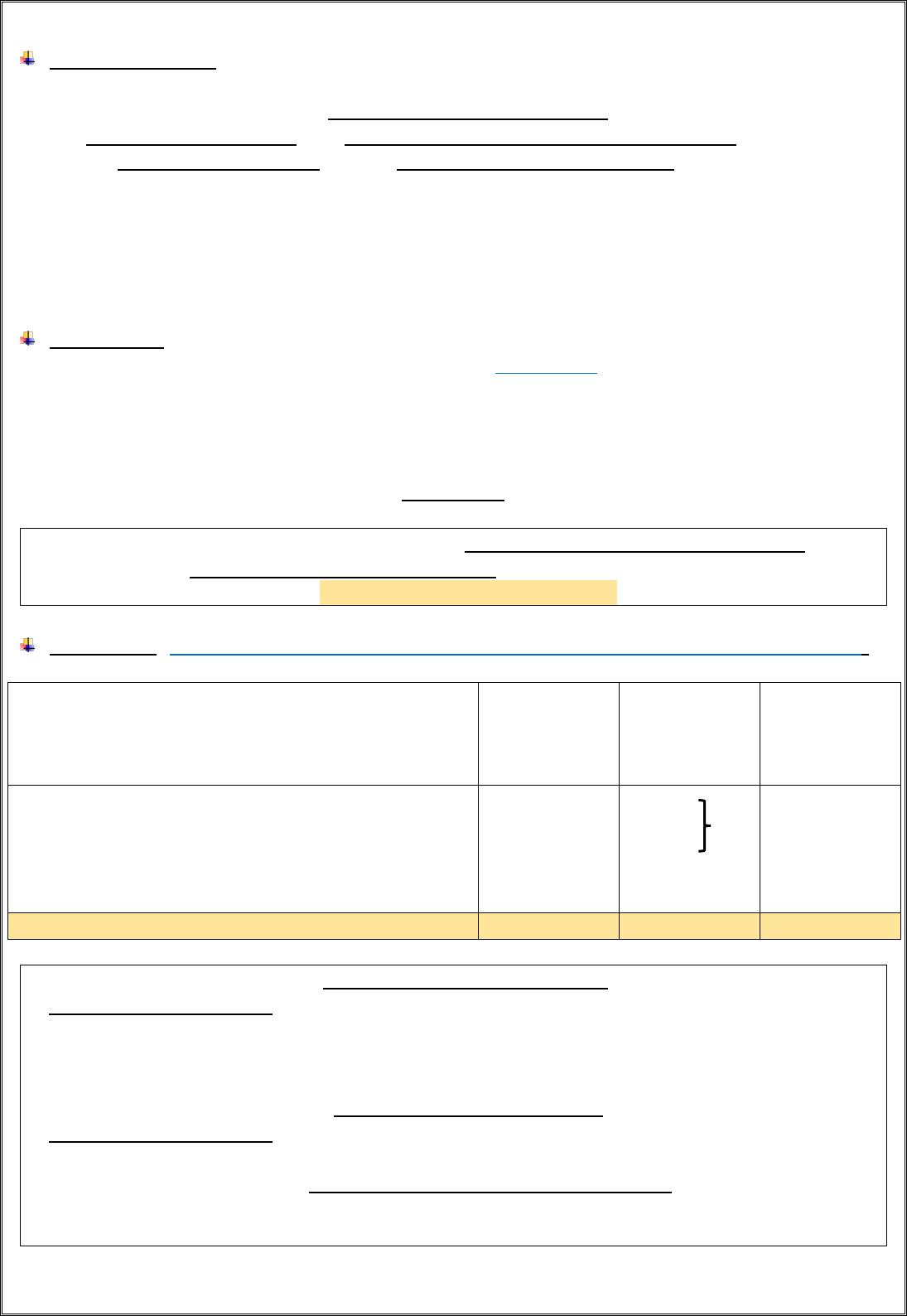
Reject order
Accept order
▪ Revenues (200,000 units x $4.5 per unit (1))
(-) V. manufacturing costs:
➢ Direct material (200,000 units x $2 per unit)
➢ Direct labor (200,000 units x $0.50 per unit)
➢ V. manuf. overhead (200,000 units x $1 per unit)
$0.00
0.00
0.00
0.00
$900,000
(400,000)
(100,000)
(200,000)
= Contribution Margin (CM)
$0.00
$200,000
(1) Special order offered price:
**Mentioned in the example:
✓ The Army would pay the unit cost for direct materials, direct labor, and variable manufacturing
overhead costs. In addition, the Army has agreed to pay an additional $1 per undergarment.
✓ So, offered price = (D. mat/unit) + (D. labor/unit) + (V. manuf. Overhead/unit) + 1$ additional
= $2.00 + $0.50 + $1 + $1 = $4.5 per unit
❖ Decision: yes, Hardy Fiber should accept the special order, since it will generate a profit of
$200,000 as incremental analysis indicated.
End of example (1)
3
(Make or buy)
Example (2) (7–4):
Stahl Inc. has been manufacturing its own shades for its table lamps. The company is currently
operating at 100% of capacity, and variable manufacturing overhead is charged to production at the
rate of 70% of direct labor cost. The direct materials and direct labor cost per unit to make the lamp
shades are $5 and $6, respectively. Normal production is 30,000 table lamps per year.
A supplier offers to make the lamp shades at a price of $15.50 per unit. If Stahl Inc. accepts the
supplier’s offer, all variable manufacturing costs will be eliminated, but the $45,000 of fixed
manufacturing overhead currently being charged to the lamp shades will have to be absorbed by other
products.
Instructions:
(a) Prepare the incremental analysis for the decision to make or buy the lamp shades.
(b) Should Stahl Inc. buy the lamp shades?
(c) Would your answer be different in (b) if the productive capacity released by not making the lamp
shades could be used to produce income of $35,000?
SOLUTION
This type of examples is about comparing the cost of manufacturing the part (making) to the
cost of purchasing the part (buying) from an outside supplier. and
choose the lowest cost alternative.
Required (a): Prepare the incremental analysis for the decision to make or buy the lamp shades:
(1)
Cost of Make
(2)
Cost of Buy
(3) = (1-2)
Net income
Increase
(decrease)
▪ Direct material (30,000 units x $5.00 per unit)
(+) Direct labor (30,000 units x $6.00 per unit)
(+) V. manuf. Overhead ($180,000 x 70%)
(+) F. manuf. Overhead (given)
(+) Purchase price. (30,000 units x $15.50 per unit)
$150,000
180,000
126,000
45,000
—
—
— (1)
—
45,000 (2)
465,000
$150,000
180,000
126,000
0
(465,000)
= Total annual costs
$501,000
$510,000
(9000)
(1) All variable manufacturing costs:
**Mentioned in the example:
✓ If accepts the supplier’s offer, all variable manufacturing costs will be eliminated.
So, it is considered as (avoidable cost), meaning it will be removed (if we buy the part) = Zero.
(2) fixed manufacturing overhead:
**Mentioned in the example:
✓ If accepts the supplier’s offer, the $45,000 of fixed manufacturing overhead currently being
charged to the lamp shades will have to be absorbed by other products. (this sentence means it
is (Not avoidable cost) in both cases (if we buy the part) or (if we make the part).
Required (b): Should Swayze Inc. buy the lamp shades?
➢ The cost of buy ($510,000) is greater than the cost of make ($501,000).
➢ No, Stahl Inc. should not purchase the shades, it will generate a loss of $9000 as incremental
analysis indicated.
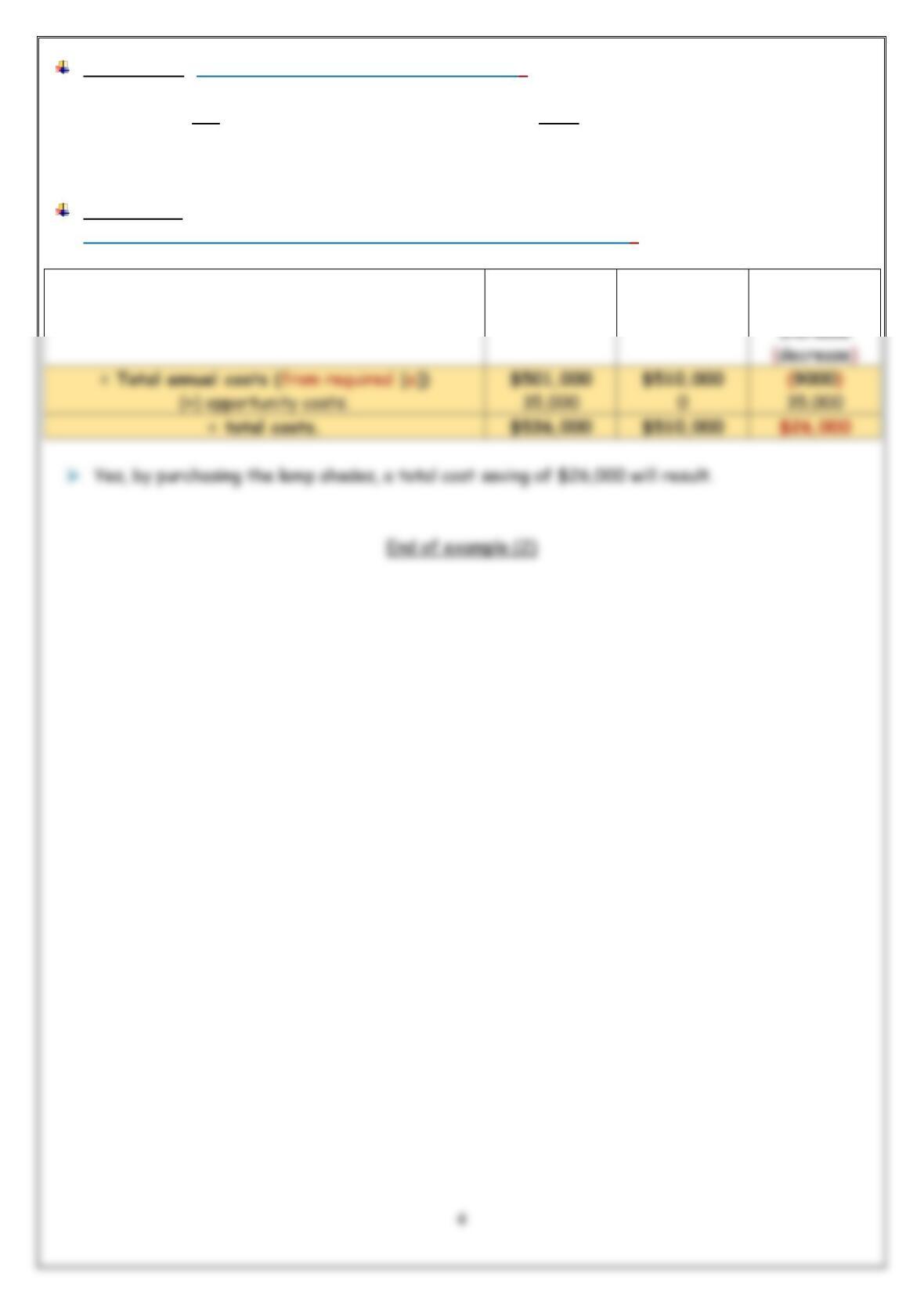
Required (c): Would your answer be different in (b) if the productive capacity released by not
making the lamp shades could be used to produce income of $35,000?
(1)
Make
(2)
Buy
(3) = (1-2)
Net income