BBBL 2113 INVESTMENT INDUSTRY LAW
RFI3 2014/15
LECTURER / TUTOR: MR LEONG WAI MUN
DATE OF SUBMISSION: 2nd of July 2015
Name ID Number
Seow Chun Pin 15WBR10274
Lim Wen Ting 15WBR11068
Yeap May Tze 15WBR09100
Han Lie Guan 15WBR09231
1
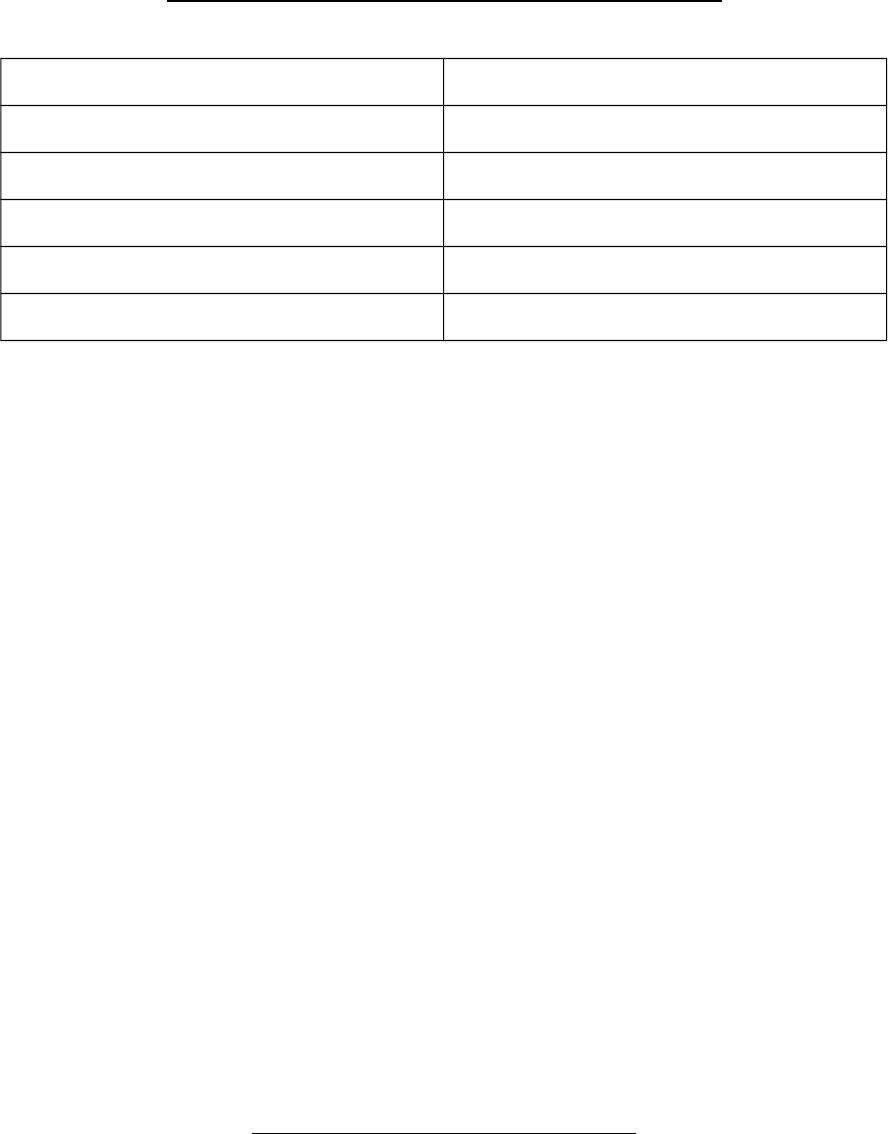
TABLE OF CONTENTS
Title Page
Assignment question 3-4
Introduction 5-7
Content 8-20
Take aways 21-22
Reference 23
GROUP ASSIGNMENT QUESTION
Suan lives in Karak, Pahang and she wants to sell her rare set of stamps collection
2
to raise money for her husband medical expenses. On the 5th January 2015, she offers to
sell her stamps collection to Johan an avid stamp collector who lives in Alor Setar, Kedah
for RM50,000-00. Her offer is duly communicated to Johan and it lapses on the 9th
January 2015. Due to the distance, Suan insists Johan to accept her offer by letter
thinking that it is good to have the transaction evidenced in writing.
On the 7th January 2015, 11.30am, Johan puts his letter of acceptance into the
mail box at post office in Kampar with Suan’s correct address and stamp affixed. On the
same day, Johan takes a morning flight out of the country to meet a foreign buyer for his
stamp collections. He has the habit of not taking with him his hand phone while abroad
as he does not want to be disturbed.
On the 8th January 2015, Suan’s husband medical problem deteriorates and
requires urgent medical attention. She still has not received the mail from Johan which is
expected to reach her house in Karak in the morning.
On the same day, another buyer in Kuala Lumpur offers to buy the same set of
stamps collection and would pay her the same amount with cash on delivery. She is
happy over the new deal as she would have the money for her husband’s operation. She
tries contacting Johan through his hand phone many times to cancel her offer but fails to
get through. Frustrated, she leaves a voice message informing Johan that her offer to him
is cancelled. She repeated twice her cancellation in the voice mail and forwarded a
cancellation message to Johan’s hand phone to ensure he will not miss it.
In the late night of 8th January 2015, she delivers her stamps collection to the
buyer in Kuala Lumpur and is paid as promised which she pays her husband’s medical
expenses.
3

In the morning of 10th January 2015, Suan returns to Karak and to her surprise
she finds Johan’s acceptance letter in her mail box a delay in the delivery of the letter.
Johan is furious and wants to sue Suan for breach of contract. Advise Suan based
on the above given facts.
INTRODUCTION
4

In Malaysia, our contract law is basically governed and enforced by the Contracts
Act 1950. The Contracts Act is adopted from the Indian Contracts Act 1872. English
Common Law principles are generally enacted in the Contracts Act. The provisions of the
Contracts Act are not exhaustive, English common law applies if the subject matter is not
covered by the Contracts Act by virtue of the Civil Law Act 1956. Where the Contracts
Act makes certain provisions which differ from the English Law, the provisions of the
Contracts Act must prevail.
A contract is an agreement that is legally binding between two or more parties. S2(h)
Contracts Act states that ‘an agreement enforceable by law’ is a contract whereas an
agreement that is not enforceable by law is not a contract. The terms of the contract must
be definite and certain and the performance of a contract must be exact and precise and
should be accordance to with what the parties had promised. In order to form a contract
agreement that is enforceable by law, there are some essential elements that must be
fulfilled which is offer and acceptance, consideration, intention to create legal
relationship between the parties, certainty, capacity of parties, consent and legality. Thus,
not every ‘agreement’ will result in a contract enforceable by law as an agreement may
lack any one of essential elements required of a contract.
The first element of a contract is offer and acceptance. An offer can be oral or written
as long as it is not required to be written by law. It is the definite expression or an overt
action which begins the contract. It is simply what is offered to another for the return of
that person’s promise to act. It cannot be ambiguous or unclear. For acceptance, if a
proposal is addresses to the proposee, he has to signify his assent to the proposal, the
proposal is therefore said to be accepted. S 3 Contracts Act is the general section about
5

communication of proposals, acceptance of proposals, revocation of proposals and
revocation of acceptance that deemed to be made by any act or omission of the party
which has the effect of communicating it.
Consideration is another essential element of the contract. It is regarded as a bargain
between the contracting parties that is the price paid by one party for the promise or act
of the other party. There are three categories of consideration: executory, executed and
past consideration. Our Contracts Act is silent on intention to create legal relations thus
English common law principles will apply. In domestic and family agreements, the legal
principle is that parties to such agreements are presumed not to intended to have legal
consequences, however, the presumption is rebuttable by evidence to the contrary and
from the circumstances of the case to show intention. In commercial and business
agreements the general is that there is always the presence of intention to create legal
relations. This presumption is also rebuttable if the parties clearly express that it is not
intended to be legally binding.
In addition, the law requires that parties to the contract must be ‘competent to
contract’. S11 Contracts Act states that every person is competent to contract must be of
the age of majority which is 18 years old, of sound mind and not disqualified from
contracting by any law to which he is subject to. S10 (1) Contracts Act states that one of
the requirement for an agreement to be binding the contracting parties must give their
consent willing and freely. Consent is said to be free if not caused by vitiating factors
such as coercion, undue influence, fraud, misrepresentation and mistake as stated in S14
6

Contracts Act. Another essential element of a valid contract is that there must be
certainty. There would be no binding contract if it cannot be established with certainty
what it was that the parties had contracted for.
Lastly, a contract may be discharged by performance, by consent or agreement between