AN INTRODUCTION TO BUSINESS
Learning Objectives
After reading this chapter, a student should be able to;
• Describe the meaning of a business
• Initiate a business idea
• Identify type of business
• Plan for legal entity
• Describe the meaning business development and business developer
• Design for the Business Model Canvas.
1.0 INTRODUCTION
The objective for this chapter is to learn about, what constitute a business and business idea, what
are the different types of business, the legal structure of business, introductory concepts in
business development and business canvas model.
1.1 What Constitutes a Business?
1.1.1 What is business
To be able fully understand the topic ‘a business plan and how to create one’ is better to make
clear what is it ‘a business’.
“Business is the organized effort of individuals to produce and sell, for a profit, the goods and
services that satisfy society’s need. To be successful a business must perform three activities; It
must be organized. It must satisfy needs. And it must earn a profit” (Pride, Hughes and Kapoor
2009, 9). Better put, “business is nay profit-seeking organization that provides goods or services
designed to satisfy customers’ needs.
This definition of a business needs to be explained more into details. ‘An organized effort of
individuals’ sounds very obvious but under these five words can be hidden a great deal of acts,
researches, studying, ideas and sometimes pain. One cannot be sure what is necessary to do for
organizing of the effort. Generally is known that for a business to be organized, it must combine
four types of resources: material, human, financial, and informational ((Pride, Hughes, and
Kapoor 2009, 9) ;
❖ Material resources mean the raw material from which can be produced the final product.
❖ Human resource includes people who work and earn money for running a business.
❖ Financial resource is money which is necessary for purchasing a material, furniture,
machinery, or for paying to employees.
❖ And informational resources tell to managers how the others resources are combined. .
All businesses provides something that others want to pay for. Some businesses buy things and
sell them again at a higher price, for example a shop. Other businesses produce things, for example

by growing fruits or making furniture out of timber. Another type of business provides a service
which others need, like building a house or grinding grain into flour.
1.1.2 The business idea
This consists of a simple statement that acts as an introduction to the business plan. A business
idea forms the nucleus of your business plan and is the starting point from which every other aspect
will emanate. A clear definition of your intentions is essential for investors to make informed
decisions regarding your proposal.
For example:
“I am proposing to work as a self-employed complementary Financial Analysist providing
a range of services to my clients including; Ideation, Business/Investment Planning
writing, taxation, Business Incubation, Business Mentoring and Innovation Programs. I
am qualified as a professional, and experienced in each of these areas, and having worked
in a finance sector for the past ten years, I am ready now to branch out on my own”.
This statement shows in clear and simple terms, the type of work envisaged the employment status
of the owner, the range of services that will be offered and why the owner has chosen to do it.(See
appendix I for more examples on business ideas).
Hints: Making up business idea(Figure 1)
❖ Come up with an idea. Come up with business ideas by identifying things people need and
are willing to pay for, that isn’t provided in your area, or which you can provide better than
anyone else.
(a) Have an idea (b) Make it possible
Figure 1.0 : Business idea
❖ Be sure it’s unique. Whatever your idea is, be sure it’s as unique as possible. This will help
you eliminate or significantly combat competition, which will make your business more
successful.
❖ Consider if it is possible. Before going too far, think about how plausible your idea is. Is it
something that people would actually pay for? Will it turn enough of a profit to be worth
spending your time to do it? You will also need to be sure that it is possible to put into action.
1.1.3 The Business Tree
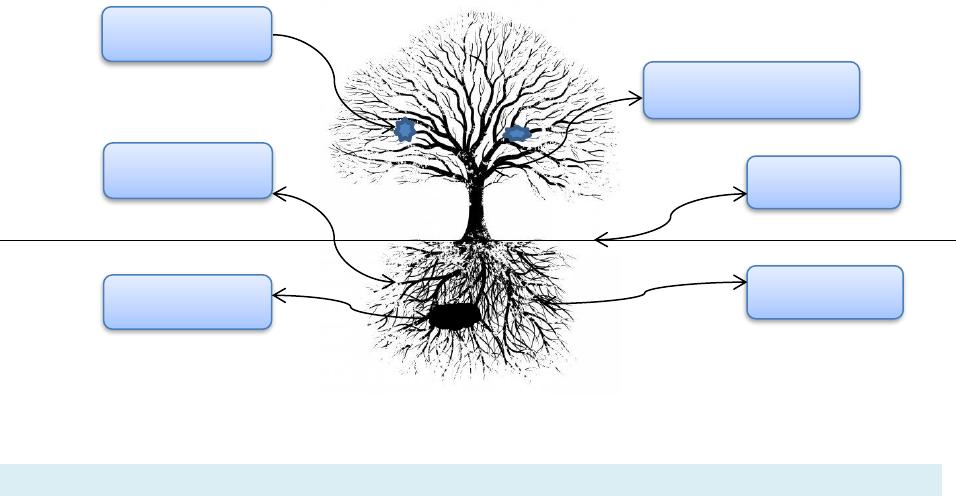
The business tree (Figure 1.1) is a way to understand what constitutes a business. A tree starts
from a small seed. If you choose a good seed and a proper place to plant, it can grow into a healthy
tree over time. In a similar way, a business starts with from an idea. If you choose a good idea,
it can grow into a healthy business. A tree must have water to survive. The roots draw up the water
from the soil, so the branches can be healthy and grow. A business must have money(capital) to
survive. Money can come from different sources, like your own pocket or loans, and can be
used for things like stock, cash or tools. If you take care of a tree, it can give nice fruits. If you
take care of your business you can give good results (e.g. profits).
Figure 1.1. The Business Tree
1.1.4 Motives and Functions of a Business
Some of the more important decisions, together with establishing of a business, are:
❖ Is it worthwhile to create this business?
❖ What resources does this business need to provide its services?
❖ What types of stakeholders must this business attempt to satisfy?
❖ What are the key functions that managers must perform to manage this business?
❖ What characteristics in the business environment must the managers monitor?
All businesses must take these types of decisions, whether they provide car rentals, produce
computers, offer dentistry services, or build houses (Madura 2006, 3). These decisions have impact
on the value of the business (Figure 1.2).
Water = money
Seed = idea
Fruits = Profits
Roots = assets
branches = activities
Soil = market
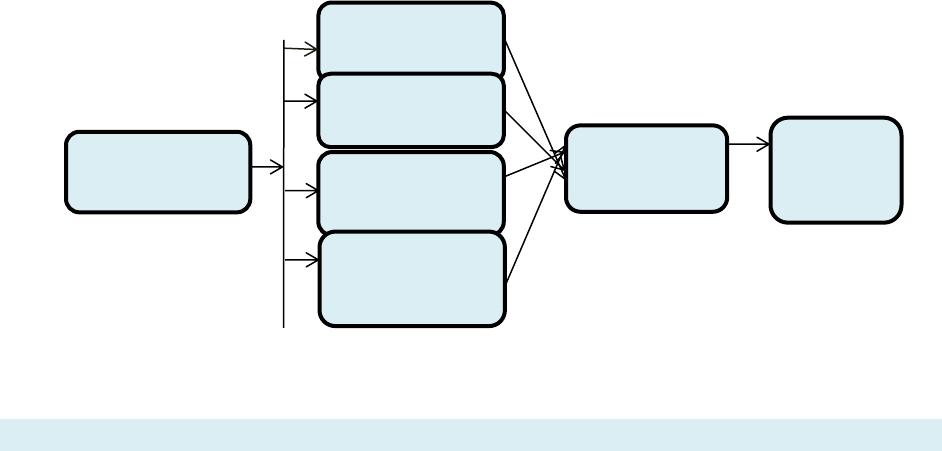
Figure 1.2. Motives and Functions of a Business
1.1.5 Type of Business
Find the business category listed below that most closely matches your business. You’ll use the
description that follows as a reference when you describe your own business. Each of the business
categories requires different skills to run efficiently. Many small businesses involve one or two
types of business in the same endeavor. But if your idea will involve you in several types of
business, it may be too complicated for you to run efficiently. As a general rule, small businesses
work best when their owners know exactly what they are about and strive for simplicity.
• Retail: Retail businesses buy merchandise from a variety of wholesalers and sell it directly to
consumers. Some retailers provide service and repair facilities, while most do not. Most
retailers just take in the goods and mark up the price, sometimes doubling their purchase price
to arrive at a sales price. Supermarkets, mail order catalog merchants, computer stores, dress
shops, department stores and convenience marts are retailers.
• Wholesale: Wholesalers buy merchandise from manufacturers or brokers and resell the goods
to retailers. Normally, a wholesaler maintains an inventory of a number of lines. A wholesaler
normally does not sell to consumers in order to avoid competing with his retailer customers.
Wholesalers usually offer delivery service and credit to customers. This type of business is
characterized by low gross profit margins (sometimes varying between 15% and 33% of the
wholesaler’s selling price) and high inventory investment. Wholesalers typically buy in large
What resources
are needed?
Decision to create
a business
Value of
the
Business
Key functions of
the manager?
How to deal with
environmental
concerns?
How to satisfy the
stakeholders?
Performance
of business
lots and sell in smaller lots. Like retailers, they seldom make any changes to the products. Most
wholesalers aren’t well known to the general public.
• Service: People with a particular skill sell it to consumers or to other businesses, depending
on the skill. The end product of a service business is normally some sort of advice or the
completion of a task. Occasionally, a service business sells products as an ancillary function.
For example, a baby diaper cleaning service may also sell diapers and baby accessories.
Service business customers normally come from repeats and referrals. It’s common to have to
meet state licensing requirements. Hairdressers, carpet cleaners, consultants, housecleaners,
accountants, building contractors and architects are examples of service businesses.
• Manufacturing: Manufacturers assemble components or process raw materials into products
usable by consumers or other businesses. This type of business ranges from an artisan who
makes craft items to General Motors. The most difficult part of the manufacturing business is
to find a product, or even better, a series of products, that have acceptance in the marketplace
and generate a steady sales volume. Or, as one business person put it: “Production without
sales is scrap.”
• Project development: Developers create and finish a saleable commodity by assembling
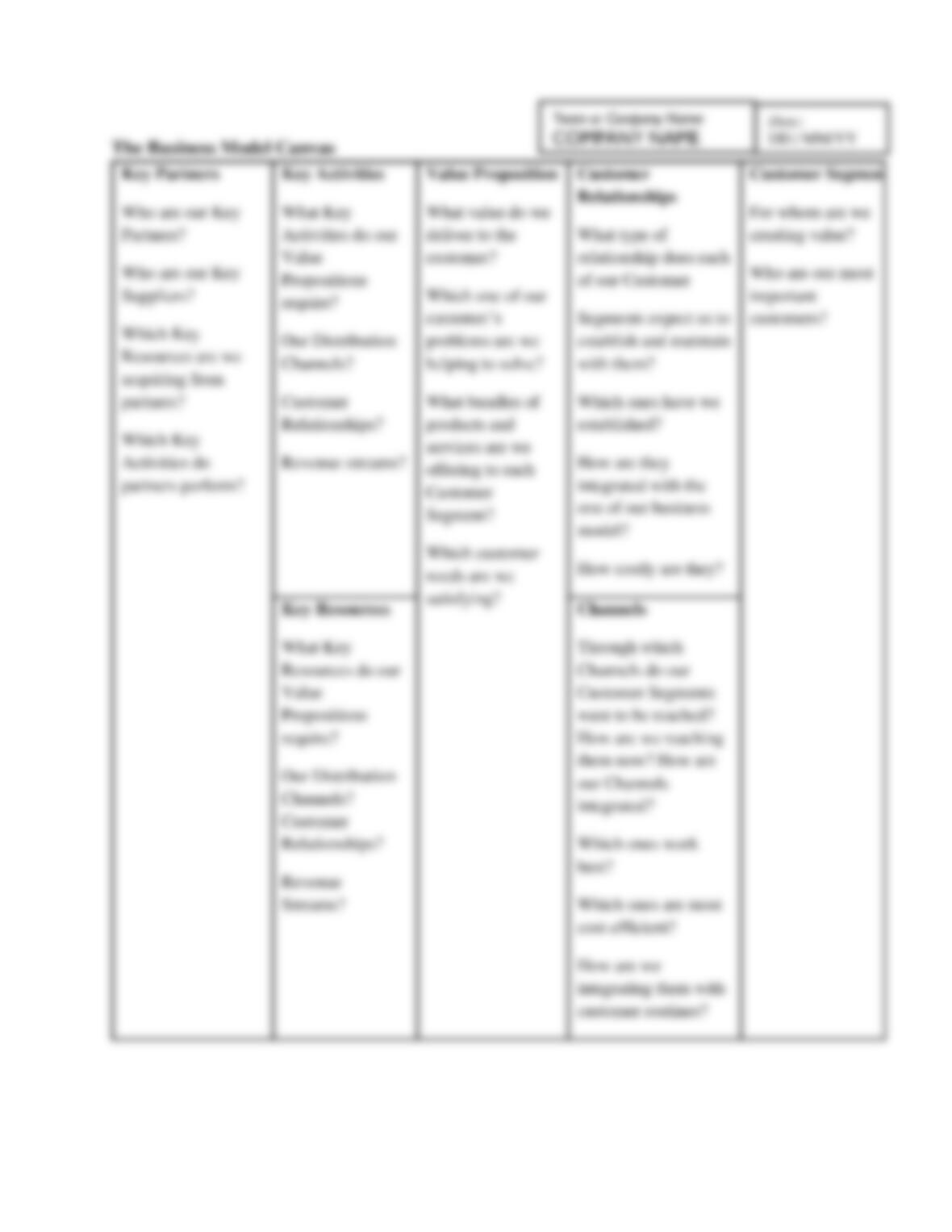
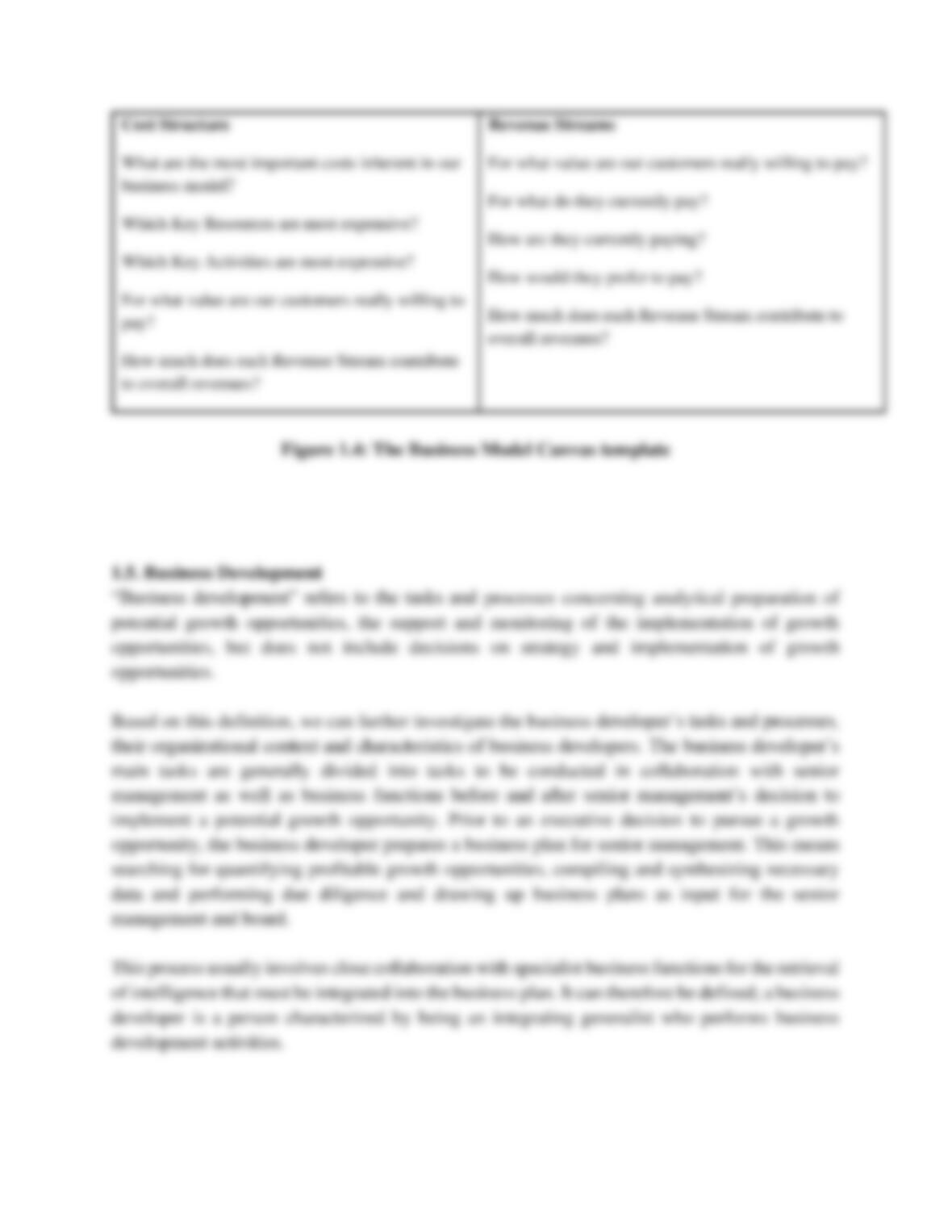
(Figure 1.4).