1.0 Introduction
Saba is an Australian fashion-clothing store that is privately owned and operated
by Joe Saba, an Australian fashion designer and fashion business owner in the year
1965 in Melbourne. The brand has various stores operating all over Australia and
carries a contemporary label for both women and menswear lines. Saba intends to
target working adults.
Saba ensures that their customers are dressed stylishly and elegantly for work as
well as for casual outings. Moreover, it makes sure that their products are premium
fabrics, so that customers could get the best quality products (Saba, 2014). Since Saba
is only available in Australia, it vigorously emphasizes on its online shop. It fully
takes advantage of the Internet in order to create strong brand awareness globally.
With the online shop, everyone in every parts of the world could easily and efficiently
purchase or to check on updates from Saba.
Currently, Saba’s main internal problem is market saturation. Saba stores are
located all over Australia, and therefore, it has been maximized in Australia. At this
point, further growth such as overseas expansion can be achieved.
Also, one of the potential threats Saba might face in Singapore is local
competitors. This is because, they are more established in Singapore, which leads to
more awareness in local brands. On top of that, their products are cheaper.
Furthermore, the country is pushing domestic brands for promotion, which in turn
makes it harder for Saba to compete, as most consumers will demand more on
cheaper and known products.
Simultaneously, Saba is likely to penetrate the market in Singapore. In the
recent years, Singapore is the world’s easiest place to do business as it has the best
business environment in Asia Pacific and worldwide (Nanyang Technological
University, 2014). Moreover, it has a very large population. These attract major
corporations from all over the world to expand their businesses in this country.
However, there are challenges that Saba would face when the company expands their
business in Singapore. There are seven aspects to be analyzed in order to determine
and evaluate the opportunities and possible threats in the entry of Singapore market.
2.0 Economic Environment
The Singapore economy is developing due to the country’s strong economic
performance, which leads to the success of its open and outward-oriented
development strategy (Monetary Authority of Singapore, 2014).
2.1. Gross-Domestic Product
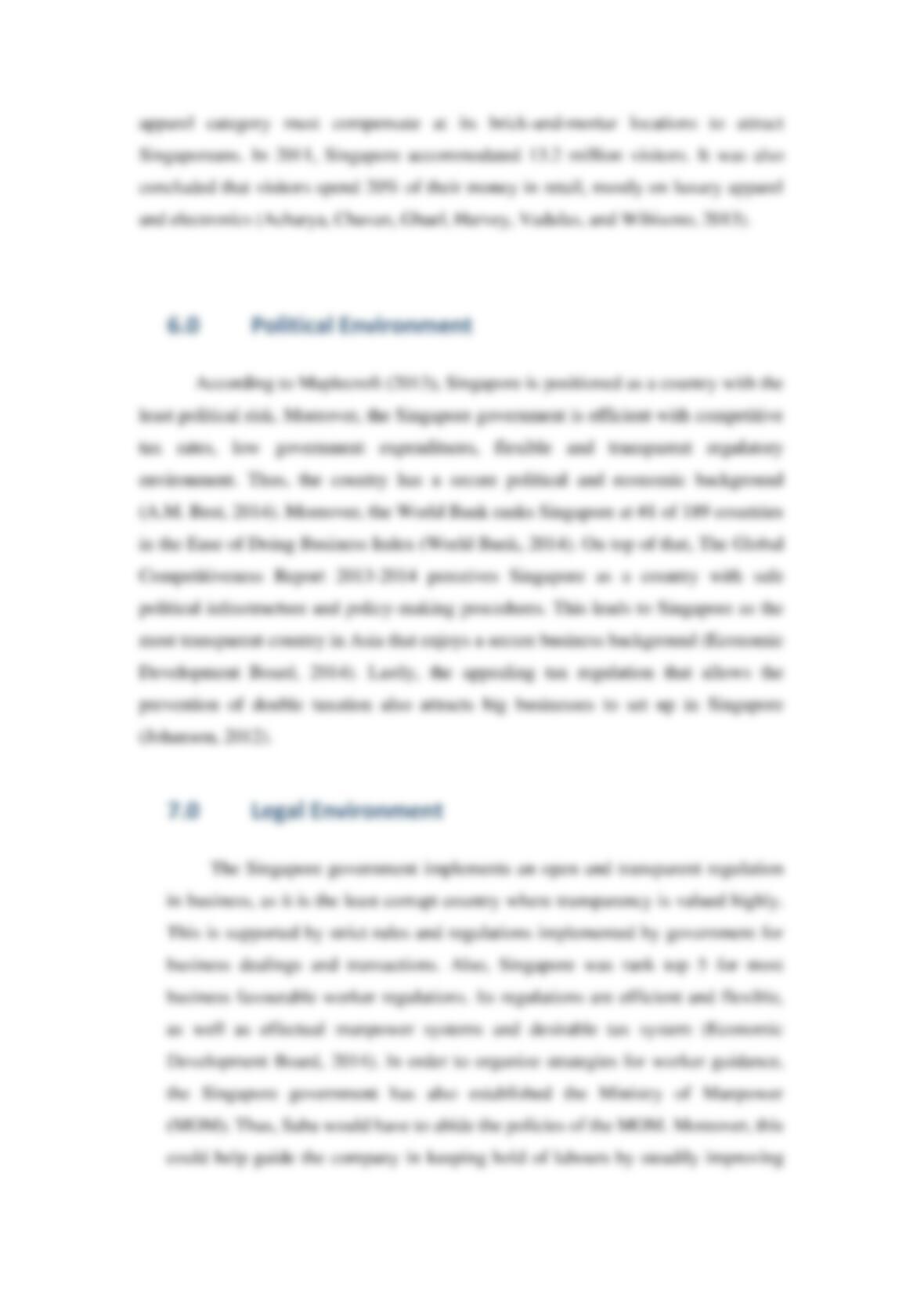
Singapore’s GDP per capita is increasing over the years, with the GDP of
US$274.7 billion in the year 2012, as seen in Appendix 1. Singapore has one of the
highest GDP per capita in the world as the country depends heavily on foreign trade
(Trading Economics, 2014). Moreover, Knight Frank and Citi Private Wealth’s 2012
Wealth Report concluded that Singapore has the highest per capita income in the
world, at $56,532 in 2010, measured by purchasing power parity. This leads to
Singapore being listed as the third in the world in the year 2010-11 by International
Monetary Fund (Voight, 2012).
2.2. Inflation Rate
Inflation occurs due to an inequality between demand and supply of money,
changes in production and distribution cost or increase in taxes on products. However,
a reasonable level of inflation, which is at the rate of 2 or 3%, indicates a good
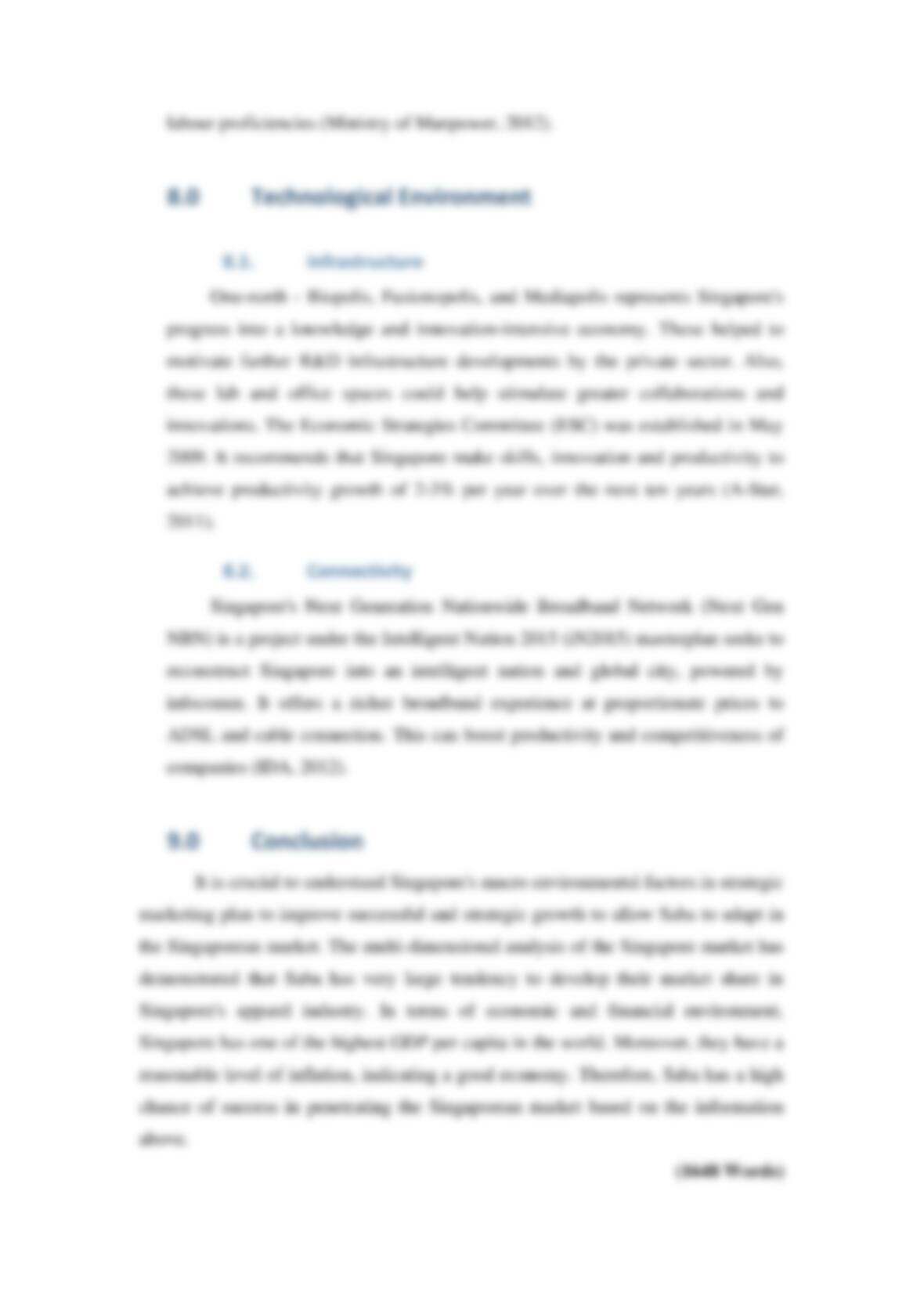
economy (The Economic Times, 2014). The inflation rate in Singapore for the month
of June 2014 is 1.8% and it further decreases to 1.2% in the month of August, as seen
in Appendix 2 (Trading Economics, 2014).
Therefore, with the large working population, a very high GDP, and a
moderate level of inflation, Saba does have a higher potential in venturing into
Singapore.
3.0 Financial Environment
In order to expand overseas, a company needs capital. Singapore is the #1 city
with the best investment potential. According to Business Environment Risk
Intelligence (BERI) Report 2014-I (April 2014), Singapore’s steady political and
economy develops an optimal environment to invest in (Economic Development
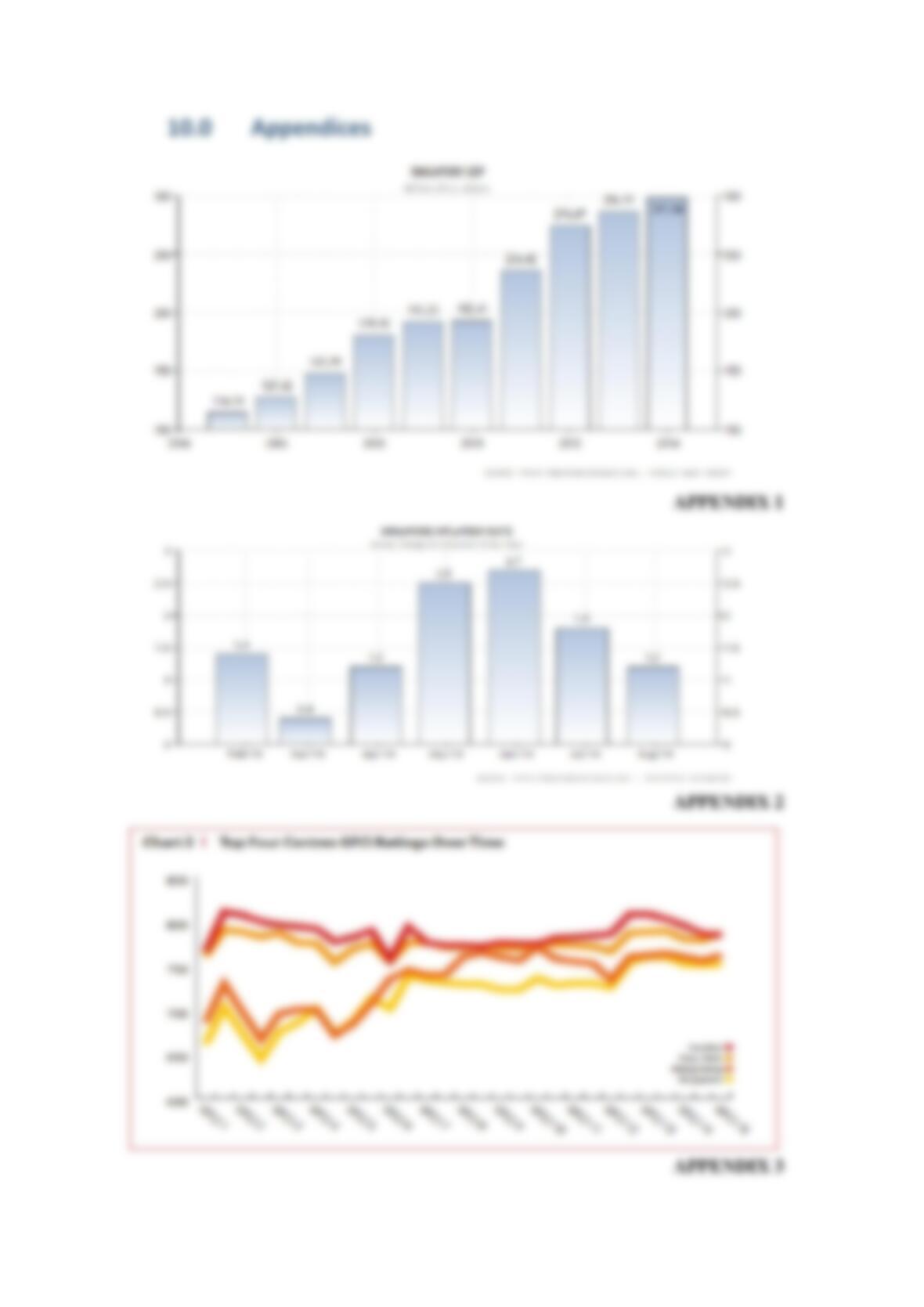
Board, 2014). The Global Financial Centres Index 12 positioned Singapore as the
fourth leading financial centres in the world (Long Finance, 2012), as seen in
Appendix 3.
3.1. Prime Lending Rate
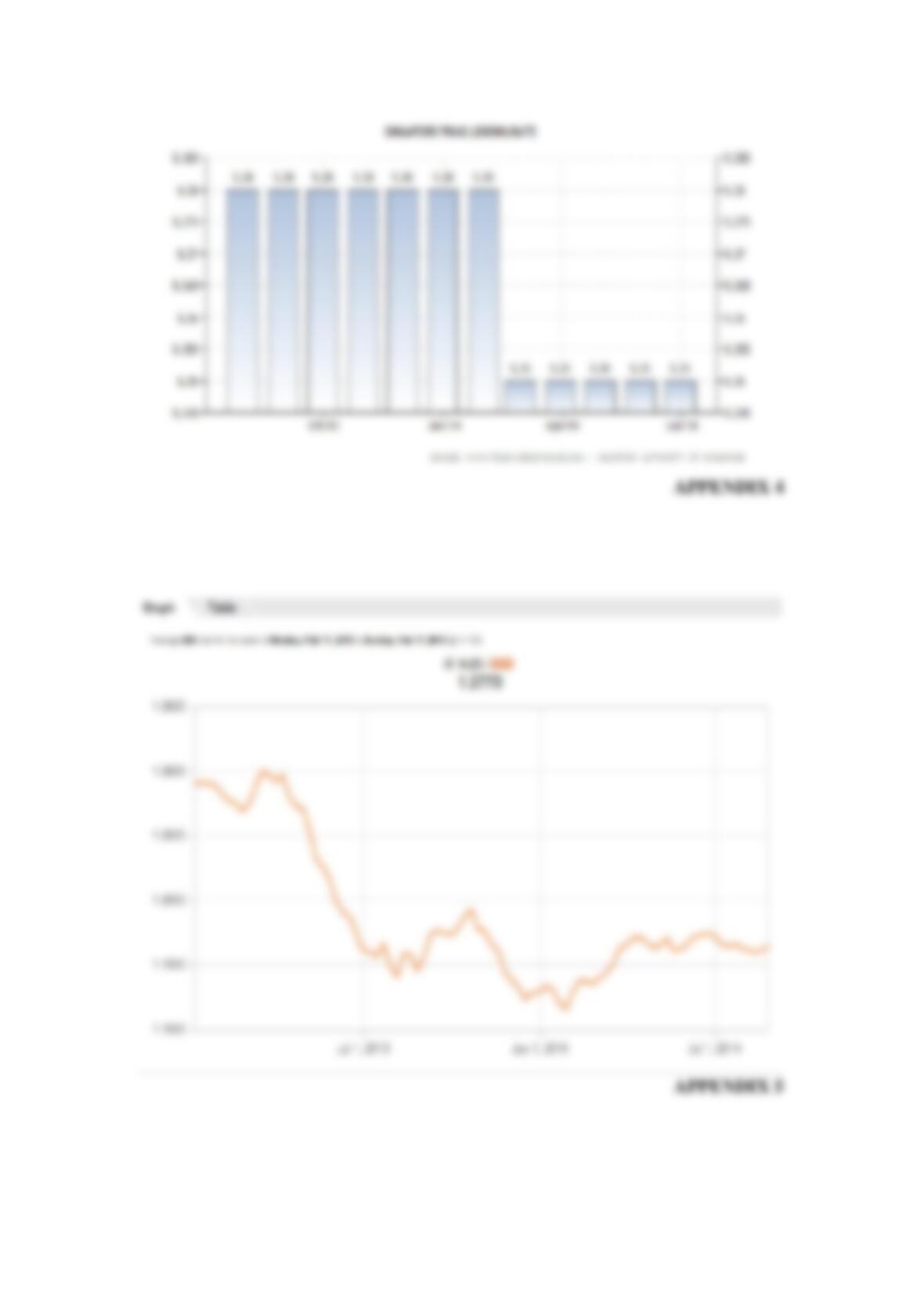
To expand overseas, the company needs to make loans. Singapore’s prime
lending rate for the year 2014 is stable, with average rate of 5.35% charged on loans
by 10 Singaporean leading banks and financial companies (Trading Economics,
2014), as seen in Appendix 4. This shows that Singapore is very advanced in term of
its financial capacity, which allows companies to have access on loans. This will help
Saba in expanding their business overseas easily.
3.2. Exchange Rate
Since 1981, Singapore’s monetary policy focused on exchange rate, with the
objective to promote price stability for sustainable economic development (Monetary
Authority of Singapore, 2014). Singapore’s currency, SGD, is quite stable from 2013
to 2014, at SGD1.17/AUD, as of 31 August 2014, as shown in Appendix 5 (Oanda,
2014).
4.0 Cultural Environment
4.1. Hofstede’s Theory
Geert Hofstede’s theory is the most extensive tool to measure
cultural differences. The four dimensions are namely power distance,
uncertainty avoidance, individualism, and masculinity, as shown in
Appendix 6.
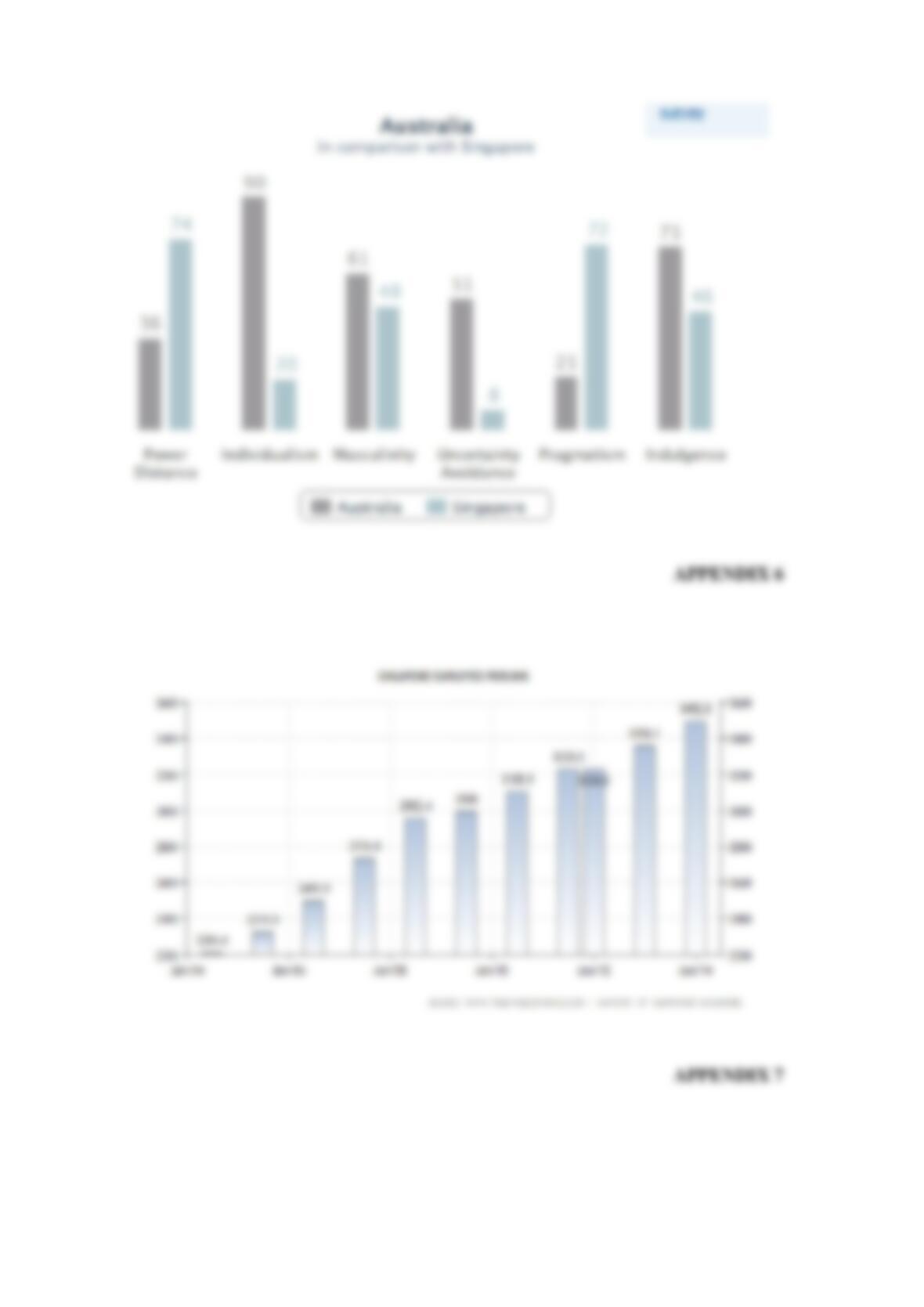
Singapore scores 74 on power distance, while Australia scores 36.
In Singapore, employees rely on their bosses and on rules as power is
centralized, while in Australian organizations, hierarchy is established.
Next, Singapore scores 8 on uncertainty avoidance, while Australia scores
51. This means that Singaporeans have a very high power distance score,
which leads them to abide to many rules, while in Australia is the opposite.
Thirdly, Singapore scores 20 on individualism dimensions, while Australia
scores 90. This means that Singapore is a collectivist society where people
belong in groups, while Australia is a highly individualistic culture. Lastly,
Singapore scores 48 in masculinity, while Australia scores 61. This means
that Singapore is towards the feminine side, such as leveling with others,
and being modest, while Australians value their successes and
achievements more (The Hofstede Centre, 2014).
4.2. Aesthetics
Aesthetics is dealing with “art, folklore, dance that has a role in portraying
significant meanings in each culture, which highlight the uniqueness of a culture and
need to be included in marketing” (Fletcher & Crawford, 2011). There are different
meanings to different types of colours in every country with different cultures.
Singaporeans are very abrupt in their traditions. Chinese prefer colours such as red
(prosperity), blue (peace), gold and purple (royalty). On the other hand, black and
white usually means “death” (Kommonen, 2011).
4.3. Language
Singapore is consists of three major ethnic groups, namely, Chinese, Malays,
and Indians. The country’s official languages are English, Mandarin Chinese, Malay,