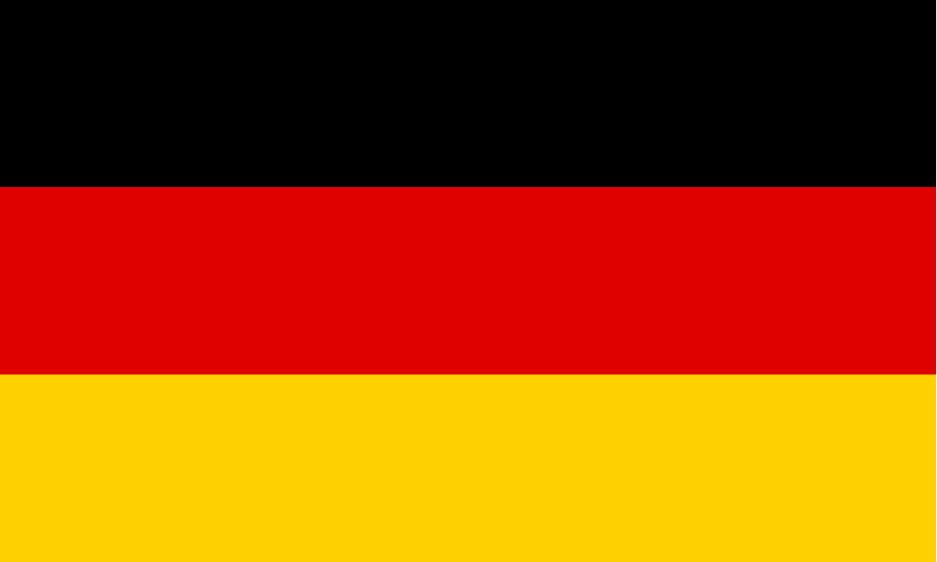
Germany

Tyler Beasy
BA 343
2/15/16
Country Paper
Executive Summary
(insert executive summary)
Company Overview (WalMart)
Wal-Marts first store was opened by Sam Walton in 1962 in Rogers, Arkansas. The store
was dedicated to making sure that they made a difference in their customers lives and a positive
impact in the community. The idea of Wal-Mart was Sam Walton’s success with his original
store, Walton’s 5&10 on the downtown square of Bentonville, Arkansas and the want to bring
even greater opportunity and value to his company. The idea that a company could succeed while
offering lower prices and great service was looked down at as faulty, however the company
exceeded even Sam’s expectations for their success. The company later went public in 1970 and
grew rapidly due to, what Sam claims, was not just the low prices but the associates as well. The
associates were relied upon to give the customer a positive experience and make the customer
want to return (“Our History,” 2016).
Wal-Mart Stores Inc. today is a retail store that operates in multiple formats around the
world. The company has three different segments that they operate through and they are,
Walmart U.S., Walmart International, and Sams Club. They operate discount stores,

supermarkets, supercenter, hypermarkets, warehouse clubs, cash and carry stores (a store that
accepts cash only), home improvement stores, specialty electronics stores, restaurants, apparel
stores, drug stores, and convenience stores, along with online stores. Their stores offer a variety
of products such as meats, produce, deli, alcoholic and nonalcoholic beverages, health and
beauty aids, pet supplies, electronics, toys, and much more. They also provide financial services
and other related products such as money orders, prepaid cards, wire transfers, money transfers,
check cashing, and bill payment. Wal-Mart, as of January 15, 2016, owned and operated 11,600
stores using 72 different banners within 28 countries and online shopping inside 11 countries
(“WMT Profile,” 2016).
Country History (Germany)
This section will give an overview of the history of Germany in areas of key political and
historical events that have shaped the country to where it is currently at today.
The Beginning
The first people to inhabit Germany are believed to be the Celts and followed in the 2nd
century B.C. by German tribes. The declining Roman Empire was invaded and destroyed by
Germany in the 4th and 5th centuries A.D. One of the tribes came to supremacy in western Europe
under Charlemagne the holy Roman Emperor in 800 until their lad east of Rhine was given to the
German Prince Louis by the Treaty of Verdun in 843. Germany became just as large as they were
in the middle ages when the Treaty of Mersen gave them additional territory in 870 and by 936,
under the rule of Otto the Great, many German rulers were heads of the Holy Roman Empire.
Martin Luther’s 95 theses brought state and church reformation which came to a head in 1547
when Charles V scattered the forces of the Protestant League at Mühlberg and was followed by
the Counter-Reformation. The Thirty Years’ War (1618-1648) was brought on by a dispute over
the succession to the Bohemian throne, which devastated Germany and left the empire divided
(“Germany History,” 2014).
The Rise of Bismarck and the Second German Reich
While all of this was going on with Germany and Rome Prussia was in the process of
developing into a state o considerable strength. From 1740-1786 Frederick the Great took the
Prussian army and defeated Maria Theresa of Austria in a struggle over Silesia. Following the
defeat of Napoleon at Waterloo in 1815, the struggle continued between Austria and Prussia for
control of Germany ending with the defeat of Austria in the Seven Week War in 1866 and the
formation of the Prussian-dominated North German Confederation. Otto von Bismarck then