1
Influence of Economics on Household Decision Making
Bobbie MoyerIsabella
ECO/561
October 12, 2017
George Sharghi
2
Influence of Economics on Household Decision Making
Purchasing a new home can be not only challenging and demanding but also complexed and
overwhelming while working through the decision-making process. Several decisions must be
made before settling on the right home. In this assessment of the influence of economics on
household decision making, an analyzation of the process of decision making for the purchase of
a home is conducted. The analyzation will cover interest rates, financing, home markets,
locations and the effects on the household; along with State and Federal home purchase
programs. Furthermore, according to Wilcox, (2015). “an improved understanding of housing
can contribute to improving housing and macroeconomic policies and forecasts.”
Gross Domestic Product (GDP) Trends
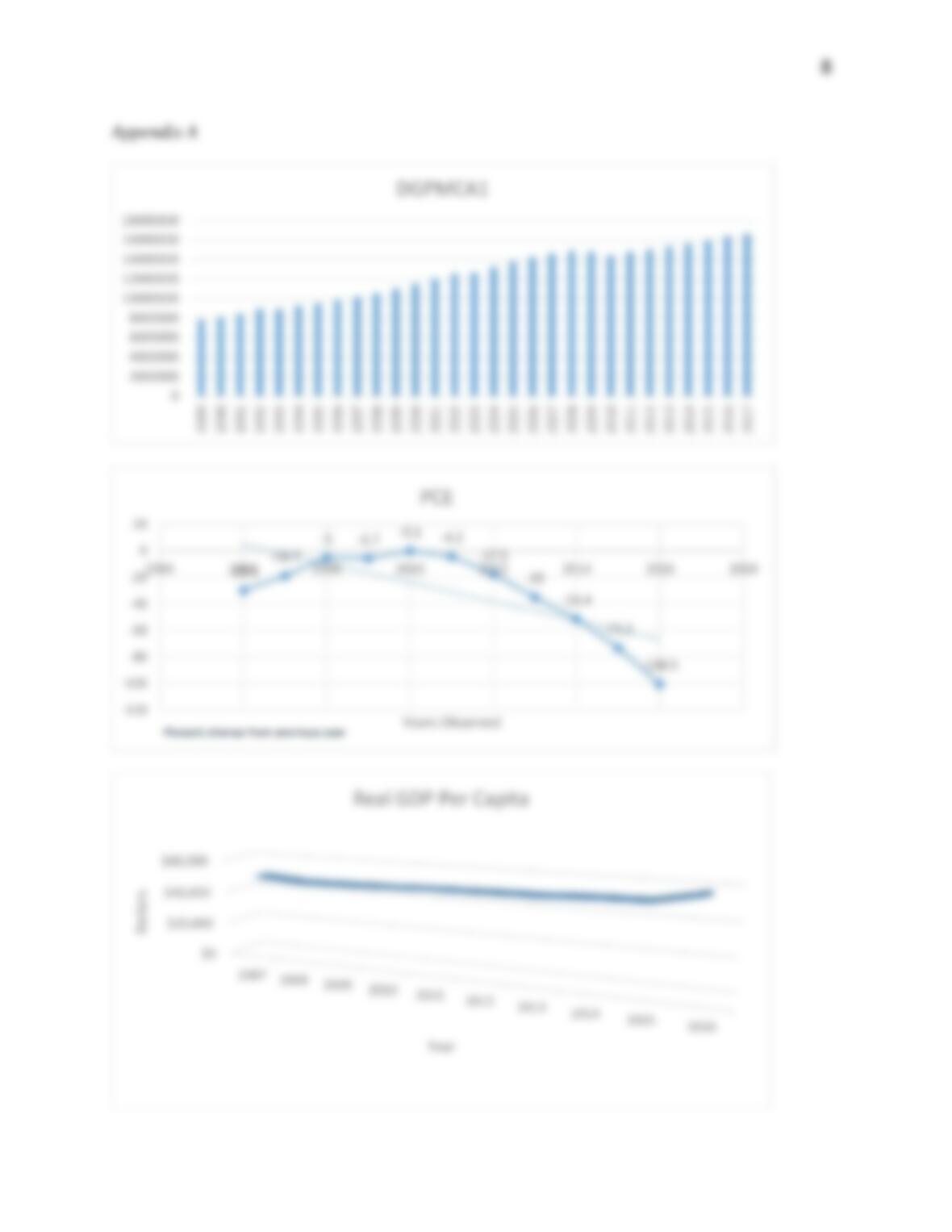
In this analysis, trends in the GDP were examined and evaluated for the recent past years.
However, the collected data supplied by the Federal Reserve of Saint Louis (FRED) only provide
data up to the Year 2011 for per Capita. In reviewing the data, the trend in GDP reached a peak
in 2009 (98522 per capita) and had the lowest percent of change during that same period (-0.7).
Proportionately, it did provide ten years of data for total GDP; and the data indicates that GDP
has trended steadily upward (Federal Reserve Bank of St. Louis, 2017).
Real Personal Consumption Expenditures (PCE) Trends
PCE was also assessed as to trend over the last ten years. The resulting outcome of the
collected data reveals that the PCE over the previous decade is steadily declining. Per the data, it
also reached its peak in 2009. After which it began its downward movement, suggesting a
reduction in consumer spending. Furthermore, when both GDP and PCE are compared it appears
that while GDP is rising the PCE is falling. However, this situation may be addressed by “Fisher
3
Dynamics” as to the PCE is declining. Fisher, 1933, points out that dropping incomes and prices
created rising debt burdens, and this condition still exists today (Mason, & Jayadev, 2014).
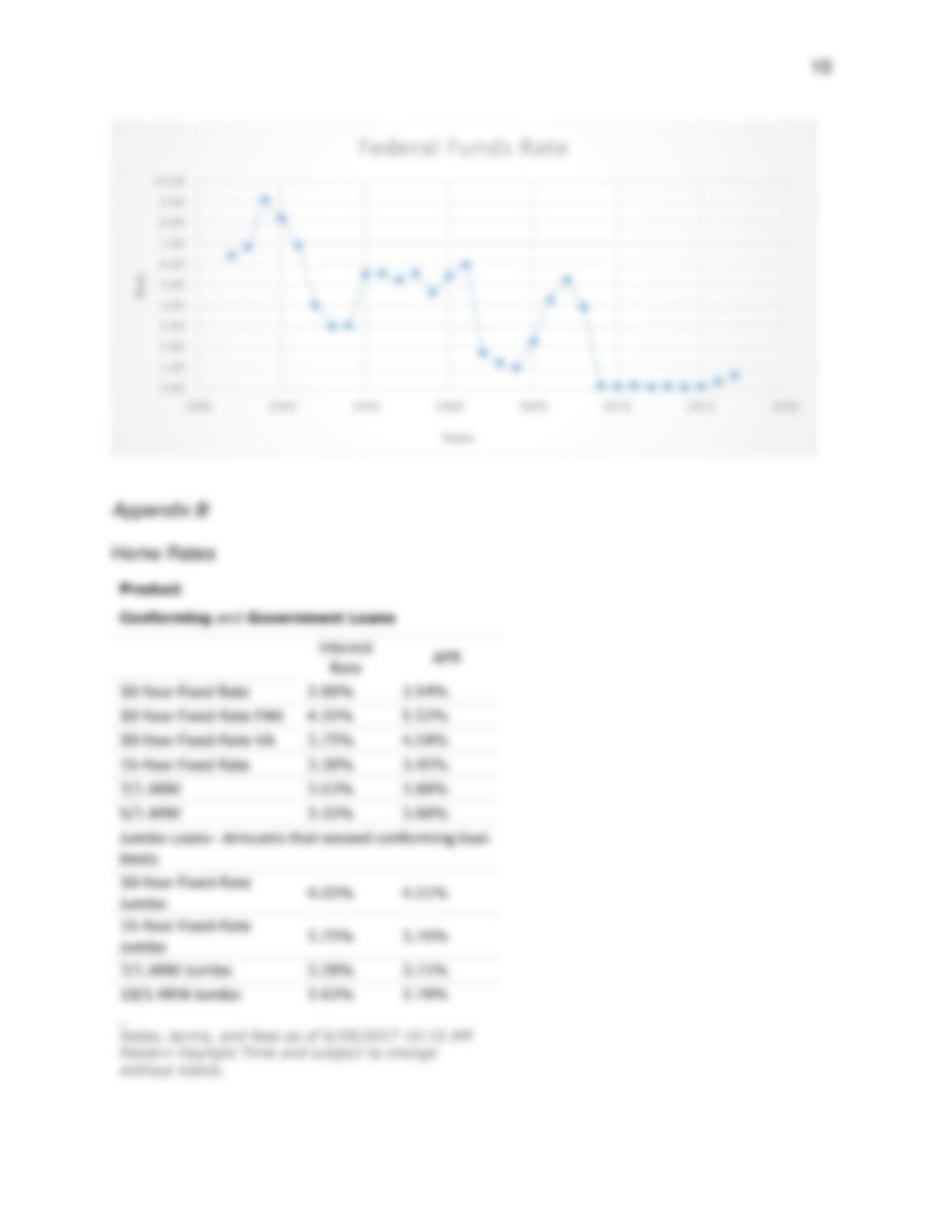
Effective Funds Rate, Consumer Price Index, and Inflation
The Effective Funds Rate is stated to be the interest rate at which bank organizations and
lending institutions exchange centralized funds with each other nightly (Board of Governors of
the Federal Reserve System (US), (2017). Also, the effective federal funds rate circuitously
impacts long-term interest rates; here are a few examples, savings, mortgages, and loans.
Whereas, each is vastly significant to both consumer assurance and wealth (Board of Governors
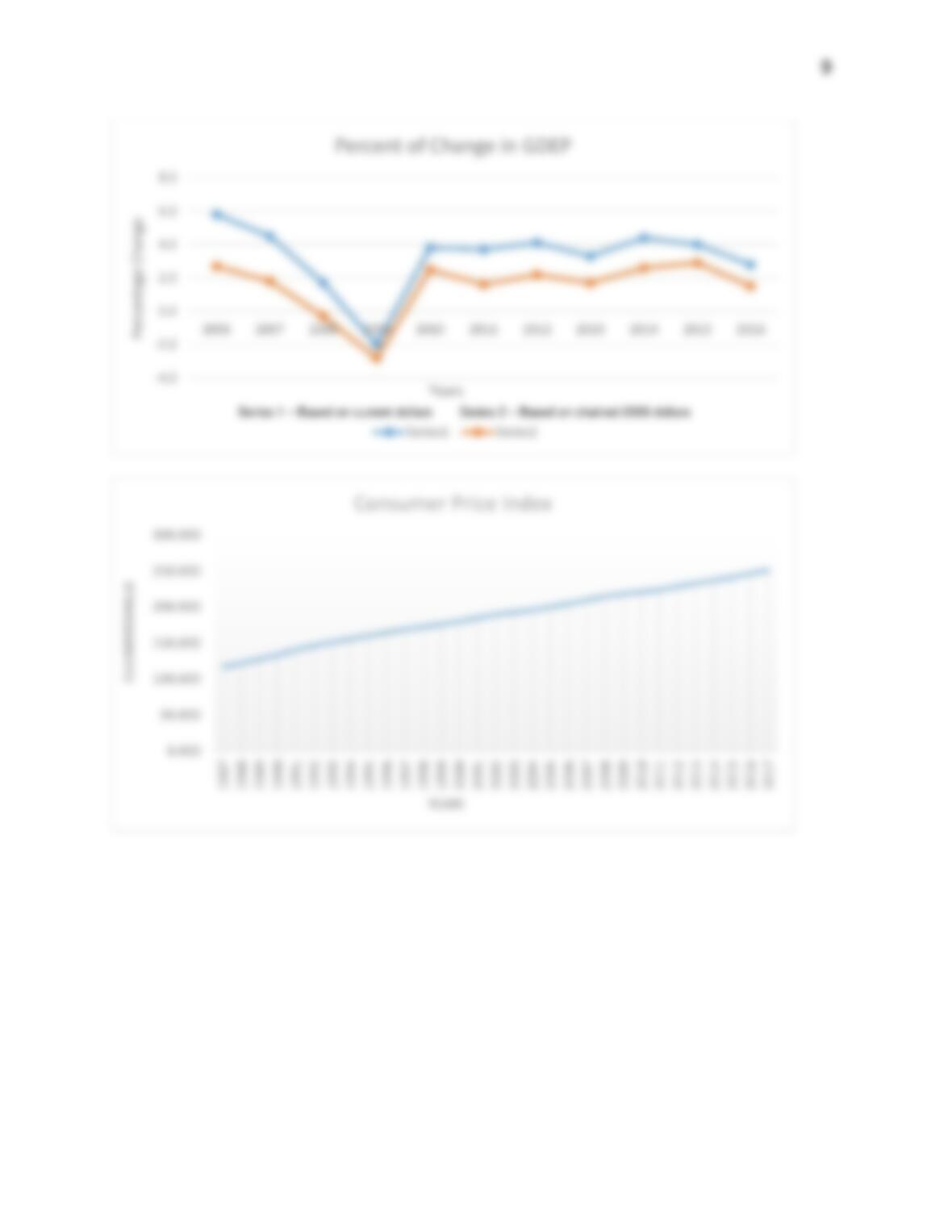
of the Federal Reserve System (US), (2017). “The Consumer Price Index for All Urban
Consumers: All Items Less Food & Energy” is a combination of outlays that “urban consumers”
have paid for, it is a representative collection “of goods, excluding food and energy” (U.S.
Bureau of Labor Statistics, 2017). Additionally, this is also considered the Core CPI and is
employed to identify periods of deflation and inflation respectively. Whereas substantial
upsurges in the CPI within a short time may well signify an inflation phase, and sizeable declines
in CPI over a short time may well suggest the reverse; a deflation phase (U.S. Bureau of Labor
Statistics, 2017). Utilizing the research data one can examine the relationship between the two.
First, the Effective Funds Rate is showing a decline with several periods of minor upswings over
the last ten years; while the CPI shows a steady increase with no drastic swings. In evaluating
these trends, one sees the relationship and influence they hold in an economy.
Purchase Decision: Interest Rates and Financing
Home interest rates have a direct impact on a person’s decision to buy a home. Equally,
important is the type of home one is deciding to purchase such as mobile or permanently as these
utilize different interest rate structures. When deciding to buy a home, buyers need to understand
4
and take into consideration both the annual percentage rate (APR) and the annual effective rate
(AER). When looking at obtaining funds, in the framework of a loan, the face value denotes the
borrowing costs across a given cycle of interest using an application of the loan’s total borrowed
amount. Whereas, the effective rate characterizes the borrowing price over a given period of
interest utilizing an application of the available funds by the borrower; in other words, the
monies that a debtor essentially can use (Vicknair, & Wright, 2015).
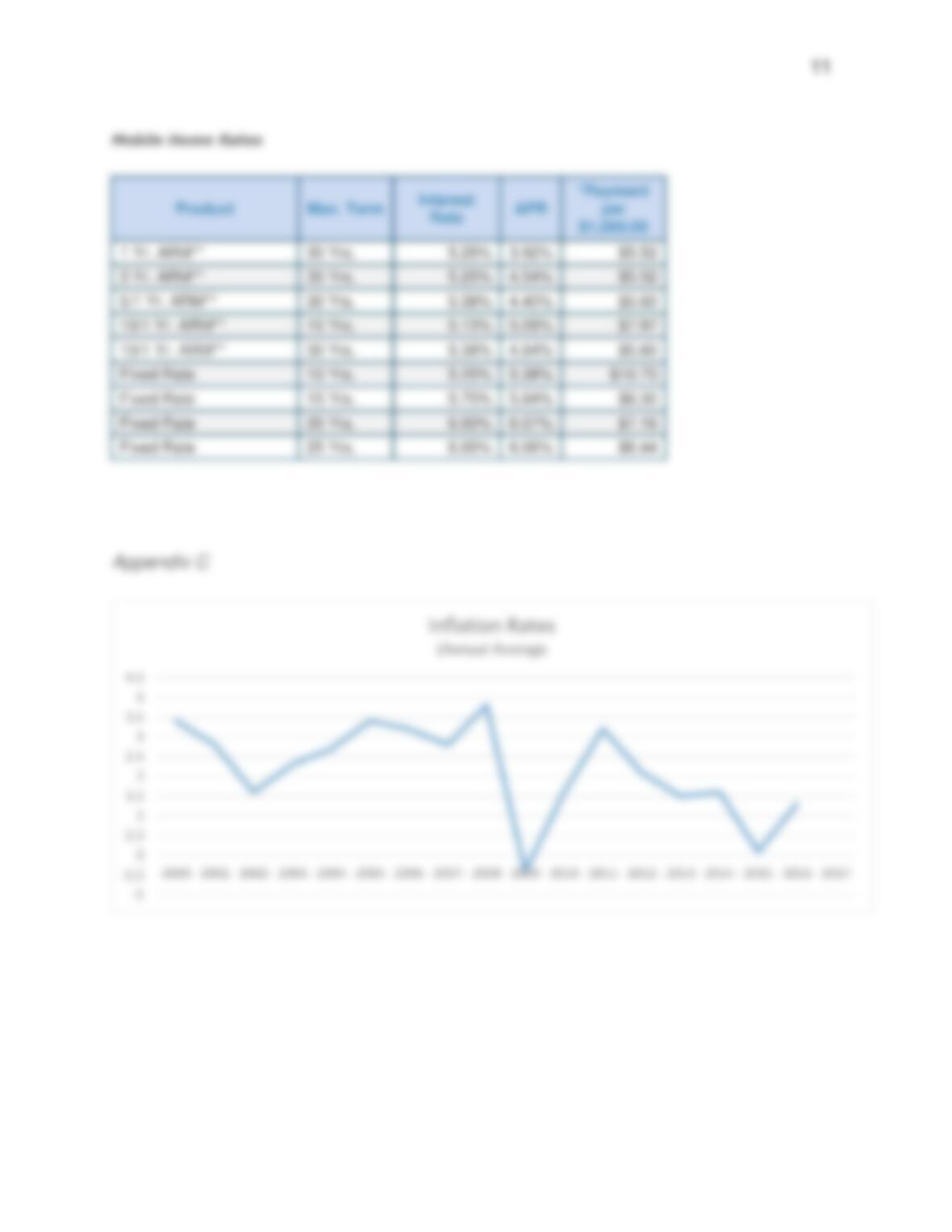
The purchase made was a new mobile home three years ago, obtaining a fifteen-year fixed
mortgage. The interest rate received was 3.95%, and the interest rate was declining. At the time
of purchase, the national interest rates averaged 3.58% (HSH® Associates, 2017). During the
process, several markets and locations that fit the required needs were looked at. Additionally,