IMPLEMENTING
TOTAL
QUALITY
MANAGEMENT
All
glory
comes
from
daring
to
begin.
—
Anonymous
MAJOR
TOPICS
.
Rationale
for
Change
.
Requirements
for
Implementation
.
Role
of
Top
Management:
Leadership
.
Role
of
Middle
Management
.
Viewpoints
of
Those
Involved
.
Implementation
Variation
Among
Organizations
.
Implementation
Approaches
to
Be
Avoided
.
An
Implementation
Approach
That
Works
.
Getting
On
with
It
.
What
to
Do
in
the
Absence
of
Commitment
from
the
Top
.
Implementation
Strategies:
ISO
9000
and
Baldrige
This
chapter
is
intended
to
serve
three
purposes:
1.
To
summarize
in
one
chapter
some
of
the
salient
points
concerning
the
key
elements
and
philoso-
phy
of
total
quality.
2.
To
develop
a
logical
“road
map,”
or
structure
for
implementation,
in
order
for
the
student
of
total
quality
to
better
understand
the
scope
and
magni-
tude
of
total
quality
implementation.
3.
To
provide
a
practical,
hands-on,
how–to
guide
for
implementing
total
quality
in
any
organization,
in
the
sincere
hope
that
this
text
will
have
inspired
some
who
are
in
positions
of
leadership
to
take
this
next
step.
Total
quality
management
has
been
accurately
described
as
a
journey,
not
a
destination.
It
is
the
fervent
hope
of
the
authors
that
many
who
study
the
material
presented
in
this
text
will
embark
on
that
journey.
This
chapter
is
offered
as
your
guide.
Six
decades
ago
Japan
was
in
a
state
of
crisis.
Japan’s
industry
had
been
decimated
by
World
War
II,
and
its
economy
was
in
shambles.
It
was
struggling
to
rebuild
its
economy
and
put
people
to
work.
This
involved
more
than
just
getting
the
factories
running
again.
Even
if
they
could
manage
to
get
production
flowing,
who
would
buy
the
goods
that
were
produced?
The
vast
majority
of
Japanese
people
had
all
they
could
do
to
put
clothes
on
their
backs
and
food
in
their
bellies.
Japan
had
to
look
beyond
its
own
shores
for
markets.
The
most
obvious
market
was
the
United
States,
the
economy
of
which
had
burgeoned
during
the
war.
However,
the
U.S.
market
posed
two
problems
for
the
Japanese,
which
were
as
follows:
convinc-
ing
Americans
that
they
should
buy
goods
from
the
nation
that
attacked
Pearl
Harbor,
and
overcoming
the
American
association
of
Japanese
goods
with
inferior
quality.
Before
World
War
II,
Japan
had
been
notably
unsuccessful
in
American
markets
because
of
the
per-
ception
of
poor
quality
in
its
goods.
Enter
Dr.
W.
Edwards
Deming,
an
American
statistician
who
had
been
in
Japan
in
1947
at
the
request
of
the
Supreme
Commander
of
Allied
Powers
to
help
prepare
for
a
census
to
be
taken
in
1951.
He
had
met
some
of
the
Japanese
people
who
formed
the
Union
of
Japanese
Scientists
and
Engineers
(JUSE).
As
JUSE
wrestled
with
the
prob-
lems
confronting
Japanese
industry
and
the
econ-
omy,
they
were
introduced
to
the
1931
McGraw-Hill
book
The
Economic
Control
of
Manufactured
Product
by
Dr.
Walter
Shewhart
of
Bell
Laboratories,
the
originator
of
the
control
chart.
From
their
acquaintance
with
Deming,
they
thought
he
might
help
them
apply
Shewhart’s
techniques.
JUSE
wrote
Deming
in
March
1950,
asking
him
to
give
a
series
of
lectures
to
plant
managers,
engineers,
and
research
workers.
Deming
gave
his
first
lecture
on
June
19,
1950.
Some
500
people
attended.
Always
unwilling
to
invest
his
time
on
a
lost
cause,
Deming
insisted
that
the
top
executives
of
Japanese
industry
get
involved.
JUSE
arranged
for
that
first
high-level
meeting
on
July
5,
1950.
The
top
21
Japanese
company
presidents
attended.
Deming
told
them
that
they
could
compete
in
the
world’s
markets
within
5
years
if
they
followed
his
teachings.
They
did
it
in
4
years.
From
Chapter
22
of
Quality
Management
for
Organizational
Excellence:
Introduction
to
Total
Quality,
7th
Edition.
David
L.
Goetsch,
Stanley
B.
Davis.
Copyright
©
2013
by
Pearson
Education,
Inc.
All
rights
reserved.
435

Implementing
Total
Quality
Management
This
chapter
sets
the
stage
for
implementation
of
total
quality
in
any
organization.
Had
Japan
not
been
in
such
dire
straits
after
World
War
II—industry
in
shambles,
people
needing
jobs,
the
nation
with
no
money
with
which
to
import
food—perhaps
peo–
ple
there
would
not
have
listened
to
and
acted
on
Deming’s
recommendations.
They
were
seeking
a
route
to
survival.
Your
organization
may
or
may
not
be
in
a
similar
fix.
When
an
organization
is
truly
facing
the
possibility
of
going
out
of
business,
there
is
a
bet-
ter
chance
that
its
management
can
be
convinced
to
embrace
the
principles
of
total
quality.
On
the
other
hand,
when
an
organization
is
doing
pretty
well,
then
taking
on
the
work
that
is
involved
in
becoming
a
total
quality
organization
is
more
difficult
to
sell—unless
you
are
at
the
top
of
the
organization
chart.
Change
is
always
difficult,
and
changing
a
culture
that
has
been
ingrained
for
many
years
is
a
monumen–
tal
undertaking.
When
change
is
seen
as
the
last
hope
for
survival,
it
gets
easier.
People
are
more
receptive
to
change
when
they
realize
that
they
will
surely
be
out
of
jobs
unless
change
is
made.
Is
it
worth
the
trouble?
Unquestionably.
Is
survival
ensured
with
change?
No.
But
the
other
side
of
the
coin
is
that
going
out
of
busi-
ness
is
virtually
ensured
if
you
don’t
change.
Every
enterprise,
no
matter
what
the
type,
will
be
pressured
more
and
more
as
total
quality
pervades
industry,
education,
health
care,
government,
merchandising,
and
services.
Managers
should
consider
whether
they
would
prefer
to
be
ahead
of
the
quality
groundswell
or
engulfed
by
it—out
of
control,
fighting
for
survival
with
the
odds
against
success
much
higher.
This
chapter
provides
insights
to
help
you
imple-
ment
total
quality.
No
one
best
way
fits
the
needs
of
all
organizations.
What
you
will
find
in
this
chapter
are
not
prescriptions,
but
suggestions
and
examples
of
what
has
worked,
with
the
idea
that
you
may
find
the
inspiration
that
will
lead
you
to
success
in
your
own
organization.
RATIONALE
FOR
CHANGE
What’s
wrong
with
the
traditional
way
we
do
business?
1.
We
are
bound
to
a
short-term
focus.
If
the
organiza-
tion
of
which
you
are
a
part
is
similar
to
most
in
the
West,
it
is
driven
by
short-term
objectives.
This
is
true
whether
you
are
in
industry,
education,
health
care,
services,
or
govern-
ment.
For
more
than
60
years,
we
have
been
the
victims
of
Keynesian
economics.
Everything
we
do
has
to
have
a
meas–
urable
payback
in
the
next
quarter
or
the
next
year,
or
it
can–
not
be
justified.
Whether
Keynes
had
that
in
mind
or
not,
it
436
has
become
a
reality
of
Western
management
and
business.
It
is
the
sentiment
“Don’t
tell
me
how
good
it
will
be
in
5
years.
What
are
you
going
to
do
for
me
today?”
2.
The
traditional
approach
tends
to
be
arrogant
rather
than
customer
focused.
Western
organizations
have
tended
to
be
arrogant.
They
think
they
know
more
about
what
their
customers
need
than
their
customers
do.
Or
worse
yet,
they
don’t
care
about
their
customers’
needs.
To
illustrate
this
point,
go
into
a
typical
government
office
and
try
to
get
something
done—get
new
license
plates
for
your
car
or
have
some
legal
papers
executed.
Often
you
will
find
that
the
employees,
whose
salaries
come
from
your
taxes,
are
rude,
inefficient,
and
totally
disinterested
in
you
or
your
needs.
The
same
thing
has
happened
in
industry.
3.
We
seriously
underestimate
the
potential
contribu-
tion
of
our
employees,
particularly
those
in
hands–on
func-
tions.
The
person
who
knows
the
most
about
a
job—and
the
one
who
is
most
likely
to
know
how
to
solve
problems—
is
the
person
who
is
doing
that
job
and
facing
the
job’s
prob-
lems
day
in
and
day
out.
This
truth
is
proven
over
and
over,
yet
the
typical
traditional
manager
does
not
believe
it.
This
factor
alone
is
responsible
for
much
of
the
poor
job
perform-
ance
and
ill
will
that
exists
between
management
and
labor,
the
folks
who
have
to
do
the
work.
People
generally
want
to
do
a
good
job;
but
faced
with
processes
that
are
not
capable
and
management
that
will
not
listen,
they
soon
determine
the
only
way
to
get
ahead,
or
stay
employed,
is
to
“live
with
it
and
don’t
make
waves.”
The
result
is
that
the
brainpower
we
employ
is
largely
wasted.
Think
about
it:
if
you
are
in
a
100-person
organization
and
only
two
or
three
people
can
make
changes
to
the
procedures
you
work
by
and
the
proc-
esses
you
work
with,
97%
or
98%
of
the
idea
potential
and
creativity
is
silenced—but
you
still
pay
for
it.
Let
us
bring
home
this
point.
Konosuke
Matsushita,
the
head
of
Matsushita,
the
giant
Japanese
company
that
pro-
duces
electronic
equipment
under
the
Panasonic
brand
name,
writes:
We
are
going
to
win
and
the
industrial
West
is
going
to
lose
out;
there’s
not
much
you
can
do
about
it
because
the
reasons
for
failure
are
within
yourselves.
Your
firms
are
built
on
the
Taylor
Model.
Even
worse,
so
are
your
heads.
With
your
bosses
doing
the
thinking
while
the
workers
wield
the
screwdrivers,
you’re
con-
vinced
deep
down
that
this
is
the
right
way
to
run
a
business.
For
you,
the
essence
of
management
is
get–
ting
the
ideas
out
of
the
heads
of
the
bosses
and
into
the
hands
of
labor.
We
[in
Japan]
are
beyond
the
Taylor
Model.
Business,
we
know,
is
now
so
complex
and
difficult,
the
survival
of
firms
so
hazardous
in
an
environment
increasingly
unpredictable,
competitive
and
fraught
with
danger,
that
their
continued
existence
depends
on
the
day-to–
day
mobilization
of
every
ounce
of
intelligence.
1
Considering
what
Matsushita,
Sony,
Hitachi,
and
other
Japanese
consumer
electronic
firms
did
to
the
American
HourlyCost
m
an
y
5
ad
a
nd
y
St
at
es
m
a
an
n
C
an
er
Ki
te
d
U
ni
U
ni
te
d
G
M
ex
ic
o
EU
–1
Iat
l
tri
do
Fr
an
la
Ja
p
ai
Au
s
ng
Ie
r
Ko
r
Sp
ea
ce
Implementing
Total
Quality
Management
$
35
30
25
20
15
10
5
0
FIGURE
1
Hourly
Production
Labor
Costs
in
U.S.
Dollars,
2005
Source:
U.S.
Department
of
Labor,
U.S.
Bureau
of
Labor
Statistics,
December
2007.
Note:
EU–15
is
the
average
for
Austria,
Belgium,
Denmark,
Finland,
France,
Germany,
Greece,
Ireland,
Italy,
Luxembourg,
the
Netherlands,
Portugal,
Spain,
Sweden,
and
the
United
Kingdom.
competition,
his
remarks,
while
chilling,
seem
reasonable.
The
Japanese
certainly
won
that
battle,
but
the
war
is
not
over
yet.
Many
Western
organizations
have
also
concluded
(if
belatedly)
that
our
traditional
management
system
(the
Taylor
Model)
wastes
brainpower
in
unthinkable
amounts
and
is
no
longer
appropriate;
they
have
adopted
the
total
quality
model.
If
yours
has
not,
now
is
the
time.
4.
The
traditional
approach
equates
better
quality
with
higher
cost.
Philip
Crosby
wrote
a
book
titled
Quality
Is
Free.
2
The
title
was
probably
intended
to
catch
the
poten-
tial
buyer’s
interest
with
its
shock
value.
When
the
book
was
published
in
1979,
not
many
traditional
managers
would
buy
the
idea
that
quality
is
free.
In
the
ensuing
years,
how–
ever,
that
title
has
proven
to
be
understated.
Organizations
that
have
successfully
changed
themselves
into
total
quality
enterprises
have
found
not
only
that
quality
is
free
but
also
that
it
brings
unforeseen
benefits.
Sadly,
though,
many
tra-
ditional
managers
still
believe
that
if
you
want
better
qual-
ity,
you
have
to
pay
more
for
it.
But
the
marketplace
has
found
that
if
you
want
better
quality,
you
simply
pick
the
supplier
that
has
demonstrated
superior
quality
at
the
same
price.
That
is
why
the
Japanese
cars
have
been
so
successful.
Unfortunately,
it
is
also
the
reason
so
many
of
our
indus-
tries—radios,
televisions,
VCRs,
and
stereo
equipment,
just
to
name
a
few—have
been
lost.
Better
quality
was
to
be
had
from
other
suppliers—for
the
same
cost—and
that
is
where
the
buyers
went.
This
issue
of
better
quality
from
foreign
competitors
for
the
same
cost
is
not
a
matter
of
lower
wage
scales
in
those
countries.
With
few
exceptions,
wage
scales
in
most
of
the
developed
nations
do
not
differ
widely.
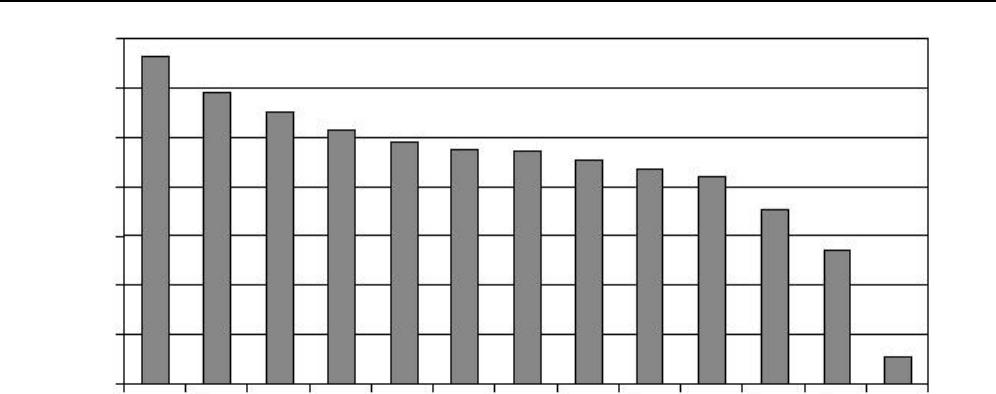
December
2007
data
from
the
U.S.
Department
of
Labor
include
hourly
labor
costs
in
U.S.
dollars
for
production
workers
in
several
countries
for
the
year
2005,
the
last
year
for
which
data
are
available
(Figure
1).
You
will
note
that
France,
Canada,
the
United
States,
Ireland,
Japan,
and
Italy
all
have
hourly
pro-
duction
labor
costs
between
$20
and
$25,
with
the
United
States
and
Japan
separated
by
$1.89.
For
most
of
the
past
15
years,
Japan’s
hourly
production
labor
costs
have
been
higher
than
those
of
the
United
States.
Figure
1
also
shows
that
if
any
geographic
entity
was
being
adversely
affected
by
high
labor
costs
in
2005,
it
was
Europe.
Eight
European
countries
and
Australia
and
Canada
(not
all
shown
on
Figure
1)
had
higher
hourly
labor
costs
than
did
the
United
States.
Of
course,
there
are
a
number
of
countries,
includ-
ing
Korea,
Taiwan,
and
Mexico,
whose
hourly
production
labor
costs
are
significantly
less
than
ours.
But
the
point
we
want
to
make
here
is
that
whether
in
the
United
States
or
Japan,
the
cost
of
producing
comparable
quality
products
should
be
about
the
same.
The
same
product
would
likely
cost
a
little
more
if
produced
in
Europe
and
a
little
less
if
produced
in
Korea,
and
that
is
borne
out
by
product
pric-
ing
with
which
we
are
all
familiar.
It
is
important
to
keep
in
mind
that
for
manufactured
goods
like
automobiles,
televisions,
washing
machines,
and
so
on,
labor
costs
rep-
resent
only
10
to
15%
of
the
product’s
cost
to
the
manu–
facturer
and
can
be
significantly
less
than
that
in
factories
with
automation.
That
means
that
it
takes
a
large
difference
in
labor
cost
to
yield
a
meaningful
change
in
the
ultimate
cost
of
the
product.
The
fact
is
that,
when
Japan
is
able
to
produce
a
$20,000
car
that
is
of
superior
quality
compared
to
an
equivalent
domestic
offering,
it
is
simply
because
that
company
has
embraced
total
quality
methods
and
honed
them
for
40
to
50
years.
437

Implementing
Total
Quality
Management
5.
The
traditional
approach
is
short
on
leadership
and
long
on
“bossmanship.”
Far
too
many
Western
managers
see
their
jobs
as
simply
telling
subordinates
what
to
do
and
when
to
do
it.
It
is
their
station
in
life
to
make
sure
that
the
procedures
are
followed,
that
quotas
are
met,
and
that
no
one
makes
waves.
It
is
easy
to
be
critical
of
this
kind
of
“lead–
ership,”
but
for
95
years,
it
is
what
we
have
been
taught.
It
is
a
product
of
mass
production,
springing
out
of
Henry
Ford’s
Highland
Park
assembly
line
in
1913
and
being
adopted
in
one
form
or
another
by
just
about
every
kind
of
production
activity.
What
exactly
did
Ford
do?
Prior
to
1908,
all
automo–
biles
were
manufactured
in
craft
shops.
In
North
America,
Europe,
wherever,
craft
production
was
how
things
were
made.
All
the
people
engaged
in
the
making
of
an
automo–
bile
were
skilled
craftsmen.
All
parts
had
to
be
hand-fitted
by
filing,
cutting,
or
shaping.
No
two
of
anything
coming
out
of
a
craft
shop
were
the
same.
Ford
realized
that
if
he
could
make
parts
interchangeable,
thereby
eliminating
the
filing
and
bending,
he
could
produce
his
cars
a
lot
cheaper—and
achieve
unit-to-unit
consistency
in
the
bargain.
For
example,
in
1908
a
Ford
assembler/fitter
(notice
the
latter
designation)
spent
514
minutes
to
complete
his
task
before
repeating
the
same
steps
on
the
next
car.
His
work
included
getting
the
parts,
filing
or
shaping
them
to
fit,
and
bolting
them
on
and
adjusting
and
aligning
as
necessary.
It
also
included
maintaining
his
tools.
These
were
multiple
tasks—tasks
requiring
a
craftsman’s
skills.
At
about
that
time,
Ford
finally
achieved
perfect
part
interchangeability.
Ford
assemblers
then
went
to
a
single
task,
with
the
cycle
time
dropping
to
2.3
minutes—the
assembler’s
assigned
task
took
only
2.3
minutes
to
complete
before
the
assembler
was
ready
to
repeat
it
again
on
the
next
car.
Productivity
went
up
in
a
dramatic
fashion.
Having
to
do
only
one
simple
task
over
and
over
meant
that
the
assembler
(he
was
no
longer
a
fitter)
got
to
be
an
expert
at
it
very
quickly.
Ford
took
it
to
the
next
step
in
1913
with
his
introduction
of
the
moving
assembly
line.
Now
the
assembler
no
longer
had
to
move.
The
work
came
to
him.
Assembler
cycle
time
dropped
to
1.19
minutes.
We
cannot
give
Ford
all
the
credit
for
part
interchange-
ability
because
Cadillac
apparently
beat
him
to
that
goal
by
2
years,
achieving
it
in
1906.
But
Ford
must
be
credited
with
the
moving
assembly
line
and
what
has
been
called
the
interchangeable
worker.
3
Ford
no
longer
needed
skilled
craftsmen.
He
could
hire
unskilled
assemblers
direct
from
the
farm
or
immigrants
who
couldn’t
speak
or
read
English.
Within
just
a
few
minutes,
they
would
be
as
expert
as
the
assembly
line
demanded.
This
division
of
labor
down
to
its
simplest
terms
paid
big
dividends
for
Ford
and
for
society
in
general.
For
the
first
time,
the
possibility
of
owning
an
auto-
mobile
was
not
restricted
to
the
wealthy.
When
the
Model
T
was
introduced
in
1908
with
its
interchangeable
parts,
it
cost
far
less
than
competing
cars.
In
the
early
1920s,
Ford’s
inter-
changeable
workers
produced
2
million
identical
cars
each
year,
and
the
cost
was
reduced
by
another
two-thirds.
Ford’s
production
techniques
soon
found
their
way
into
virtually
all
manufacturing
activities
in
North
America
and
Europe.
438
Mass
production
had
arrived—and
with
it
the
elimi-
nation
of
skills.
Soon
industry
found
ways
to
divide
labor
in
other
areas
to
minimize
the
need
for
worker
skills
and
knowledge.
We
called
it
specialization.
In
this
kind
of
envi-
ronment,
all
you
needed
were
simple
work
instructions,
the
right
tool,
and
the
requisite
muscle
to
turn
it.
Follow
the
instructions—over
and
over
and
over
again.
Don’t
impro-
vise;
don’t
make
waves;
just
follow
orders.
Supervisors
and
managers
have
been
trained
in
this
system
for
nearly
a
cen–
tury.
It
worked,
at
least
for
a
while.
For
the
last
half
of
that
period
the
Japanese
have
demonstrated
a
better
approach.
REQUIREMENTS
FOR
IMPLEMENTATION
Some
parts
of
your
organization
are
concerned
that
the
future
holds
little
promise
of
prosperity
unless
fundamen–
tal
changes
are
brought
about.
Perhaps
your
competition
is
taking
market
share.
You
know
that
your
product
quality
is
not
good
enough.
There
is
strife
within
your
firm,
bickering
among
departments,
endless
“brushfires.”
The
total
quality
approach
is
working
for
others.
Maybe
total
quality
is
what
is
needed.
What
has
to
happen
for
total
quality
to
take
place?
What
are
the
requirements
for
its
implementation?
Commitment
by
Top
Management
First
and
foremost,
for
total
quality
to
become
the
way
we
do
business,
an
unwavering
and
unquestioned
commitment
is
required
at
the
top.
The
CEO,
general
manager,
or
what–
ever
title
the
top
person
has
must
commit
not
only
resources
but
also
a
considerable
amount
of
his
or
her
own
time.
Top
executives
should
plan
on
a
third
to
half
their
time
being
used
in
the
total
quality
effort.
Certainly,
less
than
a
quar-
ter
of
their
time
is
not
sufficient.
Some
say,
“But
the
presi-
dent
is
so
busy.
Why
can’t
he
delegate
the
implementation?”
Neither
in
personal
experience
nor
in
the
recorded
experi-
ences
of
the
many
companies
of
which
we
are
aware
is
there
a
single
success
story
of
a
delegated
total
quality
implemen-
tation.
People
expect
the
boss
to
put
his
or
her
efforts
on
the
most
important
issues.
If
they
fail
to
see
that
effort
as
being
total
quality,
the
subliminal
message
is
that
total
qual–
ity
is
not
number
one.
Some
departments
will
press
on—for
a
while—until
they
get
at
cross
purposes
with
other
depart-
ments
that
are
marching
to
the
beat
of
a
different
drummer.
Who
has
the
authority
to
solve
the
impasse?
Only
the
boss,
and
he
or
she
is
not
involved
in
the
process.
For
an
organization
to
completely
embrace
total
quality
from
the
mailroom
to
the
executive
office,
a
profound
change
is
required
in
the
corporate
culture.
Changing
a
culture
is
very
difficult
even
when
everyone
is
willing,
and
it
is
almost
never
the
case
that
everyone
will
be
willing.
Some
see
danger
in
change,
danger
to
their
personal
position,
the
threat
of
loss
of
power
or
prestige,
perhaps
even
loss
of
employment.
Some
just
like
everything
the
way
it
is
and
see
no
reason
to
change.
Some
will
be
unwilling
to
put
in
the
work
required.
Some

Implementing
Total
Quality
Management
cannot
believe
that
total
quality
makes
sense.
If
the
message
from
the
top
is
not
crystal
clear
and
if
the
person
at
the
top
is
not
seen
as
being
totally
involved,
that
will
be
all
the
encour-
agement
some
will
need
to
“toss
wrenches
into
the
gears.”
But
there
is
another
reason
the
person
at
the
top
must
be
involved:
the
change
to
total
quality
is
a
learning
experi-
ence.
If
the
boss
is
not
involved
in
it
day
to
day,
he
or
she
will
never
know
enough
about
what
is
happening
to
make
rational
decisions
affecting
the
change.
For
example,
sup–
pose
department
heads
have
been
meeting
over
the
course
of
a
month
or
two,
wrestling
with
the
issue
of
how
the
organi-
zational
structure
needs
to
change
to
accommodate
total
quality.
These
people
have
aired
the
problem,
have
devel-
oped
suggestions
for
change,
and
generally
understand
the
issue.
However,
a
change
as
far-reaching
as
creating
a
new
organizational
structure
is
beyond
the
scope
of
the
depart-
ment
heads.
Only
the
person
at
the
top
can
do
that.
How
do
the
department
heads
get
that
person
to
understand
everything
that
has
happened
in
these
meetings?
They
have
been
at
it
for
weeks.
A
1-hour
briefing
is
not
going
to
get
the
boss
up
to
speed.
In
this
setting,
the
naysayer’s
impassioned
plea
for
the
status
quo
takes
on
a
credibility
that
would
have
been
impossible
if
the
boss
had
been
involved
in
the
meet–
ings
from
the
start.
The
boss
hears
from
one
side
that
the
proposed
change
must
be
put
in
place
if
total
quality
is
ever
going
to
provide
the
promised
benefit.
From
the
other
side,
he
or
she
hears
that
the
proposed
change
would
be
disrup-
tive
at
best,
and
possibly
disastrous.
The
span
of
control
will
be
too
wide,
allowing
things
to
drop
through
the
cracks.
Perhaps
the
system
currently
in
place
is
not
perfect,
but
at
least
it
is
familiar—and
it
works.
What
would
you
do?
If
you
were
the
boss
and
heard
these
arguments,
would
you
risk
the
company
and
make
the
change?
The
easy
thing
to
do
is
do
nothing:
tell
the
department
heads
that
you
understand
where
they
are
coming
from
and
that
maybe
sometime
later
it
will
be
an
appropriate
thing
to
do,
but
in
the
meantime,
What
happened
in
this
example
goes
on
all
the
time.
The
boss
is
given
a
briefing
from
which
he
or
she
is
expected
to
know
as
much
as
the
briefer.
It
cannot
be.
The
briefer
has
been
directly
involved
in
weeks
of
discussion
and
has
the
benefit
of
long
and
thoughtful
consideration
and
delibera-
tion.
The
boss
got
a
few
minutes
of
encapsulated
data
and
has
had
no
opportunity
to
consider
them.
Should
he
or
she
decide
against
the
change,
the
decision
will
make
an
immedi-
ate
and
lasting
impact
on
the
proponents.
They
won’t
make
that
mistake
again.
Wasted
weeks
of
effort,
and
for
what?
Only
to
be
told
that
the
boss
thought
the
organization
had
better
stay
the
way
it
is
and
make
the
best
of
it.
Total
quality
will
probably
come
to
a
screeching
halt
then
and
there.
Does
this
happen
in
the
real
world?
Yes,
it
does!
Commitment
of
Resources
The
other
part
of
the
commitment
is
resources.
Total
qual–
ity
implementation
need
not
be
expensive,
but
everything
has
a
cost.
In
this
case,
the
cost
will
certainly
include
some
training.
It
may
also
include
some
consultant
expense.
The
dollars
must
be
there
when
they
are
needed.
The
difficulty
is
that
it
will
not
be
easy
to
project
a
payback;
so
many
factors
can
affect
a
company’s
performance
that
it
may
be
impossi-
ble
to
know
with
certainty
that
X
dollars
invested
in
training
yielded
Y
dollars
in
performance
gains.
This
area
conforms
to
Deming’s
truth
that
some
things
are
not
measurable.
Accountants
don’t
like
to
hear
that.
The
test
for
commitment
of
money
should
be
one
of
reasonableness.
Does
it
make
sense
to
do
this?
Is
the
tim-
ing
right?
Is
the
money
available?
Can
we
afford
it?
Is
it
the
right
thing
to
do?
If
the
answer
to
these
questions
is
yes,
you
should
not
worry
unduly
about
trying
to
capture
the
pay–
back.
Chances
are
good
that
it
would
cost
more
to
figure
out
what
the
payback
should
be
than
the
project
itself
will
cost,
and
you
can
never
be
certain
of
the
data.
they’ll
have
to
figure
ways
to
work
around
the
structure.
Organization–wide
Steering
Committee
QUALITY
TIP
It
Isn’t
Easy,
but
It’s
Worth
Doing
In
a
review
of
an
earlier
edition
of
this
text
on
the
Amazon.
com
Web
site,
the
reviewer
chastised
the
authors
for
making
TQM
sound
like
it
was
difficult
to
achieve.
We
are
quite
sure
the
writer
of
the
review
had
never
been
through
a
TQM
implementation
because
if
he
had,
he
would
more
likely
have
agreed
that
it
is
not
easy.
The
task
is
sometimes
more
than
an
organization
is
prepared
to
take
on
or
to
complete.
Even
so,
it
is
shortsighted
not
to
try,
for
it
is
certainly
possible
to
accomplish
with
support
from
the
top
and
a
well-
planned
approach.
The
easy
part
will
come
after
total
quality
is
in
place
and
performance
and
quality
are
improving,
while
simultaneously
costs
and
time
required
are
declining.
Take
our
word
for
it—few
TQM
implementations
take
place
without
a
lot
of
hard
work
and
determination,
none
without
a
supporting
commitment
from
the
top.
Yes,
it
is
difficult,
but
the
reward
makes
the
endeavor
sweet.
Source:
David
L.
Goetsch
and
Stanley
B.
Davis.
The
third
thing
needed
for
company-wide
implementation
is
a
top-level
steering
committee.
It
may
be
called
by
a
number
of
names,
but
it
should
be
chaired
by
the
person
filling
the
top
position
in
the
organization’s
structure,
and
its
mem-
bership
should
comprise
that
person’s
direct
subordinates.
In
a
typical
corporate
setting,
this
would
be
the
president
as
chair,
with
all
of
the
vice
presidents
filling
the
membership.
The
function
of
this
group
is
to
establish
how
total
quality
is
to
be
implemented
and
then
to
see
that
it
happens.
As
the
conversion
process
starts,
it
will
be
necessary
to
set
up
cross-
functional
teams,
to
establish
the
teams’
objectives,
and
to
monitor
results.
Ultimately,
this
group
will
find
itself
operat-
ing
as
a
team
rather
than
just
as
the
staff.
It
will
set
the
vision
and
goals
for
the
organization,
establish
teams
to
pursue
the
goals,
monitor
the
teams’
progress,
and
reward
them
for
their
achievements.
The
important
point,
from
the
outset,
is
that
implementation
requires
management.
Otherwise,
it
can
easily
set
off
in
too
many
directions
at
once,
some
of
439
Implementing
Total
Quality
Management
which
may
not
even
be
in
concert
with
the
company’s
objec–
tives.
This
cannot
be
allowed
to
happen.
The
energy
that
is
going
to
be
unleashed
throughout
the
organization
must
be
channeled.
The
steering
committee
does
that.
Another
important
aspect
of
the
steering
committee
is
symbolic.
If
the
employees
observe
the
top-management
group
functioning
like
a
team
and
doing
things
differently
from
the
way
things
used
to
be
done,
they
will
get
a
strong
message
that
this
time
something
really
is
happening.
If,
on
the
other
hand,
they
see
the
staff
operating
just
as
they
always
have,
they
will
know
that
failure
is
simply
a
matter
of
time.
Why
bother
to
get
involved?
Do
not
minimize
the
dif-
ficulty
of
doing
this.
The
typical
staff
is
made
up
of
stars,
not
team
players.
They
have
insulated
their
respective
depart-
ments
with
walls
that
can
defy
all
efforts
to
penetrate
them.
Their
interests
usually
lie
in
their
own
departments
rather
than
in
the
long-term
vision
and
objectives
of
the
company.
What
is
worse,
they
don’t
have
a
common
language—hav–
ing
backgrounds
as
diverse
as
engineering,
finance,
man–
agement
information
systems,
human
resources,
quality
assurance,
manufacturing,
purchasing,
and
so
on.
In
many
cases,
they
do
not
trust
each
other.
Is
it
any
wonder
that
we
have
problems?
The
person
with
the
biggest
challenge
is
the
one
who
has
to
forge
this
crowd
into
a
cohesive,
mutually
supportive
team.
But
it
must
be
done.
The
upside
is
that
almost
invariably,
once
they
really
start
to
function
as
a
team,
staff
members
will
never
want
to
go
back
to
the
old
ways
again.
Planning
and
Publicizing
So
far,
we
have
secured
commitment
from
the
top
and
estab–
lished
the
steering
committee.
At
this
point,
the
real
work
has
only
begun.
We’ve
just
said
we’re
going
to
do
it
and
determined
who
is
going
to
manage
it.
Now
we
have
to
get
down
to
the
details.
The
steering
committee
must
develop
the
vision
statement
and
guiding
principles,
set
the
goals
and
objectives,
put
the
TQ
implementation
plan
in
place,
and
then
develop
an
award
and
recognition
program
and
other
publicity
efforts.
All
these
matters
will
be
discussed
next.
Vision
Statement
and
Guiding
Principles
Where
would
the
organization
like
to
be
5
or
even
10
years
down
the
road,
and
what
are
the
guiding
principles
for
operating
the
business?
The
vision
statement
is
a
long-range
strategic
view.
Total
quality
needs
a
long-range
vision
because
total
quality
is
achieved
only
over
a
relatively
long
period,
although
there
will
be
visible
improvements
practically
from
the
outset.
We
are
really
talking
about
fundamental
changes
in
the
way
we
do
things
and
how
people
work
together;
about
involving
customers
and
suppliers
in
ways
never
before
considered
and
putting
values
on
matters
that
may
never
have
been
discussed.
Not
everything
will
come
together
overnight,
so
the
vision
must
be
of
a
distant
target
to
provide
a
consistent
course
into
the
future.
Without
that,
the
company
will
find
itself
taking
turns
and
detours
with
every
new
quarter
or
year.
That
will
destroy
the
effort.
Consistency
is
the
watchword.
440
Toyota
Motor
Sales
USA
Inc.:
To
be
the
most
successful
and
respected
car
company
in
America.
Rollins
College:
To
be
one
of
the
nation’s
leading
colleges,
emphasizing
academic
excellence,
responsible
citizenship,
personal
growth,
and
ethical
leadership.
Park
Place
Lexus:
To
be
the
unparalleled
retail
automotive
group
in
the
United
States.
FIGURE
2
Sample
Vision
Statements
from
a
Manufacturer,
a
College,
and
a
Car
Dealership
Sources:
Toyota,
www.toyotamotors2alesus.com,
retrieved
September
23,
2011;
Rollins
College,
www.rollins.edu,
retrieved
September
23,
2011;
Park
Place
Lexus,
www.quality.hist.gov/PDF_Files/Park_Place_Lexus_
Profile.pdf,
retrieved
September
23,
2011.
The
vision
statement
need
not
be
lengthy—in
fact,
the
shorter,
the
better.
But
it
must
represent
the
best
collective
thoughts
of
free
and
open
discussion
by
the
steering
com–
mittee.
If
your
organization
is
part
of
a
larger
entity
(such
as
a
division
within
a
company)
that
has
a
vision,
then
you
need
only
tailor
yours
to
support
that
one.
The
total
quality
vision
statement
will
usually
include
a
recognition
that
only
the
customers
make
the
final
judgment
of
success
or
failure.
If
not
stated
in
words,
that
idea
must
be
implicit.
Sample
vision
statements
from
a
variety
of
businesses
are
found
in
Figure
2.
The
guiding
principles
are
the
second
element
of
the
vision
and
usually
accompany
the
vision
statement
in
a
sin-
gle
document.
The
guiding
principles
establish
the
rules
of
conduct
for
the
organization
and
its
members.
These
princi-
ples
may
be
concerned
with
honesty,
ethics,
respect,
fairness,
quality,
suppliers,
customers,
community,
environment,
roles
of
management
and
employees,
and
so
on.
This
can
sound
very
lofty
indeed,
and
that
is
not
a
bad
thing.
People
want
to
be
associated
with
organizations
with
lofty
ideals.
They
want
to
be
proud
not
only
of
their
own
contribution
but
also
of
the
company.
Sample
guiding
principles
are
listed
in
Figure
3.
A
well-written
vision
statement
with
its
attending
guid–
ing
principles
has
the
following
properties:
1.
Is
easily
understood
by
all
stakeholders
(employees,
customers,
suppliers,
and
others)
2.
Is
briefly
stated
yet
clear
and
comprehensive
in
meaning
3.
Is
challenging
yet
possible
to
accomplish,
lofty
yet
tangible
4.
Is
capable
of
stirring
excitement
and
unity
of
purpose
among
stakeholders
5.
Sets
the
tone
for
how
the
organization
and
its
employ-
ees
conduct
their
business
6.
Is
not
concerned
with
numbers
The
vision
statement
must
be
crafted
in
such
a
way
that
all
employees
can
relate
to
it
and,
in
so
doing,
execute
their
work
in
a
manner
and
direction
that
is
consistent
with
its
meaning
and
objectives.
Implementing
Total
Quality
Management
Evonik
Industries
AG
(Formerly
Degussa)
Focus
on
our
customers.
Operate
according
to
Responsible
Care
principles
that
protect
employees,
environment
and
the
community.
Respect
diversity
in
culture,
gender,
nationality
and
race.
Treat
people
fairly,
with
consistency
and
respect
different
opinions.
Be
open,
honest,
and
share
information.
Encourage
learning,
develop
people,
foster
teamwork.
Set
clear
goals,
empower
employees
and
encourage
open
feedback.
Take
responsibility,
and
lead
by
example.
Support
innovation
and
initiative,
learn
from
mistakes,
strive
for
excellence.
Act
with
passion
for
our
business.
PepsiCo
Inc.
Care
for
customers,
consumers
and
the
world
we
live
in.
Sell
only
products
we
can
be
proud
of.
Speak
with
truth
and
candor.
Balance
short
term
and
long
term.
Win
with
diversity
and
inclusion.
Respect
others
and
succeed
together.