IFRS in the US
Source: http://www.pwc.com/us/en/issues/ifrs-reporting/transition-to-ifrs-
status.jhtml
Date prepared: September 22, 2009
Executive summary:
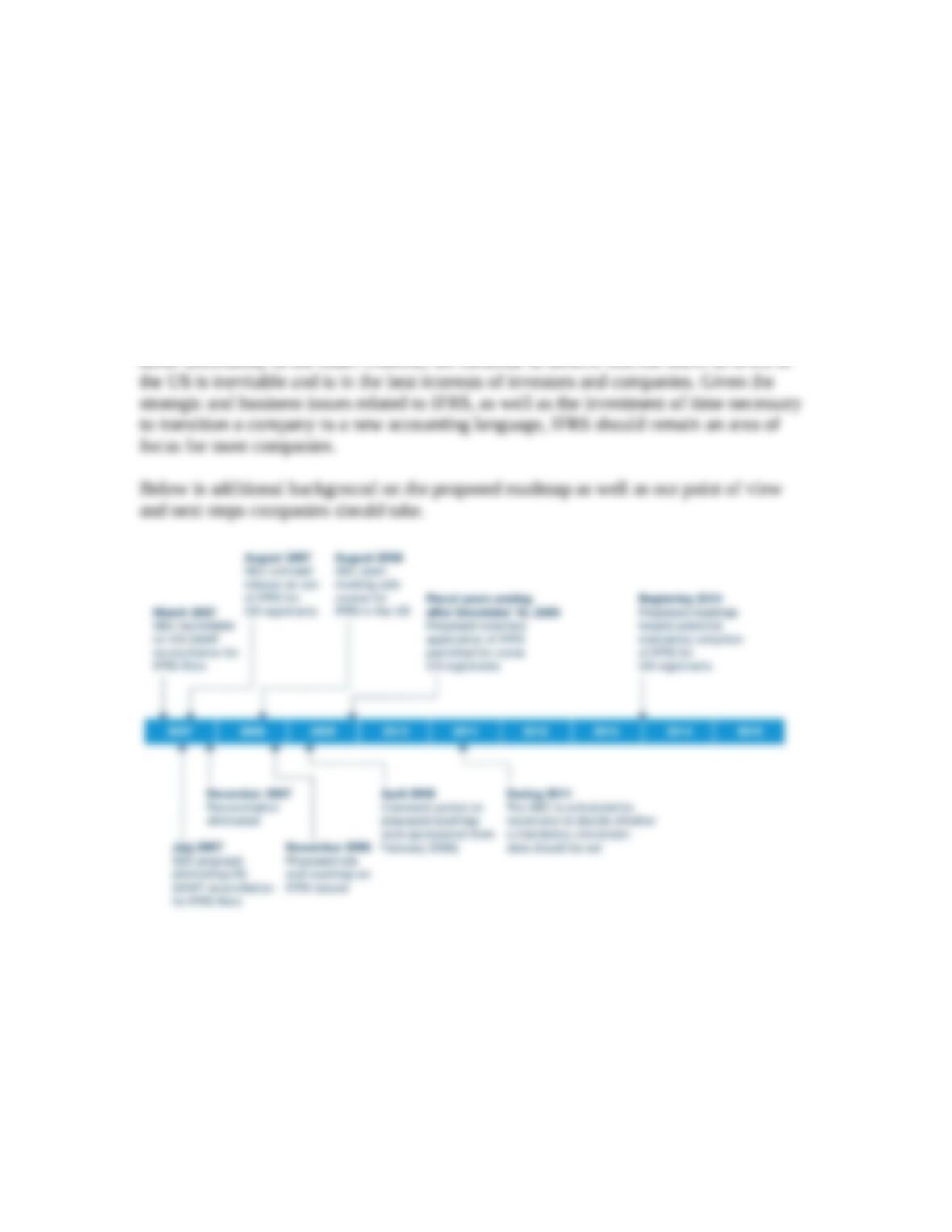
In 2008 the SEC issued its roadmap to adopting IFRS which includes adoption
milestones of 2014 for accelerated filers with others adopting in 2015 and 2016. To-
date, the SEC has not issued definitive deadlines for adoption.
The overwhelming opinion seems to be that adoption of IFRS by the US is inevitable but
there are many hurdles that need to be cleared first.
In the meantime, there is a memo of understanding between the FASB and IASB that
outlines eleven areas in which improvements should be made to both sets of
standards that will improve each and converge the two sets of standards. As a result,
we can expect a wave of new standards to be issued under US GAAP in the next
several years.
Below are PwC’s recommendations of what can be done now to prepare:
Focus on the challenge. The next several years will bring major changes to US
financial reporting. Whether changes arrive through convergence, an SEC-
mandated move to IFRS, or continued IFRS adoption by subsidiaries and
counterparties, the effect on the US businesses will be considerable.
Perform an assessment. Consider the effects these alternation paths could have
and identify business, accounting, tax investor, control, systems and work-force
issues.
Be poised to adapt to ongoing change. Use scenario planning to incorporation
likely convergence and IFRS adoption explanations into strategic thinking and
business planning.
Monitor actual changes. Closely follow SEC actions and new FASB and IASB
standards. Consider how they will influence non-US counterparties (customers
and vendors) and affect reporting, long-term contractual commitments, tax
structures, financings, systems and controls.
Maintain corporate oversight. Influence transition timing, strategies, and policy
decisions of non-US subsidiaries who are or may soon be IFRS users.
Identify what can be done now. Be mindful of the specific aspects of
convergence and conversion that will take the longest and consider smaller
controlled one-off projects and “easy wins” where desirable.
Current situation and next steps
On November 14, 2008, the SEC released its proposed roadmap for the adoption of IFRS
in the US. At about the same time, leaders from the G20 countries at a financial summit
in the US issued a statement which, among other things, confirmed the leaders’ support
for developing a single set of high-quality global accounting standards.
Both of these events represent progress toward the adoption of IFRS in the US. While
current events including a new administration and the ongoing financial crisis have added