Precautionary and mercantilist incentives, which are right now the dominant arguments
explaning reserve accumulation especially within emerging economies. I also am going to talk
about the importance of reserves as a symbol of strength for China today.
1 INTRODUCTION
China is the second largest foreign holder of U.S. government debt, with an amount of US
treasury securities totaling 1047.6 billion dollars as of September 2021.
1
The trade war between
Beijing and Washington has stoked concern in financial markets that China might opt to weaponize
its holdings in retaliation for the tariffs the Trump administration has imposed on Chinese imports
in hope of gaining political leverage. Some analysts and investors have painted this as China’s
nuclear option, arguing that massive sell-offs could cause havoc in US financial markets.
1.1 Theoretical framework behind weaponization
The amount of U.S. debt held by China refers to securities such as bills, notes and bonds issued
by the United States Department of the Treasury on behalf of the federal government to fund its
annual budget deficit and roll over existing debt. Investors in the United States and abroad include
official institutions, such as the U.S. Federal Reserve and foreign central banks; financial
institutions, such as commercial banks; and private individual investors.
For decades, the U.S. has saved less than it invests and lived beyond its means. Huge fiscal
deficits and ballooning public sector debt run by the U.S. government effectively reduces domestic
saving and crowds out investment. By accounting identity S – CA = I, where CA = TB + NFIA +
NUT (expanded, this is (household saving + business saving + government saving) + (borrowing
from abroad – lending to abroad) = (public investment + private investment)), the shortfall between
U.S. saving and physical investment has to be met by borrowing from abroad. Federal debt
represents, in large measure, the accumulated balance of federal borrowing of the U.S. government.
The inflow of Chinese (and other foreign) capital to U.S. debt and equity markets have helped
keep interest rates low. Assume the same budget deficits and U.S. saving rates without the
possibility of foreign borrowing: budget deficits would have had a much greater crowding-out
effect on U.S. private investment, because only domestic saving would have been available to
finance both. The pressures the deficit has placed on domestic saving would have pushed up
interest rates throughout the economy and caused fewer private investment projects to be profitably
undertaken. The ability to borrow from foreigners avoids these negative effects on U.S. interest
rates, private investment, and GDP.
Not only does debt financing allow the U.S. to remove upward pressure on the interest rate, but
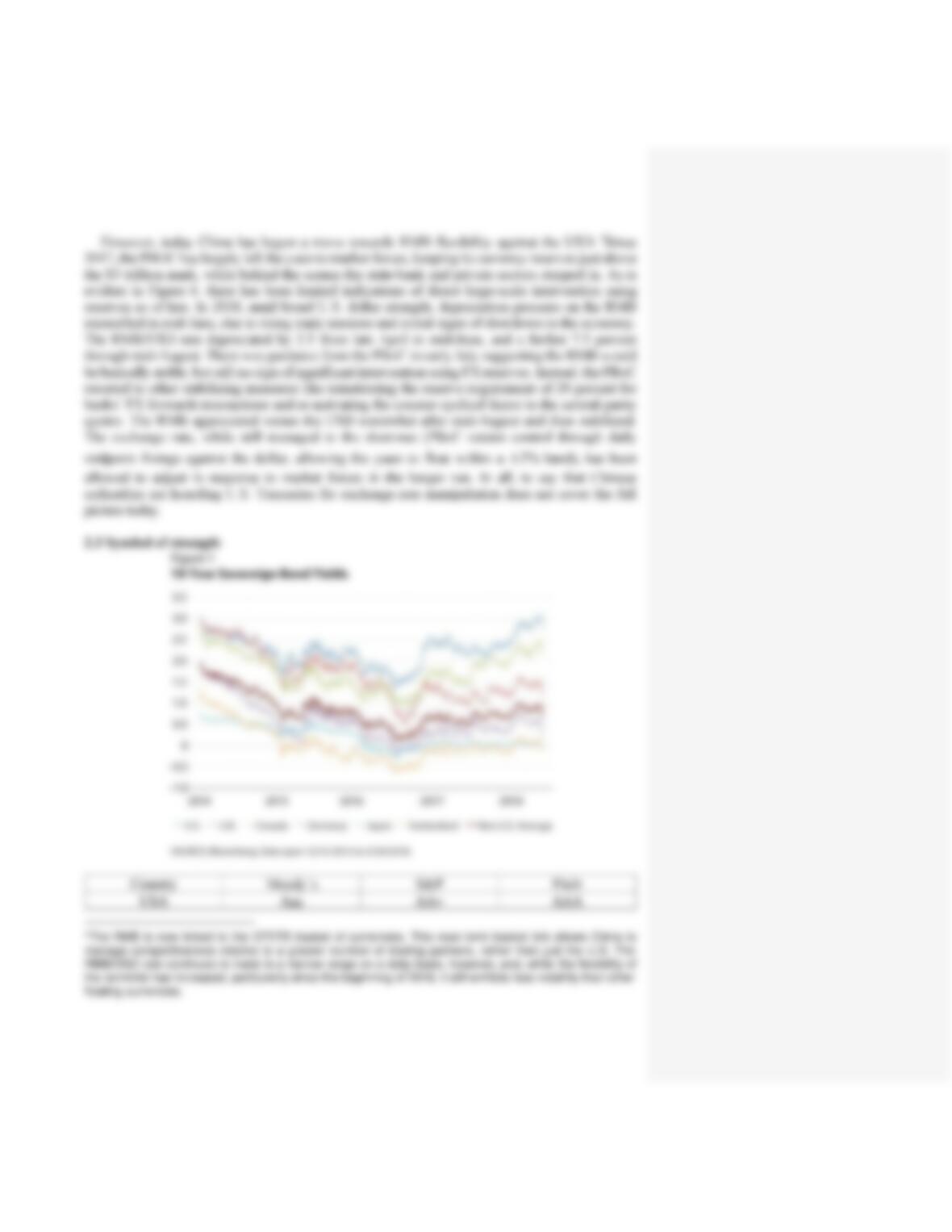
consistent strong demand for U.S. Treasuries lead to high prices and low yields. The 10-year
Treasury yield serves as a vital economic benchmark, and it influences many other interest rates.
1
Data from Federal Reserve; US Department of the Treasury, published August 2021.
Commented [WL1]: To extend its maturity in ordinary
commercial fashion, either by agreeing with the holder of
the debt (on the same terms or on new terms) or by
refinancing it with someone else on new terms.
So for example, when the 10-year yield goes down, so do mortgage rates and other borrowing
rates. This subsidizes consumption and investment and effectively reduces the costs the deficit
places on the broader economy.
The prices at which investors buy and sell bonds in the secondary market move in the opposite
direction to the yields they expect to receive. Once a bond is issued, it offers fixed interest
payments to its owner over its term to maturity, which does not change. However, interest rates in
financial markets change all the time and, as a result, new bonds that are issued will offer different
interest payments to investors than existing bonds.
For example, suppose interest rates fall. New bonds that are issued will now offer lower interest
payments. This makes existing bonds that were issued before the fall in interest rates more valuable
to investors, because they offer higher interest payments compared to new bonds. As a result, the
price of existing bonds will increase. However, if a bond’s price increases it is now more expensive
for a potential new investor to buy. The bond’s yield will then fall because the return an investor
expects from purchasing this bond is now lower.
Following from that argument, if China dumps bonds on a large scale:
(i) It would push down debt prices and cause a spike in interest rates in the U.S., bringing about
negative repercussions on investment and consumer spending while yielding greater profit for
China.
(ii) Depending on the amount dumped, there might also be depreciation of the U.S. dollar. This
would increase the dollar cost of a given volume of imports and harm production in the U.S. given
that it is a net importer.
(iii) Some speculate that there might be a domino effect. As the price of bonds declines, and
other countries and holders of bonds are adversely affected, these countries might also sell bonds
to trigger a bigger crisis.
2 CHINESE IMPERATIVES FOR HOLDING U.S. DEBT
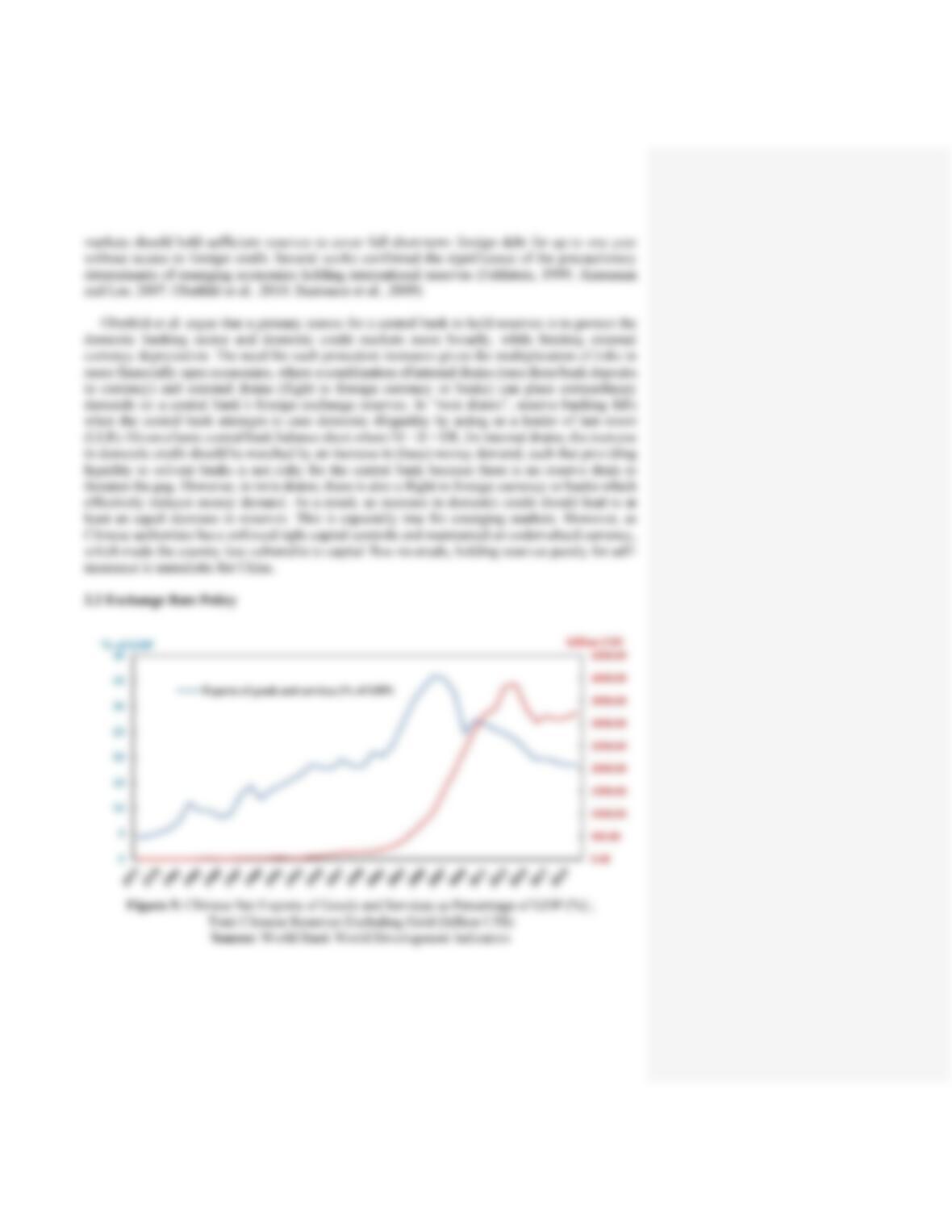
China has been running a large trade surplus in goods and services for years. As such, its
international income has also increased, with many of the trade transactions with businesses in the
U.S. and other countries paid for with U.S. dollars. Since the 1978 reforms, China has been
accumulating U.S. dollars to buy assets denominated in dollars – such as Treasuries. These assets
are included in its foreign exchange reserves, which are now the largest in the world at US$3.22
trillion (as of November 30, 2021)
2
. If we disregard political agenda and employ economic analysis,
it is highly unlikely that China would engage in a massive sell-off simply for political leverage.
2
http://finance.sina.com.cn/jjxw/2021-12-07/doc-ikyakumx2602618.shtml
Commented [WL2]: An abrupt shift in the balance of
supply and demand could drive down Treasury prices, and
drive up their yields, which move in the opposition direction
to prices. That would cause a spike in borrowing costs for
the U.S. government.
Also, because Treasury yields are a benchmark for U.S.
consumer and business credit, interest rates on everything
from corporate bonds to homeowners’ mortgages would rise,
likely slowing the economy.
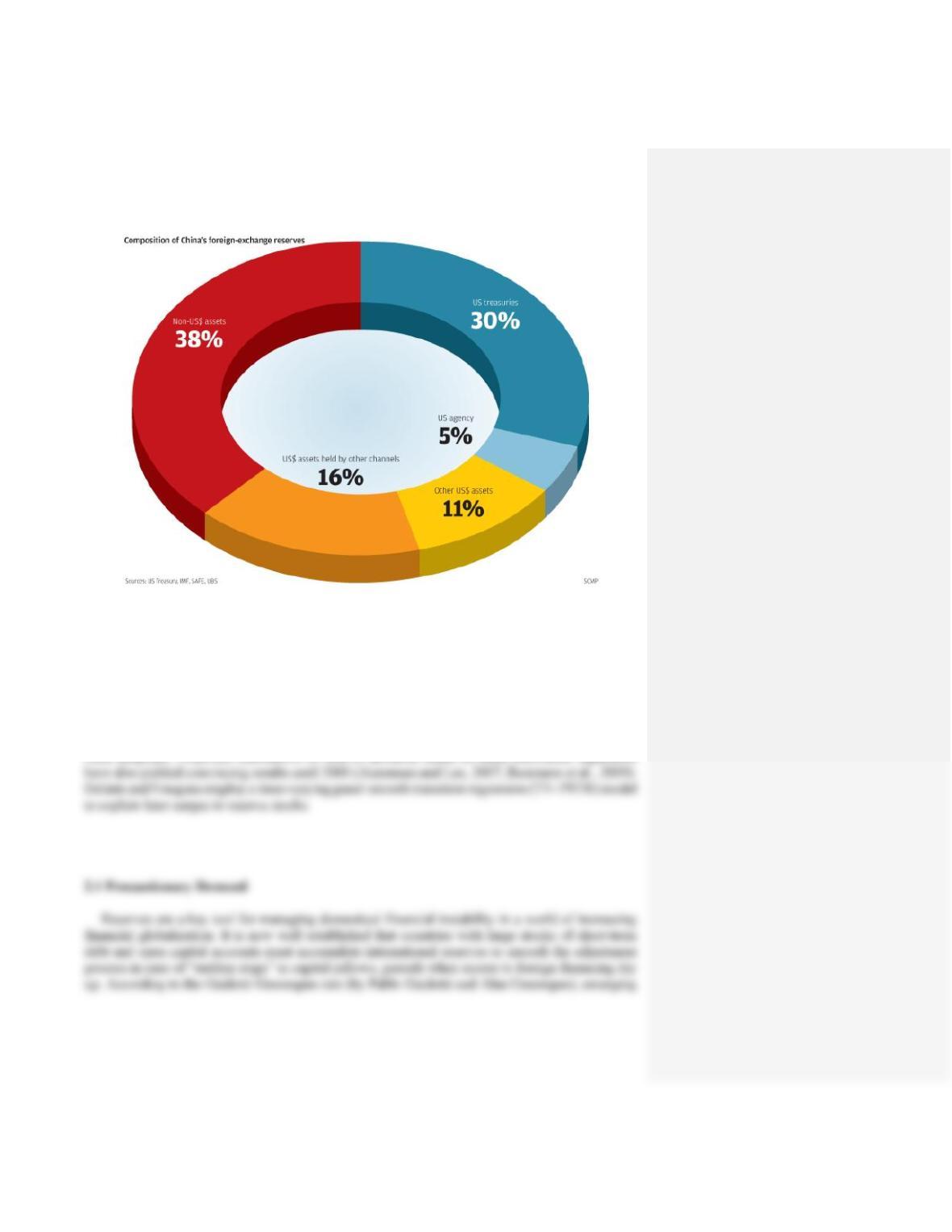
Figure 4: Composition of China’s FX reserves (%)
Source: South China Morning Post,
https://www.scmp.com/business/money/article/1863028/chart-day-chinas-reserves-powder-keg
There is a substantial theoretical literature that classifies motives for official reserve holding
into two broad categories: “mercantilist” and “precautionary” motives. The mercantilist motive
suggests that reserves are hoarded to defend export competitiveness while the precautionary
argument proposes that holdings are a way to hedge against balance-of-payments instability. A
widespread consensus has been reached on the fact that the massive accumulation of foreign
reserves in most Asian countries has reflected, to a different extent in different countries, both