Basic Concepts:
A hypothesis is a statement or a tentative theory
that may or may not be true, but is initially
assumed to be true until new evidence suggests
otherwise. It may be proposed from a preliminary
observation, a guess or based from previous
experiences.
HYPOTHESIS TESTING

Types of Hypothesis:
•Null hypothesis –the null hypothesis is denoted by Ho, it is the hypothesis of
“no difference” and usually formulated for the purpose of being rejected.
•Alternative hypothesis –the alternative hypothesis is denoted by Ha or H1.
This the hypothesis that contradicts the hull hypothesis. If the null
hypothesis is rejected, the alternative is being supported. The alternative
hypothesis is the operational statement of the experimenter’s research
hypothesis.
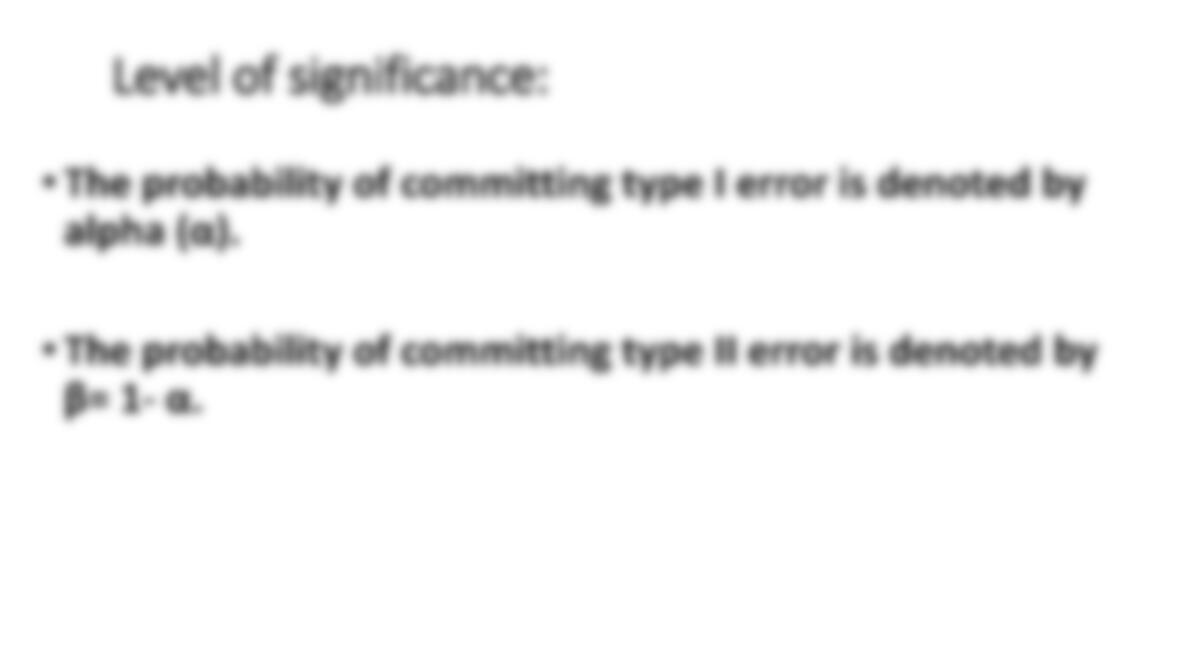
Types of Errors:
•Type I error –usually committed if the Ho is rejected when the Ho is true
•Type II error –usually committed if the Ho is accepted when the Ho is false

Status of Hypothesis :
Accept Ho Reject Ho
Ho is True Correct Decision Type I error
Ho is False Type II error Correct Decision
Types of Test:
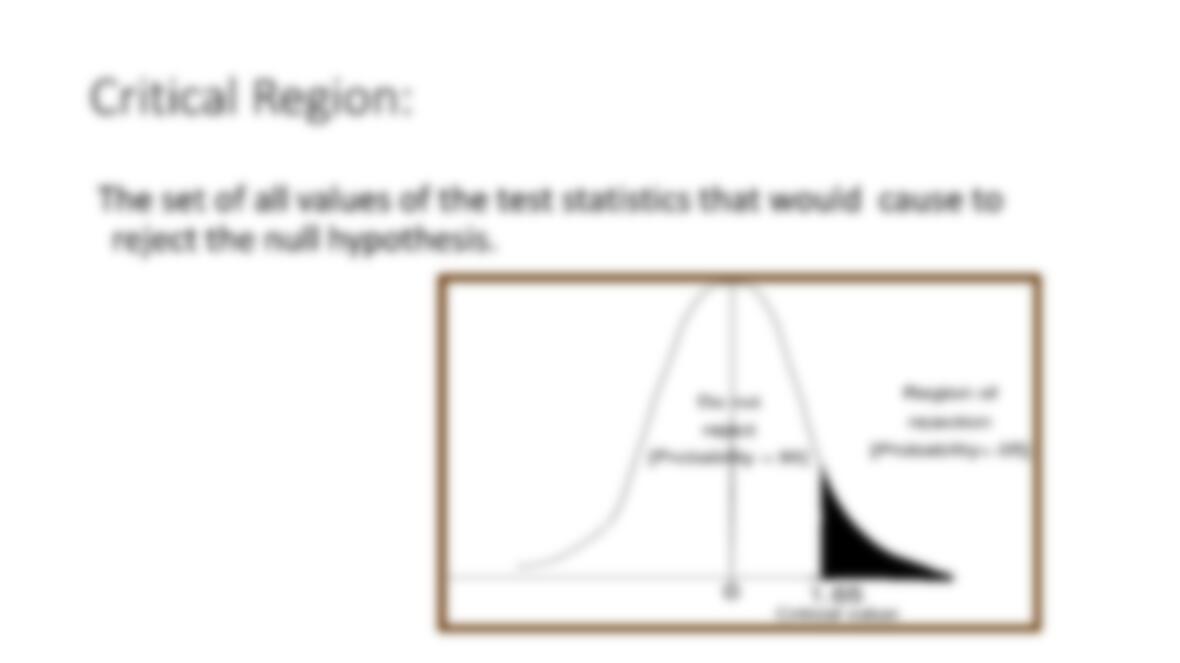
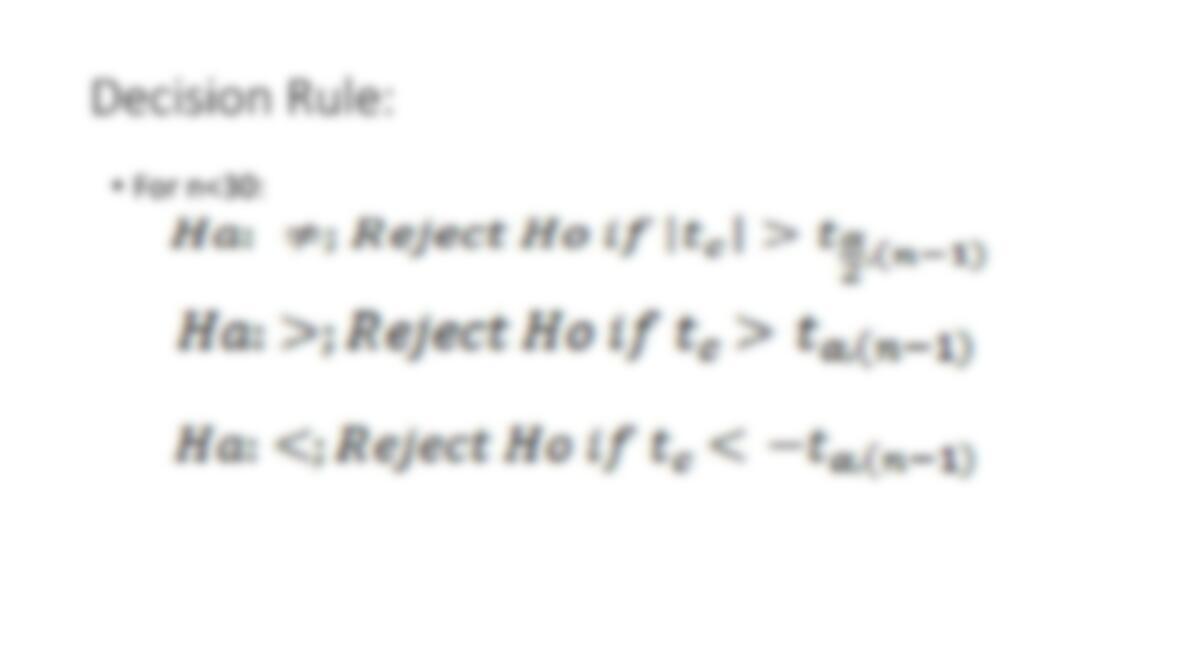
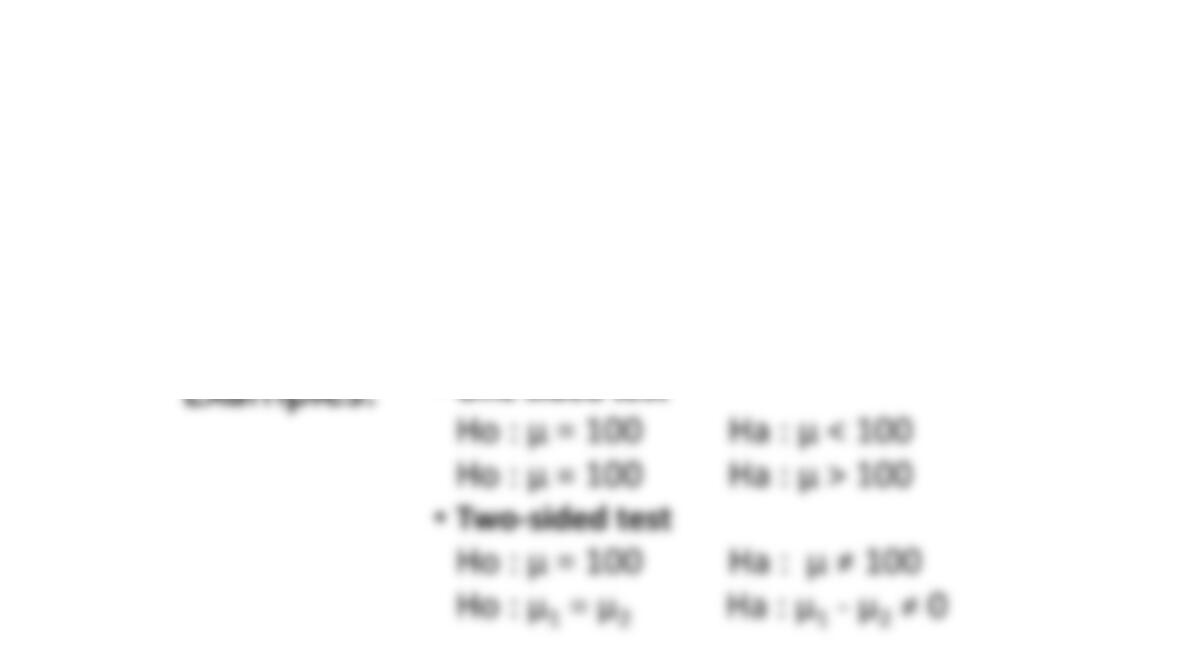
•One sided test- In one-sided test the Ha specifies that the unknown population
parameter is entirely above or entirely below the specified value of the Ho. It is
called one-tailed or a directional test.
•Two-sided test- the Ha specifies that the unknown population parameter can lie
on either side of the value specified by Ho. It is called two-tailed or non directional
test.