1
Assignment Front Sheet
Qualification
Unit Number and Title
Pearson BTEC Level 3, Extended Diploma in
Business
Unit 16: Human Resource Management
in Business
Reg. No. Learner’s Name
Assessor’s Name
18000487-Saima Arshad
Dr. Tajwar Hussaini
Hand-out Date
Hand-in Date
Submitted On
April 21, 2019
May 30, 2019
8/July/2019
Assignment
Type
Summative Report
Assignment Title
Human Resource Planning and Management
Learner’s Declaration
I certify the work submitted for this assignment is my own and research sources are fully
acknowledged.
Learner’s Signature: Saima Arshad
Date: 8/July/2019
Acknowledged by:
Assessor Signature:
Date:
2
Table of Contents
ACTIVITY 1 ………………………………………………………………………………………………………… 5
(P1) ………………………………………………………………………………………………………………………… 5
UBER: ……………………………………………………………………………………………………………………… 5
Human Resource Management in Business: …………………………………………………………………… 5
Internal planning factors: ……………………………………………………………………………………………. 5
Organizational requirements- ……………………………………………………………………………………… 5
Skills requirements- …………………………………………………………………………………………………… 5
Workplace profiles- …………………………………………………………………………………………………… 6
External Planning Factors: …………………………………………………………………………………………… 6
Labor supply- ……………………………………………………………………………………………………………. 6
Labor costs- …………………………..…………………………………………………………………………………. 6
Workforce skills- ……………………………………………………………………………………………………….. 6
Government policies-…………………………………………………………………………………………………. 6
Labor Market Competition- …………………………………………………………………………………………. 6
Changing nature of work- …………………………………………………………………………………………… 7
Employee expectations- ……………………………………………………………………………………………… 7
Automation Impact- ………………………………………………………………………………………………….. 7
Demand for products and services- ……………………………………………………….……………………… 7
(P2) ………………………………………………………………………………………………………………………… 8
People as Organizational Resources: …………………………………………………………………………….. 8
Employee Skills: ………………………………………………………………………………………………………… 8
New service of Uber: …………………………………………………………………………………………………. 8
Job role of IT manager in Uber’s operations: …………………………………………………………………… 8
Job description: ………………………………………………………………………………………………………… 8
Personal Specifications: ……………………………………………………………………………………………… 9
IT manager qualifications: …………………………………………………………………………………………… 9
Impact of Technology: ……………………………………………………………………………………………….. 9
Skills Sets: ……………………………………………………………………………………………………………….. 9
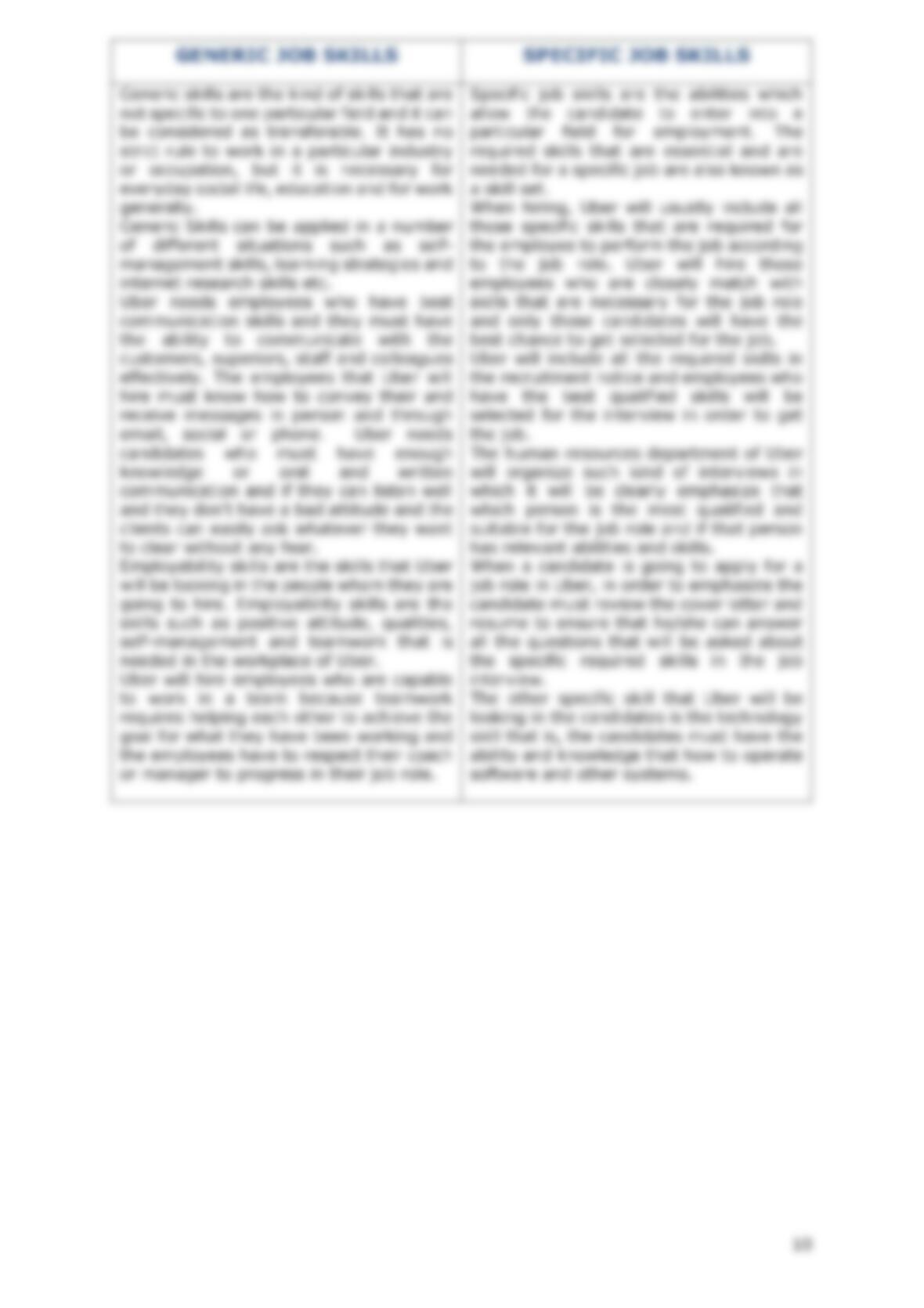
GENERIC JOB SKILLS …………………………………………………………………………………………………. 10
SPECIFIC JOB SKILLS …………………………………………………………………………………………………. 10
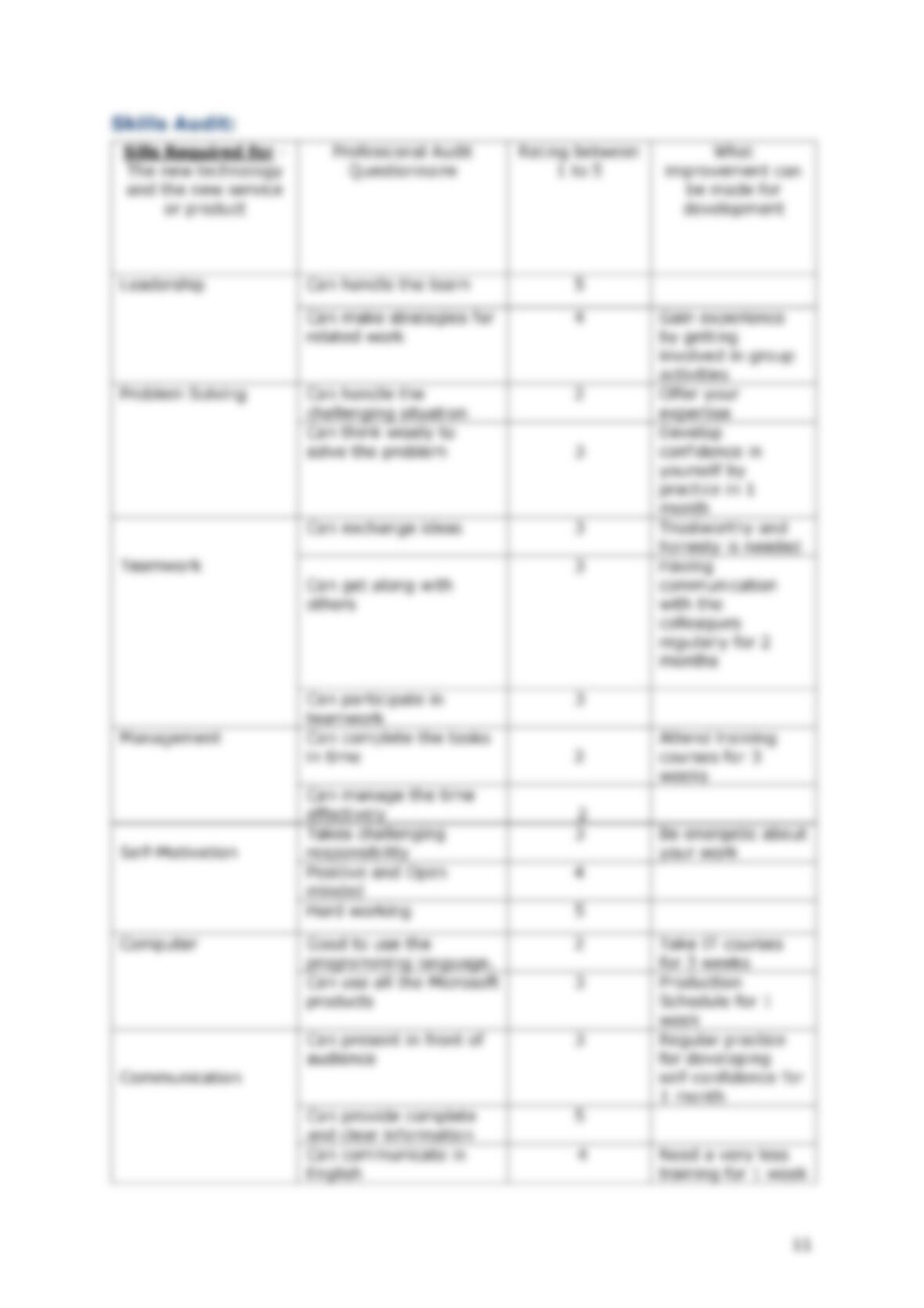
Skills Audit: ……………………………………………………………………………………………………………. 11
Skills Transferability: ………………………………………………………………………………………………… 12
Skill Acquisition: …………………………..…………………………………………………………………………. 12
(M1) ……………………………………………………………………………………………………………………… 12
3
When HR planning is not done: ………………………………………………………………………………….. 13
ACTIVITY 2 ………………………………………………………………………………………………………. 14
(P3) ………………………………………………………………………………………………………………………. 14
Motivation: ……………………………………………………………………………………………………………. 14
Frederick Taylor’s Theory: …………………………………………………………………………………………. 14
Elton Mayo: ……………………………………………………………………………………………………………. 14
Herzberg’s Theory:…………………………………………………………………………………………………… 14
(M2) ……………………………………………………………………………………………………………………… 15
Frederick Taylor’s Theory: …………………………………………………………………………………………. 15
Herzberg’s Theory:…………………………………………………………………………………………………… 15
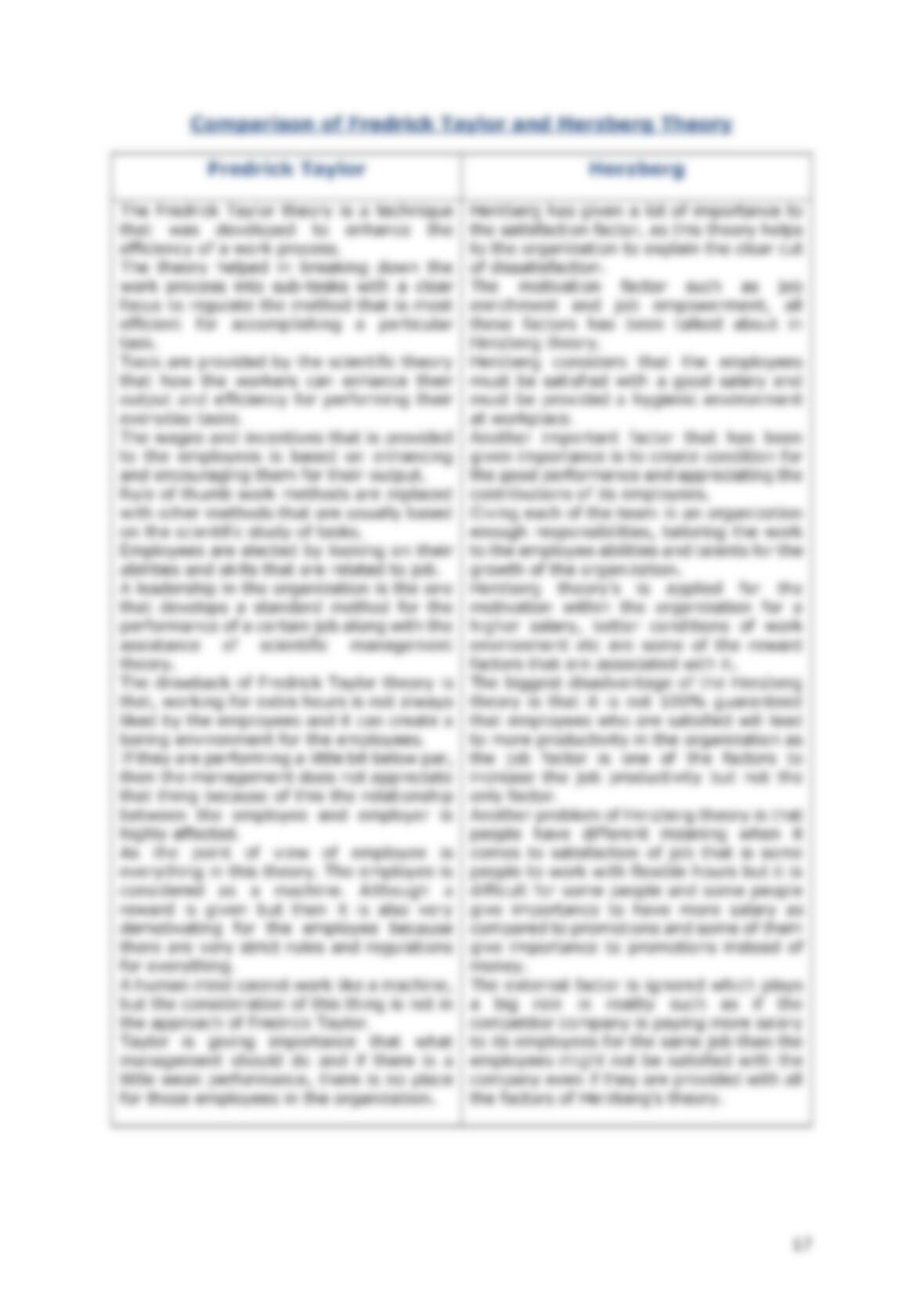
Comparison of Fredrick Taylor and Herzberg Theory ………………………………………………………. 17
Fredrick Taylor………………………………………………………………………………………………………… 17
Herzberg ……………………………………………………………………………………………………………….. 17
(D1) ………………………………………………………………………………………………………………………. 18
Emphasis on Motivation from Within: …………………………………………………………………………. 18
Companies can focus on the employees’ problem: ………………………………………………………… 18
Money is treated secondary: ……………………………………………………………………………………… 18
Reward System: ………………………………………………………………………………………………………. 18
ACTIVITY 3 ………………………………………………………………………………………………………. 20
(P4) ………………………………………………………………………………………………………………………. 20
Obtaining the cooperation of the employees in Uber: …………………………………………………….. 20
Employee and employer rights: ………………………………………………………………………………….. 20
Importance of Contract: ……………………………………………………………………………………………. 20
Employee involvement techniques: …………………………………………………………………………….. 21
ACTIVITY 4 ………………………………………………………………………………………………………. 23
(P5) ………………………………………………………………………………………………………………………. 23
How employee performance is measured and managed? ……………………………………………….. 23
Performance Indicators:……………………………………………………………………………………………. 23
Job Role: Uber’s Driver …………………………………………………………………………………………….. 23
Goals of Uber’s Driver: ……………………………………………………………………………………………… 23
Goal Theory: …………………………………………………………………………………………………………… 23
Job Role: Uber’s Supervisor ……………………………………………………………………………………….. 24
SMART targets for Uber’s Supervisor: ………………………………………………………………………….. 24
Benchmarking: ……………………………………………………………………………………………………….. 24
(M3) ……………………………………………………………………………………………………………………… 25
Ways to Improve Individual’s Performance Through Performance Management …………………. 26
4
Delegation and managing work: …………………………………………………………………………………. 26
Occupational health: ……………………………………………………………………………………………….. 26
Appraisal: ………………………………………………………………………………………………………………. 26
Probation: ……………………………………………………………………………………………………………… 26
Supporting Employees: …………………………………………………………………………………………….. 26
(D2) ………………………………………………………………………………………………………………………. 27
Importance of measuring and managing employee performance ……………………………………… 27
Benefits of performance management ………………………………………………………………………… 28
Consequences of failing to manage performance ……………………………………………………….….. 29
Conclusion: …………………………………………………………………………………………………………….. 29
References: ……………………………………………………………………………………………………………. 30

5
ACTIVITY 1
(P1)
UBER:
Uber is a company based in San Francisco, which makes it convenient to call a car. The
Uber app is just one click away from a luxurious city car experience. All charges go to
credit cards directly without cash or extra paperwork required. Garrett Camp and Travis
Kalanick founded the company in 2009. The prices of Uber are similar to the taxis
measured. If the Uber car travels more than 11 mph, the price shall be calculated on the
basis of the distance. The price is otherwise determined in a time-based manner. Prices
are approximately 50% to 75% higher than conventional taxis. In July 2012, the company
entered the UK market with nearly 50 million dollars in venture funding and increased
demand.
Human Resource Management in Business:
Human resource planning is very important, because it helps a company achieve its
objectives and goals and makes it easier for a company to meet its goals, which Uber has
done successfully. The human resources planning approach of Uber focuses on many
questions relating to the organization, such as increasing profitability, improving service,
becoming more competitive and expanding its market share in the services sector. The
planning of human resources involves looking into current skills and techniques of
motivation and comparing them with what will need to be in the future. To this end,
business must take into account both the internal and the external aspects of the business
and the required skills.
Internal planning factors:
These are factors which concern the activities within the company already. This includes
how the organization adapts to new processes or new requirements such as technological
introduction, new products and services. It is also a way of looking at the new skills that
the existing personnel already have and will be required in the future. The difference
between existing and needed skills can be measured.
Uber understands how to organize and manage its employees. It should also be noted that
internal factors such as, planning and training can be controlled whereas the external
factors such as market changes cannot be controlled. The monitoring of employee
management needs can help maintain the most efficient levels of employee workforce.
Organizational requirements-
The employees of Uber must have a knowledge to adapt the changes. The number of
people will be affected according to the demand for products and services. Businesses like
Uber can move to new markets, meaning that new skills like languages are needed abroad
and staff. If the company grows, more personnel can be required in distribution.
Technological changes may also affect domestic working arrangements, such as the
creation of redundancies, the need for new training, etc. (Internet purchase and self-scan
check-offs)
Skills requirements-
Uber takes under consideration the evaluation of existing staff skills is an important
element of human resources planning, since it allows Uber’s company to establish a
training, experience and qualifications profile that its staff have already acquired. Whether
it is capital-intensive or work-intensive, it is very important. The nature and type of work
in the organization of Uber change and the requirements for skills change accordingly. In
order to plan for the future-evaluations, awards, certificates, Uber should assess its
workforce’s levels of skill.
6
Workplace profiles-
For Uber, workplace profiles provide a chance to the manager in order to monitor and view
the types of employees who are working for the company. Details like availability, age,
sex and ethnicity are usually included. Knowing ages can help you plan ahead and also
ensure that you comply with all requirements of law. Age-long gaps can cause problems,
so you can combat it. Profiling your employees ‘ skills and training enables a company to
utilize any special skills members.
External Planning Factors:
Good personnel planning is a requirement in human resources management, so it is a task
for Uber human resources managers to identify some of the external factors which
influence personnel planning. These factors influence the company from beyond its direct
control. The following are the factors affecting the company externally.
Labor supply-
The supply of work at national level depends on unemployment trends and the skill types
employers need. The UAE and Dubai labor market needs to be considered by human
resources planners. Uber needs to recruit staff with the skills and capabilities necessary.
Human Resources Planners therefore need to know how many Dubai workers have the
skills that the business needs and the planners need to take demographic data into
account. Whether Dubai employees increase or decrease, what is the employees ‘ age
structure? The provision of jobs across the country is driven by unemployment trends and
the kind of skills employers need.
Labor costs-
The cost of labor will depend, as a percentage of other costs within a company, on the
extent to which the capital or labour intensive business is available or accessible. Work
costs are higher than wages. It covers salaries and wages, expressed monetarily, and
benefits in material or non-material forms such as material payments, social security,
technical education and so on. The labor price has a direct effect on the operating costs of
the company so the human resources plan must also be taken into account.
Workforce skills-
Uber can look at the types of skills available in their local area or region using published
national statistics. Uber and its competitors should take into consideration their future
needs to ensure they attract the right people-that could entail additional incentives.
Government policy–Government policies and modifications to education policies may lead
to skill gaps or skill gaps. To see the types of skills in the region, Uber uses published
national statistics. Uber needs to take account of its future needs and its competitors to
ensure it attracts the right talent, meaning that further incentives are provided.
Government policies-
Government policy and educational policy changes may lead to skills gaps or skills gaps
that are addressed. The policy of the government, in particular, regarding UAE taxes and
contracts and labor laws should be taken into account by the human resources planners.
When the policy encourages and promotes certain business behavior in Uber, it is fairly
smooth and its corresponding business goals are achieved more quickly. Business adjusts
its strategic direction and policy on human resources according to its own circumstances.
This changes the company’s mobility and workforce systems and thus promotes an
improvement in its human resources planning.
Labor Market Competition-
As a business plan, other companies in the same industry are planning to meet their
employees ‘ needs for the future. The same applies to other companies in the same
industry where a business plans to meet its future demand for labor. There may be not
enough employees in each business that are really suited for the job. Consequently, Uber
must give more money to attract better staff and managers must manage its fund to make
profits. Human resources must therefore define good programs and reconcile related
problems.
Changing nature of work-
” A job for life “was a standard idea at the place of work, but now staff need a wider range
of skills and are prepared to change their role as an employer to keep them working. For
Uber, the workplace is now common for overnight work, flexible work time and work from
home. Uber is considered as a Flat organization which means that employees may need
to move to receive a promotion. Today, people are seeking to balance their job and family
life and, to attract highly qualified people, Uber must provide conditions that reflect that
desire. Employees must consider their ideas about their positions and their ideas about
the future when developing human resources planning.
Employee expectations-
Differing types of contracts (part-time, full-time, time, casual, permanent) as everyone is
different and employees may have business at home to take care of meaning they cannot
work full-time. Uber have to be careful how much time they spend in human resources. It
cannot provide temporary or part-time employees with important tasks because they are
dangerous and unfavorable. Simultaneously, it must be serious and responsible for full–
time and permanent workers to enhance their employee interests through human
resources plans. Uber can consider upgrading work on the HR plan or communicating with
them in order to keep them working in Uber, if Uber finds that there are employees who