1
Table of Contents
1. Case Overview ………………………………………………………………………………………………………. 2
1.1 Identifying Problems ……………………………………………………………………………………….. 2
1.2 Implications of Problems ………………………………………………………………………………….. 3
1.2.1 Ethical Dilemma …………………………………………………………………………………….. 3
1.2.2 Poor Job Performance …………………………………………………………………………….. 4
1.2.3 Survivor Syndrome ………………………………………………………………………………….. 4
1.2.4 Tarnish Employer Brand Image……………………………………………………………….. 4
1.2.5 Legality Issues ………………………………………………………………………………………… 5
1.2.6 Ineffective and Costly………………………………………………………………………………. 5
2. Intervention Strategies ………………………………………………………………………………………….. 5
2.1 Appreciative Inquiry ……………………………………………………………………………………….. 5
2.2 Downsizing Tactics…………………………………………………………………………………………. 10
3. Developing an HR Plan ……………………………………………………………………………………….. 12
3.1 Managing Diversity ………………………………………………………………………………………… 12
3.2 Developing Employer Brand …………………………………………………………………………… 13
3.3 Employee Engagement …………………………………………………………………………………… 15
3.4 Developing Total Reward Strategy …………………………………………………………………. 17
3.5 Training and Development……………………………………………………………………………… 19
3.6 Managing Survivor Syndrome………………………………………………………………………… 19
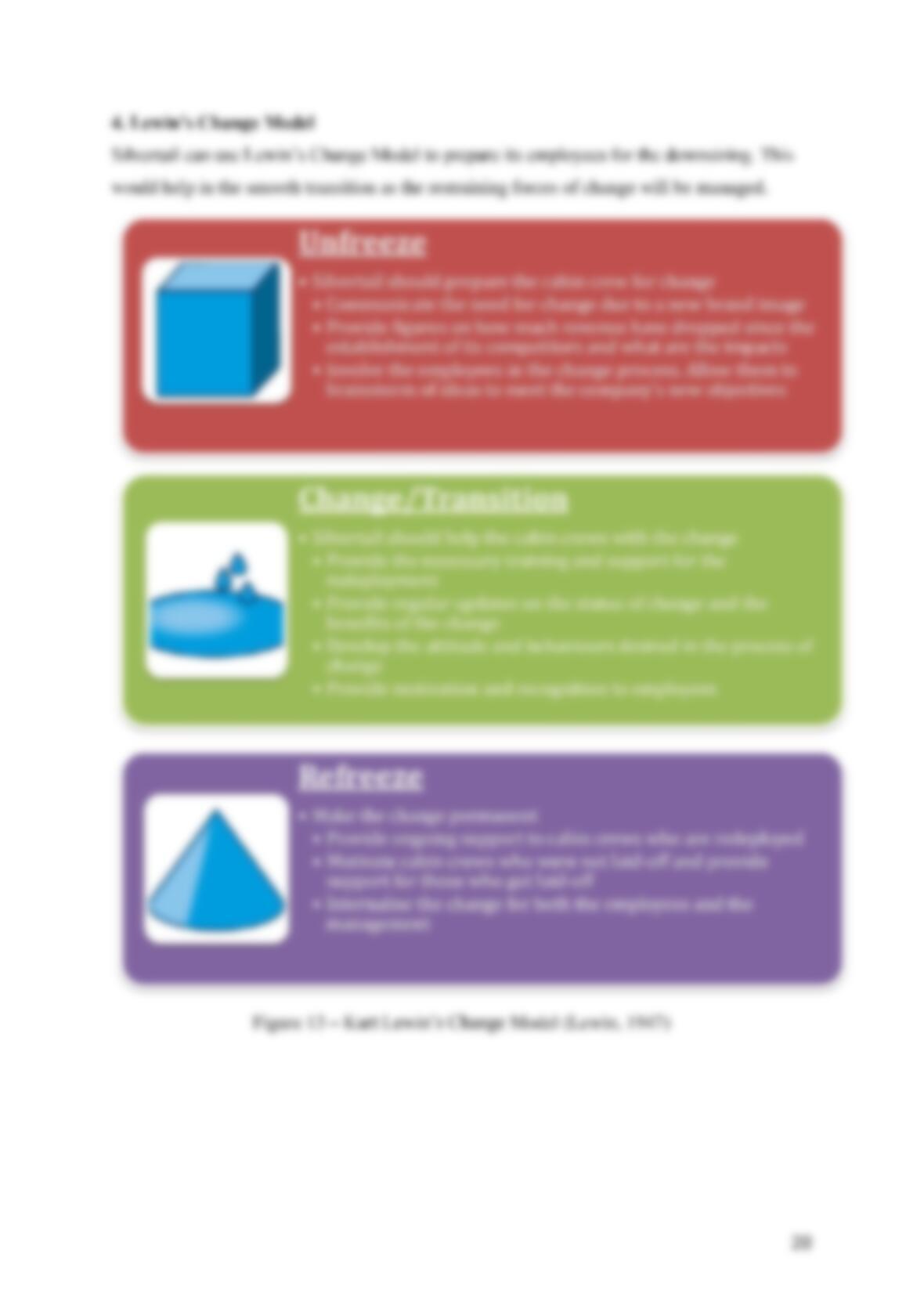
4. Lewin’s Change Model ………………………………………………………………………………………… 20
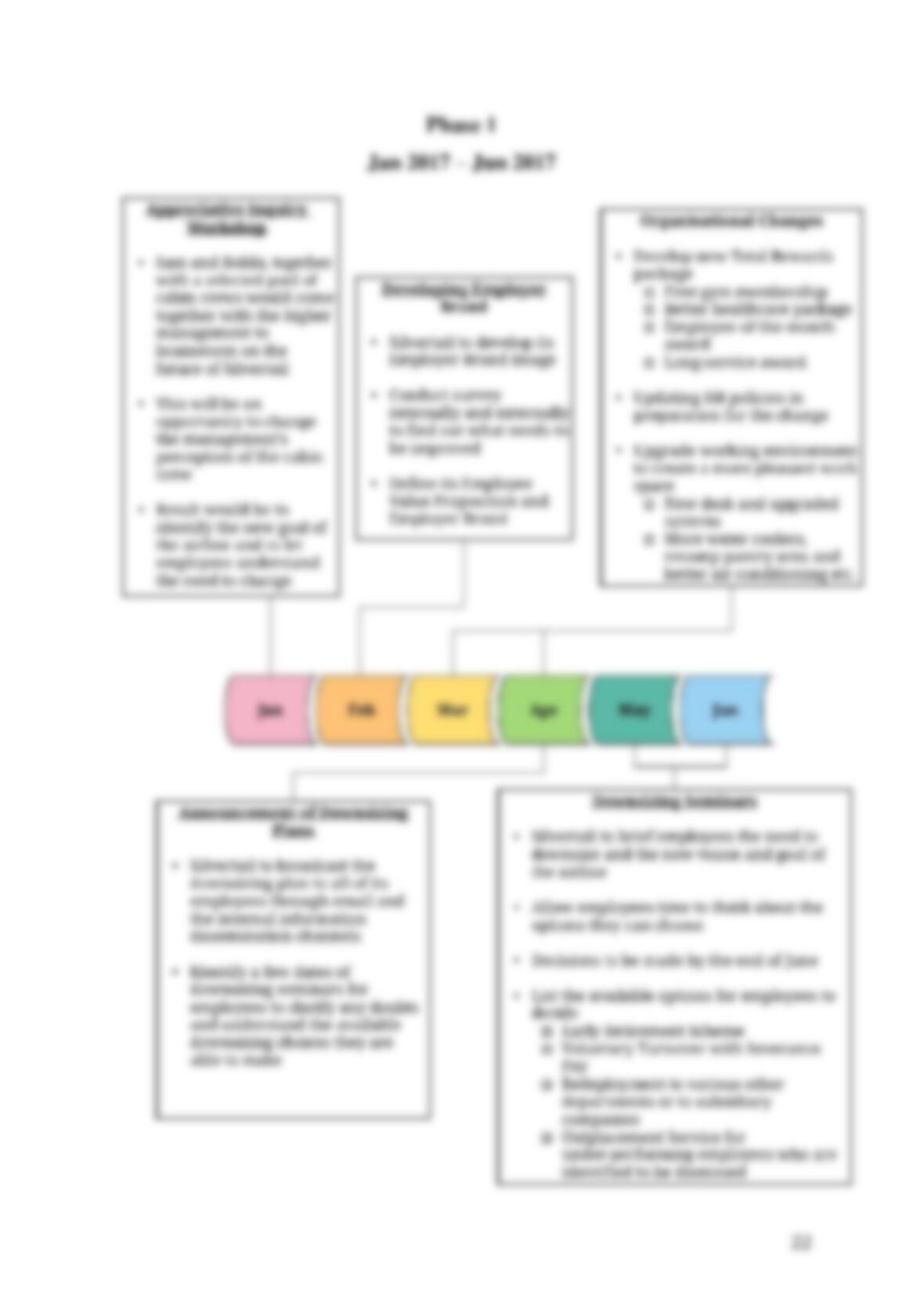
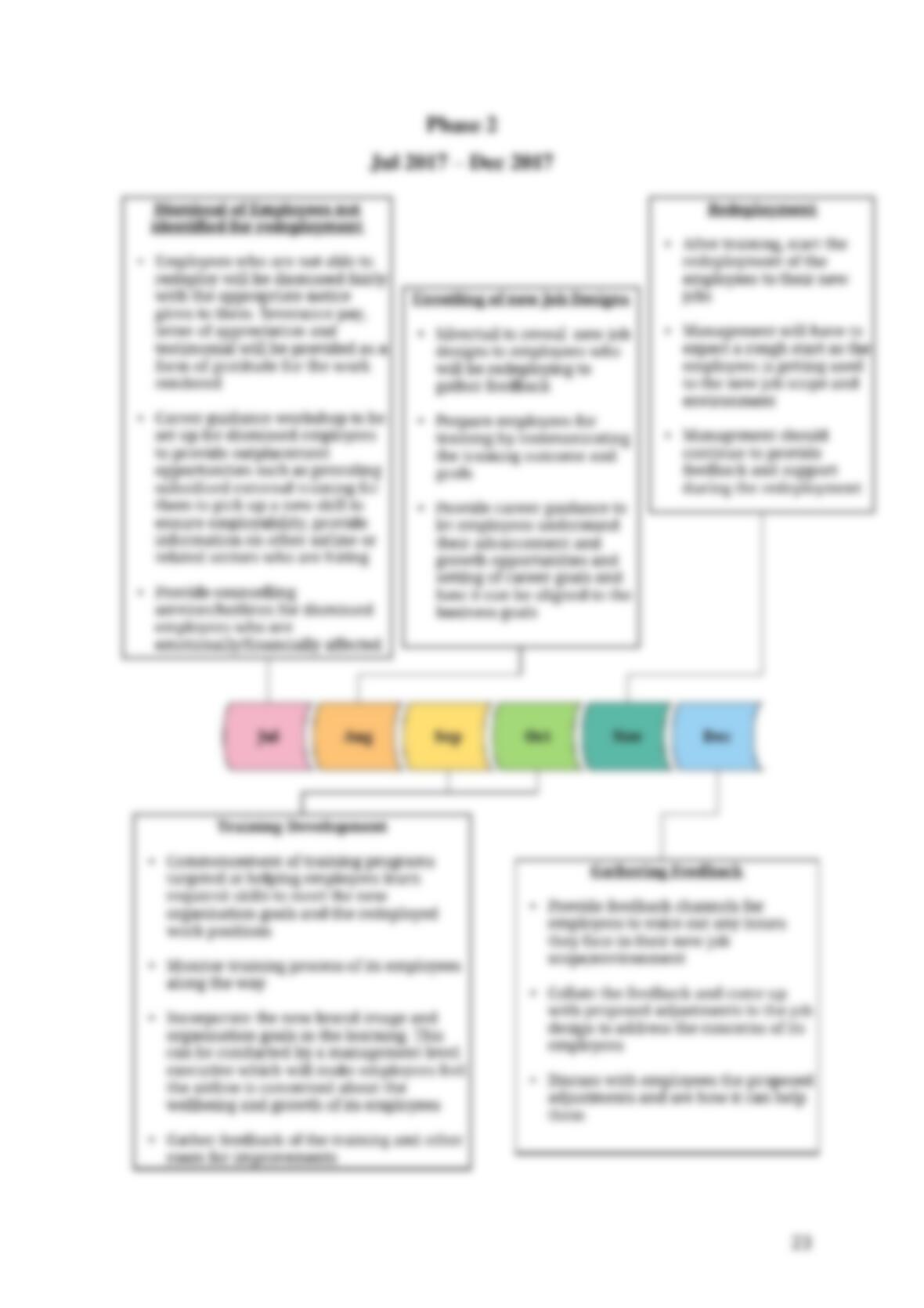
5. Action Plan …………………………………………………………………………………………………………. 21
6. Conclusion ………………………………………………………………………………………………………….. 25
5. Bibliography ……………………………………………………………………………………………………….. 26

2
1. Case Overview
The case centers on two airlines in Singapore – Singapore Airline and Silvertail Airline. As a
result of the government’s “Two airlines policy”, both airlines shared a duopoly of the air
transport industry. Neither of the companies had to be innovative or put in extra effort to
attract its passengers. This served the public well until the 1980s when mounting pressure
caused the government to deregulate the air transport industry.
The deregulation lead to the introduction of low-cost carriers into the market, which had a
significant impact on Silvertail Airline. In response to the new competition, Silvertail Airline
underwent an organization restructure and the result was an overhaul of its brand image. Its
new image is one of a new, young and innovative airline with its target market set on the
young budget conscious traveler.
As a result of the change, new requirements and expectations would have to be met in order
to align with its new image. However, many of the airline’s existing frontline staff did not fit
with the intended image. In a discussion between Sam, the Recruitment Manager, and Bobbi,
the Cabin Crew Director, they came up with unethical plans attempted at forcing the existing
employees to resign voluntarily.
1.1 Identifying Problems
Figure 1 – Problems Identified (Self-Created, 2016)
•Sam and Bobbi had the perception that its existing
employees lack enthusiasm and intiative. They feel they do
not fit into the new brand image the company is pursuing
and seeks to force them to leave by making work
conditions difficult for them.
Perception
•The change in the organisation structure that resulted in
new requirements and needs was not conveyed to its
existing employees. They did not attempt to help its
employees understand the impetus for change and give
them an opportunity to change.
Communication
•The management did not explore alternative methods of
downsizing. The current unethical method will certainly
upset many employees and cause lasting impact or even
more problems for the company. They are acting based on
the negative impression they had of the older cabin crews.
Management
3
1.2 Implications of Problems
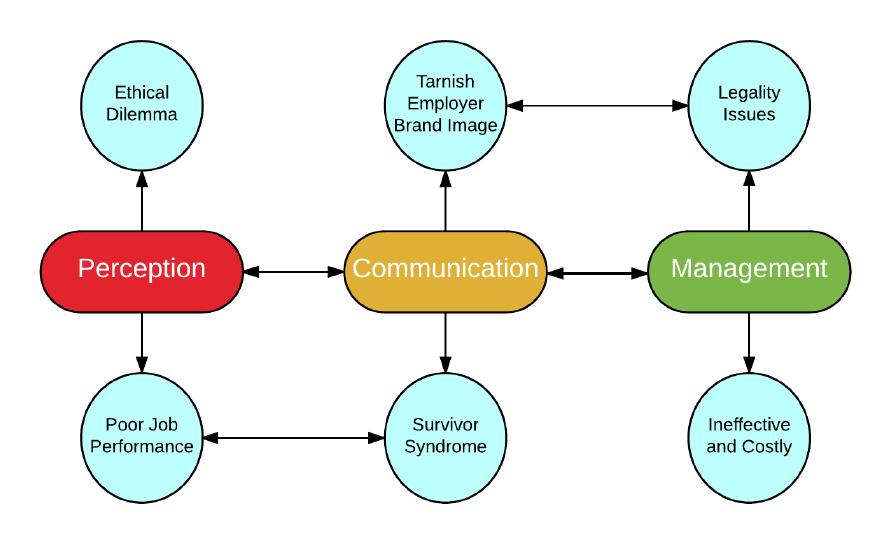
The problems identified have several implications and some are interlinked with
another as illustrated in Figure 2.
Figure 2 – Implications of Problems Identified (Self-Created, 2016)
1.2.1 Ethical Dilemma
Silvertail is facing an ethical dilemma, as they know they have to make some
changes in order for the company to be rebranded to its new image. However,
the method of making the life of its employees difficult in a bid to force them
to leave is unethical. If the downsizing was necessary due to an economic
downturn or crisis, it would have been reasonable to dismiss some of its
employees under such circumstances. However, in this scenario Silvertail
perceives its existing employees as mature and not fitting for its new image
and uses that as the reason for forcing them to leave through unethical and
unfair dismissal methods.
4
1.2.2 Poor Job Performance
There would also be a possibility of conflicts if Silvertail pushes through their
plans of promoting the junior cabin crews faster than the senior ones. The
senior cabin crew may feel unvalued and upset that he has to take instructions
from a more junior cabin crew. This would result in poor teamwork and
synergy during flights and performance will be affected. They may even see
an increase in customer complaints if the cabin crew cannot control their
emotions during work.
1.2.3 Survivor Syndrome
Survivor syndrome may also set in for employees who stay on. They may feel
insecure because they do not know when would it be their turn to be forced to
leave. They would also feel unfair for their colleagues who are forced to leave
and in turn, their morale would be lowered. This could lead to higher
absenteeism, poor performance and even higher turnover rate causing more
problems for the company.
1.2.4 Tarnish Employer Brand Image
Silvertail’s downsizing plan may potentially tarnish its brand image. By
forcing the employees to resign through the deliberate act of creating a tough
working environment, it will cause the employees to become disgruntled.
These employees may go on to spread negative messages of the treatment they
had received through social media or words of mouth. This would ruin the
reputation of the company making it difficult for them to hire, as potential
employees may not want to join. The performance of employees who stayed
would deteriorate too as they do not feel motivated or proud to work for a
company who has got a bad reputation.
5
1.2.5 Legality Issues
The company may also find themselves facing legality issues or even a lawsuit
under the Singapore law. Disgruntled employees who left Silvertail may file a
complaint with the Ministry of Manpower to seek a redress for unfair
dismissal under the Employment Act (www.mom.gov.sg, 2016). This would
possibly attract media coverage, tarnish its employer brand image even further
and become a publicity nightmare.
1.2.6 Ineffective and Costly
After forcing the employees to resign, Silvertail would have to employ new
employees that fit into its new brand image. This would incur a lot more cost,
as they have to send them for training and development courses. Tacit
knowledge that retrenched employees gained through experience will be lost
too. It also takes time for them to train the new employees and could
potentially result in tight manpower during the transition, resulting in poor
performance and higher customer complaints.
2. Intervention Strategies
2.1 Appreciative Inquiry
Sam and Bobbi’s approach to solving the airline’s problem is a negative one. It is
based on the traditional method of identifying problems and finding solutions to solve
them. This deficit-based approach is not ideal as it drains both energy and motivation
from existing employees. Sam and Bobbi can also be described as adopting a Theory
X management style under Douglas’s theories (McGregor, 1960). What this means is
Sam and Bobbi are pessimistic towards its employees that they would perform their
duties diligently or be proactive. This negative mindset would cause Sam and Bobbi
to have a narrow perspective of how to downsize.
The better way to approach the problem would be through the use of a positive model
such as the Appreciative Inquiry methodology. This method focuses on the existing
strengths of the organization instead of on fixing problems to bring about change to
its system to achieve the vision of its future (Cooperrider and Whitney, 2005). This
methodology will also help bring Sam and Bobbi to a Theory Y management style
6
which is one that is optimistic and participative and believes that its employees are
committed and will exercise self-control to meet the organizational objectives.
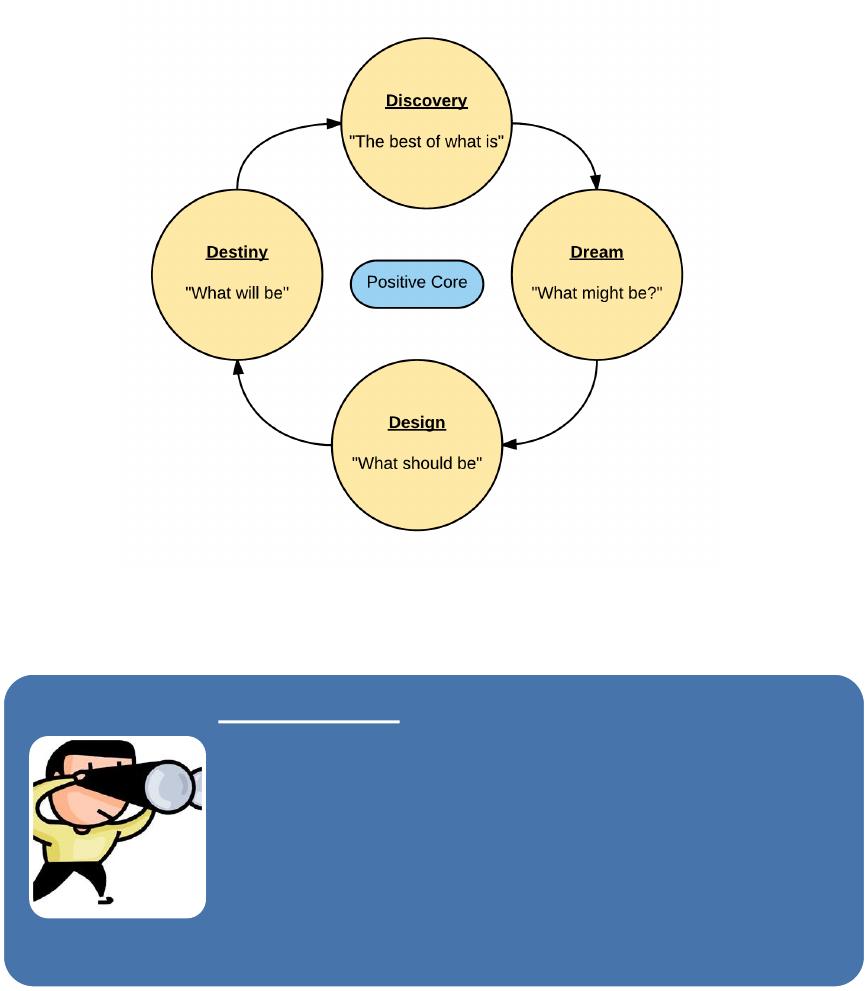
The Appreciative Inquiry model is implemented using the “4–D cycle” illustrated in
Figure 3. This model is different compared to traditional problem-solving methods
where organizations become problems to be solved. Appreciative Inquiry model aims
to identify better solutions where organizations become possibilities waiting to
happen.
Figure 3 – “4–D cycle” to Appreciative Inquiry (Cooperrider and Whitney, 2005)
Figure 4 – Appreciative Inquiry: Discovery (Self-Created, 2016)
Discovery
•What are the achievements of Silvertail you are most proud
of?
•What are some of the unforgettable events that has
happened during your time as a cabin crew?
•What motivates you to work as a cabin crew?
•What do you like most about your work as a cabin crew?
•Can you name one positive aspect of the company that you
think is important for the future?
The aim of the Discovery phase is to identify “the best of what is”. In other words, a
set of questions that is positively crafted can be posed to the cabin crew to find out
what they find are positive attributes of the organization. Such positive attributes can
be the accomplishments of its employees, best practices of the company, customer
appreciation for a job well done, empowerment or innovation.
Through this phase, the cabin crews can identify and appreciate the positive things
that have happened in their career instead of dwelling on the negative ones. This
would enable them to identify attributes they value the most that they would want to
bring to the future or expand further to meet the company’s objectives. It also serves
as a starting point for employee engagement to build a social bonding that is both
supportive and positive for the organization and its employees. At the end of the
Discovery phase, Sam and Bobbi should be able to appreciate the positive
contributions of the older cabin crews and not consider the negative downsizing
methods.
Dream