Chapter Two- Human Resource Management
Dire Dawa University, Department Of Management Page 1
Chapter Three
Job Analysis & Human Resource Planning
3.1. Meaning and Definition of Job Analysis
Developing an organizational structure, results in jobs which have to be staffed. Job analysis is the procedure
through which you determine the duties and nature of the jobs and the kinds of people (in terms of skills and
experience) who should be hired for them.’ It provides you with data on job requirements, which are then used
for developing job descriptions (what the job entail) and job specifications (what kind of people to hire for the
job). Some of the definitions of job analysis are given as follows, to understand the meaning of the term more
clearly:
According to Michael L. Jucius, “Job analysis refers to the process of studying the operations, duties and
organizational aspects of jobs in order to derive specifications or as they called by some, job descriptions.”
According to Decenzo and P. Robbins, “A job analysis is a systematic exploration of the activities within the
job. It is a basic procedure, one that is used to define duties, responsibilities and accountabilities of the job.
According to Herbert G Herman “A job is a collection of tasks that can be performed by a single employee to
contribute to the production of some product or service provided by the organization. Each job has certain
ability requirements (as well as certain rewards) associated with it. Job analysis process used to identify these
requirements.”
Flippo has offered a more comprehensive definition of job analysis as, “Job analysis is the process of studying and
collecting information relating to the operations and responsibilities of a specific job. The immediate products
of the analysis are job descriptions and job specifications”
Thus, job analysis involves the process of identifying the nature of a job (job description) and the qualities of the
likely job holder (job specification).
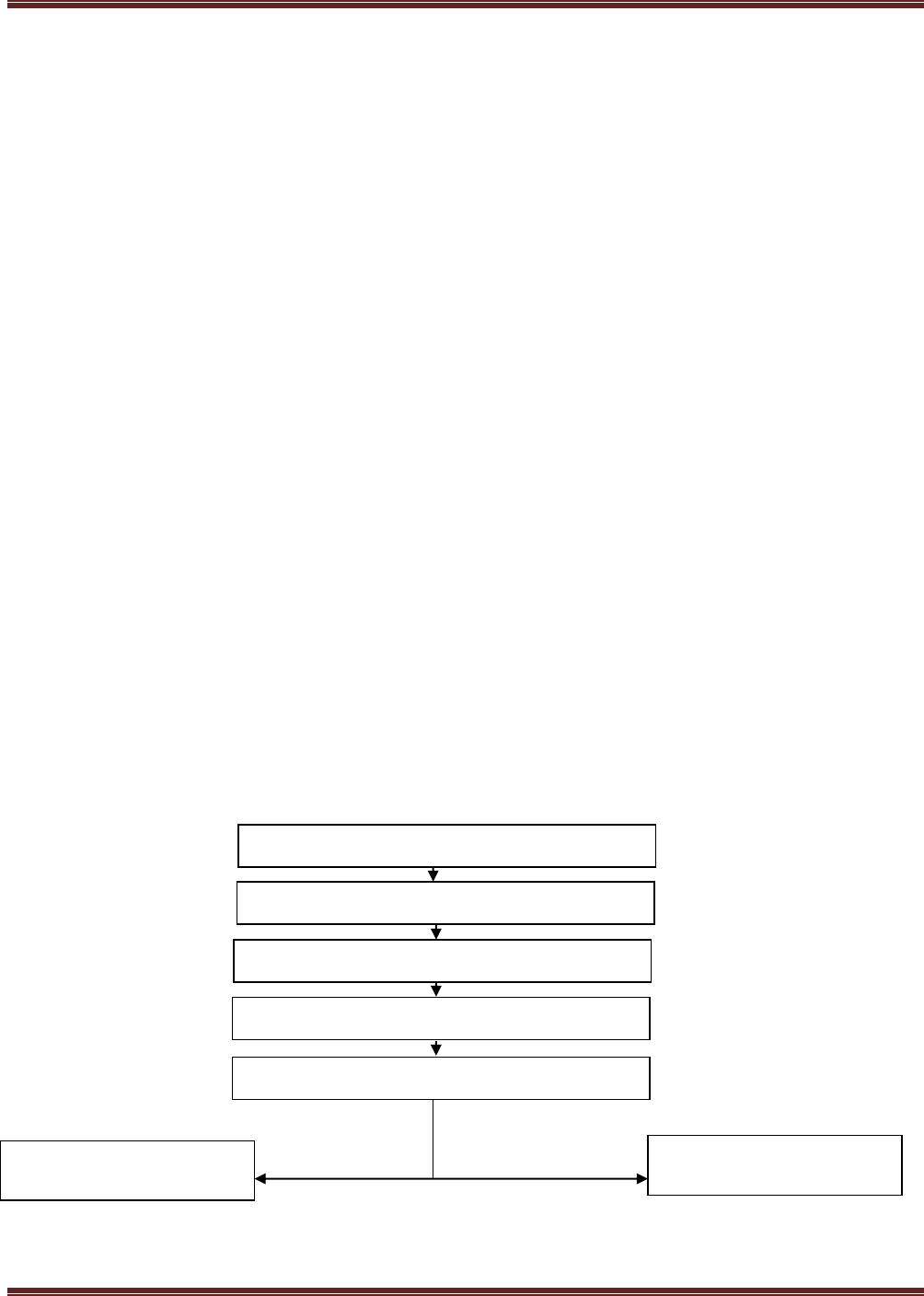
3.2. Steps in Job Analysis
.
Determination of the use of the Job Analysis
Information job analysis
Determination of background information
Information processing
Selection for job analysis
Collection of job analysis data
Job description
Job specification

Chapter Two- Human Resource Management
Dire Dawa University, Department Of Management Page 2
1. Determine the Use of the Job Analysis Information: Start by identifying the use to which the
information will be put, since this will determine the type of data you collect and the technique you
use to collect them.
2. Collection of Background Information: According to Terry, “The make-up of a job, its relation
to other jobs, and its requirements for competent performance are essential information needed for
a job evaluation. This information can be had by reviewing available background information such
as organization charts (which show how the job in question relates to other jobs and where they fit
into the overall organization); class specifications (which describe the general requirements of the
class of job to which the job under analysis belongs); and the existing job descriptions which
provide a starting point from which to build the revised job description”.
3. Selection of Jobs for Analysis: To do job analysis is a costly and time consuming process. It is
hence, necessary to select a representative sample of jobs for purposes of analysis. Priorities of
various jobs can also be determined. A job may be selected because it has undergone
undocumented changes in job content. The request for analysis of a job may originate with the
employee, supervisor, or a manager.
When the employee requests an analysis it is usually because new job demands have not been
reflected in changes in wages. Employee’s salaries are, in part, based upon the nature of the work
that they perform. Some organizations establish a time cycle for the analysis of each job. For
example: A job analysis may be required for all jobs every three years. New jobs must also be
subjected to analysis.
4. Collection of Job Analysis Data: Job data on features of the job, requited employee qualification
and requirements, should be collected either form the employees who actually perform a job; or
from other employees (such as foremen or supervisors) who watch the workers doing a job and
there by acquire knowledge about it; or from the outside persons, known as the trade job analysis
who are appointed to watch employees performing a job. The duties of such a trade job analyst are
i. To outline the complete scope of a job and to consider all the physical and mental activities
involved in determining what the worker does.
ii. Find out why a worker does a job; and for this purpose he studies why each task is essential for
the overall result.
iii. The skill factor which may be needed in the worker to differentiate between jobs and establish
the extent of the difficulty of any job.
5. Processing the Information: Once job analysis information has been collected, the next step is to
place it in a form that will make it useful to those charged with the various personnel functions.

Chapter Two- Human Resource Management
Dire Dawa University, Department Of Management Page 3
Several issues arise with respect to this. First, how much detail is needed? Second, can the job
analysis information be expressed in quantitative terms? These must be considered properly.
6. Preparing Job Descriptions and Job Classifications: Job information which has been collected
must be processed to prepare the job description form. It is a statement showing full details of the
activities of the job. Separate job description forms may be used for various activities in the job
and may be compiled later on. The job analysis is made with the help of these description forms.
These forms may be used as reference for the future.
7. Developing Job Specifications: Job specifications are also prepared on the basis of information
collected. It is a statement of minimum acceptable qualities of the person to be placed on the job. It
specifies the standard by which the qualities of the person are measured. Job analyst prepares such
statement taking into consideration the skills required in performing the job properly. Such
statement is used in selecting a person matching with the job.
3.3. Methods of Collecting Job Analysis Information
Information is to be collected for job analysis. Such information may be collected by the trained job
analysis, superiors concerned and job holders themselves. Job information is collected through the
following methods:
1. Participant Diary/Logs: Workers can be to keep participant diary/long or lists of things they do
during the day. For every activity he or she engages in, the employee records the activity (along
with the time) in a log. This can provide you with a very comprehensive picture of the job,
especially when it’s supplemented with subsequent interviews with the worker and his or her
supervisor. This method provides more accurate information if done faithfully. However, it is quite
time consuming. Further, each job holder may maintain records according to his own way which
presents problems in analysis at later stage. Therefore, it has limited application.
2. Interview: There are three types of interviews you can use to collect job analysis data: individual
interviews with each employee; group interviews with groups of employees having the same job;
and supervisor interviews with one or more supervisors who are thoroughly knowledgeable about
the job being analyzed. The group interview is used when a large number of employees are
performing similar or identical work, since this can be a quick and inexpensive way of learning
about the job. As a rule, the worker’s immediate supervisor would attend the group session; if not,
you should interview the supervisor separately to get that person’s perspective on the duties and
responsibilities of the job.
Chapter Two- Human Resource Management
3. Critical Incidents: In this method, job holders are asked to describe incidents concerning the job
on the basis of their past experience. The incidents so collected are analyzed and classified
according to the job areas they describe, A fairly picture of actual job requirements can be obtained
by distinguishing between effective and ineffective behaviors of workers on the job. However, this
method is time consuming. The analyst requires a high degree of skill to analyze the contents of
descriptions given by workers.
4. Technical Conference Method: This method utilizes supervisors with extensive knowledge of the
job. Here, specific characteristics of a job are obtained from the “experts.” Although it is a good
data gathering method, it often overlooks the incumbent worker’s perception about what they do
on their job.
5. Job Performance: Under this method, the job analyst actually performs the job under study to
get first-hand experience of the actual tasks, and physical and social demands of the job. This
method can be used only for jobs where skill requirements are low and can be learnt quickly and
easily. This is a time consuming method and is not appropriate for jobs requiring extensive
training.
6. Functional Job Analysis: Functional job analysis (FJA) is employee- oriented analytical approach