Managerial Accounting, 4e (Braun/Tietz)
Chapter 1 Introduction to Managerial Accounting
1) Evaluating operations by comparing actual results to budgeted results is a part of the
controlling responsibility of management.
Answer: TRUE
Di!: 1
LO: 1-1
EOC: QC1-1
AACSB: reflective thinking
Learning Outcome: De+ne and use cost-volume-pro+t analysis to analyze the e!ects of changes.
2) Controlling means overseeing the company’s day-to-day operations.
Answer: FALSE
Di!: 1
LO: 1-1
EOC: QC1-1
AACSB: reflective thinking
Learning Outcome: De+ne and use cost-volume-pro+t analysis to analyze the e!ects of changes.
3) The purpose of managerial accounting is to gather, summarize, and report the cost and
revenue data relevant to each decision that is made.
Answer: TRUE
Di!: 1
LO: 1-1
EOC: QC1-1
AACSB: reflective thinking
Learning Outcome: De+ne and use cost-volume-pro+t analysis to analyze the e!ects of changes.
4) Budgeting is the process of evaluating the results of business operations against a plan
and then making adjustments to that plan.
Answer: FALSE
Di!: 1
LO: 1-1
EOC: QC1-1
AACSB: reflective thinking
Learning Outcome: De+ne and use cost-volume-pro+t analysis to analyze the e!ects of changes.
5) Planning, directing, and controlling are a manager’s three primary responsibilities.
Answer: TRUE
Di!: 1
LO: 1-1
EOC: QC1-1
AACSB: reflective thinking
Learning Outcome: De+ne and use cost-volume-pro+t analysis to analyze the e!ects of changes.
1
Copyright © 2015 Pearson Education, Inc.
6) Managerial accounting develops reports that help internal parties e!ectively and
efficiently run the company.
Answer: TRUE
Di!: 1
LO: 1-2
EOC: S1-2
AACSB: reflective thinking
Learning Outcome: De+ne and use cost-volume-pro+t analysis to analyze the e!ects of changes.
7) Directing means setting goals and objectives for the company and determining how to
achieve them.
Answer: FALSE
Di!: 1
LO: 1-1
EOC: S1-1
AACSB: reflective thinking
Learning Outcome: De+ne and use cost-volume-pro+t analysis to analyze the e!ects of changes.
8) Budgets are the quantitative expression of management’s plans.
Answer: TRUE
Di!: 1
LO: 1-1
EOC: S1-1
AACSB: reflective thinking
Learning Outcome: De+ne and use cost-volume-pro+t analysis to analyze the e!ects of changes.
9) ________ gathers, summarizes, and reports on the financial impact of changes to business
operations.
A) Managerial accounting
B) Planning
C) Directing
D) Controlling
Answer: A
Di!: 2
LO: 1-1
EOC: S1-1
AACSB: reflective thinking
Learning Outcome: De+ne and use cost-volume-pro+t analysis to analyze the e!ects of changes.
10) Creating budgets are part of which primary management responsibility?
A) Controlling
B) Planning
C) Managerial accounting
D) Directing
Answer: B
Di!: 2
LO: 1-1
EOC: S1-1
AACSB: reflective thinking
Learning Outcome: De+ne and use cost-volume-pro+t analysis to analyze the e!ects of changes.
2
Copyright © 2015 Pearson Education, Inc.
11) Which of the following is not one of the primary responsibilities of management?
A) Adhering to GAAP
B) Planning
C) Directing
D) Controlling
Answer: A
Di!: 2
LO: 1-1
EOC: S1-1
AACSB: reflective thinking
Learning Outcome: De+ne and use cost-volume-pro+t analysis to analyze the e!ects of changes.
12) Planning involves which of the following activities?
A) Evaluating the results of operations
B) Overseeing the company’s day-to-day operations
C) Setting goals and objectives for the company
D) None of the above
Answer: C
Di!: 1
LO: 1-1
EOC: S1-1
AACSB: reflective thinking
Learning Outcome: De+ne and use cost-volume-pro+t analysis to analyze the e!ects of changes.
13) Which of the following is being fulfilled when management compares the budget to
actual results?
A) Directing
B) Planning
C) Adjusting
D) Controlling
Answer: D
Di!: 2
LO: 1-1
EOC: S1-1
AACSB: reflective thinking
Learning Outcome: De+ne and use cost-volume-pro+t analysis to analyze the e!ects of changes.
14) When management uses feedback to take corrective action on the budgets, which of the
following management responsibilities are being fulfilled?
A) Controlling
B) Adjusting
C) Directing
D) Planning
Answer: A
Di!: 2
LO: 1-1
EOC: S1-1
AACSB: reflective thinking
Learning Outcome: De+ne and use cost-volume-pro+t analysis to analyze the e!ects of changes.
3
Copyright © 2015 Pearson Education, Inc.
15) When management analyzes whether to move production to another country or to keep
the production located where it currently is, which of the following management
responsibilities is being performed?
A) Adjusting
B) Controlling
C) Planning
D) Directing
Answer: C
Di!: 3
LO: 1-1
EOC: S1-1
AACSB: reflective thinking
Learning Outcome: De+ne and use cost-volume-pro+t analysis to analyze the e!ects of changes.
16) Which one of the following items is not one of the three primary manager
responsibilities?
A) Controlling
B) Planning
C) Directing
D) Adjusting
Answer: D
Di!: 2
LO: 1-1
EOC: S1-1
AACSB: reflective thinking
Learning Outcome: De+ne and use cost-volume-pro+t analysis to analyze the e!ects of changes.
17) Using product cost information to determine sales prices is an example of
A) directing.
B) directing and controlling.
C) controlling, directing, and planning.
D) controlling and planning.
Answer: A
Di!: 3
LO: 1-1
EOC: S1-1
AACSB: reflective thinking
Learning Outcome: De+ne and use cost-volume-pro+t analysis to analyze the e!ects of changes.
4
Copyright © 2015 Pearson Education, Inc.
18) When management reviews product sales reports to set goals and objectives and then
evaluates the results of sales operations against the plan and performance results, which of
management’s three primary responsibilities is fulfilled?
A) Controlling and planning
B) Directing and planning
C) Directing, controlling, and planning
D) Analyzing, directing, and planning
Answer: C
Di!: 3
LO: 1-1
EOC: S1-1
AACSB: reflective thinking
Learning Outcome: De+ne and use cost-volume-pro+t analysis to analyze the e!ects of changes.
19) Budgets are a way for managers to communicate their
A) control.
B) decision-making.
C) hiring practices.
D) plans.
Answer: D
Di!: 1
LO: 1-1
EOC: S1-1
AACSB: reflective thinking
Learning Outcome: De+ne and use cost-volume-pro+t analysis to analyze the e!ects of changes.
20) Comparing actual results to budgets is an example of which of the following
management functions?
A) Analyzing
B) Planning
C) Controlling
D) Directing
Answer: C
Di!: 1
LO: 1-1
EOC: S1-1
AACSB: reflective thinking
Learning Outcome: De+ne and use cost-volume-pro+t analysis to analyze the e!ects of changes.
21) Overseeing the day-to-day operations of a company is an example of which of the
following management functions?
A) Directing
B) Planning
C) Analyzing
D) Controlling
Answer: A
Di!: 1
LO: 1-1
EOC: S1-1
AACSB: reflective thinking
Learning Outcome: De+ne and use cost-volume-pro+t analysis to analyze the e!ects of changes.
22) Preparing budgets is an example of which of the following management functions?
A) Planning
B) Directing
C) Analyzing
D) Controlling
Answer: A
5
Copyright © 2015 Pearson Education, Inc.
Di!: 1
LO: 1-1
EOC: S1-1
AACSB: reflective thinking
Learning Outcome: De+ne and use cost-volume-pro+t analysis to analyze the e!ects of changes.
23) Evaluating results against the plan is an example of which of the following management
functions?
A) Planning
B) Controlling
C) Analyzing
D) Directing
Answer: B
Di!: 1
LO: 1-1
EOC: S1-1
AACSB: reflective thinking
Learning Outcome: De+ne and use cost-volume-pro+t analysis to analyze the e!ects of changes.
24) What are the three primary responsibilities of managers that use managerial accounting
as described in the chapter? Give an example of each type of responsibility applicable to a
managerial accountant.
Answer: The following are managers’ three primary responsibilities:
a. Planning: An example of planning is when the manager of a local McDonald’s restaurant
makes the schedule of employee work hours for the upcoming week.
b. Directing: An example of directing is when the manager of the local McDonald’s adjusts
the menu to reflect local tastes and preferences.
c. Controlling: An example of controlling is when the manager of the local McDonald’s
compares the actual number of hamburger patties used over the past week to the budgeted
number of hamburger patties.
Note that student examples of each type of responsibility may vary.
Di!: 2
LO: 1-1
EOC: S1-1
AACSB: reflective thinking
Learning Outcome: De+ne and use cost-volume-pro+t analysis to analyze the e!ects of changes.
6
Copyright © 2015 Pearson Education, Inc.
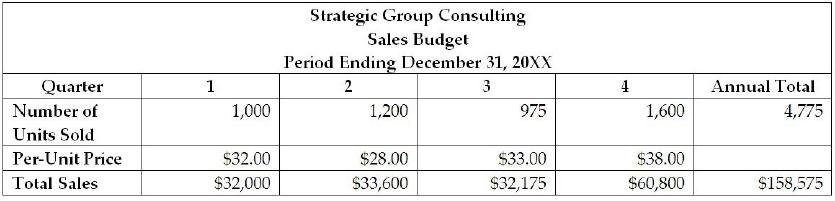
25) The managerial accountant at Strategic Group Consulting reported the following
information about the sales budget for the period ending December 31, 20XX:
Observe the Sales Budget and determine which primary responsibility the managerial
accountant uses to
determine which quarter generated the most per-unit product sales data in order to adjust
the marketing strategy?
A) Planning
B) Controlling
C) Directing
D) Analyzing
E) Eliminating
Answer: C
Explanation: C) The managerial accountant used the directing responsibility in managerial
accounting to determine which quarter generated the most sales. This information is
important to a manager because the information found in the sales budget report can help
the manager adjust the marketing strategy.
Di!: 3
LO: 1-1
EOC: S1-1; A1-32-1
AACSB: Analytical thinking
Learning Outcome: De+ne and use cost-volume-pro+t analysis to analyze the e!ects of changes in
costs and volume on a company’s profit.
7
Copyright © 2015 Pearson Education, Inc.
26) Managerial accountants fulfill three primary responsibilities: planning, directing and
controlling. Review each of the following tasks that managerial accountants complete in
their role as a managerial accountant:
(a)The manager at the Pet Store holds a meeting with sta! to set goals and to ask
the employees how to achieve the goals.
(b)The manager at the Home Goods Store realized that the actual sales are lower
than planned and the manager schedules a meeting to revise plans or adjust the
operations.
(c) The local manager at the Halloween Store uses product sales data to determine
which costumes generate the most sales and then he or she can use that
information to establish seasonal marketing strategies.
(d)The manager at the Children’s Hospital translates plans into budgets because he
or she wants to see the quantitative expression of the plan.
(e)A manager decides to increase local advertising at the Children’s Toy Store.
In the space provided below, indicate whether the task is (1) planning; (2) directing; or, (3)
controlling.
Planning
Directing
Controlling
Answer:
(a) Planning: The manager at the Pet Store is planning in this scenario holds a meeting with
sta! to set goals and discuss how to achieve those goals. Recall that planning involves
setting goals and objectives for the company and determining how to achieve those goals.
(b) Controlling: The manager at the Home Goods Store uses the controlling responsibility.
Recall that the controlling responsibility means that a manager evaluates the results against
the budget and then uses feedback to take corrective action. A manager that reveals that
actual sales are lower than planned can schedule a meeting and revise plans or adjust
operations to accommodate new objectives.
(c) Directing: The manager at the Halloween Store is directing when he or she uses product
sales data to determine which costumes generate the most sales and then uses that
information to establish seasonal marketing strategies.
(d) Planning: A manager at the Children’s Hospital uses the planning responsibility when he