2017
MPE781
Assignment 1
MATTHEW CROMPTON
ID: 217401114
QUESTION 1: ………………………………………………………………………………………………………………………………………………… 2
QUESTION 2: ………………………………………………………………………………………………………………………………………………… 4
QUESTION 3: ………………………………………………………………………………………………………………………………………………… 8
QUESTION 4: ………………………………………………………………………………………………………………………………………………. 10
QUESTION 5: ………………………………………………………………………………………………………………………………………………. 12
REFERENCES ……………………………………………………………………………………………………………………………………… 16
FIGURE 1 – US CABLE TV OPERATOR MARKET SHARE ………………………………………………………………………………………………….. 3
FIGURE 2 – CONSUMER AND PRODUCER SURPLUS IN AN EFFICIENT MARKET ………………………………………………………………………. 4
FIGURE 3 – CHANGES IN CONSUMER SURPLUS DUE TO HIDDEN FEES ………………………………………………………………………………. 5
FIGURE 4 – CHANGES IN PRODUCER SURPLUS DUE TO HIDDEN FEES ………………………………………………………………………………… 6
FIGURE 5 – TOTAL SURPLUS REDUCED BY DWL ………………………………………………………………………………………………………… 7
FIGURE 6 – IMPACT ON QUANTITY DEMANDED FOR TOURISM IN THE U.S. MARKET ……………………………………………………………… 12
FIGURE 7 – SHIFT IN DEMAND OF SUBSTITUTE GOODS ………………………………………………………………………………………………… 13
FIGURE 8 – SHORT RUN EFFECTS OF HIDDEN FEES ON JPY:USD FOREIGN EXCHANGE RATES ……………………………………………………. 14
FIGURE 9 – LONG RUN EFFECTS OF HIDDEN FEES ON JPY:USD FOREIGN EXCHANGE RATES …………………………………………………….. 15
TABLE 1 – 2007 U.S. CENSUS DATA FOR TRAVELLER ACCOMMODATION ………………………………………………………………………….. 8
TABLE 2 – CHARACTERISTICS OF OLIGOPOLIES …………………………………………………………………………………………………………. 10
TABLE 3 – ESTIMATED PRICE ELASTICITIES OF DEMAND ……………………………………………………………………………………………….. 13
Question 1:
(a) What are the ‘hidden fees’ discussed in the article above? Why are they considered hidden? Give one
other example of hidden fees based on another type of good or service (not in the article).
The report discusses the hidden fees charged by hotel and airline operators in the American travel
industry. The fees are described as ‘hidden’ because they are not included in the initial advertised
price and are added at some point after the initial transaction. The fees are mandatory or de facto
mandatory so that consumers are not able to opt out of paying them. In some cases, the hidden fees
are not connected to the provision of the service.
Hidden fees are imposed by operators in many other industries. One such example it the
entertainment industry’s event ticketing firms. With the emergence of e-commerce, vendors such as
Ticketmaster dominate the online ticketing market. Hidden fees guised as ‘service fees’, ‘processing
fees’ and ‘delivery fees’ are added to ticket prices. The fees are mandatory and usually have no
connection to any additional service (National Economic Council, 2016, p. 11).
(b) Give one example of an actual government policy/law that has attempted to counteract problems
associated with hidden fees and comment, using your knowledge of economic theory, on how
successful you think the policy is (not in the article).
Since the later stages of the Obama Administration, the U.S. Federal Communications Commission
(FCC) has been working to increase competition in the American cable TV market. The market is
concentrated such that the top 3 service providers control over 50% of the market as shown in
Error! Reference source not found.. In an attempt to increase competition, reduce consumer costs
and generate innovation; the FCC has launched a campaign to reform the industry and allows
consumers more freedom of choice in the set top box market (The White House, 2016).
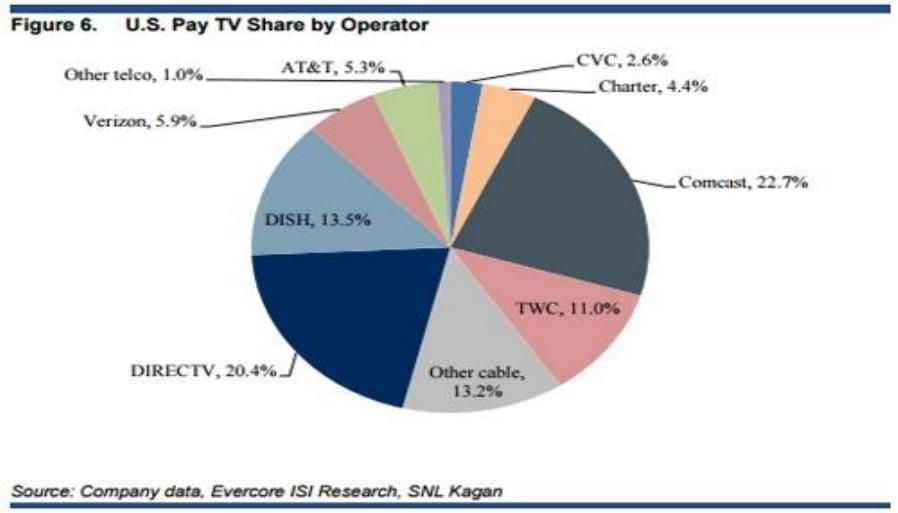
Figure 1 – US Cable TV operator market share
Source: (Munson, 2016).
American consumers are effectively forced to rent the set top boxes that their service provider
mandates. 99% of users pay an average of $231 in rental charges, generating over US$20B per
annum in revenue for the firms. The FCC also shows that over the last 20 years, the cost of these
boxes has nearly doubled (increase of 185%), while the cost of computers, televisions and
telephones has fallen by 90%. In addition, the rate of technological innovation in the industry is
stiflingly slow in comparison to segments of the IT industry that provide competition to the cable TV
providers (Apple, google, Netflix etc) (Wheeler, 2016) .
This move should be successful in opining up the industry to competition. Competitors from more
innovative IT sectors would also then enter the market and potentially supply a higher level of
service than currently exists. This would have the effect of increasing supply and lowering prices
across the industry.
Question 2:
“These hidden fees, the report argues, can weaken the overall economy by making it less efficient.” Do
hidden fees actually make the economy less efficient? If so, how? When answering, ensure you first
clearly define the concept of efficiency.
Efficiency is defined as an ‘outcome where society maximises the benefits it gains from the use of its
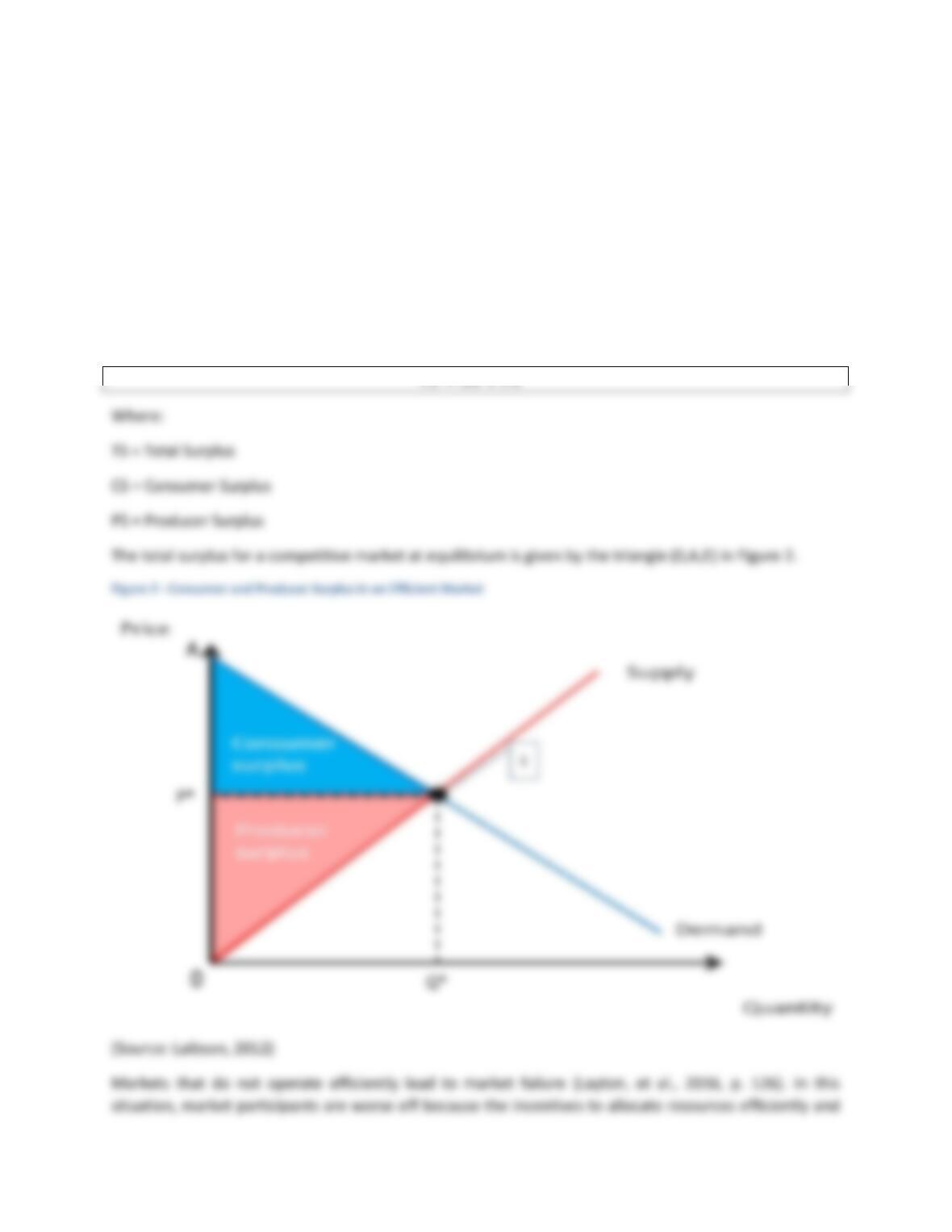
scarce resources’ (Layton, et al., 2016, p. 81). Figure 2 shows that in a competitive market, this occurs at
the equilibrium price (E) where the quantity demanded equals the quantity supplied. Resources are
used most efficiently at this point so that marginal benefit (MB) equals marginal cost (MC) (Berenson &
McTaggart, 2014, p. 112). The total surplus (sum of consumer and producer surpluses) is also maximised
such that: