Naijuan Fu
Art of China
Exhibition Project
02/22/14
Her “Tang” Lifestyle
This exhibition is going to show you all aspects of women’s lives in Tang
Dynasty. The flourishing economic and stable society made Tang a great historic era.
During this time, China was one of the richest and most predominant countries.
During the famous flourishing kaiyuan reign period (the reign of Xuanzong), Tang’s
power and prestige reached the peak. Overall grain and fabric production
capabilities were stronger than ever. Businesses with less limitation of government
were prosperous. People traveled a lot and were safe from rob. This is also the time
when art included figure paintings and poems accomplish great success. Great poets
like Li Bo and Du Fu became the greatest masters of all time. Tang’s associations
with countries in western and eastern Asia were expedite and continual. Foreign
envoys and businessmen were everywhere.
People who lived in Tang Dynasty experienced one of the most colorful lives in
ancient China. They opened their minds to a much higher level than before. One of
the most special differences of Tang and other dynasties is that both women’s social
position and family position were much higher. Rich families hired teachers for girls;
they could read and wrote like men. They started to participate in politics, which
was not even imaginable in other dynasties. The one and only empress in Chinese
history, Wu Zetian(c. 625-705), became a legend of all time. Not only in the field of
politics, women were exposure to the outside world from every aspect of everyday
life. There were over 100 female poets you can find on record. One of the most
famous is Yu Xuanji, whose poem is still popular now. Women with education did
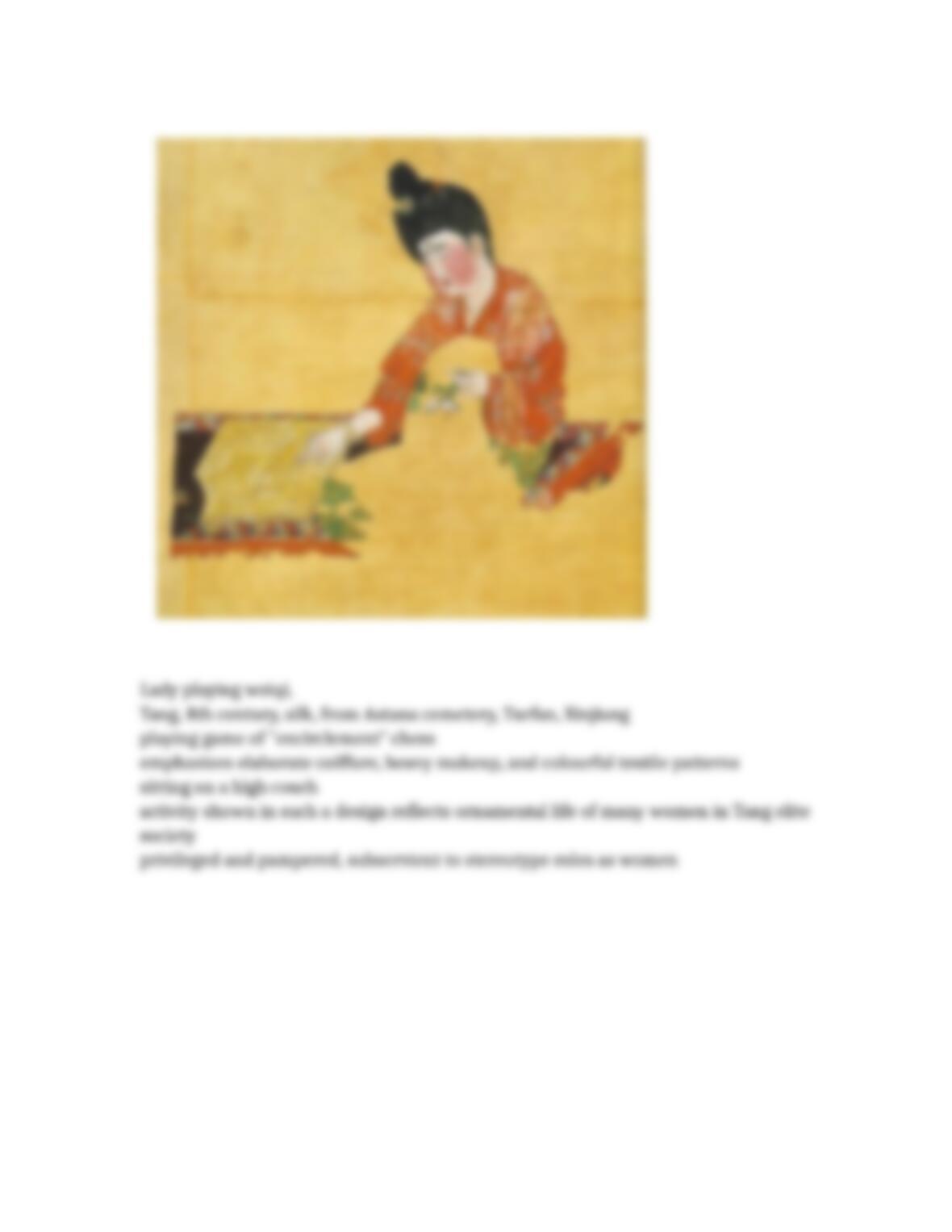
activities just like men: they play chess, paint paintings, and ride horses. Two of the
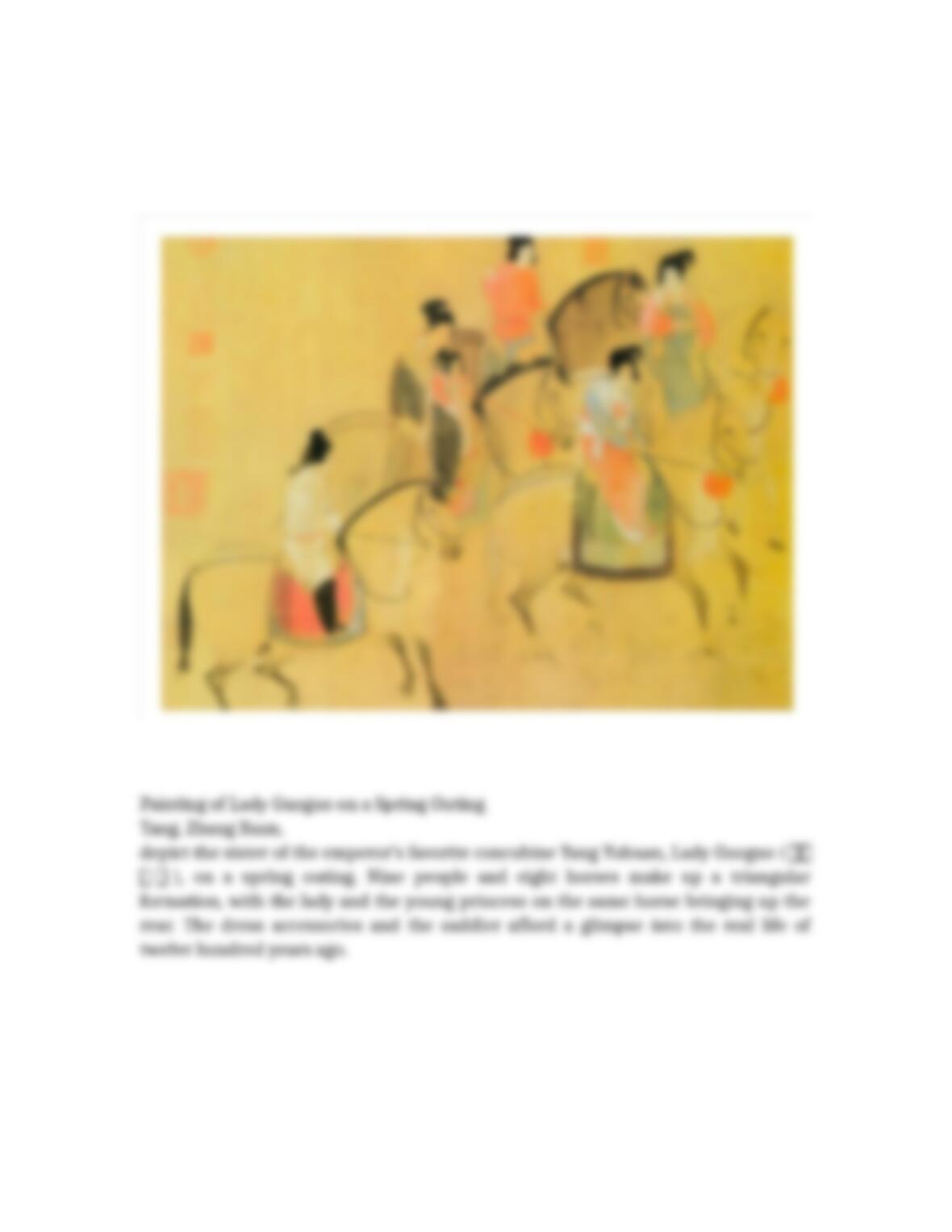
paintings I selected for this exhibition shows those vividly: “Painting of Lady Guoguo
on a Spring Outing” by Zhang Xuan and “Lady playing weiqi” from Astana cemetery.
Zhang Xuan is a famous Tang court painter. His artworks make painting of ladies one
of the most crucial type of figure paintings in Chinese art history. This “Painting of
Lady Guoguo on a Spring Outing” is one of his only two artworks that we can find
today (original lost, this is a copied one by Song Huizong). In Tang, it is common for
two young people to have a relationship with freedom. Divorce and remarriage were
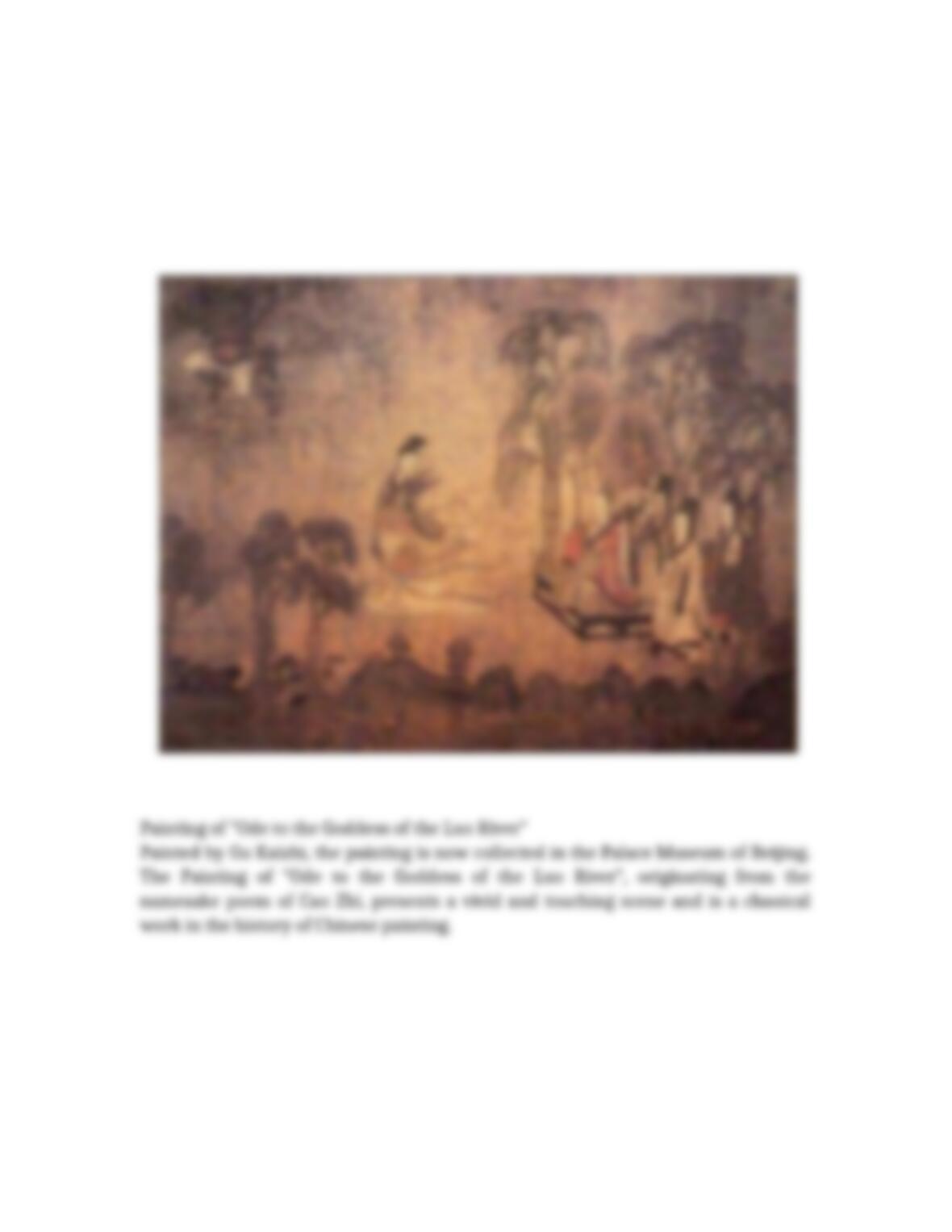
very usual in Tang too. “Painting of “Ode to the Goddess of the Luo River”” by Gu
Kaizhi was originating from the namesake poem of Cao Zhi. Painting shows a
beautiful love story that still represents freedom of love today in China. Tang
people’s appreciation of the beauty was very unique too: they like fat girls. Fat was
considered as an important standard of beauty. One of our paintings you are about
to see is “Ladies with Flowers in their Hair” by Zhou Fang: you can see the beautiful
ladies are not traditional what we consider as beauty- they are kind of fat but still
truly wonderful. Zhou Fang and Zhang Xuan are two most famous painter of painting
ladies of Chinese history. This artwork is Zhou Fang’s most famed painting: it’s
almost a symbol of Tang Dynasty when people think about Tang. Woman’s clothes
from Tang are, in my opinion, the best looking clothes of all time. From paintings I
mentioned before, you can see there are so many different kinds of dress, skirts, and
tops, and they are all elegant and pretty. However, in this period, another totally
different kind of fashion was hot among women too: wearing men’s clothing.
Historians think this was a result of getting affect of Hu, which is a outside culture.
Hu people are good at riding horses so they all dress very casually and comfortable.
Tang women like to dress like Hu people sometimes, and this also reflects their
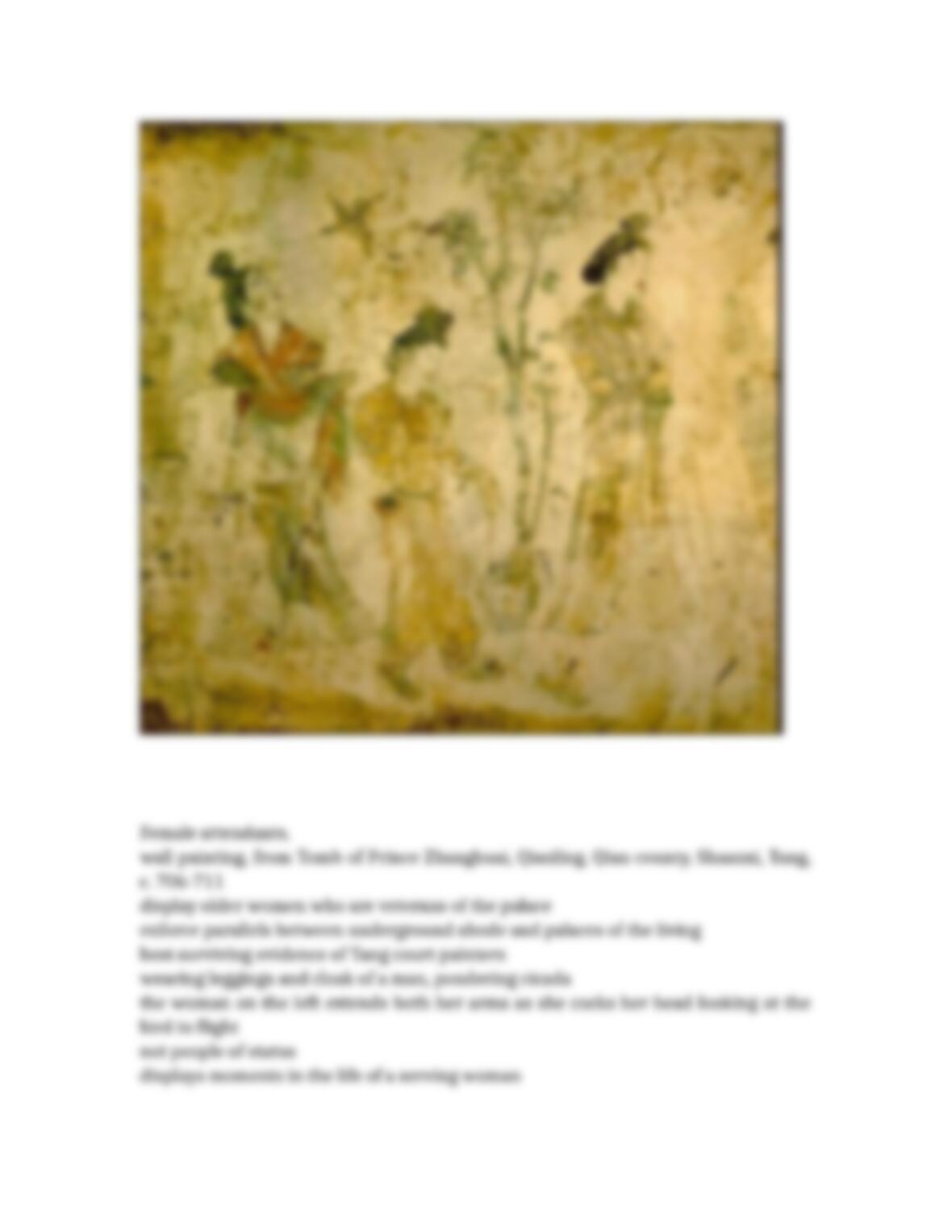
uncontrolled, viable and tough personalities. Wall painting “Female attendants”
shows ladies wear Hu clothing, and it is the best surviving evidence of Tang court
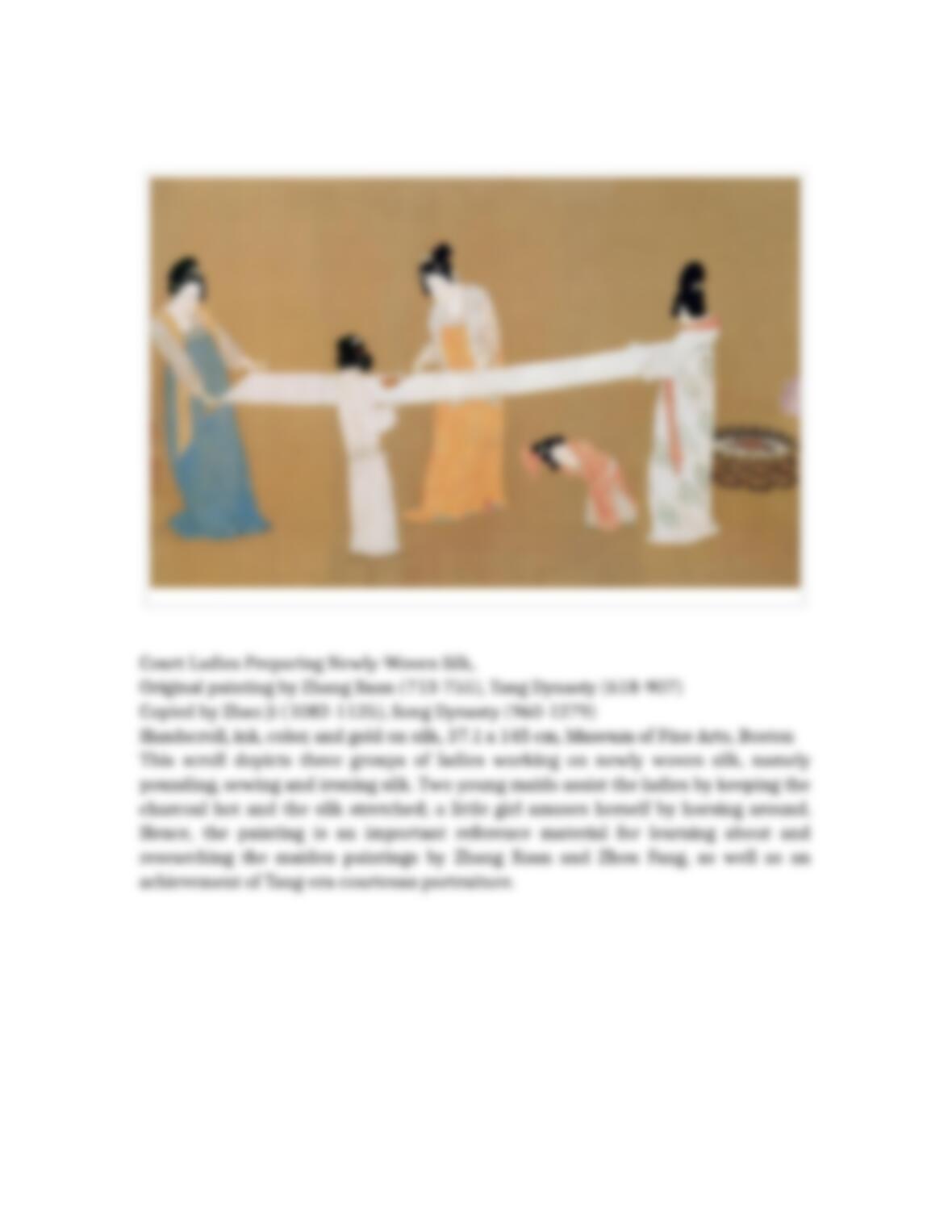
painters. Speaking of court lives of Tang, “Court Ladies Preparing Newly-Woven Silk”
is the most widely known painting shows Tang court lives. It was original painting
by Zhang Xuan (713-755). Copied by Zhao Ji (1082-1135), Song Dynasty (960-
1279). This piece of art often appears on all kinds of history topic books and also
Chinese history textbooks. Do you know that Japanese spent many students to study
in Tang Dynasty? They learned almost everything about Chinese culture in that
period and kept them even better than Chinese people did. One thing they took back
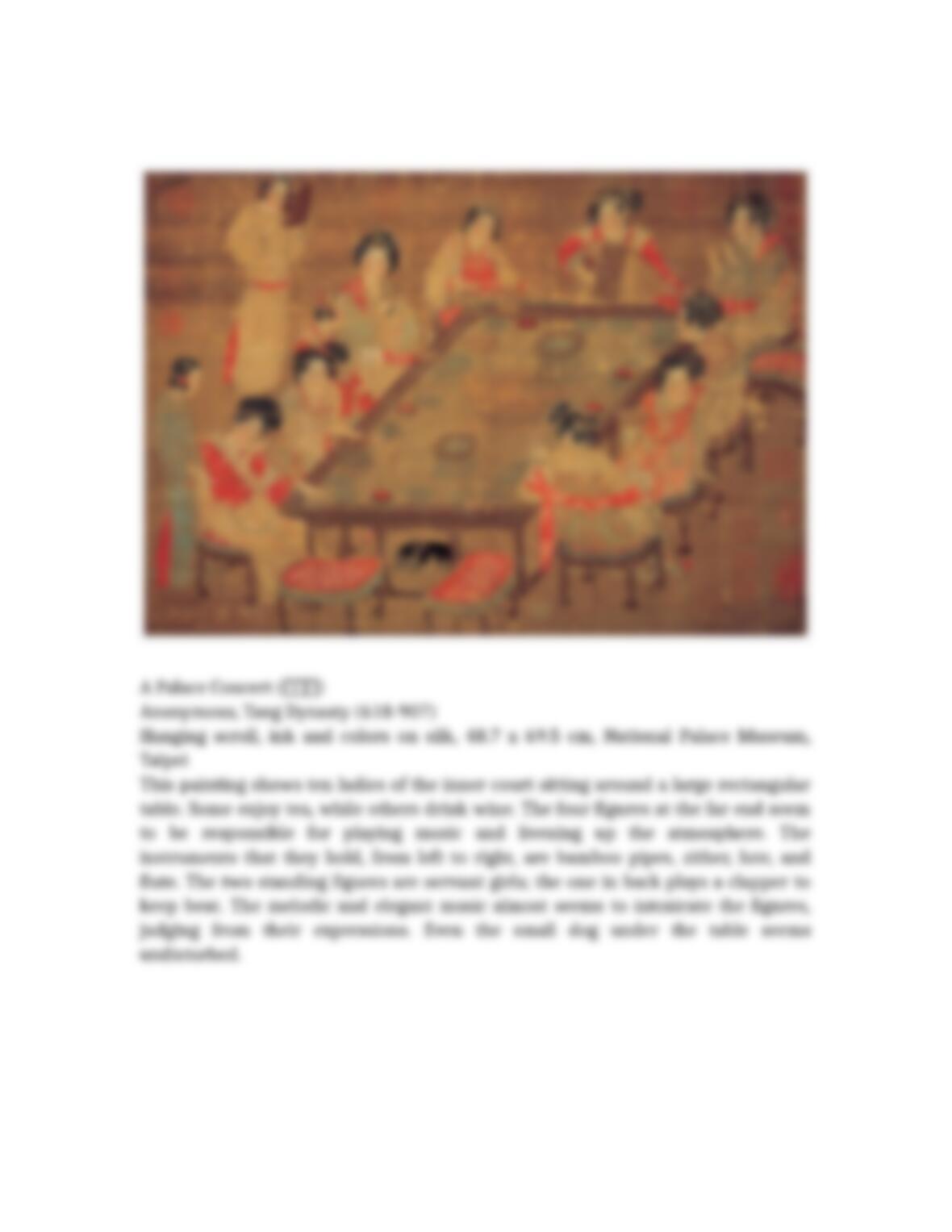
to Japan and developed very well is tea ceremony. Painting “A Palace Concert” in this
exhibition is going to show you ten ladies sitting around a rectangle table drink tea
and wine while enjoy music. We can see from this painting that tea and wine culture
were so popular in Tang people’s lives.
All seven pieces of artworks were put together to show you a special aspect of
Tang Dynasty: women’s life. Many people say that history is man’s history, especially
in ancient China. However, today’s exhibition says something else: history is not just
about man, woman plays important roles all the time. From taking a close looking of
woman’s life in Tang, you will get an overall feeling about Tang Dynasty. It was a
colorful era of art, culture, and creativity. Would you like to live in Tang if you can?
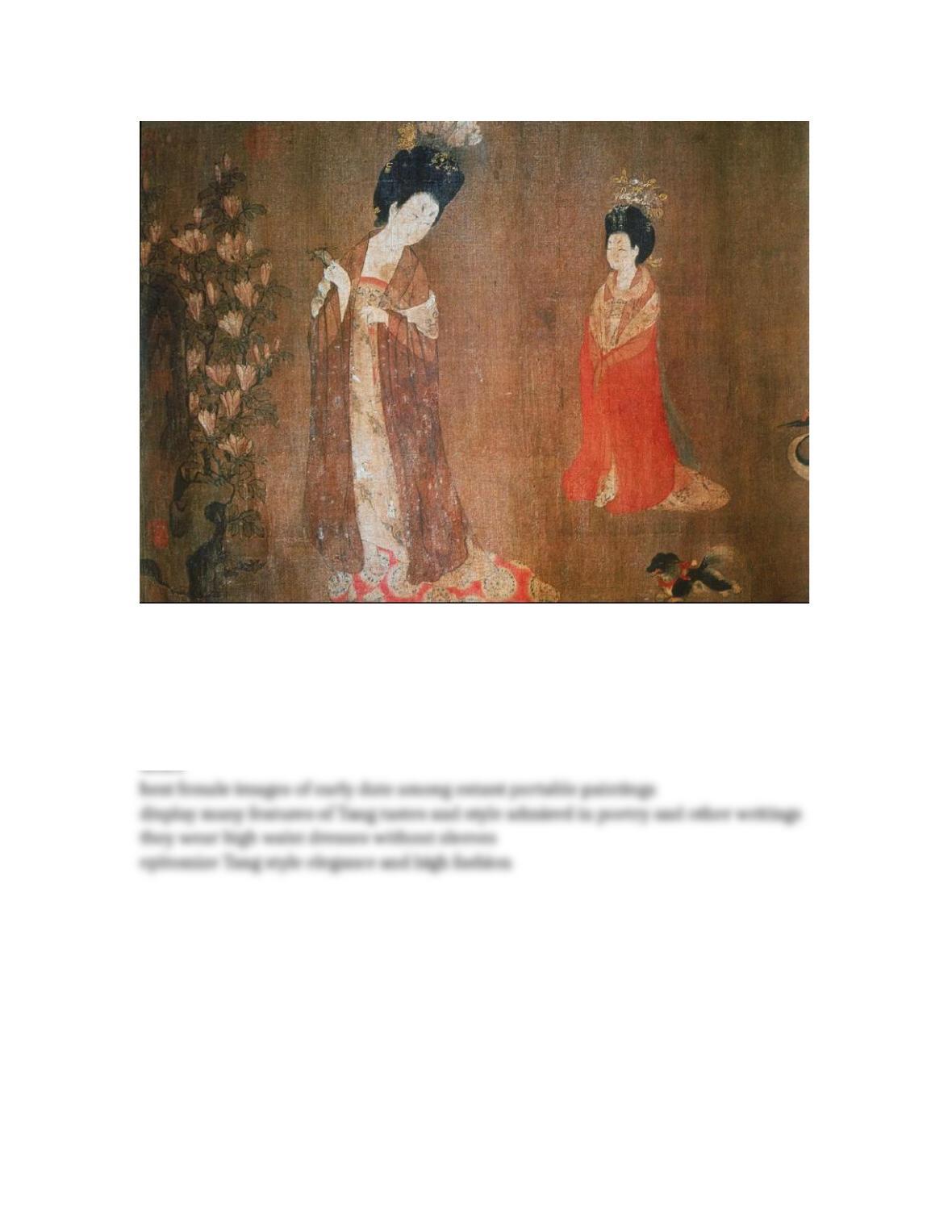
Att. to Zhou Fang, Ladies with Flowers in their Hair,
Tang, late 8th-early 9th century (10th century copy)
Ink and colours on silk
illustrates scene on (flower morning) spring holiday celebrated in Tang and later