Procurement Income
The balance that H.E.B. must provide of stocking private label products and national brand products on
the shelves is vital for its continued success. Though each option has its own respective profitability
benefits, an excess of either option without regard for the alternative would lead to a blatant disregard
for the company framework that was set forth by Florence Butt. H.E.B has already established itself as a
regional heavyweight in its industry by providing both private and national brands, so it is not wise to
ruin that delicate balance. H.E.B derives a great revenue stream from its own brand products; however,
it also accumulates a great deal of revenue from the procurement income elicited from the sales of
national brands. A quantitative analysis of this relationship clarifies the need to maintain that balance.
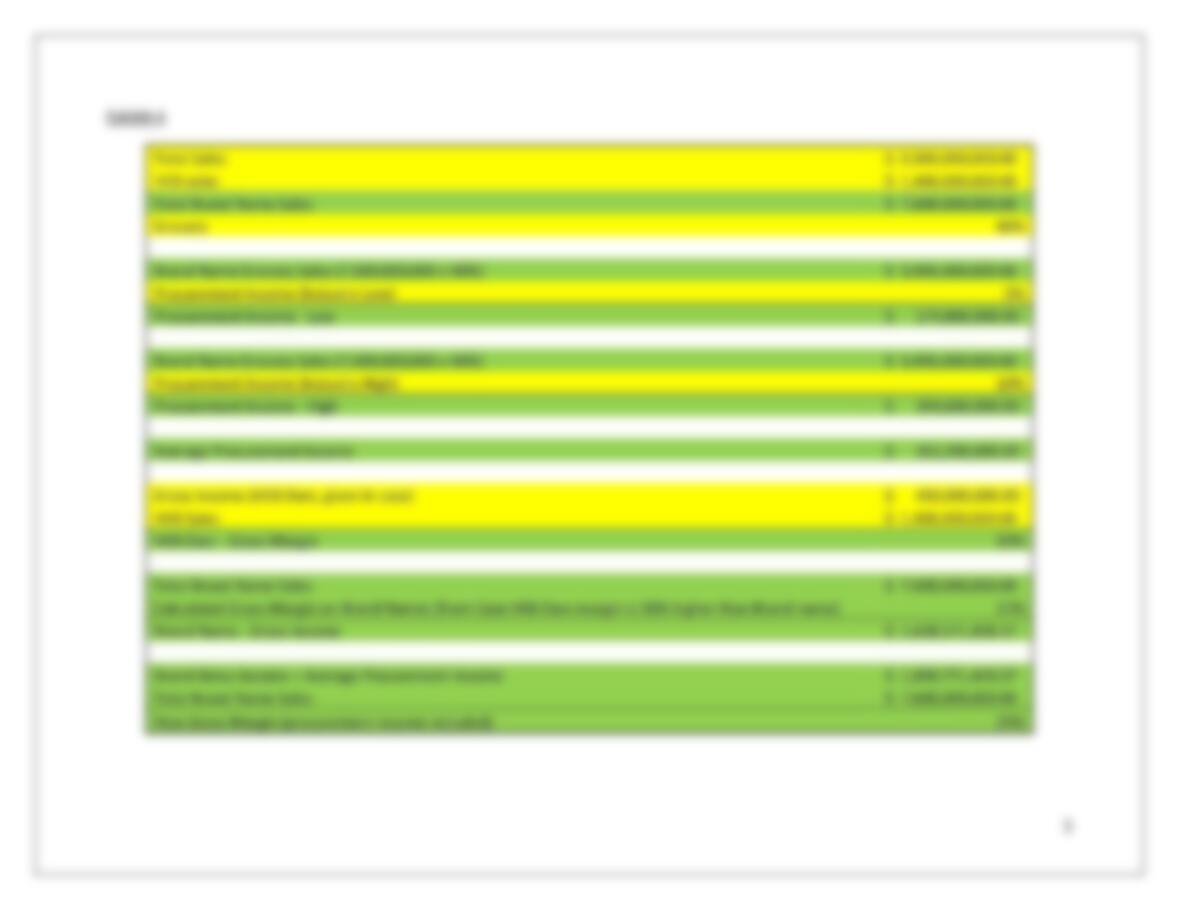
In 2001, the gross margin earned by the sale of HEB brand groceries is about 32 percent of total revenue
and gross margin earned by sales on national brand name products accounts for 21 percent of total
revenue. These numbers reflect positively on the strength of H.E.B.’s own brand line of products,
relative to that of the national brands. However, the additional revenue earned from procurement
income from the national brands increases the profit margin of national brands from by about 4 percent
(see Exhibit A for calculations) to about 25 percent, thus narrowing the gap in profitability between the
two options. To recap, profit margin of private brands is 32 percent and profit margin of national brands
(including procurement income) is 25 percent.
If the company was only able to choose one option or the other (which is thankfully not the case), they
would be losing a significant amount of profit both way and the choice would not be easy. There are