PENGUKURAN MAKRO 1
1. The CPI was 140 in one year and 145.2 the following year. Approximately how much did prices
rise between the two years?
a. 3.7 percent
b. 3.15 percent
c. 0.03 percent
d. 1.04 percent
2. If the CPI is 100 in the base year and 127 in the current year, how much did prices rise between the
two years?
a. 27 percent
b. 127 percent
c. 1.27 percent
d. 0.27 percent
3. Suppose the market basket consists of 10X, 20Y, and 30Z. Current-year prices are $1.00 for each
unit of X, $0.96 for each unit of Y, and $1.13 for each unit of Z. Base-year prices are $1.00 for
each unit of X, Y, and Z. What is the approximate CPI in the current year?
a. 1.05
b. 203
c. 105.17
d. 309
4. What does annual economic growth refer to?
a. annual increases in GDP
b. annual increases in consumption spending
c. annual increases in investment spending
d. annual increases in Real GDP
5. One measure of the inflation rate is the
a. sum of the CPIs of adjacent years.
b. percentage change in the CPI of adjacent years.
c. percentage change in the Real GDP of adjacent years.
d. GDP minus the Real GDP in a year.
6. In year 1 the CPI is 140.1, and in year 2 the CPI is 146.7. From year 1 to year 2, Martha’s salary
rises from $32,000 to $34,000, and Chiang’s salary rises from $43,000 to $45,000. Who is “more
than keeping up with inflation”?
a. Martha
b. Chiang
c. both Martha and Chiang
d. neither Martha nor Chiang
7. In year 1 the CPI is 140.1, and in year 2 the CPI is 148.9. If Sarah’s salary was $33,500 in year 1,
what salary in year 2 would cause her to exactly “keep up with inflation”?
a. $36,448
b. $42,300

c. $40,508
d. $35,604
8. In year 1 the CPI is 140.1, and in year 2 the CPI is 148.9. If Dennis’s salary was $63,000 in year 1,
what is the minimum salary he must earn in year 2 to “more than keep up with inflation”?
a. $69,281
b. $66,957
c. $71,800
d. $63,625
9. Suppose that 1967 is the base year for the Consumer Price Index (CPI) and in 1988 the CPI is 340.
What does this “340” mean?
a. What cost $100 in 1967 will cost 340 times as much in 1988.
b. What cost $100 in 1967 will cost $340 more in 1988.
c. What cost $100 in 1967 will cost 100/340 (or .2941) times as much in 1988 (that is, it will cost
$29.41 in 1988).
d. What cost $100 in 1967 will cost $240 more in 1988.
10. The “chain–weighted” CPI __________ the response of buying behavior to changes in relative
prices, and so __________ a substitution bias.
a. allows; avoids
b. allows; contains
c. disallows; avoids
d. disallows; contains
11. The base year is the year
a. in which prices are unstable.
b. in which prices are lowest.
c. in which prices are highest.
d. that serves as a reference point or benchmark.
e. in which nominal output is largest.
12. In order to be classified as unemployed, a person must
a. not have worked during the survey week, actively have looked for work within the past four
weeks, and currently be available for work.
b. not have worked during the survey week, and currently be available for work.
c. actively have looked for work within the past six weeks.
d. not have a job.
13. The unemployment rate equals the
a. number of employed persons divided by the number of unemployed persons.
b. number of unemployed persons divided by the civilian non-institutional population.
c. number of unemployed persons divided by the civilian labor force.
d. sum of unemployed persons and discouraged workers divided by the civilian labor force.
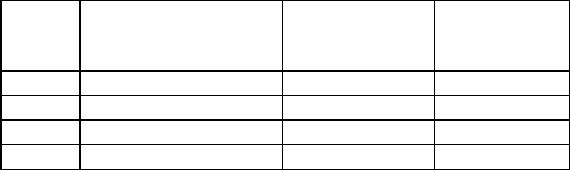
Exhibit 5-2
Year
Civilian
Non-institutional
Population (millions)
Civilian
Labor Force
(millions)
Employed
Persons
(millions)
1
250
200
175
2
400
300
200
3
500
400
350
4
1000
800
720
14. For questions 33-39, refer to Exhibit 5-2 above.
Refer to Exhibit 5-2. How many people are not in the labor force in year 1?
a. 25 million
b. 50 million
c. 75 million
d. 175 million
15. Refer to Exhibit 5-2. How many people are not in the labor force in year 3?
a. 50 million
b. 100 million
c. 150 million
d. 350 million
16. Refer to Exhibit 5-2. How many unemployed persons are there in year 1?
a. 25 million
b. 50 million
c. 75 million
d. 175 million
17. Refer to Exhibit 5-2. How many unemployed persons are there in year 3?
a. 50 million
b. 100 million
c. 150 million
d. 350 million
18. Refer to Exhibit 5-2. The unemployment rate in year 1 is
a. 12 1/2 percent.
b. 70 percent.
c. 87 1/2 percent.
d. 30 percent.
19. Refer to Exhibit 5-2. The unemployment rate in year 2 is
a. 75 percent.
b. 33 1/3 percent.
c. 50 percent.
d. 66 2/3 percent.
20. Refer to Exhibit 5-2. The employment rate in year 1 is
a. 12 1/2 percent.
b. 70 percent.
c. 87 1/2 percent.
d. 30 percent.
21. The unemployment due to the time it takes for unemployed people to locate a job utilizing their
transferable skills is called __________ unemployment.
a. structural
b. cyclical
c. natural
d. frictional
22. “Full employment” is said to exist when the unemployment rate equals
a. zero.
b. the cyclical unemployment rate.
c. the structural unemployment rate.
d. the natural unemployment rate.
PENGUKURAN MAKRO 2
1. Gross Domestic Product (GDP) is the total market value of all
a. final goods and services produced annually within a country’s borders.
b. final and intermediate goods and services produced annually within a country’s borders.
c. intermediate goods and services produced annually within a country’s borders.
d. final goods and services produced every month within a country’s borders.
2. In the definition of GDP, the words “total market value” refer to total
a. dollar value at base prices.
b. dollar value at current prices.
c. subjective value.
d. objective value.
3. Which of the following illustrates double counting?
a. The total market value of the steel used to produce a car and the total market value of the car
itself are summed.
b. The total market value of tennis rackets and the total market value of tennis balls are summed.
c. The total market value of picture frames and the total market value of camera film are summed.
d. The total market value of eyeglasses and the total market value of carpet are summed.
4. The best reason economists take only final goods and services into account when calculating
GDP is that
a. this is the way things have always been done.