1
The relations between attributes of a third-party payment and its reuse
intention: Alipay
BY
Ye Zhiyuan
1430001110
Applied Economics
Chen Jiaqi
1430010002
Applied Economics
Submitted to
Dr. Wu Minglu
A Final Year Project Submitted to the Division of
Business and Management in Partial Fulfilment of
the Graduation Requirements for the Degree of
Bachelor of Business Administration (Honours)
Beijing Normal University – Hong Kong Baptist University
United International College
May 2017
2
Acknowledge
The authors of this final year project would like to sincerely express the greatest
gratitude to supervisor Dr. WU Minglu and assistant professor Dr. Thomas CHAN, both
of who currently work for United International College. Only after they have provided
their valuable assistance and flexible suggestions, can we successfully accomplish the
proposal and report. Furthermore, we have to mention that during the composition
period, some classmates, HE Yunping & OU Yangpian shared empirical computer
techniques with us when we came to them for help. We also appreciate those 30
volunteers who participated in our mock interview. They strongly helped in improving
the quality of questionnaire and interview procedure. We believe there are still some
other individuals who helped us, but unfortunately we cannot come up with all these
names at the time, since the space of the page is limited. What most importantly matters
is that the authors intend to send the most sophisticated wishes to the kind helpers. Good
luck to you guys!
Signature:
May 3rd, 2018
3
Table of contents
1.1 Statement of the problem(s) ………………………………………………………………… 4
1.2 Literature review ……………………………………………………………………………….. 4
1.2.1 Perceived risks …………………………………………………………………………….. 5
1.2.2 Economic benefits ………………………………………………………………………… 5
1.2.3 Convenience …………………………..……………………………………………………. 6
1.2.4 Ease of use …………………………………………………………………………………… 6
1.2.5 Consumer satisfaction …………………………………………………………………… 7
1.2.6 Reuse intention …………………………………………………………………………….. 7
1.2.7 Simultaneous equation model ………………………………………………………… 8
1.3 Objective(s) of the study …………………………………………………………………….. 8
1.4 Statement of hypotheses …………………………..…………………………………………. 8
2. Method ………………………………………………………………………………………………….. 9
3. Results …………………………………………………………………………………………………. 13
4. Discussion and implication …………………………..………………………………………… 22
5. Conclusion …………………………………………………………………………………………… 24
Appendix I: Research instrument related to proposed model ……………………….. 25
Appendix II: t-statistic & F-statistic reference …………………………………………….. 27
Reference …………………………..……………………………………………………………………. 28
4
1. Introduction
1.1 Statement of the problem(s)
Recently, when we, my partner and I, walk around the campus of United
International College and Beijing Normal University, we realize students always pay
for the bills with their smart phone, using a third-party payment, either Wechat or Alipay.
This phenomenon inspires our interest in what exactly stimulates virtually all students
to use electronic payment repeatedly. What are the factors that push students to use
electronic payment and what largely increase their reuse intention? There must be some
effective motivation which somehow keep students as loyal customers. After doing
sufficient online research, we reveal all of the academic journals we have found
focusing on a subject group rather than college students. Therefore, the aim of the
project is to conduct a research mainly concentrating on college students in Zhuhai.
1.2 Literature review
With the fast development of e-commerce in China, the third-party online payment
platform also develops in a high rate, a field which belongs to the emergence industry
(Hu, 2008). Established in 2004, Alipay now has become China’s predominant third-
party online payment platform. Third-party online payment services are well known for
escrow services, in which money is held by a third party on behalf of a supervisor
(Dahlberg, Guo, & Ondrus, 2015). Basically, Alipay provides an escrow service
enabling consumers to reflect their satisfaction with the goods they purchase online
before Alipay distributes money to the seller (Choi & Sun, 2016). In this process, Alipay
served as an authorized third party that provides guaranteed intermediation. In the
context of weak consumer protection regulations and laws, this unique payment service
is critical and necessary (Liu, 2015). In addition, Alipay also provides many more
applications and entertainment for users to engage in informative community. Alipay’s
successful operation would result from different features, which may affect the
satisfaction of users and finally are positively related to reuse intention (Odom, Kumar
& Saunders, 2002).
5
1.2.1 Perceived risks
According to the Ministry of Industry and Information Technology of China (MIIT,
2014), by January 2014 there were 0.84 billion mobile internet users in China, and only
25.1 percent of the Chinese mobile phone users use mobile payment, a percentage
which is much lower than the expected. Previous studies on third-party payment
acceptance mainly investigate the using motivations behind using m-payment, such as
ease of use, usefulness and convenience, but they lack attention of customer’s concern
suchlike perceived risk. (Kim, Mirusmonov & Lee, 2010). Considering the knowledge
gap, Yang (et al., 2015) aims to research how perceived risks are derived from various
uncertainties.
Forsythe and Shi (2003) define perceived risk is the subjective expectation of
possible losses of a customer when making decisions of online shopping. Perceived risk
of third-party payment refers to the extent of consumer’s perception of the possible
losses including financial loss, the violation of privacy, dissatisfaction with
performance, psychological discomfort, and wasting time (Yang et al., 2015). The
transfer of money between accounts through third-party would raise concern about
financial information, such as accounts and passwords being stolen and the subsequent
risk of financial loss. In mobile payment process, much more user information is
required, such as phone number, national identification number, consumption location,
shopping record etc., a situation which is also the major concern of the users. Moreover,
online payment usually draws support from wireless communication technologies that
potentially provide financial information to another industry (Kim, Mirusmonov & Lee,
2010). In addition, QR code scanning contains malicious software, which would be
used to illegally acquire private information.
1.2.2 Economic benefits
Consumers’ perceived risk and perceived profit are the two most fundamental
aspects affecting consumer decisions, including perceived negative and positive utility
(Peter & Tarpey, 1975). According to Treiblmaier, Pinterits and Arne Floh (2008), the
research showed that the economic factor that generates benefits for users has a
6
significant influence on users’ satisfaction towards online payments. Alipay and
TianHong Asset Management Company jointly launched an innovative product named
YuEBao on June 13, 2013, involving both payment and financial investment. This
financial product achieved rapid expansion. By the end of June, YuEBao received 2.5
million users and the transaction scale had reached RMB 6.6 billion (Xia & Hou, 2016).
Until today, the number of people using online financial products has grown, reflecting
a huge demand for financing in China. Some users of YuEBao choose not to be covered
by traditional financial institutions and turn to online financial instruments because of
the higher interest rate and possible money withdrawals at any time. The research
results of Choi and Sun (2016) supported that interests obtained from YuEBao account
increase the user’s satisfaction, thereby pushing patrons to reuse Alipay.
1.2.3 Convenience
According to Huang, Liu, and Wu (2017), consumers accept and reuse the
application for greater convenience, saving time and reducing cost. Convenience
yielded from third-party payment system lies in the fact that people can handle
transaction in any time and place where network is accessible (Yu et al. 2002).
Nowadays public services payments are available to be performed via the third-party
Alipay, mainly covering water charges, electricity and gas utilities, which were used to
be paid at banks or in certain locations. Moreover, Alipay launched joint services with
Didi Cab services, involving taxi hailing services, which offers the convenience to
passengers at a lower price than the traditional alternative does (Guo & Bouwman,
2016). Online shopping and online payment bring a large scale of convenience that
intensifies satisfaction to customers (David & Richard 2000).
1.2.4 Ease of use
Previous research indicated that perceived usefulness and perceived ease of use are
two determinants which cause people to accept or reject an application (Fred, 1989). In
Shin’s research (2010), it approved that perceived ease of use affects usage intention of
mobile payment systems. Ease of use reflects users’ operational experience with respect
to mobile payment. There is a negative impact of complexity on use intention,
7
indicaitng that ease of use creates positive utility on third-party payment (Xia & Hou,
2016). The higher degree of the ease of use, the higher the users’ adoption toward the
application; therefore, the more likely they would reuse the product. Consumers who
are familiar with and accustomed to the operation system more intend to acknowledge
the application.
1.2.5 Consumer satisfaction
The element satisfaction is an essential attribute of successful long-term business
relationships with customers (Balasubramanian et al., 2003). Consumer satisfaction
refers to cognitive and affective state of fulfillment in the consequence of the exchange
(Kim et al., 2009). After comparing the original expectation and the product’s actual
performance, the users develop a satisfaction level based on their confirmation level
and the expectation on which that confirmation was based. Based on previous studies
(Bhattacherjee, 2001), satisfaction was conceptualized as an affective state representing
the consumer’s emotional reaction to the entire e-commerce transaction through the
selling entity on the Internet. Thus, customer satisfaction is a customer’s subjective
judgment, deriving from observations of product performance. A higher consumer’s
perceived performance than the original expectation would lead to a relatively higher
level of satisfaction.
1.2.6 Reuse intention
Repurchase process is distinct from pre-purchase because the consumer has
previous experience to evaluate the level of satisfaction, which would largely affect
future purchase decisions and customer loyalty (Kim et al., 2009). Satisfaction acts as
an intermediate role of reuse intention, and several previous studies have shown the
positive effects of customer satisfaction on reuse intention (Choi & Sun, 2016).
Expectation-confirmation theory (ECT) is widely used to study consumer satisfaction
and repurchase intention and behavior (Kim et al., 2009). The underlying logic is: firstly,
customers generate an expectation of a specific product or service; secondly, after
consuming, they form perception of the performance of the product or service; thirdly,
a satisfaction level was established based on the conformation level; finally, customers
8
form a reuse intention based on the satisfaction level (Bhattacherjee, Anol &
Premkumar, 2004)
1.2.7 Simultaneous equation model
Empirical research is required to provide details on how the features of Alipay
affect customer satisfaction and how the satisfaction influences customers reuse
intention.
In economic theory, the relationships among multiple variables are examined by
simultaneous equation models. In simultaneous equation models, a dependent variable
of one equation is the independent variable of another equation, and equations are
simultaneously interrelated (Wang, Lee, & Chuang, 2016). According to Matzkin
(2008), the relationship between features of third party payment system, satisfaction
and reuse intention are interdependent and resulted in an endogenous problem. This
interactive relationship among variables imply the existence of a simultaneous
relationship and the single liner equation would fail to consider the interdependencies
effects could yield inconsistent findings (Hsing, 2016). The simultaneous equation
model is a better approach for investigating the interdependency and examining the
relationships among multiple variables (Wang, Lee, & Chuang, 2016).
1.3 Objective(s) of the study
In this project, an in-depth analysis will be taken with hypothesis to investigate the
relations between satisfaction level linked with Alipay adoption and the features of
Alipay, including perceived risks, economic benefit, convenience and ease of use.
Finally, we draw a conclusion on the issue of users’ reuse intention through the factor
of satisfaction level. Typically, this project mainly focuses on college students in Zhuhai
and Guangzhou. We hoped that this project would provide the present or potential
online vendors with certain amount of insight in order to help those vendors amplify
online shoppers’ purchase intention.
1.4 Statement of hypotheses
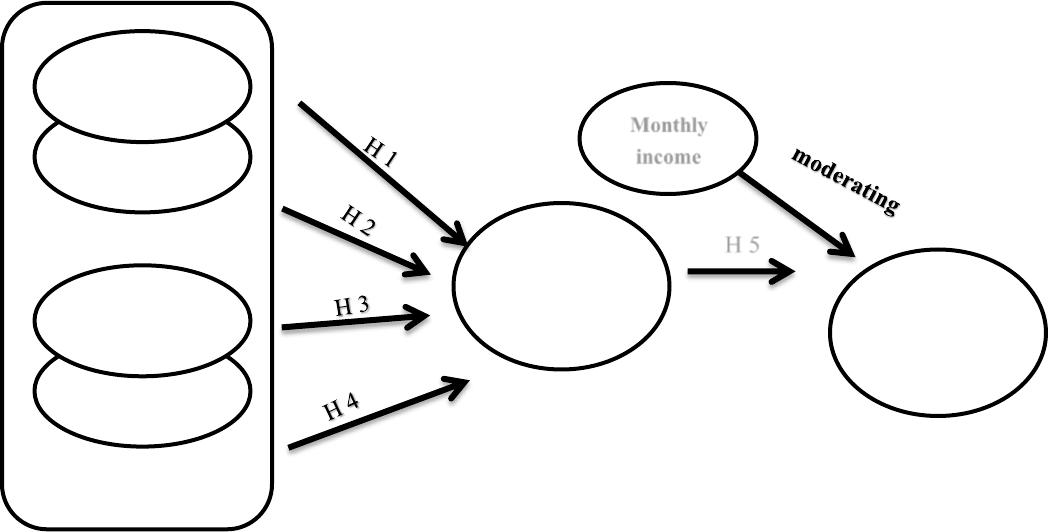
Hypothesis 1: Perceived risks negatively influence consumer satisfaction.
Hypothesis 2: Economic benefits students attained positively influence consumer
9
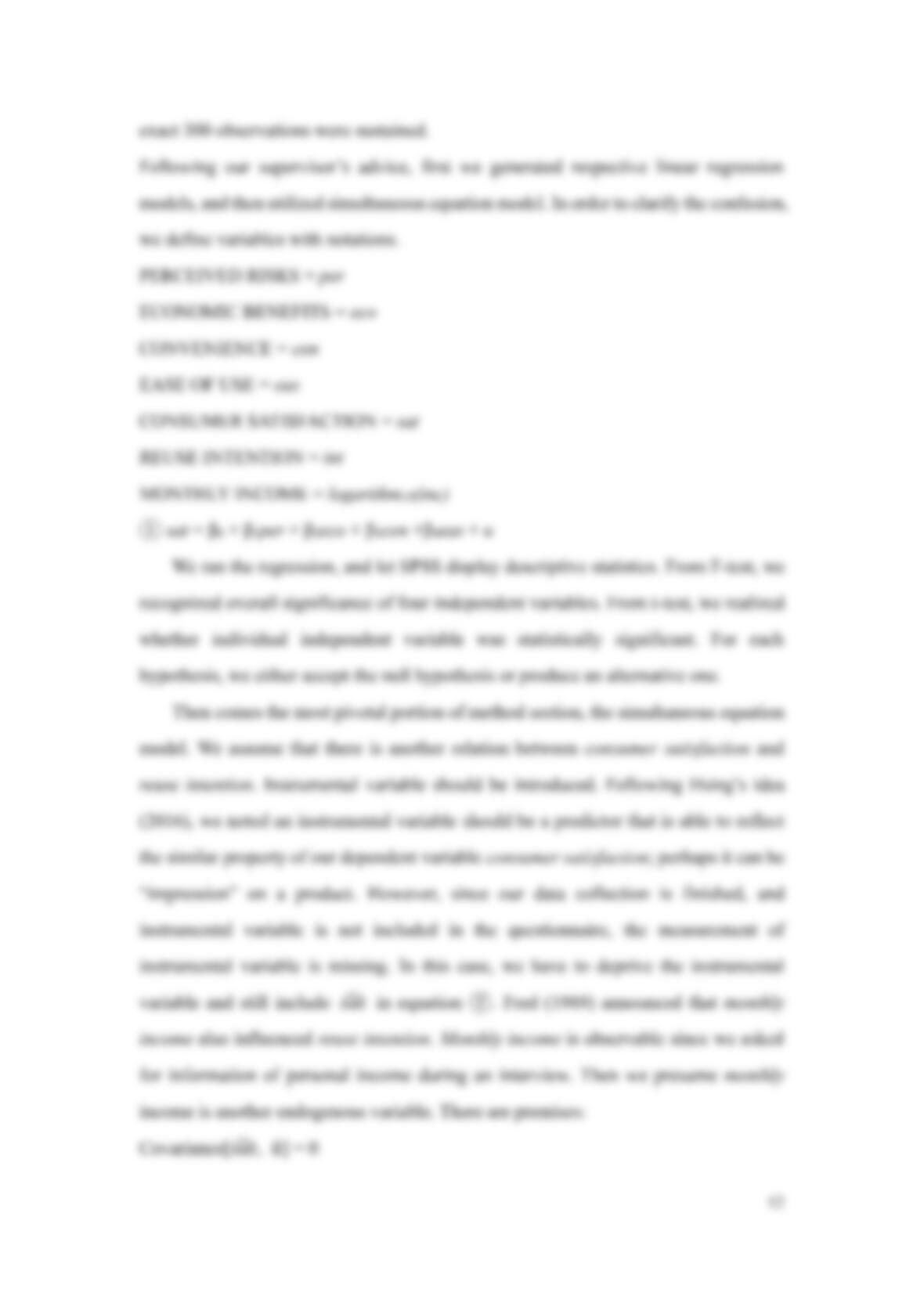
Economic
benefits
Perceived
risks
DV 1:
Consumer
satisfaction
Convenience
DV 2:
Reuse
intention
Monthly
income
Ease of use
IV
satisfaction.
Hypothesis 3: Convenience the application brings to students positively influences
consumer satisfaction.
Hypothesis 4: Ease of use positively influences consumer satisfaction.
Hypothesis 5: Consumer satisfaction positively influences reuse intention.
2. Method
After carefully reviewing the literature of different authors and following the
guideline, we choose multiple linear regression, simultaneous equation model &
hypothesis test as our cardinal method. The following phases were conscientiously
progressed: determining variables, articulating the interrelations, conceiving research
instrument, collecting data and interpreting data, nominating implication and limitation.
Guo & Bouwman (2016) denoted that interview is an optimal approach to collect
raw data. If we distribute online questionnaires, prospective participants might not take
them seriously. Since it is particularly hard for us to monitor the participants online, it
can be our concerned that those participants casually answer questions without correct
comprehension. In this case, the trustworthiness is likely to be much lower. Therefore,
after the questionnaire was mature, we walked around the Zhuhai campus of United
H 5
International College, Beijing Normal University and Sun Yat-sen University, taking a
hard copy of questionnaire with us. The paper was not directly displayed to students;
we randomly selected students who were passers-by around three campuses and
conducted a roughly 3-minute interview with them. After they answered those questions
listed, we accordingly recorded their responses.
According to Huang et al. (2017), the questionnaire should be considerably revised
and proofread, after a pre-test is held. It is suggested that we are supposed to invite a
few (roughly 30) college students to our mock interview. They are required to try to
answer our questionnaire during our mock interview, and when the work is done, those
participants at the first time are encouraged to give us feedback and flexible suggestion,
including what kind of questions should be involved/removed, what the appropriate
sequence of questions is and how long the interview lasts for. Meanwhile, a
11
is a factor that possibly performs an effect on our dependent variable; however, since it
is not an attribute of Alipay, we mark it as a moderating variable.
Research instrument is the soul of our project. In order to maintain the academic
creditability, we paraphrase ideas and questions from instruments provided by other
scholars. For most questions included in literature, the potential respondents are the
general population, so we need to modify those questions, to make them worthwhile
questions for college students to answer.
Several questionnaires shown in literature include skimming questions (Xie & Lin,
2014; Xia & Hou, 2016; Zhou, 2014; Davis & Michigan, 1989). After the debate
between me and my partner, we agree our own questionnaire starts with skimming
section, which is to make sure the participants are strongly familiar with Alipay and
acquaint how to operate it. The skimming part will easily indicate those unqualified
participants, and the interview will come to an end. In doing so, the skimming questions
help us intensify the efficiency of data collection. Not only does it save us time, but also
it suggests us smoothly look for the next interviewee. Section 2 is for collection of
demographic information. Although in the instrument of Xie & Lin (2014), collection
of personal information is placed in the first section, we reckon our questionnaire
should start with skimming questions followed by section of demographic information,
as this organization makes participative students more comfortable and then they prefer
to cooperate with us. Individual but not clandestine information will be measured,
including gender, age, year of study and monthly income.
For the upcoming sections, 6 sections are left behind. In other words, for the entire
questionnaire, there are 8 sections in total, within 6 sections of which each variable is
measured. Since our variables are somewhat qualitative, we need to quantify them with
Likert 5-point scale, ranking from strongly disagree to strongly agree. The complete
questionnaire is attached to appendix.
When all the required data were successfully received, we inspected the Excel
worksheet. Only data of students who chose “Yes” for question 1 & 3, and provided a
number larger than 3 for question 2, were accepted; others were deprived. Actually,
12
exact 300 observations were sustained.
Following our supervisor’s advice, first we generated respective linear regression
models, and then utilized simultaneous equation model. In order to clarify the confusion,
we define variables with notations.
PERCEIVED RISKS = per
ECONOMIC BENEFITS = eco
CONVENIENCE = con
EASE OF USE = eas
CONSUMER SATISFACTION = sat
REUSE INTENTION = int
MONTHLY INCOME = logarithm10(inc)
① sat = β0 + β1per + β2eco + β3con +β4eas + u
We ran the regression, and let SPSS display descriptive statistics. From F-test, we
recognized overall significance of four independent variables. From t–test, we realized
whether individual independent variable was statistically significant. For each
hypothesis, we either accept the null hypothesis or produce an alternative one.
Then comes the most pivotal portion of method section, the simultaneous equation
model. We assume that there is another relation between consumer satisfaction and
reuse intention. Instrumental variable should be introduced. Following Hsing’s idea
(2016), we noted an instrumental variable should be a predictor that is able to reflect
the similar property of our dependent variable consumer satisfaction; perhaps it can be
“impression” on a product. However, since our data collection is finished, and
instrumental variable is not included in the questionnaire, the measurement of
instrumental variable is missing. In this case, we have to deprive the instrumental
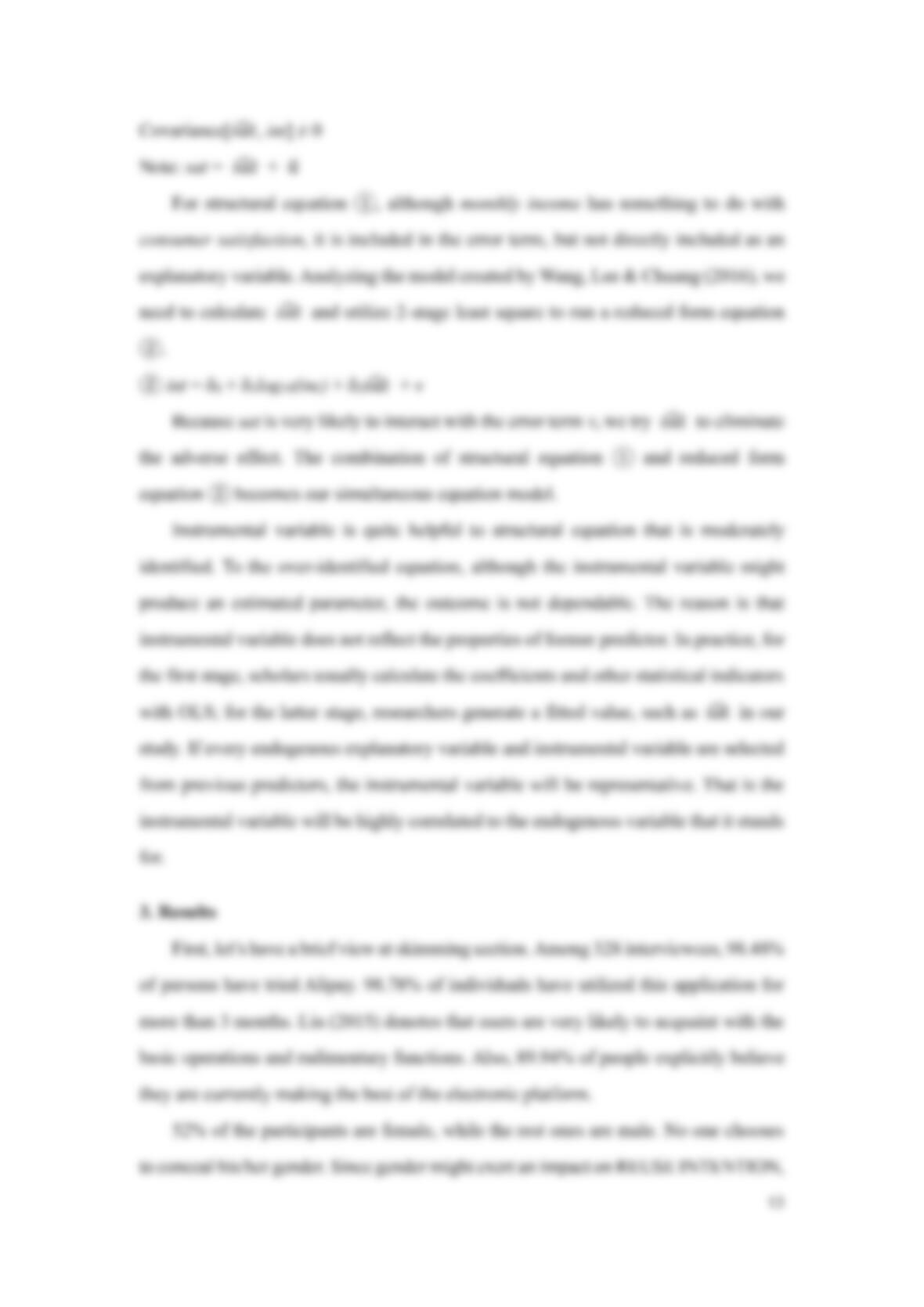
variable and still include 𝑠𝑎𝑡
in equation ②. Fred (1989) announced that monthly
income also influenced reuse intention. Monthly income is observable since we asked
for information of personal income during an interview. Then we presume monthly
income is another endogenous variable. There are premises:
Covariance[𝑠𝑎𝑡
, 𝑢] = 0
13
Covariance[𝑠𝑎𝑡
, int] ≠ 0
Note: sat = 𝑠𝑎𝑡
+ 𝑢
For structural equation ①, although monthly income has something to do with
consumer satisfaction, it is included in the error term, but not directly included as an
explanatory variable. Analyzing the model created by Wang, Lee & Chuang (2016), we
need to calculate 𝑠𝑎𝑡
and utilize 2-stage least square to run a reduced form equation
②.
② int = 0 + 1log10(inc) + 2𝑠𝑎𝑡
+ v
Because sat is very likely to interact with the error term v, we try 𝑠𝑎𝑡
to eliminate
the adverse effect. The combination of structural equation ① and reduced form
equation ② becomes our simultaneous equation model.
Instrumental variable is quite helpful to structural equation that is moderately
identified. To the over-identified equation, although the instrumental variable might
produce an estimated parameter, the outcome is not dependable. The reason is that
instrumental variable does not reflect the properties of former predictor. In practice, for
the first stage, scholars usually calculate the coefficients and other statistical indicators
with OLS; for the latter stage, researchers generate a fitted value, such as sat
in our
study. If every endogenous explanatory variable and instrumental variable are selected
from previous predictors, the instrumental variable will be representative. That is the
instrumental variable will be highly correlated to the endogenous variable that it stands
for.
3. Results
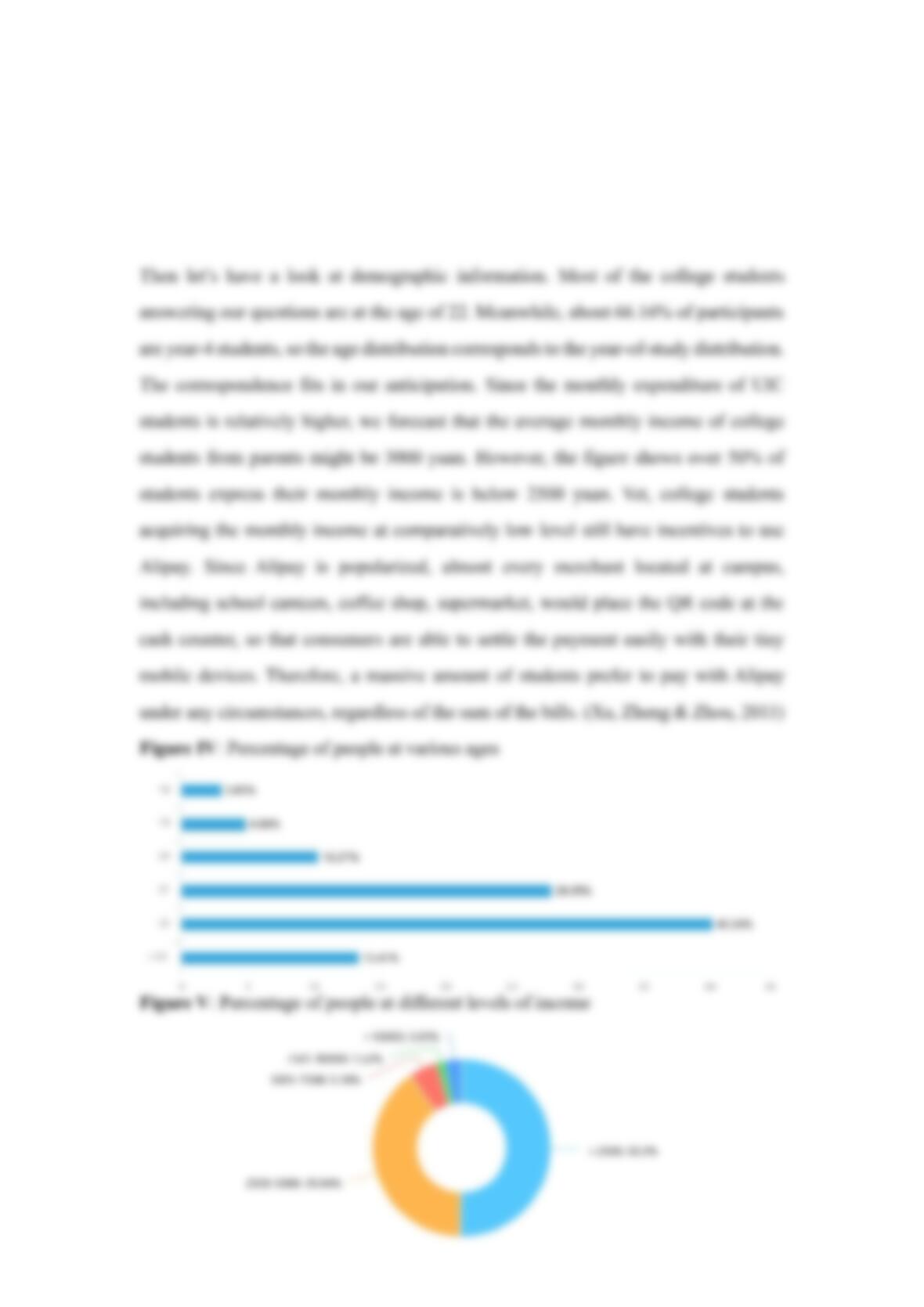
First, let’s have a brief view at skimming section. Among 328 interviewees, 98.48%
of persons have tried Alipay. 98.78% of individuals have utilized this application for
more than 3 months. Liu (2015) denotes that users are very likely to acquaint with the
basic operations and rudimentary functions. Also, 89.94% of people explicitly believe
they are currently making the best of the electronic platform.
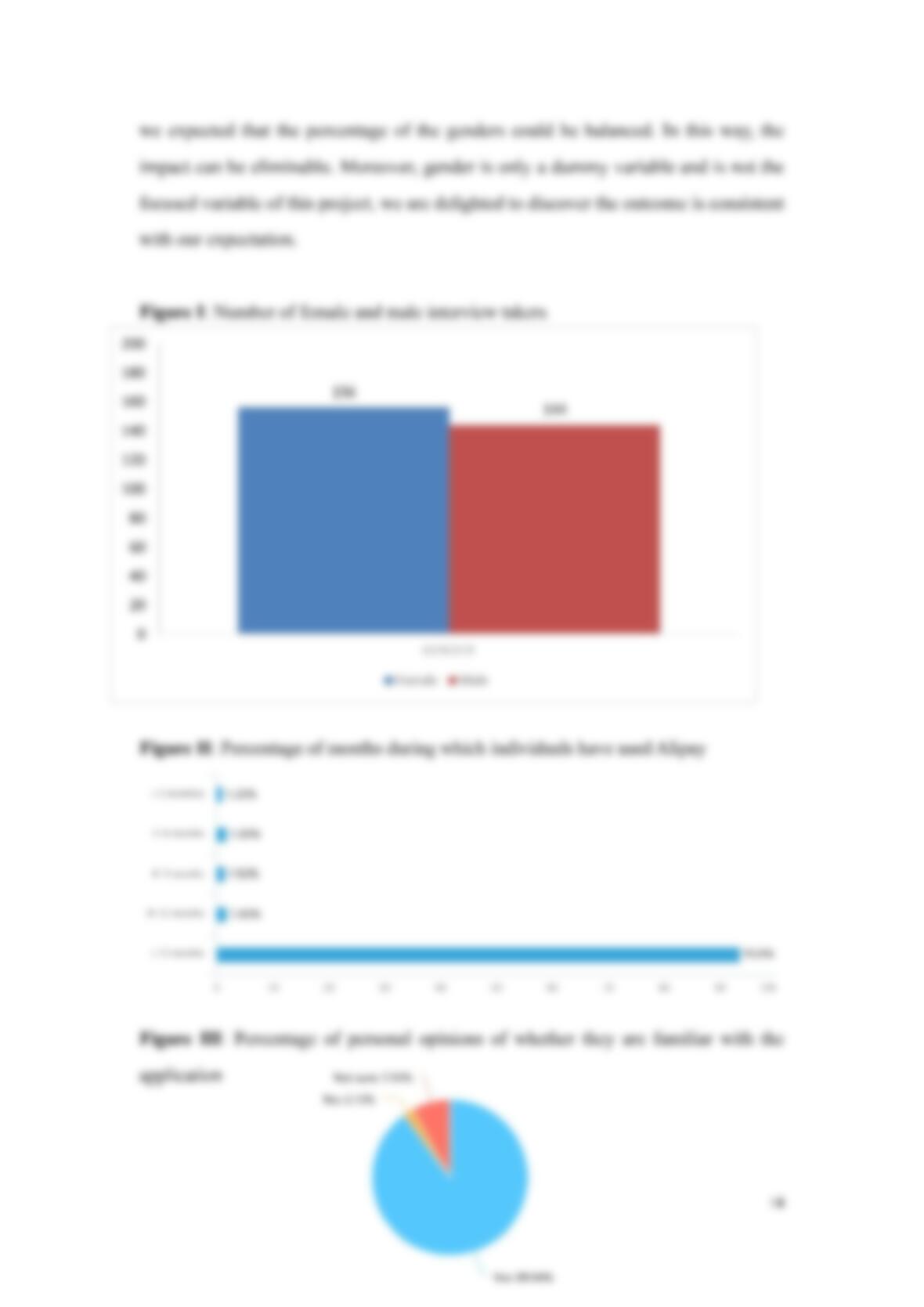
52% of the participants are female, while the rest ones are male. No one chooses
to conceal his/her gender. Since gender might exert an impact on REUSE INTENTION,
14
156
144
0
20
40
60
80
100
120
140
160
180
200
G E N D E R
Female Male
we expected that the percentage of the genders could be balanced. In this way, the
impact can be eliminable. Moreover, gender is only a dummy variable and is not the
focused variable of this project, we are delighted to discover the outcome is consistent
with our expectation.
Figure I: Number of female and male interview takers
Figure II: Percentage of months during which individuals have used Alipay
Figure III: Percentage of personal opinions of whether they are familiar with the
application
15
Then let’s have a look at demographic information. Most of the college students
answering our questions are at the age of 22. Meanwhile, about 66.16% of participants
are year-4 students, so the age distribution corresponds to the year-of-study distribution.
The correspondence fits in our anticipation. Since the monthly expenditure of UIC
students is relatively higher, we forecast that the average monthly income of college
students from parents might be 3000 yuan. However, the figure shows over 50% of
students express their monthly income is below 2500 yuan. Yet, college students
acquiring the monthly income at comparatively low level still have incentives to use
Alipay. Since Alipay is popularized, almost every merchant located at campus,
including school canteen, coffee shop, supermarket, would place the QR code at the
cash counter, so that consumers are able to settle the payment easily with their tiny
mobile devices. Therefore, a massive amount of students prefer to pay with Alipay
under any circumstances, regardless of the sum of the bills. (Xu, Zheng & Zhou, 2011)
Figure IV: Percentage of people at various ages
Figure V: Percentage of people at different levels of income
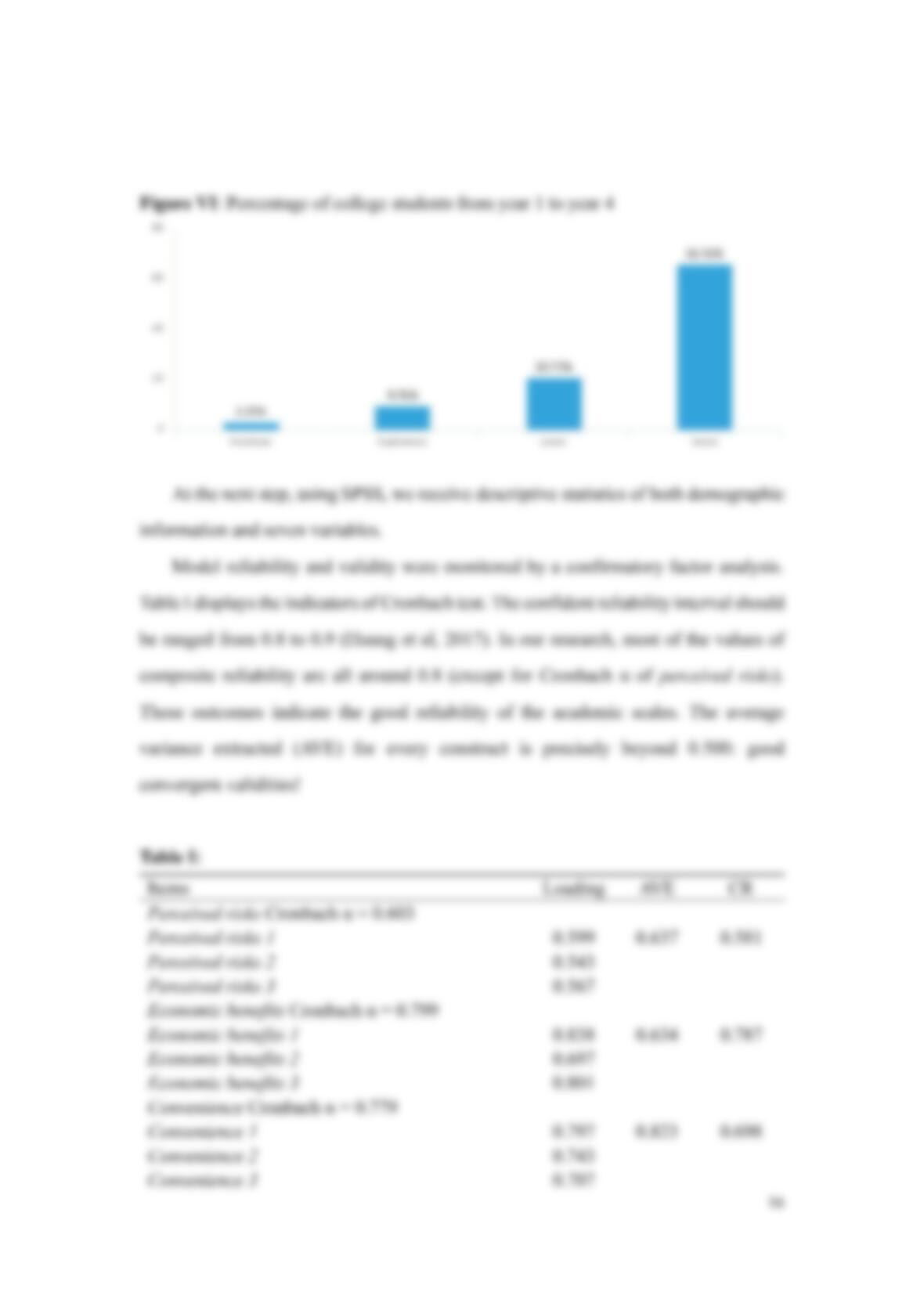
Figure VI: Percentage of college students from year 1 to year 4
At the next step, using SPSS, we receive descriptive statistics of both demographic
information and seven variables.
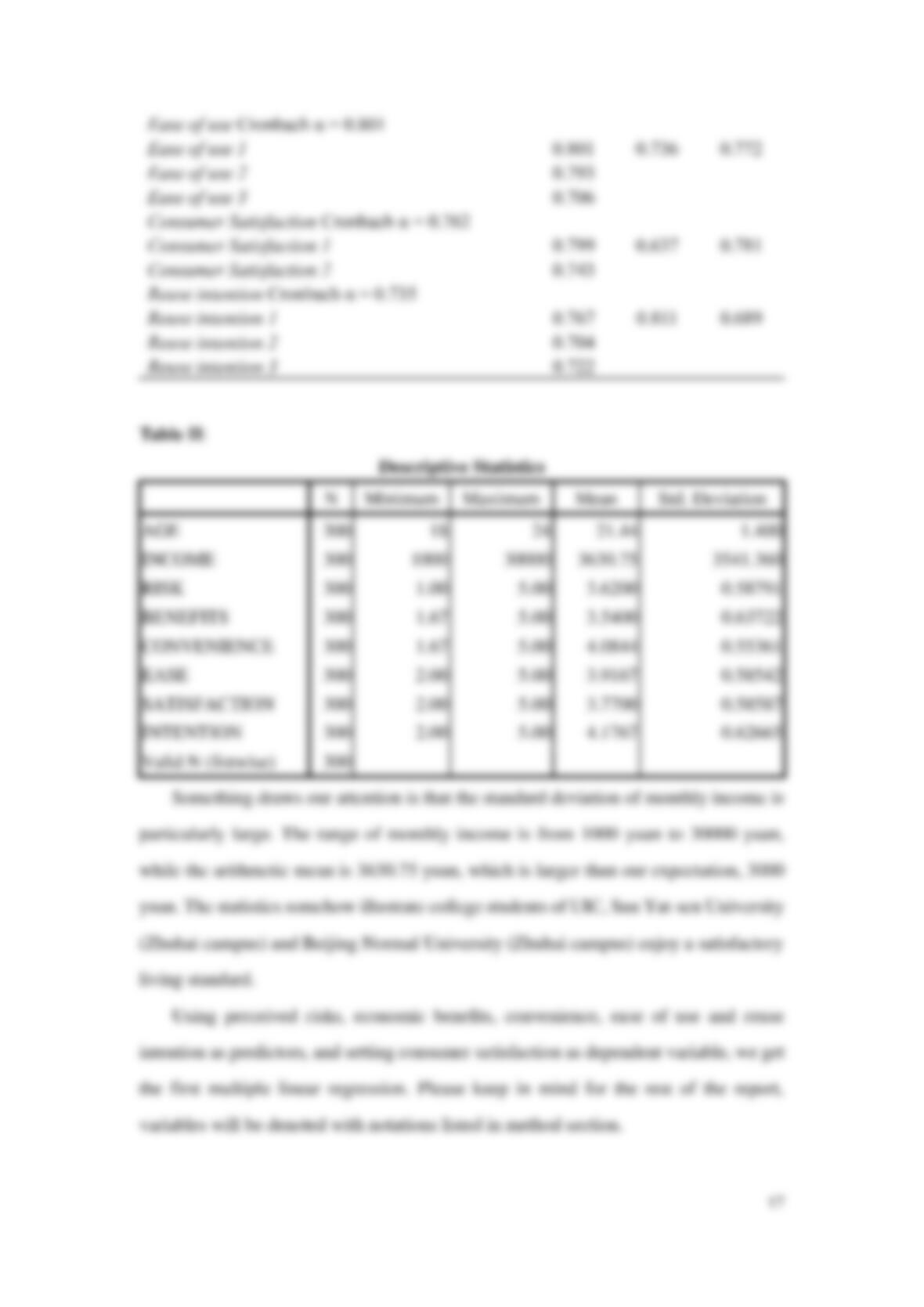
Model reliability and validity were monitored by a confirmatory factor analysis.
Table I displays the indicators of Cronbach test. The confident reliability interval should
be ranged from 0.8 to 0.9 (Huang et al, 2017). In our research, most of the values of
composite reliability are all around 0.8 (except for Cronbach α of perceived risks).
These outcomes indicate the good reliability of the academic scales. The average
variance extracted (AVE) for every construct is precisely beyond 0.500: good
convergent validities!
Table I:
Items
Loading
AVE
CR
Perceived risks Cronbach α = 0.603
Perceived risks 1
0.599
0.637
0.581
Perceived risks 2
0.543
Perceived risks 3
0.567
Economic benefits Cronbach α = 0.799
Economic benefits 1
0.838
0.634
0.787
Economic benefits 2
0.697
Economic benefits 3
0.801
Convenience Cronbach α = 0.779
Convenience 1
0.797
0.823
0.698
Convenience 2
0.743
Convenience 3
0.707
17
Ease of use Cronbach α = 0.801
Ease of use 1
0.801
0.736
0.772
Ease of use 2
0.793
Ease of use 3
0.706
Consumer Satisfaction Cronbach α = 0.762
Consumer Satisfaction 1
0.799
0.637
0.781
Consumer Satisfaction 2
0.743
Reuse intention Cronbach α = 0.735
Reuse intention 1
0.767
0.811
0.689
Reuse intention 2
0.704
Reuse intention 3
0.722
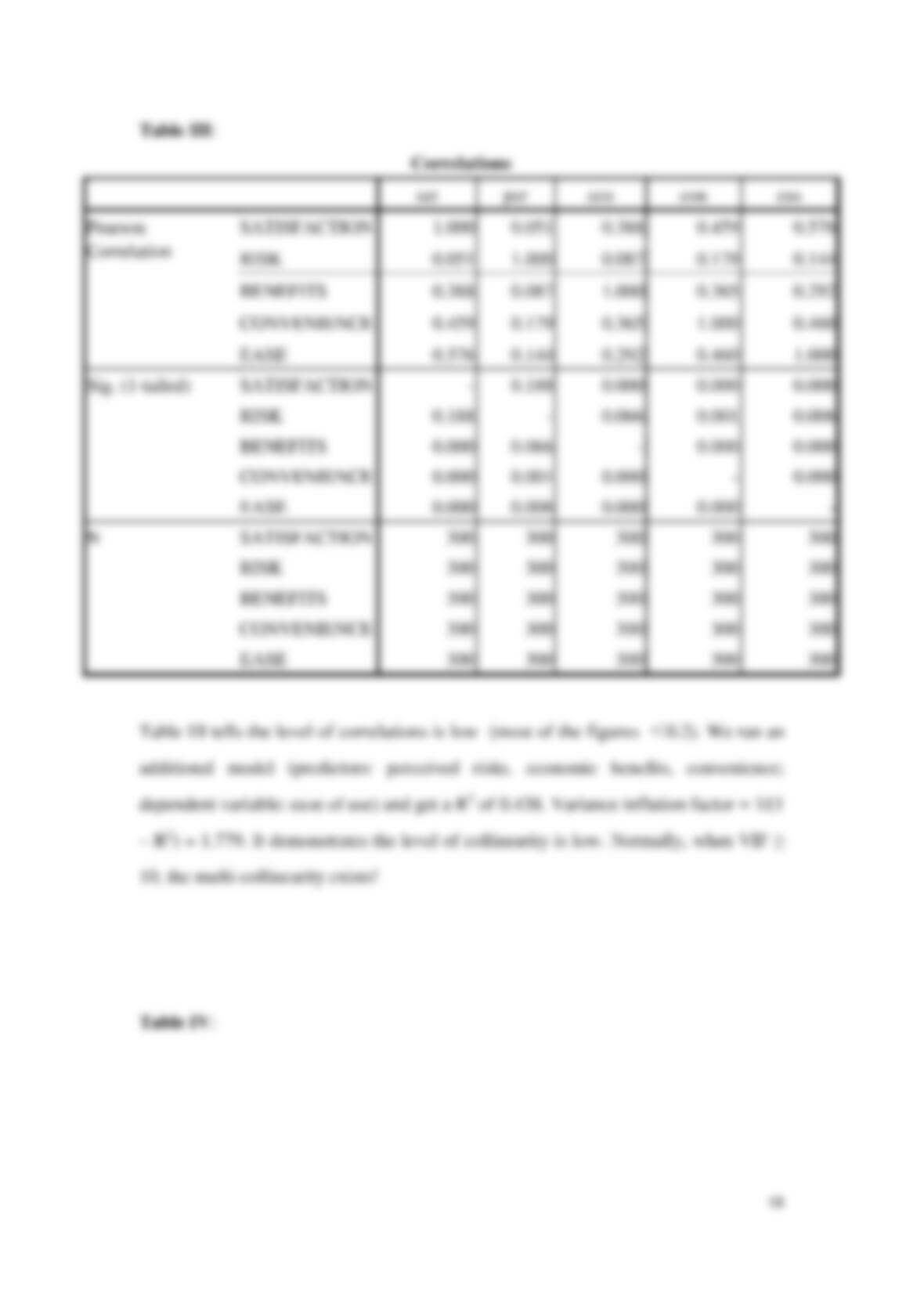
Table II:
Descriptive Statistics
N
Minimum
Maximum
Mean
Std. Deviation
AGE
300
18
24
21.44
1.400
INCOME
300
1000
30000
3630.75
3541.360
RISK
300
1.00
5.00
3.6200
0.58791
BENEFITS
300
1.67
5.00
3.5400
0.63722
CONVENIENCE
300
1.67
5.00
4.0844
0.55361
EASE
300
2.00
5.00
3.9167
0.58542
SATISFACTION
300
2.00
5.00
3.7700
0.58587
INTENTION
300
2.00
5.00
4.1767
0.62665
Valid N (listwise)
300
Something draws our attention is that the standard deviation of monthly income is
particularly large. The range of monthly income is from 1000 yuan to 30000 yuan,
while the arithmetic mean is 3630.75 yuan, which is larger than our expectation, 3000
yuan. The statistics somehow illustrate college students of UIC, Sun Yat-sen University
(Zhuhai campus) and Beijing Normal University (Zhuhai campus) enjoy a satisfactory
living standard.
Using perceived risks, economic benefits, convenience, ease of use and reuse
intention as predictors, and setting consumer satisfaction as dependent variable, we get
the first multiple linear regression. Please keep in mind for the rest of the report,
variables will be denoted with notations listed in method section.
18
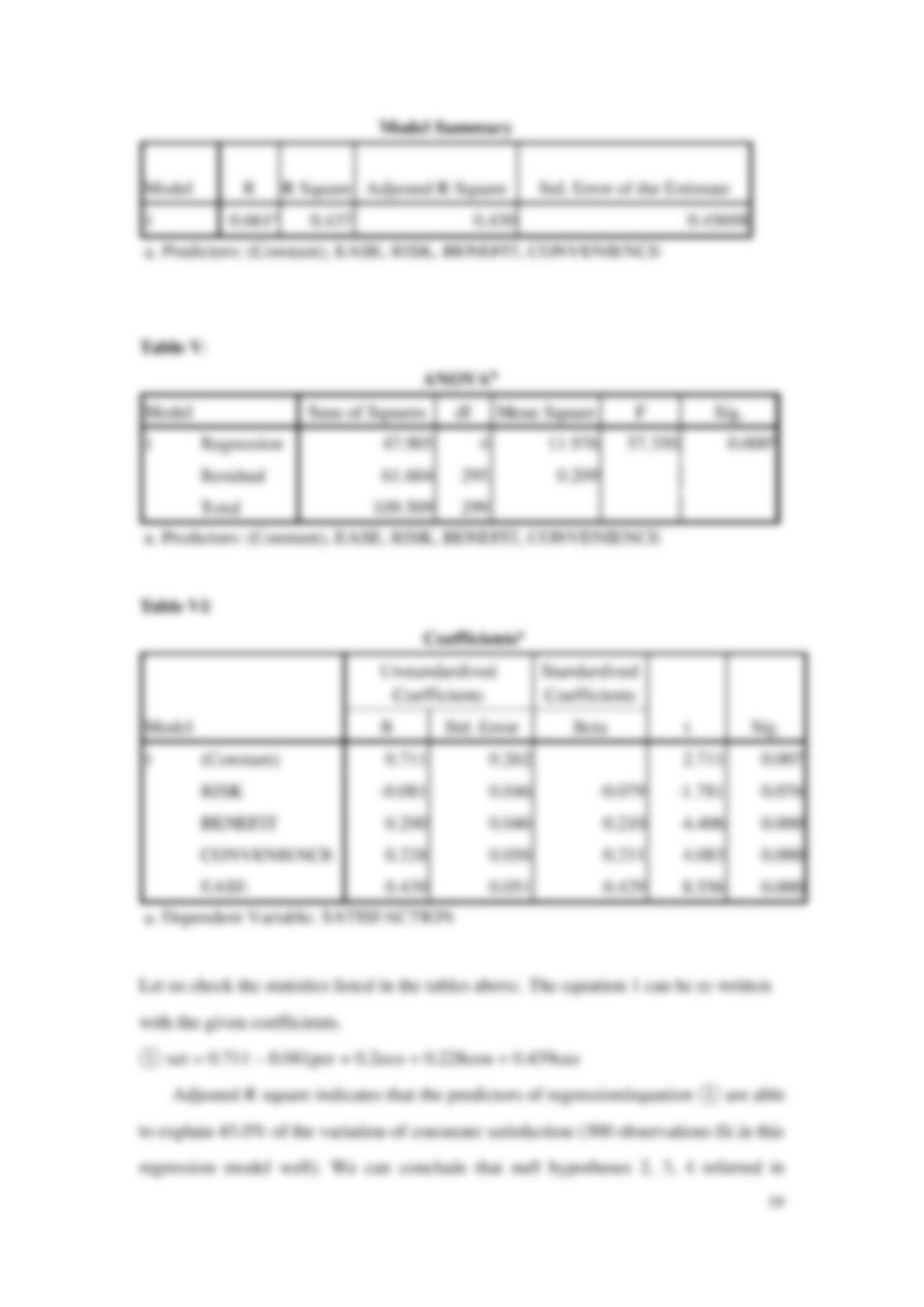
Table III:
Correlations
sat
per
eco
con
eas
Pearson
Correlation
SATISFACTION
1.000
0.051
0.388
0.459
0.576
RISK
0.051
1.000
0.087
0.179
0.144
BENEFITS
0.388
0.087
1.000
0.365
0.292
CONVENIENCE
0.459
0.179
0.365
1.000
0.460
EASE
0.576
0.144
0.292
0.460
1.000
Sig. (1-tailed)
SATISFACTION
–
0.188
0.000
0.000
0.000
RISK
0.188
–
0.066
0.001
0.006
BENEFITS
0.000
0.066
–
0.000
0.000
CONVENIENCE
0.000
0.001
0.000
–
0.000
EASE
0.000
0.006
0.000
0.000
–
N
SATISFACTION
300
300
300
300
300
RISK
300
300
300
300
300
BENEFITS
300
300
300
300
300
CONVENIENCE
300
300
300
300
300
EASE
300
300
300
300
300
Table III tells the level of correlations is low (most of the figures <0.2). We ran an
additional model (predictors: perceived risks, economic benefits, convenience;
dependent variable: ease of use) and get a R2 of 0.438. Variance inflation factor = 1/(1
– R2) = 1.779. It demonstrates the level of collinearity is low. Normally, when VIF ≥
10, the multi-collinearity exists!
Table IV:
19
Model Summary
Model
R
R Square
Adjusted R Square
Std. Error of the Estimate
1
0.661a
0.437
0.430
0.45698
a. Predictors: (Constant), EASE, RISK, BENEFIT, CONVENIENCE
Table V:
ANOVAb
Model
Sum of Squares
df
Mean Square
F
Sig.
1
Regression
47.905
4
11.976
57.350
0.000a
Residual
61.604
295
0.209
Total
109.509
299
a. Predictors: (Constant), EASE, RISK, BENEFIT, CONVENIENCE
Table VI:
Coefficientsa
Model
Unstandardized
Coefficients
Standardized
Coefficients
t
Sig.
B
Std. Error
Beta
1
(Constant)
0.711
0.262
2.711
0.007
RISK
-0.081
0.046
-0.079
-1.781
0.076
BENEFIT
0.200
0.046
0.210
4.406
0.000
CONVENIENCE
0.228
0.056
0.211
4.083
0.000
EASE
0.439
0.051
0.429
8.556
0.000
a. Dependent Variable: SATISFACTION
Let us check the statistics listed in the tables above. The equation 1 can be re-written
with the given coefficients.
① sat = 0.711 – 0.081per + 0.2eco + 0.228con + 0.439eas
Adjusted R square indicates that the predictors of regression/equation ① are able
to explain 43.0% of the variation of consumer satisfaction (300 observations fit in this
regression model well). We can conclude that null hypotheses 2, 3, 4 referred in
20
literature review section are accepted (hypothesis 5 will be discussed later). Since t-
value of perceived risks is small, the proposed negative relation between risks and
satisfaction might not exist. Null hypothesis 1 is unaccepted. At table IV, F-statistic
implicates the overall significance of the predictors. Since the number of our
observations is exactly 300, the degree of freedom should be 295. After checking the
table of critical values, with four restrictions, we confirm the critical value at 5%
significance level is 2.37. As 57.35 is substantially larger than 2.37, we know that
generally speaking the four predictors are statistically significant and contribute great
explanation to the regression and to the dependent variable. For testing respective
significance of predictors, we implement t-test. For 1-tailed t-test, at 10% significance
level, the critical value is 1.282; at 0.5% significance level, the critical value is 2.576.
Compare if t-statistic is bigger than the absolute value of certain critical values (see
appendix). We draw a conclusion that economic benefits, convenience and ease of use
are individually, statistically more significant than perceived risks.
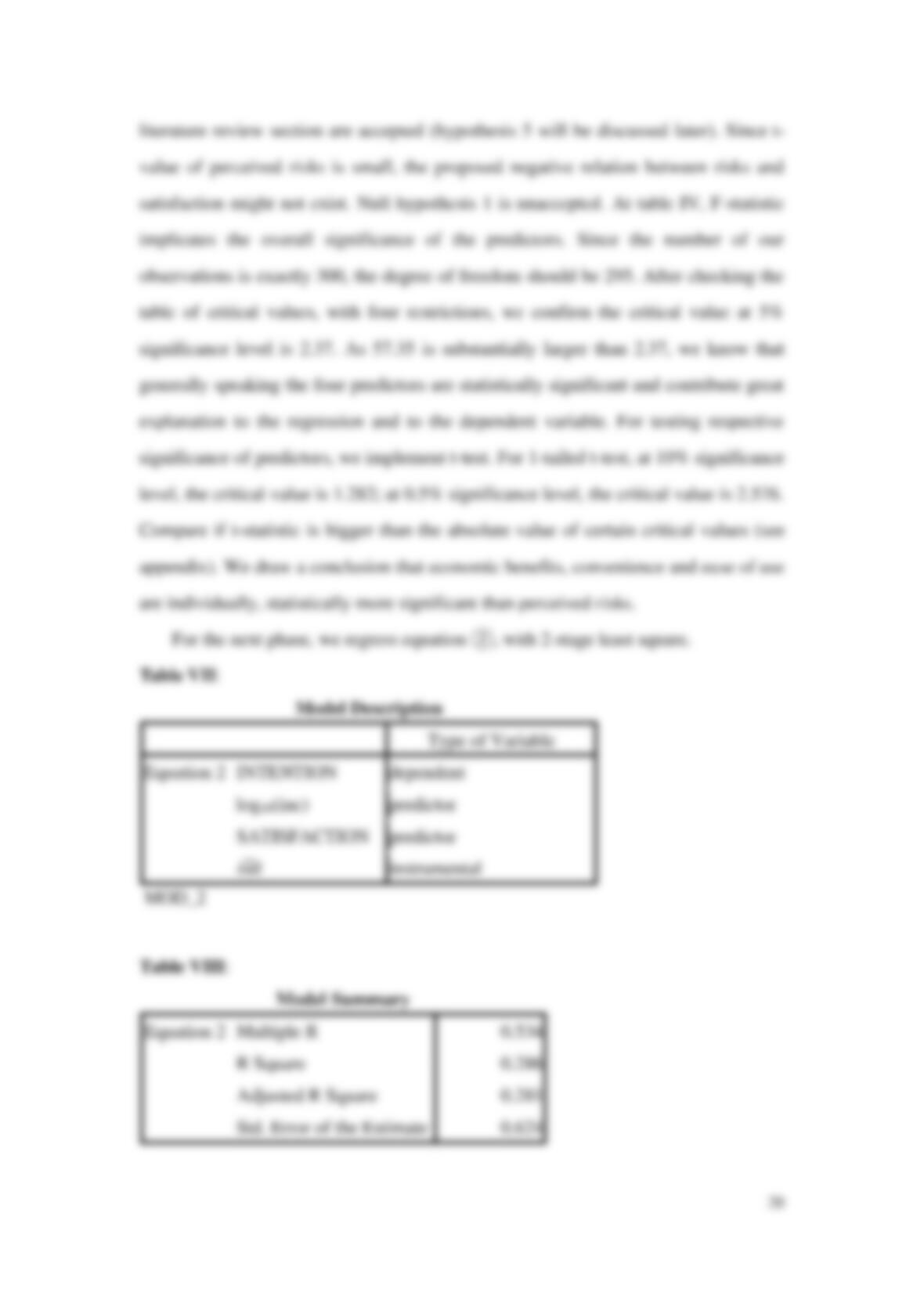
For the next phase, we regress equation ②, with 2-stage least square.
Table VII:
Model Description
Type of Variable
Equation 2
INTENTION
dependent
log10(inc)
predictor
SATISFACTION
predictor
𝑠𝑎𝑡
instrumental
MOD_2
Table VIII:
Model Summary
Equation 2
Multiple R
0.534
R Square
0.286
Adjusted R Square
0.281
Std. Error of the Estimate
0.624
21
Table IX:
ANOVA
Sum of Squares
df
Mean Square
F
Sig.
Equation 2
Regression
46.035
2
23.018
59.146
0.000
Residual
115.194
296
0.389
Total
161.229
298
Table X:
Coefficients
Unstandardized
Coefficients
Beta
t
Sig.
B
Std. Error
Equation 2
(Constant)
1.323
0.649
2.039
0.042
log10(inc)
-0.256
0.173
-0.086
-1.481
0.140
𝑠𝑎𝑡
0.988
0.091
0.953
10.876
0.000
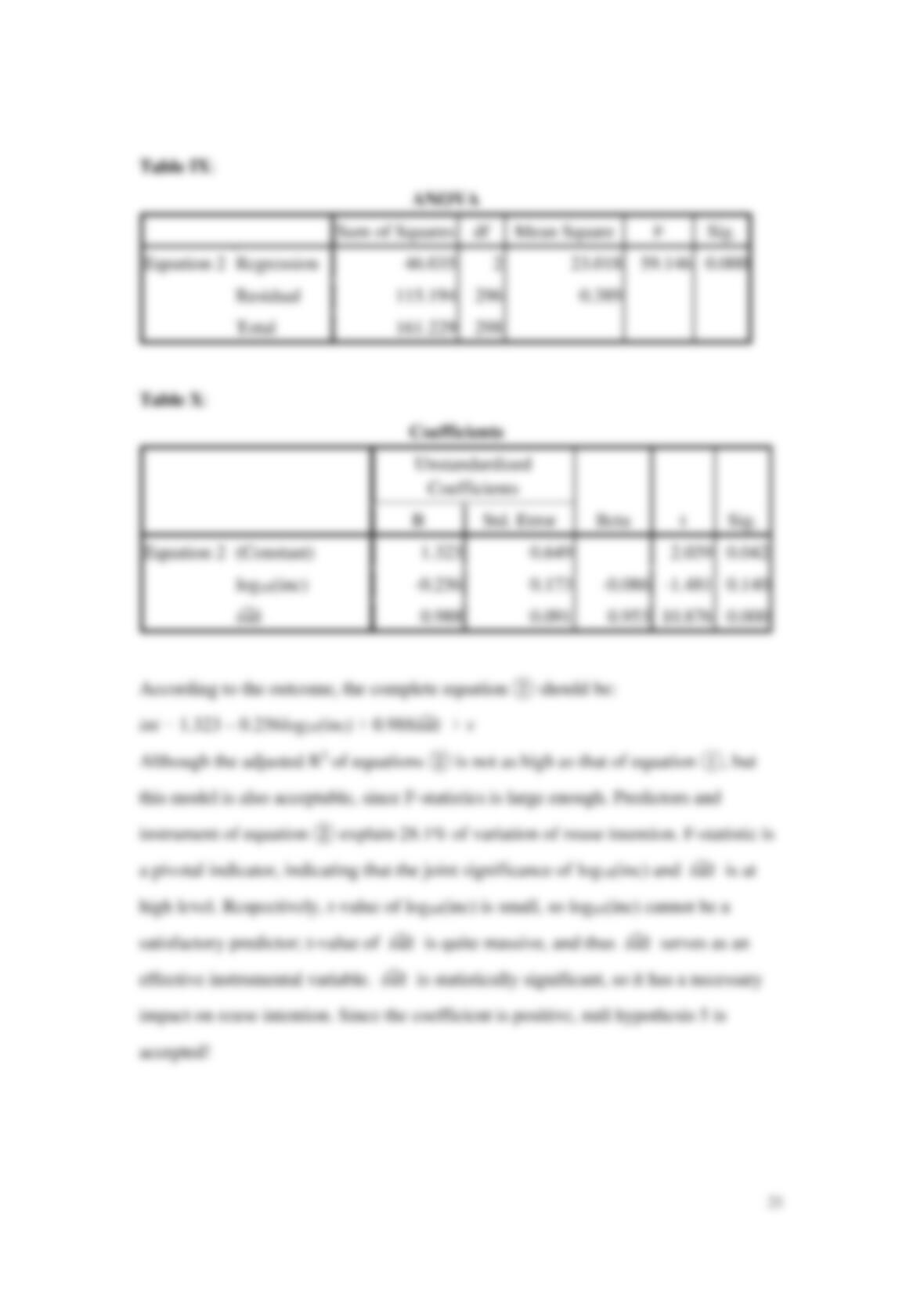
According to the outcome, the complete equation ② should be:
int = 1.323 – 0.256log10(inc) + 0.988𝑠𝑎𝑡
+ v
Although the adjusted R2 of equations ② is not as high as that of equation ①, but
this model is also acceptable, since F-statistics is large enough. Predictors and
instrument of equation ② explain 28.1% of variation of reuse intention. F-statistic is
a pivotal indicator, indicating that the joint significance of log10(inc) and 𝑠𝑎𝑡
is at
high level. Respectively, t-value of log10(inc) is small, so log10(inc) cannot be a
satisfactory predictor; t-value of 𝑠𝑎𝑡
is quite massive, and thus 𝑠𝑎𝑡
serves as an
effective instrumental variable. 𝑠𝑎𝑡
is statistically significant, so it has a necessary
impact on reuse intention. Since the coefficient is positive, null hypothesis 5 is
accepted!
22
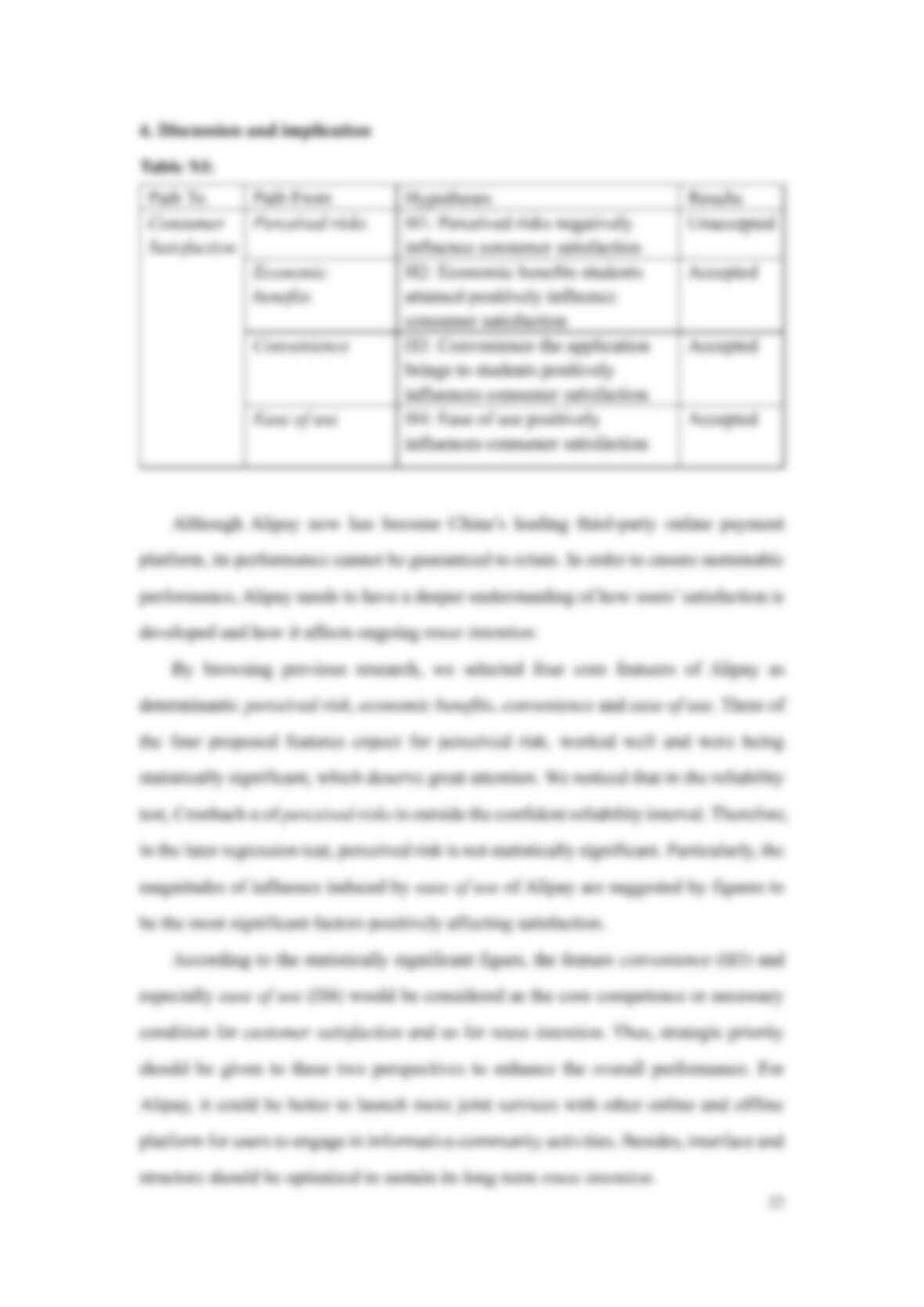
4. Discussion and implication
Table XI:
Path To
Path From
Hypotheses
Results
Consumer
Satisfaction
Perceived risks
H1: Perceived risks negatively
influence consumer satisfaction
Unaccepted
Economic
benefits
H2: Economic benefits students
attained positively influence
consumer satisfaction
Accepted
Convenience
H3: Convenience the application
brings to students positively
influences consumer satisfaction
Accepted
Ease of use
H4: Ease of use positively
influences consumer satisfaction
Accepted
Although Alipay now has become China’s leading third-party online payment
platform, its performance cannot be guaranteed to retain. In order to ensure sustainable
performance, Alipay needs to have a deeper understanding of how users’ satisfaction is
developed and how it affects ongoing reuse intention.
By browsing previous research, we selected four core features of Alipay as
determinants: perceived risk, economic benefits, convenience and ease of use. Three of
the four proposed features expect for perceived risk, worked well and were being
statistically significant, which deserve great attention. We noticed that in the reliability
test, Cronbach α of perceived risks is outside the confident reliability interval. Therefore,
in the later regression teat, perceived risk is not statistically significant. Particularly, the
magnitudes of influence induced by ease of use of Alipay are suggested by figures to
be the most significant factors positively affecting satisfaction.
According to the statistically significant figure, the feature convenience (H3) and
especially ease of use (H4) would be considered as the core competence or necessary
condition for customer satisfaction and so for reuse intention. Thus, strategic priority
should be given to these two perspectives to enhance the overall performance. For
Alipay, it could be better to launch more joint services with other online and offline
platform for users to engage in informative community activities. Besides, interface and
structure should be optimized to sustain its long-term reuse intention.
23
The perceived risks (H1) of an online payment system, which directly link to users’
financial security, are naturally being the first consideration before people decide to use.
However, in this research, this feature is statistically insignificance. Since our research
objective is all college student, the reason for insignificance of perceived risk could be
college students are lack of security awareness of asset. Nevertheless, the result of
statistically insignificance suggested that still, the managerial group of Alipay should
expand corresponding emphasis on keeping security control and reduce people’s
expectation of risks. Moreover, a reliable and stable market environment is vital for a
high-growth economy, the government should introduce relevant policies to standardize
the operation of the market.
The second determinant economic benefits (H2) may be considered as a sufficient
supplement to increase user’s satisfaction for sustainable management. As
Bhattacherjee (2001) concluded, this partial fulfillment comes from the unique
character of Chinese culture. Even if Chinese people emphasize social relationship
(“Guān xì”), it is based on its roots of mutual economic benefits, not just social
friendliness. Thus, Alipay should make effort to enhance the functioning of economy
factors for the role of customer satisfaction as a mediator for reuse intention.
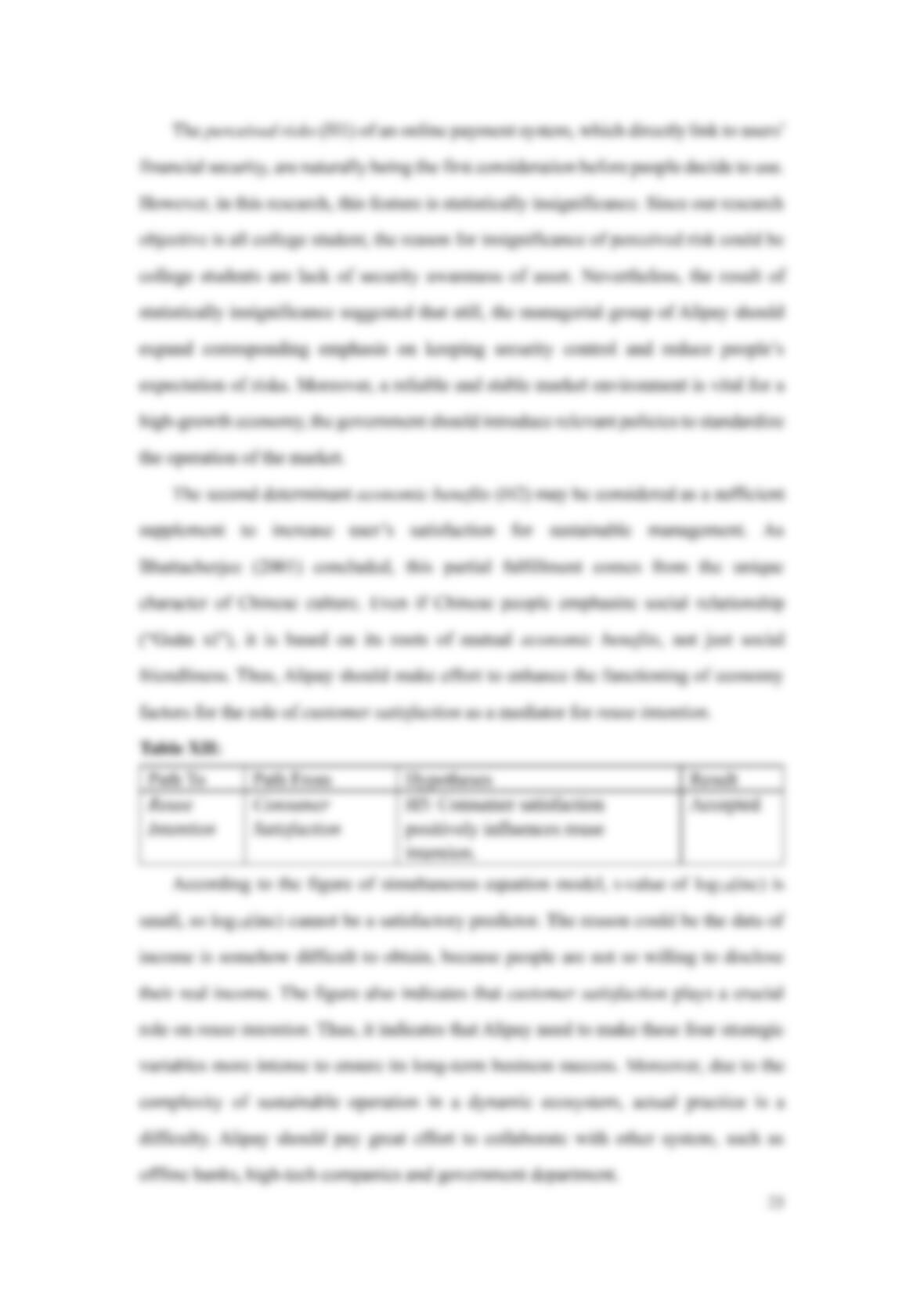
Table XII:
Path To
Path From
Hypotheses
Result
Reuse
Intention
Consumer
Satisfaction
H5: Consumer satisfaction
positively influences reuse
intention.
Accepted
According to the figure of simultaneous equation model, t-value of log10(inc) is
small, so log10(inc) cannot be a satisfactory predictor. The reason could be the data of
income is somehow difficult to obtain, because people are not so willing to disclose
their real income. The figure also indicates that customer satisfaction plays a crucial
role on reuse intention. Thus, it indicates that Alipay need to make these four strategic
variables more intense to ensure its long-term business success. Moreover, due to the
complexity of sustainable operation in a dynamic ecosystem, actual practice is a
difficulty. Alipay should pay great effort to collaborate with other system, such as
offline banks, high-tech companies and government department.
24
Limitations exit in our project. Firstly, there are limited number of sample, 300.
This research targeted at Guangdong undergraduate student, while 300 samples may
not be representative enough. The balance of gender still needs to be guaranteed. If
imbalance takes place during the future interview, the researchers might measure
whether dummy variable gender has something necessary to do with satisfaction and
reuse intention. Secondly, since the R square in this project is approximately 0.43, it
suggested that there are still potential factors affecting users’ satisfaction and reuse
intention, while this project cannot cover all of them. Lastly, we mainly conducted
cross-sectional study, which people deal business in a changing world and user behavior
is dynamic. Therefore, a longitudinal research based on time serious would provide
more insights boosting satisfaction and reuse intention level to vendors.
5. Conclusion
Retaining loyal customers and facilitating their continuous use are essential to the
success of mobile payment service. By conceiving multiple linear regression and
simultaneous equation model, we input four core variables that somewhat cover the
dominant features of Alipay. This research identifies the connection between the
attributes of the third-party payment and the reuse intention of users and determines if
the connection is reverse, and how strong the connection is. Hypothesis test was well
completed, plus four original hypotheses are defended. Except perceived risks, others
all show positive influence on reuse intention. The result denotes that the research &
development team of Alipay shall make extra efforts to diminish the perceived risks
and sustain (or even enlarge) the level of economic benefits, convenience and ease of
use. In doing so, Alipay will become more powerful, further popularize and attract
infinite users.
25
Appendix I: Research instrument related to proposed model
Section 1: Skimming
Adapted from work of Xie & Lin (2014) and Xia & Zhou (2016)
1. Have you ever used Alipay?
A. Yes B. No
2. For how long have you used this application? Please enter the number of months.
3. Are you currently understood with the basic operation and usual functions of
Alipay? A. Yes B. No C. Not sure
Section 2: Demographic information
Adapted from Xie & Lin (2014)
4. Your gender.
A. Male B. Female C. Prefer not to disclose
5. Your age. Please enter an integer.
6. Year of study.
A. Freshman B. Sophomore C. Junior D. Senior
7. Your monthly income. Please enter an approximate integer.
Section 3: Measurement of perceived risks
Adapted from Yang et al. (2014) and Xia & Hou (2016)
8. It is my concerned that my personal information inputted into my Alipay account
will be shoplifted by another institute for criminal use.
A. Strongly agree B. Agree C. Neutral D. Disagree
E. Strongly disagree
9. I’m worried all the time that economic losses happen if my account is stolen.
A. Strongly agree B. Agree C. Neutral D. Disagree
E. Strongly disagree
10. I believe Alipay Inc. has implemented sufficient issues to protect my account.
A. Strongly agree B. Agree C. Neutral D. Disagree
E. Strongly disagree
Section 4: Measurement of economic benefits
Adapted from Choi & Sun (2016)
11. Alipay offers certain amount of discounts.
A. Strongly agree B. Agree C. Neutral D. Disagree
E. Strongly disagree
12. I have spent fewer fees charged when using Alipay than paying with cash or bank
cards.
A. Strongly agree B. Agree C. Neutral D. Disagree
E. Strongly disagree
13. Unlike the financial instruments provided by commercial banks, those instruments
provided by Alipay are much more beneficial.
A. Strongly agree B. Agree C. Neutral D. Disagree
E. Strongly disagree
Section 5: Measurement of convenience
Adjusted from Choi & Sun (2016)
14. Alipay breaks the confine of time and space.
26
A. Strongly agree B. Agree C. Neutral D. Disagree
E. Strongly disagree
15. When I purchase online tickets, suchlike train tickets, theatre tickets and tickets
for entry of theme parks or scenic spots, paying with Alipay brings convenience.
A. Strongly agree B. Agree C. Neutral D. Disagree
E. Strongly disagree
16. When something emergent happens, I can obtain support from the department of
customer services.
A. Strongly agree B. Agree C. Neutral D. Disagree
E. Strongly disagree
Section 6: Measurement of ease of use
Adapted from two separated articles of Zhou (2014)
17. It only took me a little time to figure out the operation of Alipay.
A. Strongly agree B. Agree C. Neutral D. Disagree
E. Strongly disagree
18. I have never got in trouble with the operation.
A. Strongly agree B. Agree C. Neutral D. Disagree
E. Strongly disagree
19. The application provides overt guideline for users on how to make the best of
diversified functions.
A. Strongly agree B. Agree C. Neutral D. Disagree
E. Strongly disagree
Section 7: Measurement of consumer satisfaction
Revised from Guo & Bouwman (2016)
20. I have never complained about any problem of Alipay.
A. Strongly agree B. Agree C. Neutral D. Disagree
E. Strongly disagree
21. My general experience and impression of this digital wallet is satisfactory.
A. Strongly agree B. Agree C. Neutral D. Disagree
E. Strongly disagree
Section 8: Measurement of reuse intention
Modified from Xie & Lin (2014); Xia & Hou (2016); Zhou (2014)
22. Among cash, Alipay and bank cards, I will select Alipay regardless of any
circumstance
A. Strongly agree B. Agree C. Neutral D. Disagree
E. Strongly disagree
23. I like to recommend Alipay to other students.
A. Strongly agree B. Agree C. Neutral D. Disagree
E. Strongly disagree
24. I will continue to use Alipay whenever I need to pay in the next 6 months.
A. Strongly agree B. Agree C. Neutral D. Disagree
E. Strongly disagree
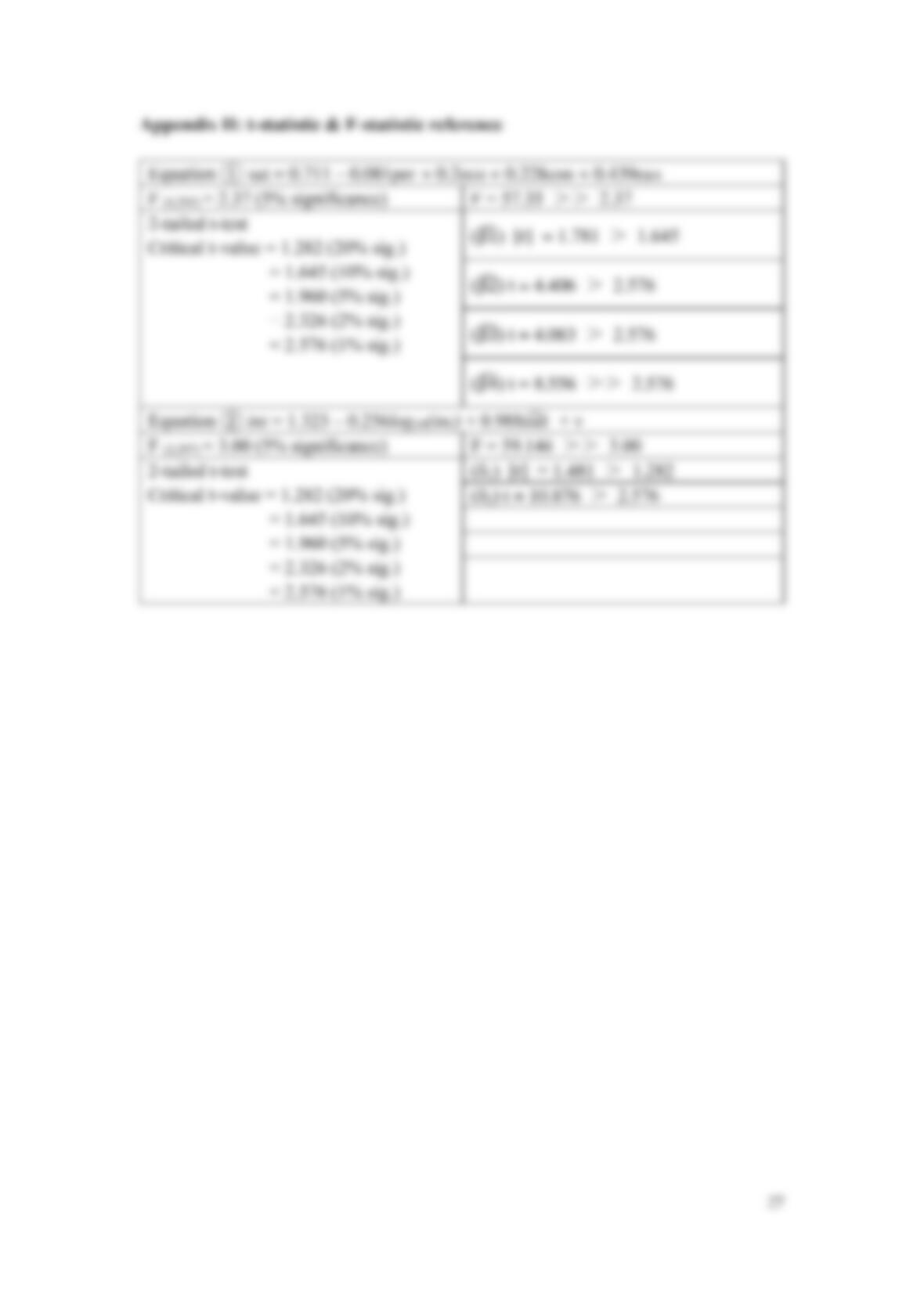
Appendix II: t-statistic & F-statistic reference
Equation ① sat = 0.711 – 0.081per + 0.2eco + 0.228con + 0.439eas
F (4,295) = 2.37 (5% significance)
F = 57.35 >> 2.37
2-tailed t-test
Critical t-value = 1.282 (20% sig.)
= 1.645 (10% sig.)
= 1.960 (5% sig.)
= 2.326 (2% sig.)
= 2.576 (1% sig.)
(β1
) |𝑡| = 1.781 > 1.645
(β2
) t = 4.406 > 2.576
(β3
) t = 4.083 > 2.576
(β4
) t = 8.556 >> 2.576
Equation ② int = 1.323 – 0.256log10(inc) + 0.988𝑠𝑎𝑡
+ v
F (2,297) = 3.00 (5% significance)
F = 59.146 >> 3.00
2-tailed t-test
Critical t-value = 1.282 (20% sig.)
= 1.645 (10% sig.)
= 1.960 (5% sig.)
= 2.326 (2% sig.)
= 2.576 (1% sig.)
(1) |𝑡| = 1.481 > 1.282
(2) t = 10.876 > 2.576
28
Reference
Balasubramanian, Sridhar, Prabhudev Konana and Nirup M Menon, (2003), Customer
Satisfaction in Virtual Environments: A Study of Online Investing, Management
Science, 49(7), 871-889.
Bhattacherjee, Anol & Premkumar. G, (2004), Understanding Changes in Belief and
Attitude Toward information Technology Usage: A Theoretical Model and
Longitudinal Test,” MIS Quarterly, 28(2), 229-254.
Choi, Y., & Sun, L. (2016). Reuse intention of third-party online payments: A focus on
the sustainable factors of alipay. Sustainability, 8(2), 147.
doi:10.3390/su8020147
Dahlberg, T., Guo, J., & Ondrus, J. (2015). A critical review of mobile payment
research. Electronic Commerce Research and Applications, 14(5), 265-284.
doi:10.1016/j.elerap.2015.07.006
Forsythe, S.M. and Shi, B. (2003), “Consumer patronage and risk perceptions in
internet shopping”, Journal of Business Research, Vol. 56 No. 11, pp. 867-875.
Fred, D. D., (1989), Perceived usefulness, perceived ease of use, and user acceptance
of information technology. The Management Information Systems Research
Center, 13(3), doi: 10.2307/249008.
Guo, J., & Bouwman, H. (2016). An ecosystem view on third party mobile payment
providers: A case study of alipay wallet. Info, 18(5), 56-78. doi:10.1108/info-01-
2016-0003
Hsing, Y. (2016). Determinants of the ZAR/USD exchange rate and policy
implications: A simultaneous-equation model. Cogent Economics & Finance,
4(1)http://dx.doi.org/10.1080/23322039.2016.1151131 Retrieved from
https://search.proquest.com/docview/1862241625?accountid=38789
Hu, Q. (2008). Chinese third-party payment risk analysis and countermeasures,
logistics management.
Huang, L., Liu, L., & Wu, J. (2017). Consumer acceptance of mobile payment across
time: Antecedents and moderating role of diffusion stages. Industrial
29
Management & Data Systems, 117(8), 1761.
Huang, X., Dai, X., & Liang, W. (2014). BulaPay: A novel web service based third–
party payment system for e-commerce. Electronic Commerce Research, 14(4),
611. doi:10.1007/s10660-014-9172-1
José Liébana-Cabanillas, F., Sánchez-Fernández, J., & Muñoz-Leiva, F. (2014). Role
of gender on acceptance of mobile payment. Industrial Management & Data
Systems, 114(2), 220-240. doi:10.1108/IMDS-03-2013-0137
Kim, C., Mirusmonov, M. and Lee, I. (2010), “An empirical examination of factors
influencing the intention to use mobile payment”, Computers in Human
Behavior, Vol. 26 No. 3, pp. 310-322.
Kim, Dan & Ferrin, Donald & Raghav Rao, H. (2009). Trust and Satisfaction, Two
Stepping Stones for Successful E-Commerce Relationships: A Longitudinal
Exploration. Information Systems Research. 20. 237-257, doi:
10.1287/isre.1080.0188
Liu, Y. (2015). Consumer protection in mobile payments in China: A critical analysis
of Alipay’s service agreement. Computer Law & Security Review, 31(5), 679-
688. doi:10.1016/j.clsr.2015.05.009
Lloyd, A. D., Antonioletti, M., & Sloan, T. M. (2016). Able but not willing? exploring
divides in digital versus physical payment use in china. Information Technology
& People, 29(2), 250-279. doi:10.1108/ITP-10-2014-0243
Matzkin, R. (2008). Identification in Nonparametric Simultaneous Equations Models.
Econometrica, 76(5), 945-978. Retrieved from
http://www.jstor.org/stable/40056491
MIIT (2014), Monthly Economy Development Report of Telecommunication Industry
of China (January 2014), Ministry of Industry and Information Technology of
China, Beijing.
Odom, M. D., Kumar, A., & Saunders, L. (2002). Web assurance seals: How and why
they influence consumers’ decisions. Journal of Information Systems, 16(2), 231-
250.
30
Peter, J.P, Tarpey, L. (1975) A comparative analysis of three consumer decision
strategies, Diffusion of innovation. Free Press, New York
Shin, D.H. (2010), “Modeling the interaction of users and mobile payment system:
conceptual framework”, International Journal of Human-Computer Interaction,
Vol. 26 No. 10, pp. 917-940.
Treiblmaier, H., Pinterits, A., & Floh, A. (2008). Success factors of internet payment
systems. International Journal Of Electronic Business, 6(4), 369-385.
doi:10.1504/IJEB.2008.020675
Wang, M., Cho, S., & Denton, T. (2017). The impact of personalization and
compatibility with past experience on e-banking usage. International Journal of
Bank Marketing, 35(1), 45-55. doi:10.1108/IJBM-04-2015-0046
Wang, M., Lee, M., & Chuang, J. (2016). Relations among audit committee
establishment, information transparency and earnings quality: Evidence from
simultaneous equation models. Quality and Quantity, 50(6), 2417-2431.
http://dx.doi.org/10.1007/s11135-015-0269-y Retrieved from
https://search.proquest.com/docview/1827074944?accountid=38789
Xia, H., & Hou, Z. (2016). Consumer use intention of online financial products: The
yuebao example. Financial Innovation, 2(1), 1-12. doi:10.1186/s40854-016-
0041-x
Xu, P., Zheng, S., & Zhou, S. (2011). Family and Western-Style Fast Food: Influences
on Chinese College Students’ Dairy Consumption. Journal Of Food Products
Marketing, 17(1), 1-24. doi:10.1080/10454446.2011.532370
Yang, Y., Liu, Y., Li, H., & Yu, B. (2015). Understanding perceived risks in mobile
payment acceptance. Industrial Management & Data Systems, 115(2), 253-269.
doi:10.1108/IMDS-08-2014-0243
Yu, H. C., His, K. H., & Kuo, P. J. (2002). Electronic payment systems: An analysis
and comparison of types. Technology in Society, 24(3), 331-347.
Zhong, J., & Nieminen, M. (2015). Resource-based co-innovation through platform
ecosystem: Experiences of mobile payment innovation in china. Journal of
Strategy and Management, 8(3), 283.
Zhou, T. (2014). An empirical examination of initial trust in mobile payment. Wireless
Personal Communications, 77(2), 1519-1531. doi:10.1007/s11277-013-1596-8
Zhou, T. (2014). Understanding the determinants of mobile payment continuance
usage. Industrial Management & Data Systems, 114(6), 936-948.
doi:10.1108/IMDS-02-2014-0068