Governmental Auditing Environment
•Historically
Use of local auditors
Perceived price sensitivity
Perceived low voter interest
•Increased Focus on Government Audit Quality
Single Audit Act of 1984 and 1996 Amendments
GAO (1986) report on audit quality
Ongoing monitoring by states and federal government
Significant portion of the economy
Fairly extensive CPA exam coverage
•Low Government Audit Quality
Complex environment
Many local CPA firms
Brown and Raghunandan
Government Quality
– Quality is lower when audit is performed by state/local auditors than independent
public accountant
– Quality is lower due to lower litigation risk
– Increase enforcement against auditor is necessary to improve quality.
•Quality Much Lower than in Private Sector
No control for reviewer, selection differences
Is peer review effective?
•Lack of Litigation Risk
We have recognized importance of litigation in enforcing quality
Reputation issues more important
•Call for Changes in Auditor Selection
Some evidence regulation is having an effect
Ignores cost
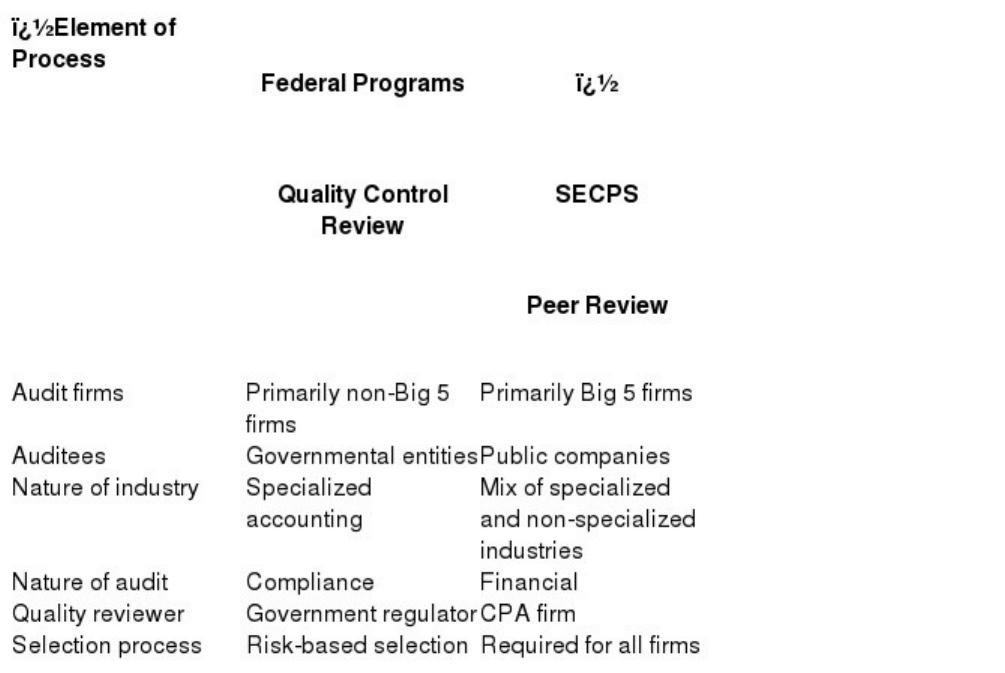
•Quality not Improving
Improvement in less severe problem category Changes take time to have an effect
Comparison of Governmental and SECPS Review
Programs
(from Elder 1997)
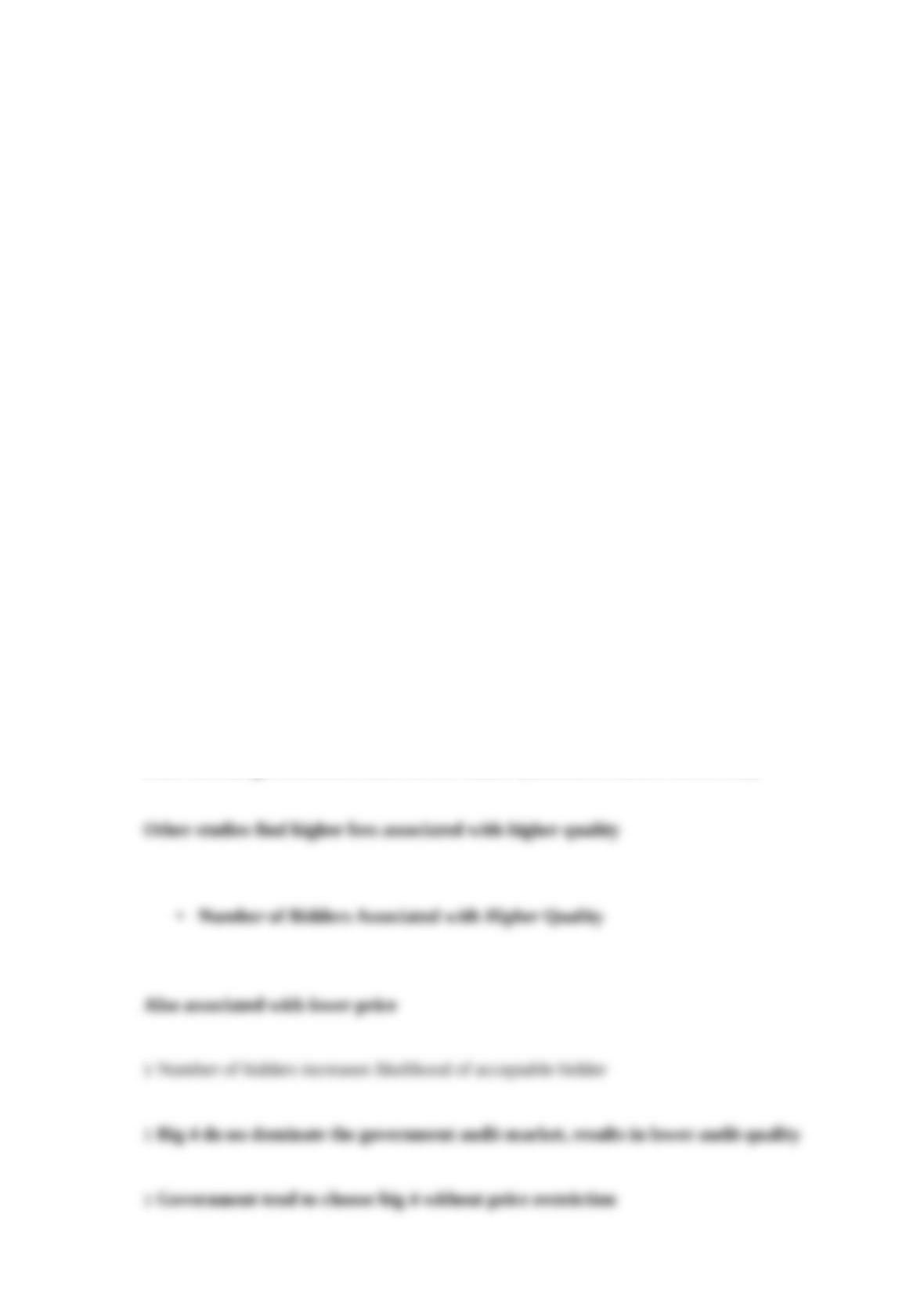
Major Conclusions from Elder:
1. 1. Quality improving
2. 2. Government and private sector quality metrics not comparable
3. 3. Selection of government quality review is risk-based, lower quality is
expected
Note: Similar data from subsequent periods is not available to assess whether trend
has continued.
Copley and Doucet
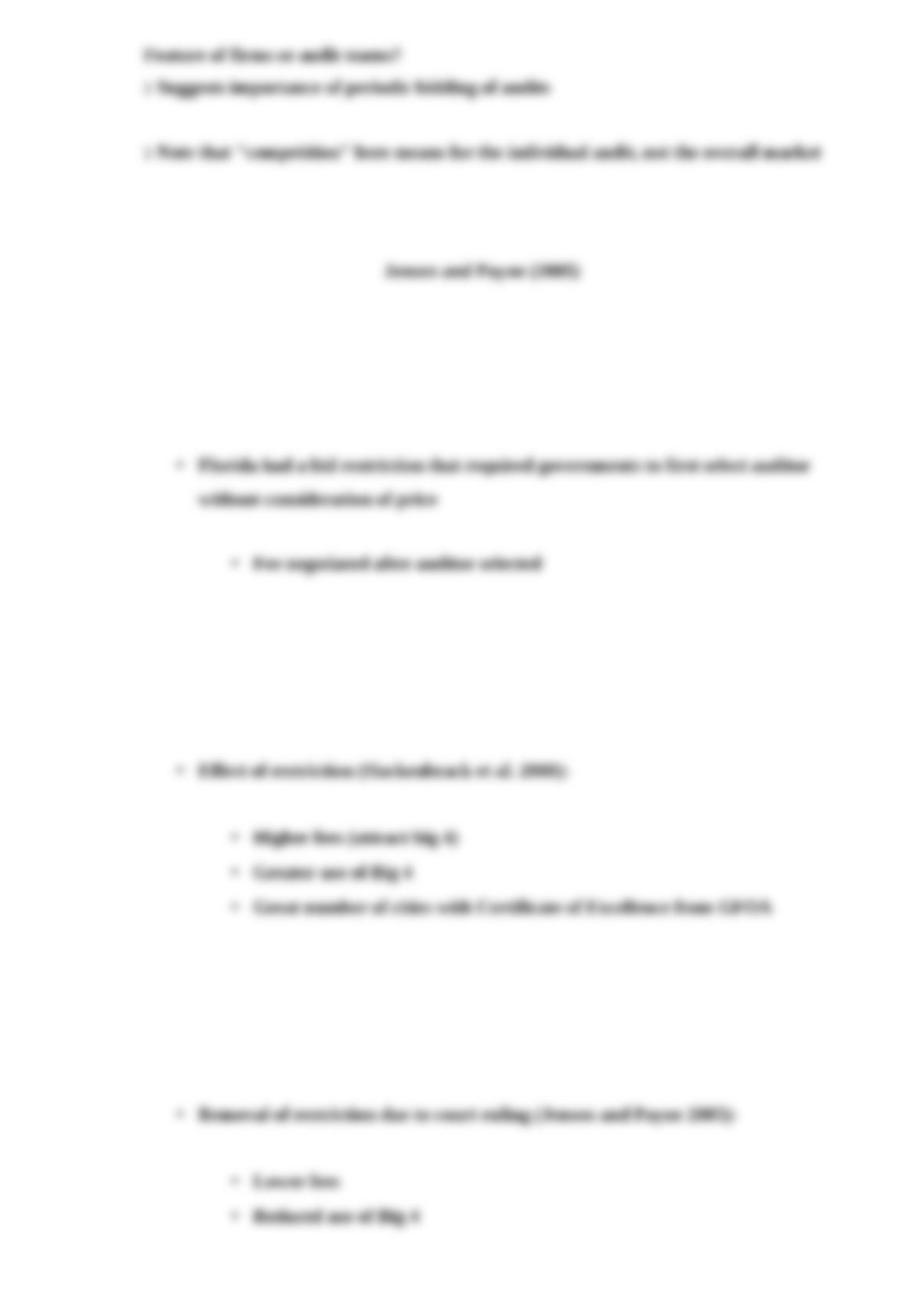
Competition and Audit Quality
Majority of governmental audits are not competitively bid, and the lowest bidder is
often not selected.
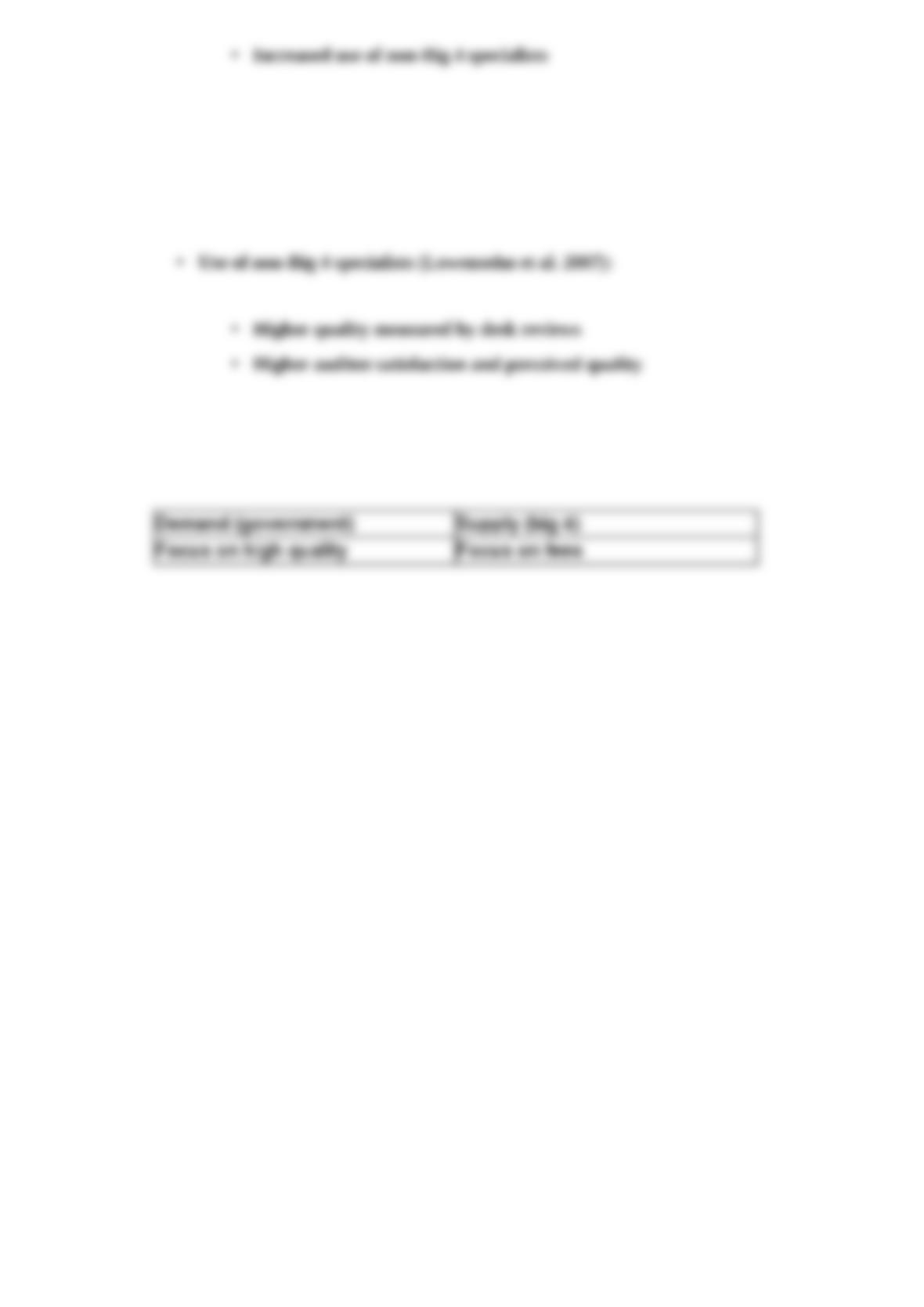
•Conventional Wisdom that Price Competition Affects Quality
Believed that governments focus on low bidder (minimal evidence this is true)