Genetically modified chickens lay eggs with
cancer-killing chemicals inside
Genetically modified chickens that produce human proteins with anti-cancer effects in their eggs
could provide a cost-effective way to produce drugs, research suggests.
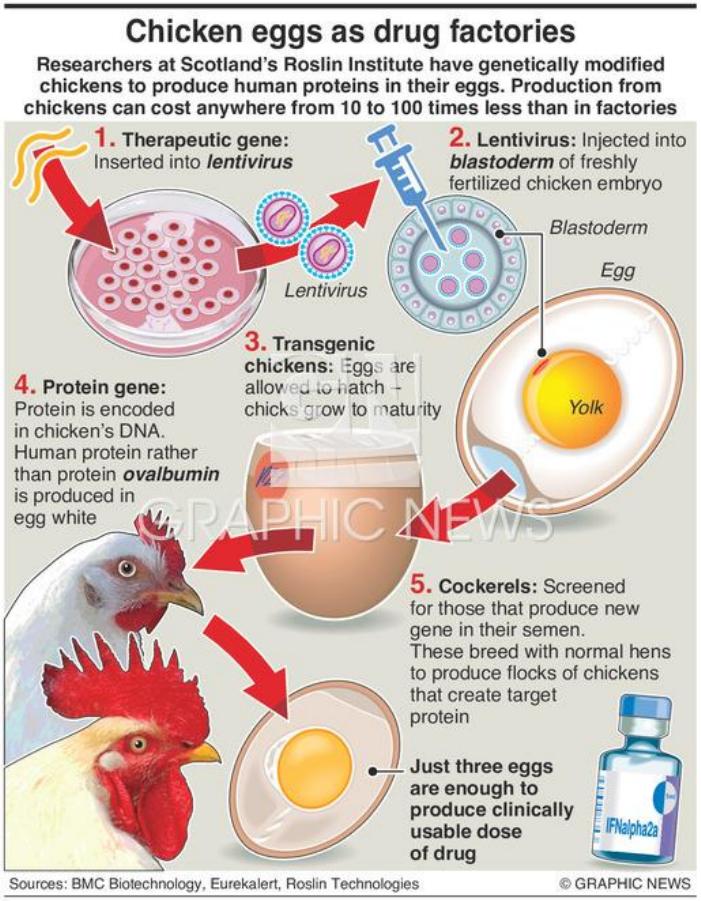
Large quantities of the valuable substances can be extracted from the eggs, with three eggs
proving enough to produce an adequate dosage.
The scientists added genes to the chickens’ DNA coding for human protein called
IFNalpha2a, which has anti-viral and anti-cancer effects, and another protein called
macrophage-CSF, which is involved in the production of white blood cells.
These substances are produced as part of the egg white, and the genes have no harmful
effects for the chickens.
“We are not yet producing medicines for people, but this study shows that chickens are
commercially viable for producing proteins suitable for drug discovery studies and other
applications in biotechnology,” said Professor Helen Sang of the Roslin Institute.
As chickens are capable of laying up to 300 eggs every year, the scientists suggest this
method could provide a cheaper approach than existing methods.
Often producing protein-based drugs to treat cancer and other diseases involves a complex
and expensive production and purification process involving mammal cell cultures.
Eggs are already used to grow viruses for use in vaccines, and other animals such as goats have been
genetically modified in the past to produce useful proteins in their milk.

Genetically Modified Chickens Lay Eggs
Containing Anti-Cancer Drug
Researchers spliced a human gene into the animals’ DNA.
by Kristin Houser / January 28 2019
Chicken/Egg Problem
The eggs laid by a group of “pampered” hens in the U.K. contain something special in their
whites.
After researchers from the University of Edinburgh spliced a human gene into the chickens’
DNA, the animals began laying eggs boasting a significant amount of two proteins used to
treat diseases including cancer in humans — and the process, they say, is far cheaper than
current methods of protein production.
“Production from chickens can cost anywhere from 10 to 100 times less than the factories,”
researcher Lissa Herron told the BBC. “So hopefully we’ll be looking at at least 10 times
lower overall manufacturing cost.”
Protein Packed
The human body naturally produces the proteins found in the new hen eggs — IFNalpha2a