BA Global Business Management (Online)
Global Strategy
Strategic Report for Global Expansion: Best Buy Co., Inc.
Assignment 2
Word Count: 2998
Submission Date: 15.05.2020

2
Table of Contents
Table of Contents
Executive Summary ………………………………………………………………………………… 3
Introduction ……………………………………………………………………………………………. 4
Market Selection ……………………………………………………………………………………… 5
BERI Analysis …………………………………………………………………………………….. 5
Market Attractiveness Analysis …………………………………………………………… 7
Competitive Strength Analysis …………………………………………………………….. 8
Entry Mode and Exit Strategy ………………………………………………………………… 10
Entry Mode ………………………………………………………………………………………. 10
Exit Strategy ……………………………………………………………………………………… 11
Organisational Structure ……………………………………………………………………….. 12
Current Structure ……………………………………………………………………………… 12
Adapted Organisational Structure …………………………………………………….. 15
Control System ………………………………………………………………………………….. 17
Summary of the 5 year plan ……………………………………………………………………. 18
References…………………………………………………………………………………………….. 21
Appendix ………………………………………………………………………………………………. 31
3
Executive Summary
The purpose of the following report is to provide a global expansion strategy analysis based
on the evaluation of three potential markets for Best Buy Co., Inc.’s international growth and
subsequently determine which country is best suited through the implementation of the
business environment risk, market attractiveness, and competitive strength analysis.
Results of in-depth evaluation show that Best Buy would be the most advantaged if it were to
enter Brazil’s market as it presents the highest probability of a long-term profitable growth.
Analysis of the internal capabilities, the external environment, along with the desired mode
characteristics and transaction specific behavior has shown that the most appropriate entry
strategy for Best Buy is through a contractual joint venture. An exit strategy has been
established as a necessity in case of future unforeseeable events, with the acquisition by the
foreign partner being the indicated approach. After adapting Best Buy’s organisational
structure to Brazil’s market and establishing a control system, a 5 year plan has been
elaborated to best sustain Best Buy’s development.
4
Introduction
As globalization has taken hold of the modern world, many businesses decide to immerse
themselves in the global field. Even though this is a critical move, international expansion
can unveil profitable markets with state-of-the-art technology and access to new product
ideas, which will result in a greater monetary performance (Hollensen 2017). Considering
Best Buy’s stable progress commenced through the implementation of the “Blue Strategy” in
2019 (Forbes 2020), a natural approach for the company would be to expand its operations
outside its current markets, respectively United States, Canada and Mexico (BestBuy 2020),
which proved to be a fortunate investment throughout the years
5
Market Selection
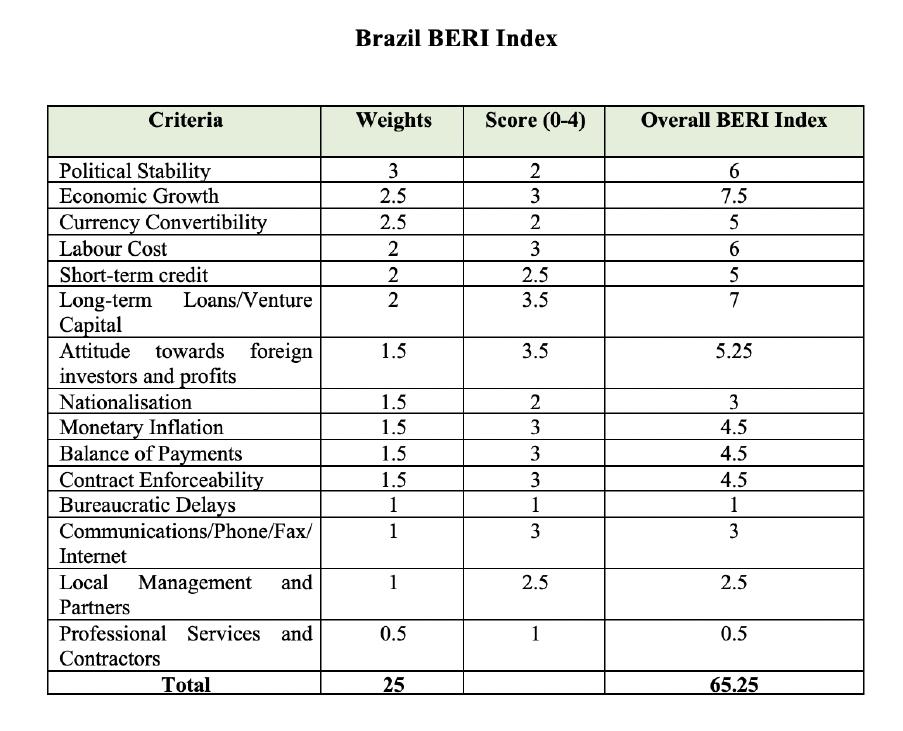
BERI Analysis
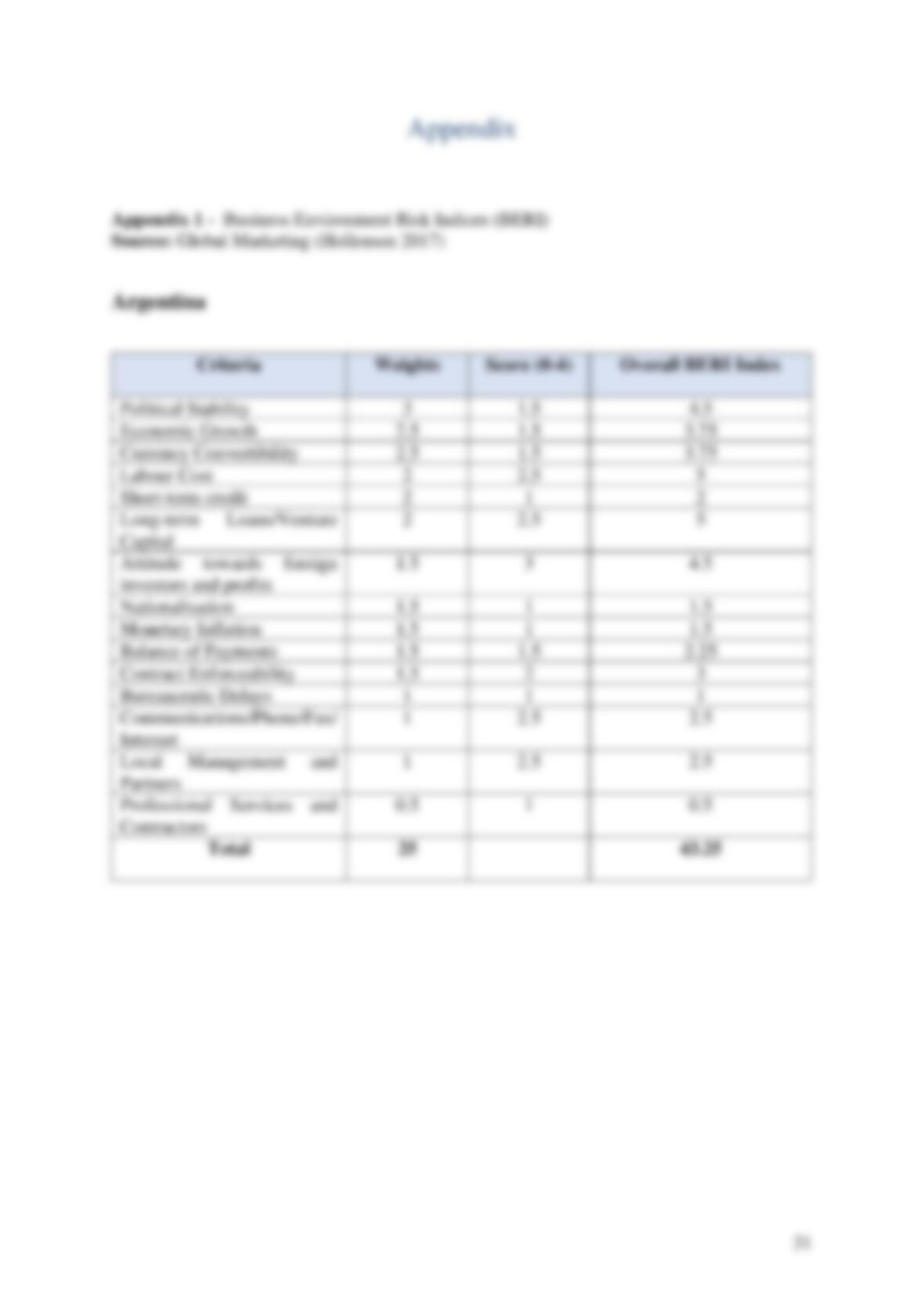
In order to assess each country’s business environment risk and designate the right market to
enter, the BERI tool has been completed with at extensive explanation for Argentina and
Colombia found in Appendix 1.

6
Political Stability
The political climate in Brazil is considered to be unstable since the election of the current
Brazilian administration in January 2019. Even though it is quite controversial, the present
government is focused on constructive plans such as foreign bilateral trade deals and the
privatisation of state-owned companies (Santander Trade 2020). This is not same case in
Argentina and Colombia, as their current administration is struggling with debt, inflation,
poverty and corruption issues. While Argentinians still experience a lower political risk status
than in previous years (Marsh 2020), Colombia was hit by anti-government protests in late
2019, an illustration of the population’s dissatisfaction with the economic reforms and lack of
corruption control (Euronews 2019).
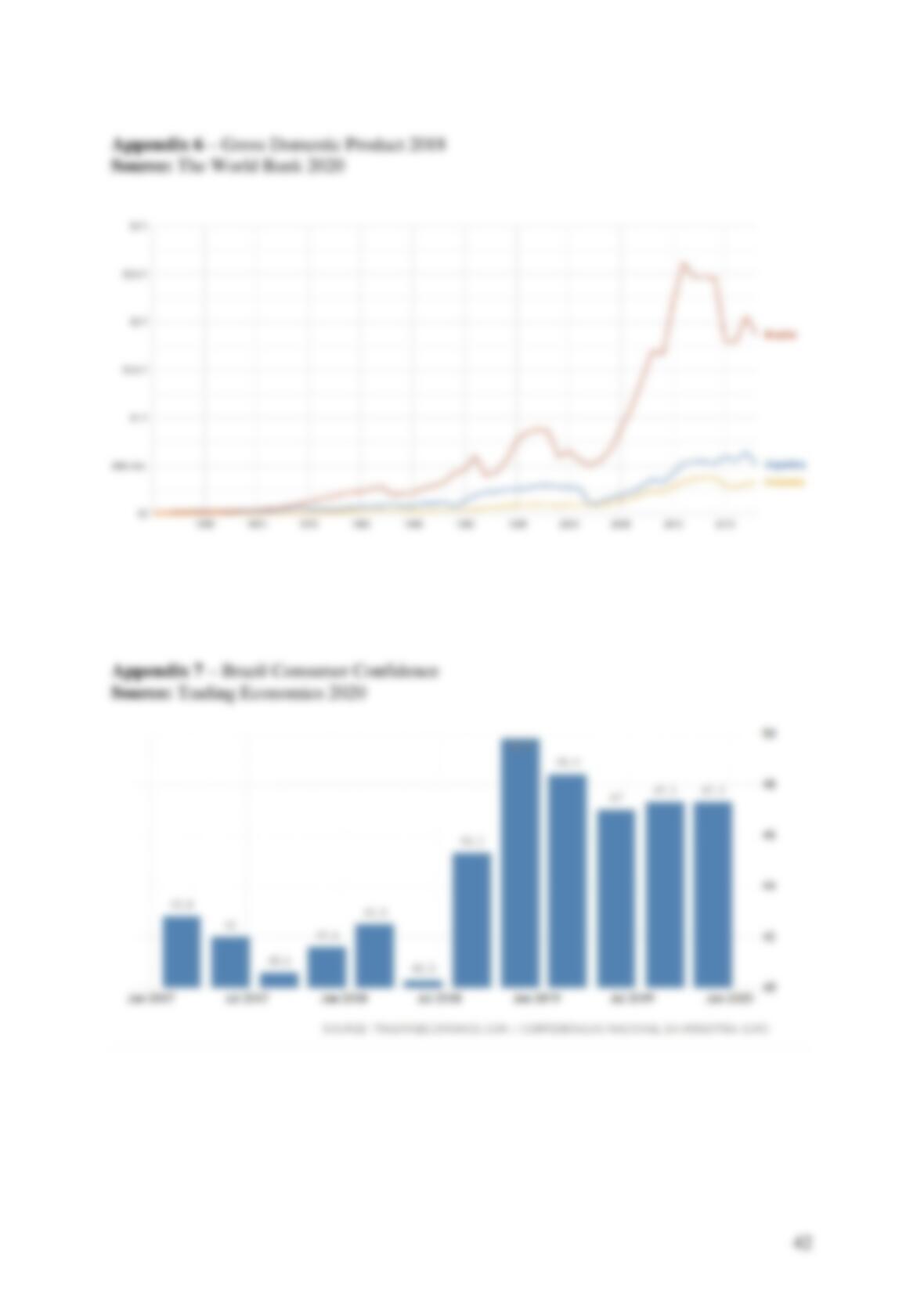
Economic Growth
Brazil is the 8th largest economy in the world and one of the fastest growing (Statista 2020),
surpassing Argentina but followed closely by Columbia’s accelerated growth (World Bank
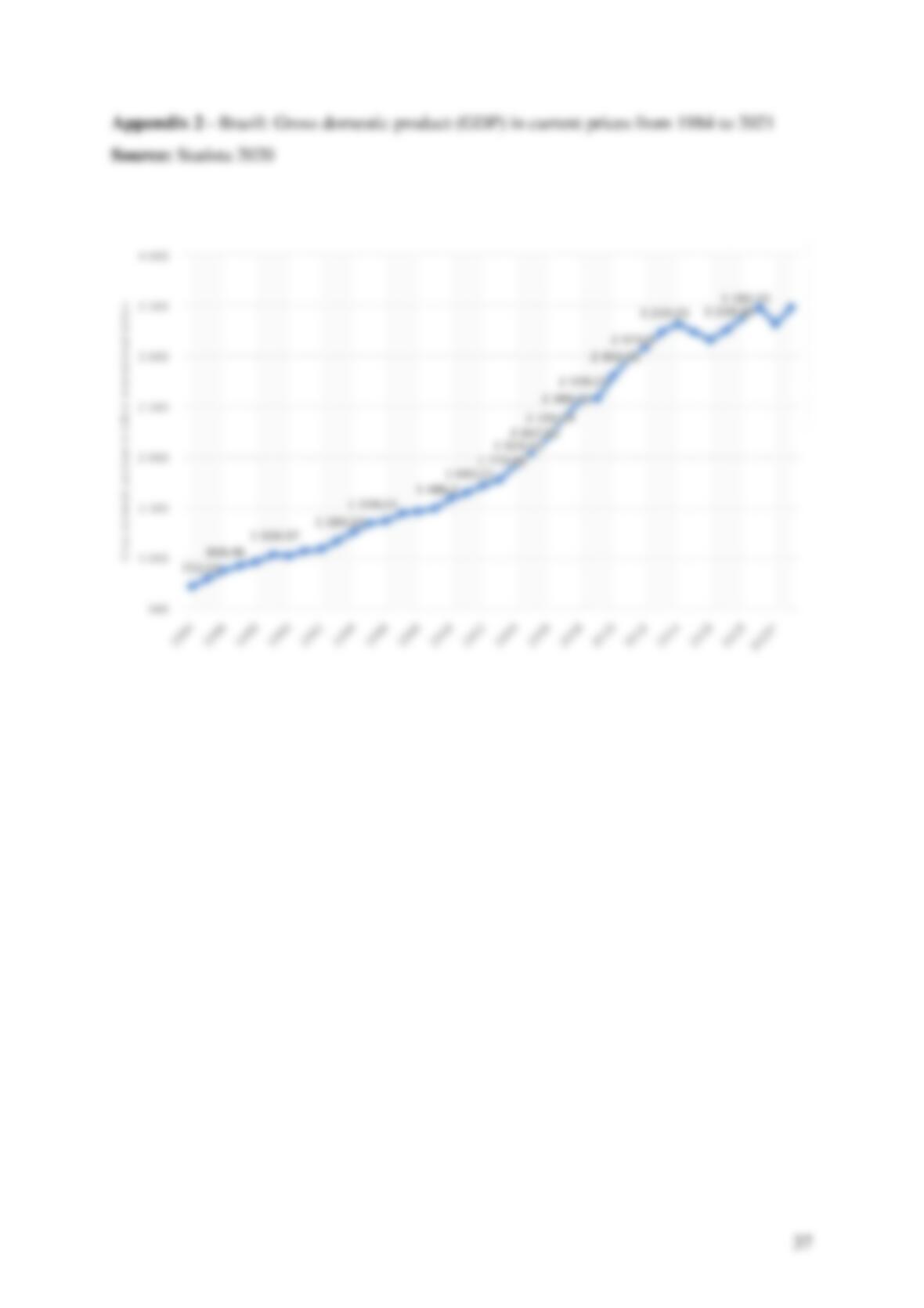
2019). Nevertheless, it is the largest among all Latin American countries, with a GDP
situated on a steady growth pace (Appendix 2). The country is part of the BRIC economies, a
denotation for developing nations that are believed to become dominant suppliers of
manufactured goods, services and raw materials due to low labor and production costs
(Investopedia 2020). These elements appeal to foreign investors and lead to the
acknowledgement of Brazil’s economic environment as stable and attractive.
Venture Capital
The Brazilian venture capital ecosystem has progressed in the recent years as the total
absorption of venture capital reached US$ bil. 1.3 in 2018, holding almost two-thirds of all
funds raised in Latin America. Furthermore, in 2018, 9 of the 14 major investments in Latin
America were done in Brazil (Polymath Ventures 2020). There is a high interest in Latin
America coming from investors, especially from U.S. based companies and Best Buy can
find value in these markets through their commercial opportunities and open prospects.
Attitude towards foreign investors and profits
According to the World Bank (2019), the Brazilian government has taken steps to facilitate
and retain more FDI through the establishment of the “Direct Investment Ombudsman” in
order to improve the interactions between investors and Brazilian agencies. The destination is
showcasing an example for other countries and its potential of being an attractive investment
destination.
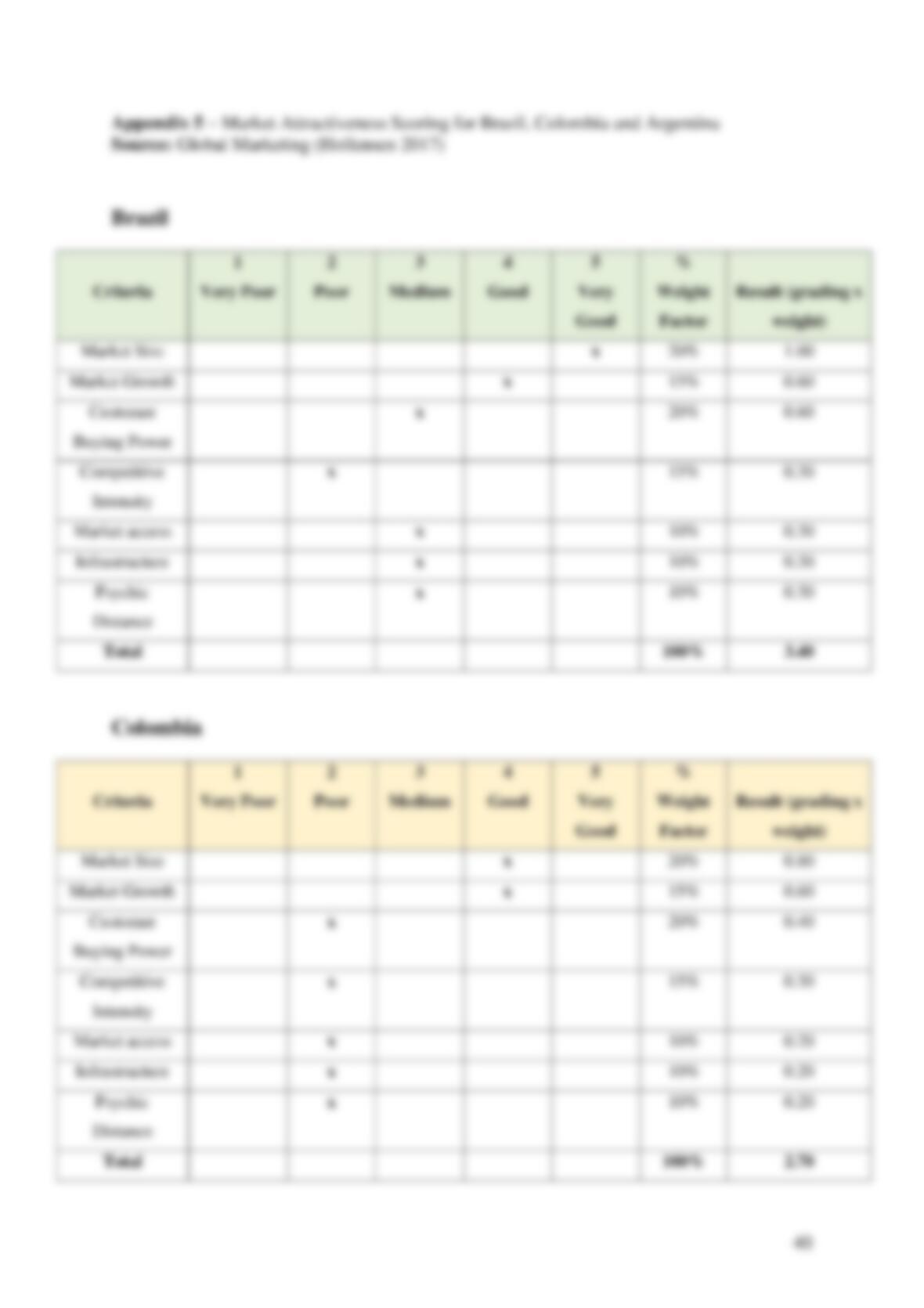
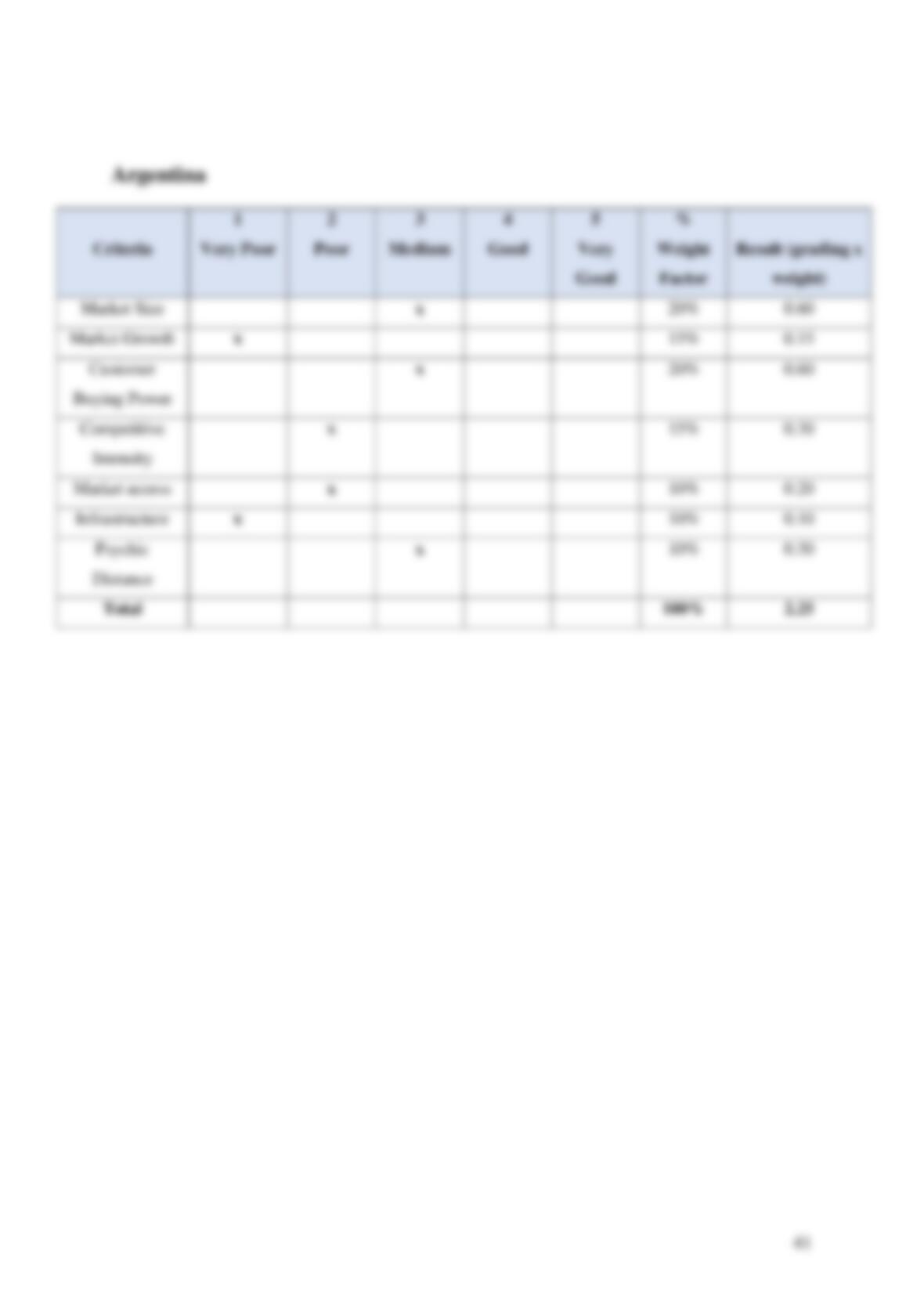
Market Attractiveness Analysis
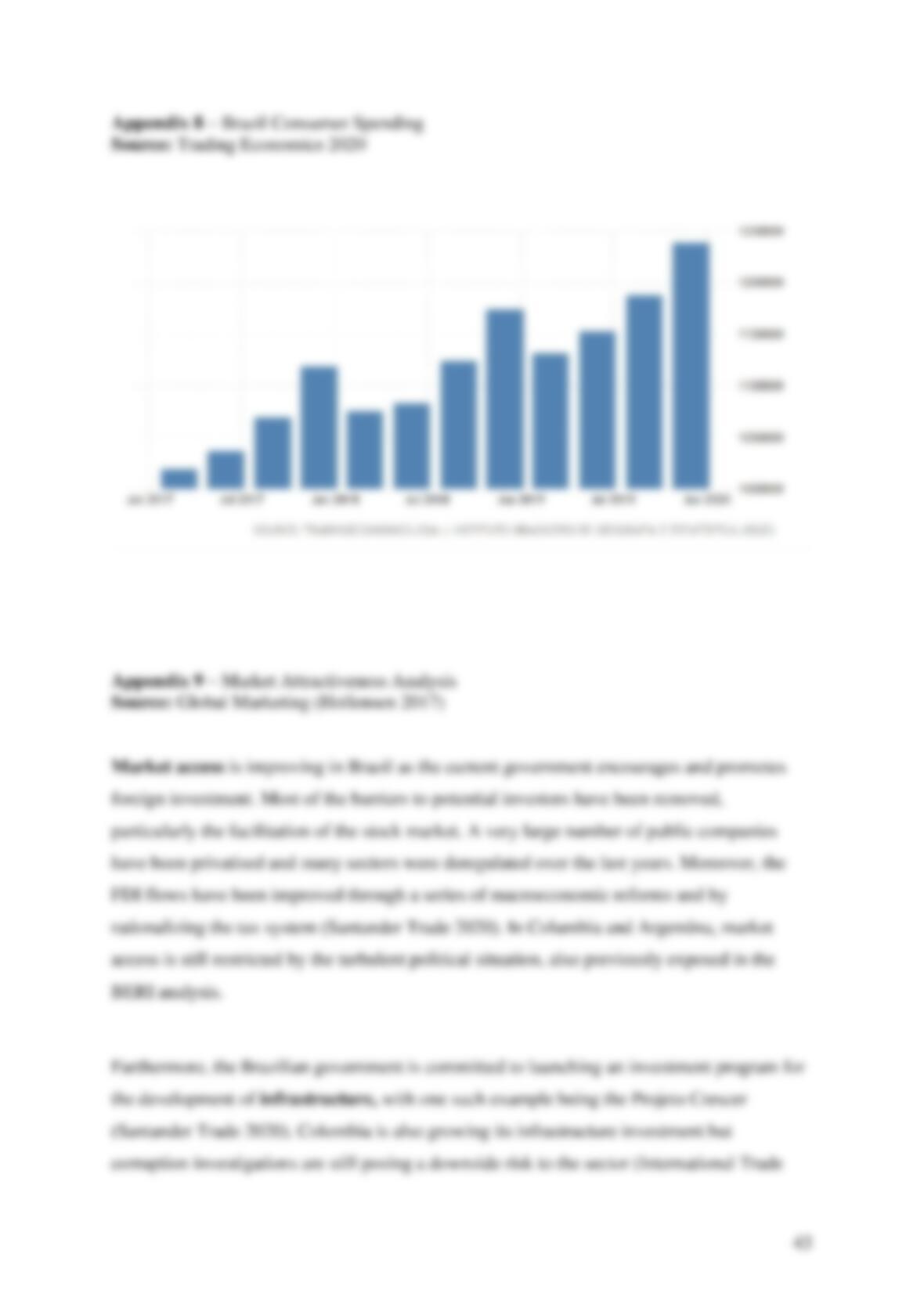
In terms of market size, the global consumer electronic segment achieved a revenue of US$
mil 426,238 in 2020 (Statista 2020) with Brazil being the 8th largest consumer market in the
world according to its spending (World Bank 2018), having 208 million potential consumers
for Best Buy to approach (Index Mundi 2019). According to the World Bank (2020), Brazil
has a GDP that is more than double in size compared to Colombia and Argentina (Appendix
6), demonstrating its economic capacity and potential.