1Chapter
Managers
and
Management
1-1
1

Learning Outcomes
•Tell who managers are and where they work.
•Define management.
•Describe what managers do.
•Explain why it’s important to study management.
•Describe the factors that are reshaping and redefining
management.
1-2
After studying this chapter you will be able to:
•Tell who managers are and where they work
•Define management
•Describe what managers do
•Explain why it’s important to study management, and
•Describe the factors that are reshaping and redefining management
2
1-3
3

Who Are Managers?
Where Do They Work?
•Organization
A collection of people who work together for
common goals and they try to accomplish the same
objectives.
In the primary objectives usually for any business is
profit.
So managers work in organizations and the primary
goal is profit.
1-4
Managers work in organizations, which we define as a deliberate arrangement of
people brought together to accomplish a specific purpose.
Three characteristics that identify an organization are its:
1. Goals
2. People, and
3. Structure.
Examples of organizations include:
•Your neighborhood convenience store
•The Dallas Cowboys football team
•Fraternities and sororities
•The Cleveland Clinic, and
•Internationally known corporations such as Nokia.
4

Who Are Managers?
Where Do They Work?
Three features that identify an organization are its:
–Goals
The organizations have certain Characteristics so every organization has specific goals.
Exp: SZABIST has specific goal, to provide the quality education, to raise the young
generation.
–People
Who make decisions and engage in work activities to reach the organization’s goals.
Exp: SZABIST has people, police department has people.
–Structure
Every organization has structure , which systematically defines and limits its members’
behaviour and also defines how activities such as task allocation, coordination and
supervision are directed toward the achievement of organizational goals.
Exp: As we can see, companies use this type of structure when they want to
organize their operations into departments, grouping employees with shared skills
and knowledge, such as marketing or sales, together.
1-5
Managers work in organizations, which we define as a deliberate arrangement of
people brought together to accomplish a specific purpose.
Three characteristics that identify an organization are its:
1. Goals
2. People, and
3. Structure.
Examples of organizations include:
•Your neighborhood convenience store
•The Dallas Cowboys football team
•Fraternities and sororities
•The Cleveland Clinic, and
•Internationally known corporations such as Nokia.
5
1-6
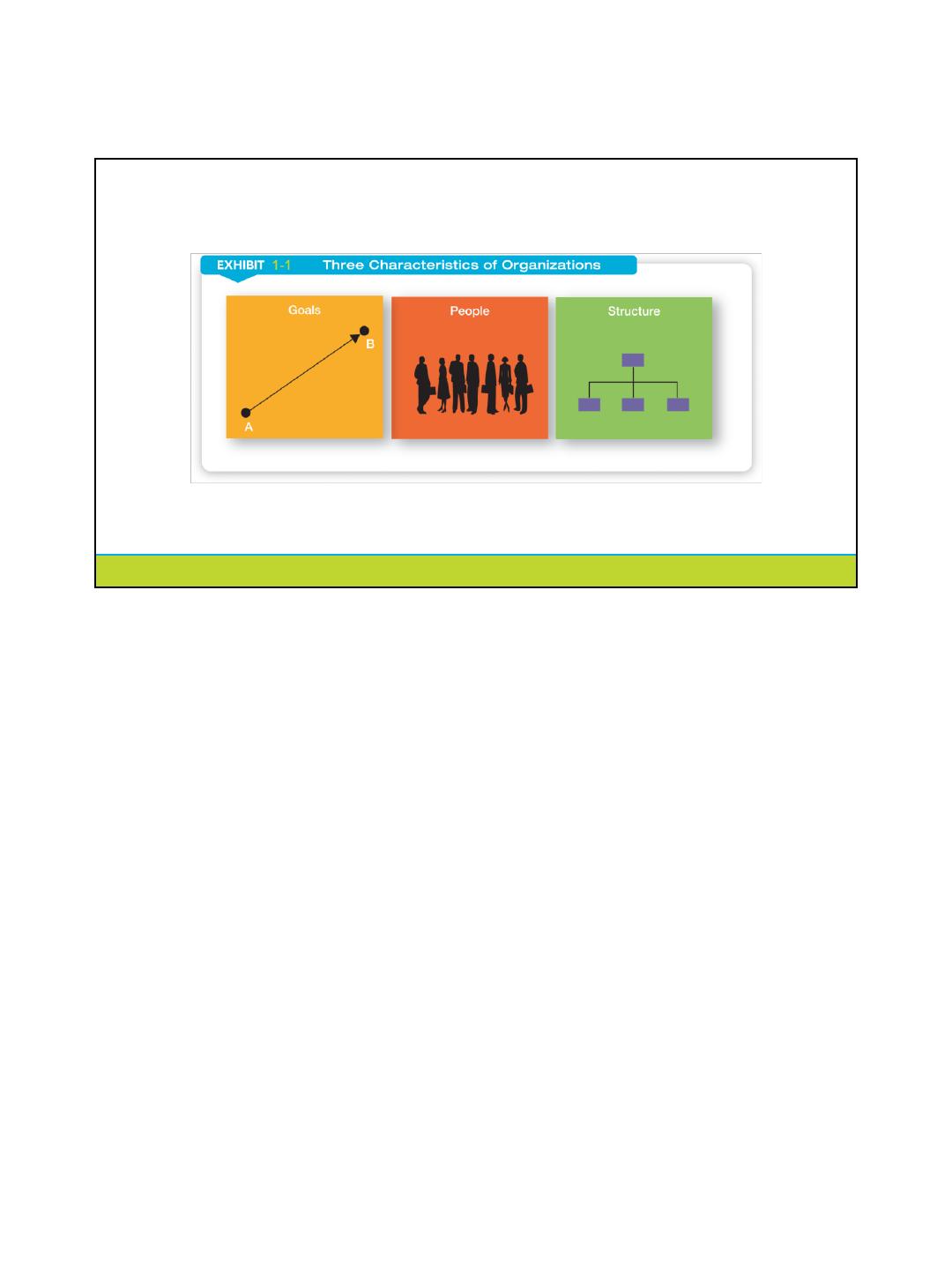
Here we see the three common characteristics that organizations share:
1. Goals, which express the distinct purpose of a particular organization
2. People, who make decisions and reach the organization’s goals, and
3. A deliberate structure, which systematically defines, limits, and guides its
members’ behavior.
6

How Are Managers Different from Nonmanagerial
Employees?
•Members of an organization can be divided into two
categories:
•Managers
–Individuals who direct and oversee the activities of the people in the
organization
•Nonmanagerial Employees
–People who work directly on a job or task and have no responsibility for