Chapter 2
The Balance Sheet
ANSWERS TO QUESTIONS
1. (a) An asset is a resource owned by a company that has measurable value
and is expected to provide future benefits.
(b) A current asset is an asset that will be used up or turned into cash within
the next 12 months.
(c) A liability is a debt or obligation arising from past transactions or events,
which the company is likely to pay, settle, or fulfill by sacrificing resources
in the future.
(d) A current liability is a debt or obligation that will be paid, settled, or
fulfilled within one year.
(e) Contributed capital includes the amount of financing (cash and sometimes
other assets) provided to the company by stockholders in exchange for
shares of stock.
(f) Retained earnings are the cumulative earnings of a company that are not
distributed to the owners and instead are reinvested in the business.
2. A transaction is an exchange or event that has a direct and measurable financial
effect on the assets, liabilities, or stockholders’ equity of a business.
Transactions include two different types of events: (1) external exchanges and
(2) internal events. The first situation (1) is exemplified by the sale of goods or
services to customers. The second situation (2) is exemplified by employees
using up the benefits of equipment owned by the company.
3. Accounts are used to accumulate and report the effects of different business
activities. Accounts are necessary to keep track of all increases and decreases
in the basic accounting equation.
4. The basic accounting equation is: Assets = Liabilities + Stockholders’ Equity.
5. Debit is the left side of a T-account and credit is the right side of a T-account. A
debit is an increase in assets or a decrease in liabilities or stockholders’ equity.
Fundamentals of Financial Accounting, 4/e 2- 1
© 2013 by McGraw-Hill Education. This is proprietary material solely for authorized instructor use. Not authorized for sale or distribution in any
manner. This document may not be copied, scanned, duplicated, forwarded, distributed, or posted on a website, in whole or part.

A credit is the opposite – a decrease in assets or an increase in liabilities or
stockholders’ equity.
6. Transaction analysis is the process of studying a transaction to determine its
financial effect on the business in terms of the basic accounting equation:
Assets = Liabilities + Stockholders’ Equity
The two principles underlying the process are:
* Duality of effects: every transaction affects at least two accounts.
* A=L+SE; the accounting equation must remain in balance after each
transaction.
7. The accounting equalities in transaction analysis are:
(a) Assets = Liabilities + Stockholders’ Equity
(b) Debits = Credits
8. A journal entry is a method for expressing the effects of a transaction on
accounts in a debits equal credits format. The title of the account(s) to be
debited is (are) listed first. The title of the account(s) to be credited is (are) listed
underneath the debited accounts and both account title(s) and amount(s) are
indented to the right. (An optional explanation can be included on the lines
following the journal entry; this explanation is omitted in most textbook examples
and homework problems because the description of the transaction in the
textbook already provides the explanation.)
9. T-accounts are a simplified version of the ledger, which summarizes transaction
effects for each account. T-accounts show increases on the left (debit) side for
assets, which are on the left side of the accounting equation. T-accounts show
increases on the right (credit) side for liabilities and stockholders’ equity, which
are on the right side of the accounting equation. The T-account is a tool for
summarizing transaction effects for each account and determining balances.
10. The cost principle requires that assets and liabilities be recorded at their original
cost to the company.
11. Because the customer list was not purchased by her salon (it was developed
internally), her salon does not report it on the balance sheet. Knowing this, she
should be sure to advise her banker that the salon has established a loyal group
of customers that holds considerable value for generating future revenues (but is
excluded from the balance sheet for accounting reasons).
2- 2 Solutions Manual
© 2013 by McGraw-Hill Education. This is proprietary material solely for authorized instructor use. Not authorized for sale or distribution in any
manner. This document may not be copied, scanned, duplicated, forwarded, distributed, or posted on a website, in whole or part.

Authors’ Recommended Solution Time
(Time in minutes)
Mini-exercises Exercises Problems
Skills
Development
Cases*
Continuing
Case
No. Time No. Time No. Time No. Time No. Time
1 2 1 8 CP2-1 45 1 15 1 30
2 2 2 10 CP2-2 50 2 15
3 4 3 5 CP2-3 50 3 45
4 4 4 5 PA2-1 45 4 20
5 4 5 3 PA2-2 50 5 20
6 4 6 5 PA2-3 50 6 10
7 3 7 3 PB2-1 45 7 35
8 3 8 10 PB2-2 50
9 5 9 5 PB2-3 50
10 6 10 15
11 6 11 20
12 6 12 25
13 10 13 10
14 10 14 15
15 10 15 30
16 10
17 10
18 10
19 10
20 10
21 15
22 10
23 3
24 8
25 8
* Due to the nature of cases, it is very difficult to estimate the amount of time students
will need to complete them. As with any open-ended project, it is possible for students
to devote a large amount of time to these assignments. While students often benefit
from the extra effort, we find that some become frustrated by the perceived difficulty of
the task. You can reduce student frustration and anxiety by making your expectations
clear, and by offering suggestions (about how to research topics or what companies to
select). The skills developed by these cases are indicated in the table on the following
page.
Fundamentals of Financial Accounting, 4/e 2- 3
© 2013 by McGraw-Hill Education. This is proprietary material solely for authorized instructor use. Not authorized for sale or distribution in any
manner. This document may not be copied, scanned, duplicated, forwarded, distributed, or posted on a website, in whole or part.
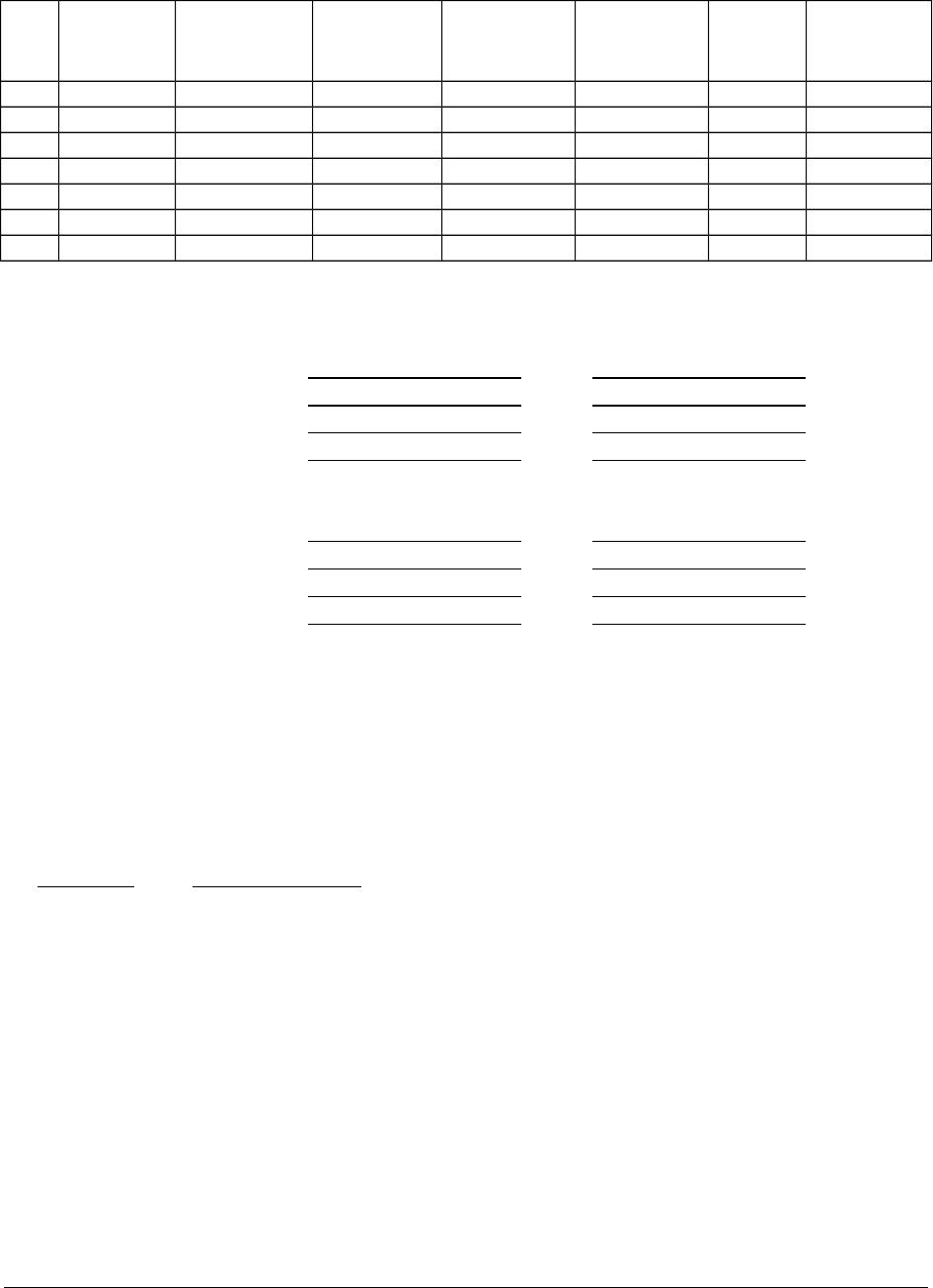
Cas
e
Financia
l
Analysis
Research Ethical
Reasoning
Critical
Thinking Technology Writing Teamwork
1 x
2 x
3 x x x x x
4 x x x
5 x x x x
6 x x
7 x x
ANSWERS TO MINI-EXERCISES
M2-1
Debit Credit
Assets Increases Decreases
Liabilities Decreases Increases
Stockholders’ Equity Decreases Increases
M2-2
Increase Decrease
Assets Debit Credit
Liabilities Credit Debit
Stockholders’ Equity Credit Debit
M2-3 (1) D (2) C (3) A (4) I (5) F (6) B
M2-4 (1) CL (2) CL (3) CA (4) NCA (5) CA (6) SE (7) NCA
(8) CL (9) NCA (10) CL (11) SE (12) CA (13) CL
M2-5
2- 4 Solutions Manual
© 2013 by McGraw-Hill Education. This is proprietary material solely for authorized instructor use. Not authorized for sale or distribution in any
manner. This document may not be copied, scanned, duplicated, forwarded, distributed, or posted on a website, in whole or part.
Req. 1 Req. 2
Category Normal Balance
1) CA Debit
2) CL Credit
3) SE Credit
4) NCL Credit
5) CL Credit
6) NCA Debit
7) SE Credit
8) CL Credit
9) CA Debit

M2-6
Req.1 Req.2
Category Normal Balance
1) CL Credit
2) CA Debit
3) CA Debit
4) SE Credit
5) NCL Credit
6) NCA Debit
7) SE Credit
8) CL Credit
M2-7
1) Yes
2) No
3) Yes
4) No
5) No
6) Yes
M2-8
1) Yes
2) Yes
3) No – This event involves only a written promise to rent the store space. No
exchange of cash, goods, or services has occurred.
4) Yes
5) No
Fundamentals of Financial Accounting, 4/e 2- 5
© 2013 by McGraw-Hill Education. This is proprietary material solely for authorized instructor use. Not authorized for sale or distribution in any
manner. This document may not be copied, scanned, duplicated, forwarded, distributed, or posted on a website, in whole or part.
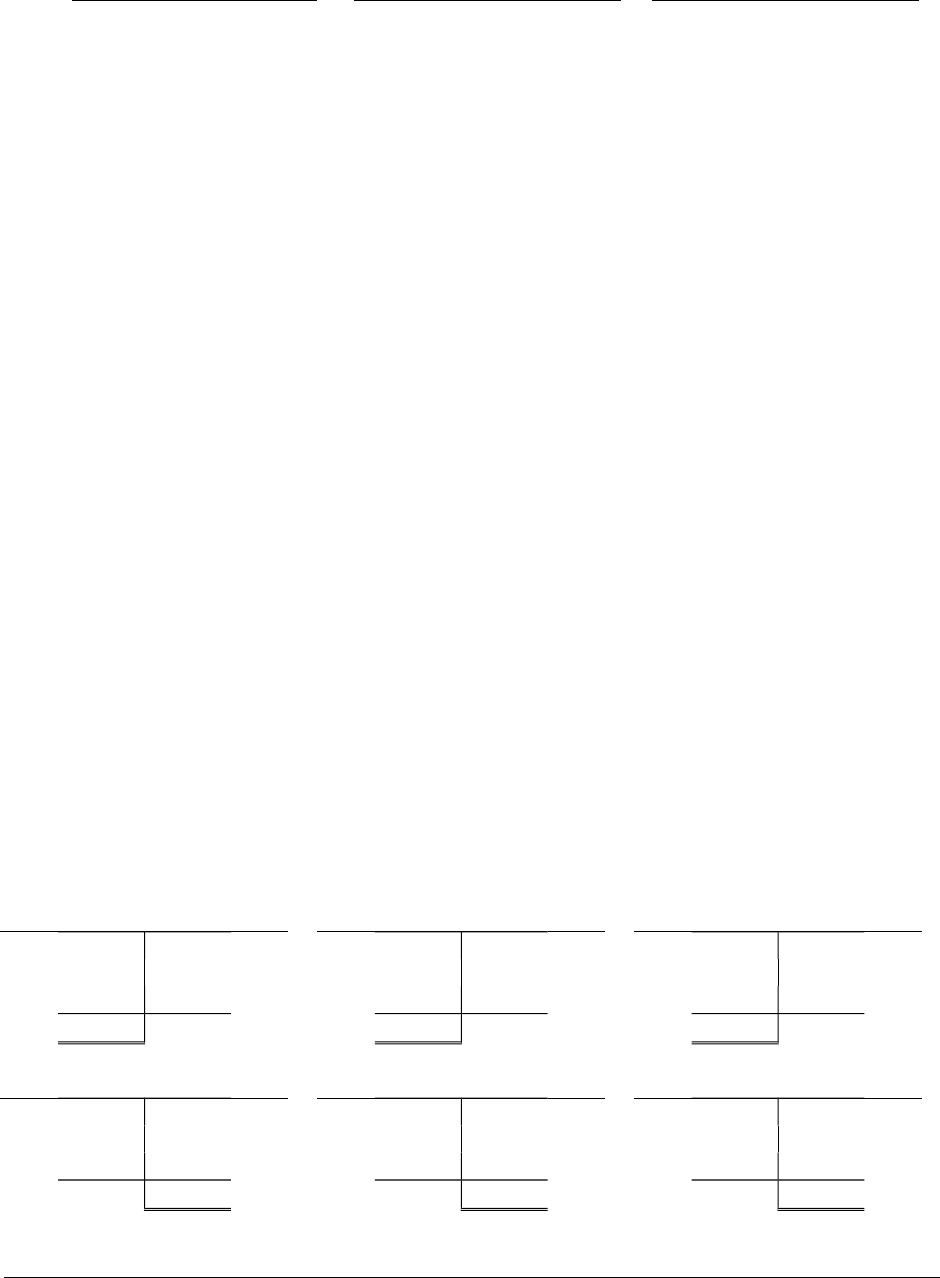
M2-9
Assets = Liabilities + Stockholders’ Equity
a. Cash +3,940 Notes Payable
(short-term)
+3,940
b. Cash +4,630 Contributed
Capital
+4,630
c. Cash
Equipment
–200
+1,000
Notes Payable
(short-term)
+800
d. Cash
Supplies
–300
+300
e. Supplies +700 Accounts
Payable
+700
M2-10
a. dr Cash (+A)………….………….………….……………….…..….…... 3,940
cr Notes Payable (short-term) (+L)…………..…..…..….….. 3,940
b. dr Cash (+A)………….………….………….……………….…..….…... 4,630
cr Contributed Capital (+SE)………….………….…………….. 4,630
c. dr Equipment (+A)…….………….………….…..…..….….….…..…. 1,000
cr Cash (A)………..………….………….……………..….….…... 200
cr Notes Payable (short-term) (+L)…………..…..…..….….. 800
d. dr Supplies (+A)……………….………….………….………….………. 300
cr Cash (A)………..………….………….……………..….….…... 300
e. dr Supplies (+A)……………….………….………….………….………. 700
cr Accounts Payable (+L)……………..……………………….… 700
M2-11
Cash (A) Supplies (A) Equipment (A)
(a) 3,940 200 (c) (d) 300 (c) 1,000
(b) 4,630 300 (d) (e) 700
8,070 1,000 1,000
Accounts Payable (L) Notes Payable (L) Contributed Capital (SE)
700 (e) 3,940 (a) 4,630 (b)
800 (c)
700 4,740 4,630
M2-12
2- 6 Solutions Manual
© 2013 by McGraw-Hill Education. This is proprietary material solely for authorized instructor use. Not authorized for sale or distribution in any
manner. This document may not be copied, scanned, duplicated, forwarded, distributed, or posted on a website, in whole or part.

SPOTLIGHTER INC.
Balance Sheet
At January 31, 2013
Assets Liabilities
Current Assets: Current Liabilities:
Cash $ 8,070 Accounts Payable $ 700
Supplies 1,000 Notes Payable 4,740
Total Current Assets 9,070 Total Current Liabilities 5,440
Stockholders’ Equity
Equipment 1,000 Contributed Capital 4,630
Total Assets $ 10,070
Total Liabilities & Stockholders’
Equity $10,070
M2-13
a.
dr Cash (+A) 70,000
cr Contributed Capital (+SE) 70,000
b.
dr Land (+A) 60,000
cr Cash (-A) 60,000
c.
dr Supplies (+A) 9,000
cr Accounts Payable (+L) 9,000
d.
dr Cash (+A) 25,000
cr Note Payable (long-term) (+L) 25,000
e.
No transaction
Fundamentals of Financial Accounting, 4/e 2- 7
© 2013 by McGraw-Hill Education. This is proprietary material solely for authorized instructor use. Not authorized for sale or distribution in any
manner. This document may not be copied, scanned, duplicated, forwarded, distributed, or posted on a website, in whole or part.
M2-14
Assets = Liabilities + Stockholders’ Equity
(a Cash + 70,000
Contributed
Capital + 70,000
(b) Cash – 60,000
Land + 60,000
(c) Supplies + 9,000
Accounts
Payable + 9,000
(d) Cash + 25,000
Note
Payable + 25,000
(e) No transaction
104,000 34,000
70,000
M2-15
a.
dr Equipment (+A) 4,000
cr Cash (-A) 4,000
b.
dr Books (+A) 7,000
cr Accounts Payable (+L) 7,000
c.
dr Cash (+A) 4,000
cr Note Payable (short-term) (+L) 4,000
d.
dr Accounts Payable (-L) 1,500
cr Cash (-A) 1,500
e.
dr Note Payable (short-term) (-L) 4,000
cr Cash (-A) 4,000
2- 8 Solutions Manual
© 2013 by McGraw-Hill Education. This is proprietary material solely for authorized instructor use. Not authorized for sale or distribution in any
manner. This document may not be copied, scanned, duplicated, forwarded, distributed, or posted on a website, in whole or part.

M2-16
Assets = Liabilities +
Stockholders’
Equity
(a) Cash – 4,000
Equipment + 4,000
(b) Books + 7,000 Accounts Payable + 7,000
(c) Cash + 4,000 Note Payable + 4,000
(d) Cash – 1,500 Accounts Payable – 1,500
(e) Cash – 4,000 Note Payable – 4,000
5,500 5,500
M2-17
a.
dr Equipment (+A) 12,000
cr Accounts Payable (+L) 12,000
b.
dr Accounts Payable (-L) 6,000
cr Cash (-A) 6,000
c.
dr Cash (+A) 400
cr Accounts Receivable (-A) 400
d.
dr Cash (+A) 15,000
cr Contributed Capital (+SE) 15,000
e.
dr Equipment (+A) 60,000
cr Cash (-A) 10,000
cr Note Payable (+L) 50,000
Fundamentals of Financial Accounting, 4/e 2- 9
© 2013 by McGraw-Hill Education. This is proprietary material solely for authorized instructor use. Not authorized for sale or distribution in any
manner. This document may not be copied, scanned, duplicated, forwarded, distributed, or posted on a website, in whole or part.

M2-18
Assets = Liabilities + Stockholders’ Equity
(a) Equipment + 12,000
Accounts
Payable + 12,000
(b) Cash – 6,000
Accounts
Payable – 6,000
(c) Cash + 400
Accounts
Receivable – 400
(d) Cash + 15,000
Contributed
Capital + 15,000
(e) Cash – 10,000 Note Payable + 50,000
Equipment + 60,000
+ 71,000 + 56,000 + 15,000
M2-19
a.
dr Cash (+A) 50
cr Accounts Receivable (-A) 50
b.
No transaction
c.
dr Accounts Payable (-L) 2,000
cr Cash (-A) 2,000
d.
dr Note Payable (short-term) (-L) 5,000
cr Cash (-A) 5,000
e.
dr Equipment (+A) 2,200
cr Cash (-A) 1,000
cr Note Payable (short-term) (+L) 1,200
2- 10 Solutions Manual
© 2013 by McGraw-Hill Education. This is proprietary material solely for authorized instructor use. Not authorized for sale or distribution in any
manner. This document may not be copied, scanned, duplicated, forwarded, distributed, or posted on a website, in whole or part.
M2-20
Assets = Liabilities + Stockholders’
Equity
(a) Cash + 50
Accounts Receivable – 50
(b) No transaction
(c) Cash – 2,000 Accounts Payable – 2,000
(d) Cash – 5,000
Note Payable
(short-term) – 5,000
(e) Cash – 1,000 Note Payable +1,200
Equipment + 2,200 (short-term)
– 5,800 – 5,800
M2-21
CHARLIE’S CRISPY CHICKEN
Balance Sheet
At September 30, 2013
Assets Liabilities
Current Assets Current Liabilities
Cash $ 1,800 Accounts Payable $ 2,000
Food Ingredients 400 Wages Payable 200
Supplies 1,400 Utilities Payable 300
Total Current Assets 3,600 Total Current Liabilities 2,500
Note Payable 25,000
Total Liabilities 27,500
Restaurant Booths 25,000
Kitchen Equipment 13,000 Stockholders’ Equity
Land 18,900 Contributed Capital 30,000
Retained Earnings 3,000
Total Stockholders’ Equity 33,000
Total Assets $ 60,500
Total Liabilities & Stockholders’
Equity $60,500
CCC’s current ratio (3,600/2,500 = 1.44) suggests the company has enough current
assets that could be converted into cash to cover its current liabilities. At September
30, CCC had $1.44 of current assets for each dollar of current liabilities.
Fundamentals of Financial Accounting, 4/e 2- 11
© 2013 by McGraw-Hill Education. This is proprietary material solely for authorized instructor use. Not authorized for sale or distribution in any
manner. This document may not be copied, scanned, duplicated, forwarded, distributed, or posted on a website, in whole or part.
M2-22
Req. 1
TRUMP ENTERTAINMENT RESORTS, INC.
Balance Sheet
At December 31, 2010
(in thousands)
Assets Liabilities
Current Assets Current Liabilities
Cash $
85,585
Accounts Payable $ 40,862
Accounts Receivable 26,094 Salaries Payable 24,338
Other Current Assets 129,343 Other Current Liabilities 74,248
Total Current Assets 241,022 Total Current Liabilities 139,448
Long-term Note Payable 366,752
Total Liabilities 506,200
Stockholders’ Equity
Equipment 463,988 Contributed Capital 11