Running Head: Fine Foods Case Study
1
Fine Foods Case Study
Cost Management
Nicole Snyder and Cindy Chang
Ashland University
Part 1: Product Costing
Fine Foods Case Study 2
Glossary of Terms:
In the following section, you will see some terms and descriptions relating to product costing.
This information will help connect product costing to how costs are applied to regular and
special orders at Fine Foods:
● Cost Object: A cost object is a term used in cost accounting to describe how costs are
added to a product. For Fine Foods the cost object could be the product itself, the
customer and market, or the distribution channel.
● Cost Driver: A cost driver is used to measure how much cost should be allocated to each
object. In Fine Foods, the cost driver is often related to product weight. Increasing the
cost driver measurement decreases gross margin in some cases because it increases
the cost of the goods sold and if the revenue does not change accordingly, it can affect
the company and their profit margin as well.
● Product vs. Period Costs
○ Product cost refers to the costs used to create a product. These costs include
direct labor, direct materials, consumable production supplies, and factory
overhead. Many of these same costs are applied to products at Fine Foods, but
may need to be allocated differently to create a fair price for customers. For
example, if they are allocated based on the cost driver of product weight,
products that are more dense will be expensed too much.
○ A period cost is a cost that relates to the selling of the product and may impact
several or all products at the same time. An example would be sales salaries
and advertising expenses. At Fine Foods SMU3 does not have a separate
department for these kinds of activities.
● Fixed vs. Variable Costs
○ Fixed costs are the costs that can not be adjusted at a business, these amounts
remain the same regardless of production levels or sales for the month. Some of
these at Fine Foods include: workshop storage, quality, production office
services, sanitation, etc.
○ Variable costs are those costs that fluctuate depending on how many products
are produced during the period they are applied. In this case, variable costs
include costs such as water, supply, steam, and warehouse costs.
● Direct vs. Indirect
○ A direct cost is a price that can be directly traced back to the production of
specific goods or services. Examples from the Fine Foods case include raw
material, packaging material, and direct production salaries. These impact gross
margin because the higher they are, the less the gross margin is due to higher
expenses.
○ Indirect costs are costs that are not easily traced to a product or cost object.
Indirect costs may be either fixed or variable. Often times they are allocated
based on an estimate. For example at Fine Foods, media and sales promotion
costs are allocated to product groups and to individual product groups based on
sales volume. This may seem logical, but might not a true calculation, it may

Fine Foods Case Study 3
have taken more work to sell 100 items than it did to sell 500. This is due to
varying order sizes.
● Incremental vs. Common Costs
○ An incremental cost is the increase in total costs resulting from an increase in
production or other activity. At Fine Foods, the manager, Kay Smith, is looking to
determine whether or not it is wise to continue with special orders and either the
benefit or burden it has on the company.
○ A common cost is an expense that is shared with at least two parts of the
organization. In other words, it’s a shared expense of creating a product or
providing a service that can’t be attributed to a single department or user. At
Fine Foods, SMU3 is having to pay other units for their marketing and sales
services because they do not have it within their own department.
● Relevant vs. Irrelevant Costs
○ Relevant costs are costs that are not considered when making decisions at an
organization. They are a cost that cannot be changed and therefore; won’t have
an impact on the decision made. At Fine Foods, they have relevant costs such
as raw material storage of product MP and the expiration of these materials.
○ An irrelevant cost is a cost that will not change based on decisions made by
managers, but still need to be considered because they may impact other
products or departments. At Fine Foods, irrelevant costs related to special
orders need to be considered because they want to make sure that it is not
affecting the production of other products.
● Controllable vs. Uncontrollable Costs
○ Controllable costs are variable costs such as raw materials, labor, and other
product costs considered to be controllable by management. Sometimes, some
fixed costs can be controlled. In the case, controllable costs are important
because managers are being evaluated on whether or not their department is
spending too much in certain areas.
○ Uncontrollable costs are costs that cannot be controlled by management. Often
times these are fixed costs, but could also be tied to production numbers. These
might include: engineering, especially if this is not done in each department;
sanitation, this may be required by your state; and building maintenance, things
happen that you can’t always predict. These types of costs can be detrimental to
both profit margin and gross margin for the month or quarter because they can’t
always be predicted and are often both costly and not a part of the budget.
● Dual Allocation: This term refers to splitting costs into fixed and variable categories. The
fixed costs are split up based on estimated volumes, but the variable costs are not
known until the period is over since they vary. This creates a problem in businesses
because they are forced to estimate costs that can change from one month to the next.
This leads to dual allocation where sometimes the estimate is way off. When costs are
applied to special orders at Fine Foods, it was determined that weight would be used
when applying costs, but this is not a fair calculation because the volume of the product
has not increased, just the density.
Fine Foods Case Study 4
● Volume Allocation: This is an allocation of indirect costs based on the production levels,
machine hours used, and labor hours required to complete the job. Fine Foods allocates
media and sales for SMU1 and SMU2 by product weight, but may want to consider
changing this to the number of units produced since not all products have the same
density.
● Activity-Based Costing: (ABC) is a costing method that often is more accurate because
more than one cost driver is used throughout the production process. This type of
costing breaks down the production process and allocates the costs associated with the
product through the use of multiple cost drivers. Fine Foods is looking for ways to more
fairly allocate costs, especially to special orders, and ABC should be a top consideration
in the process.
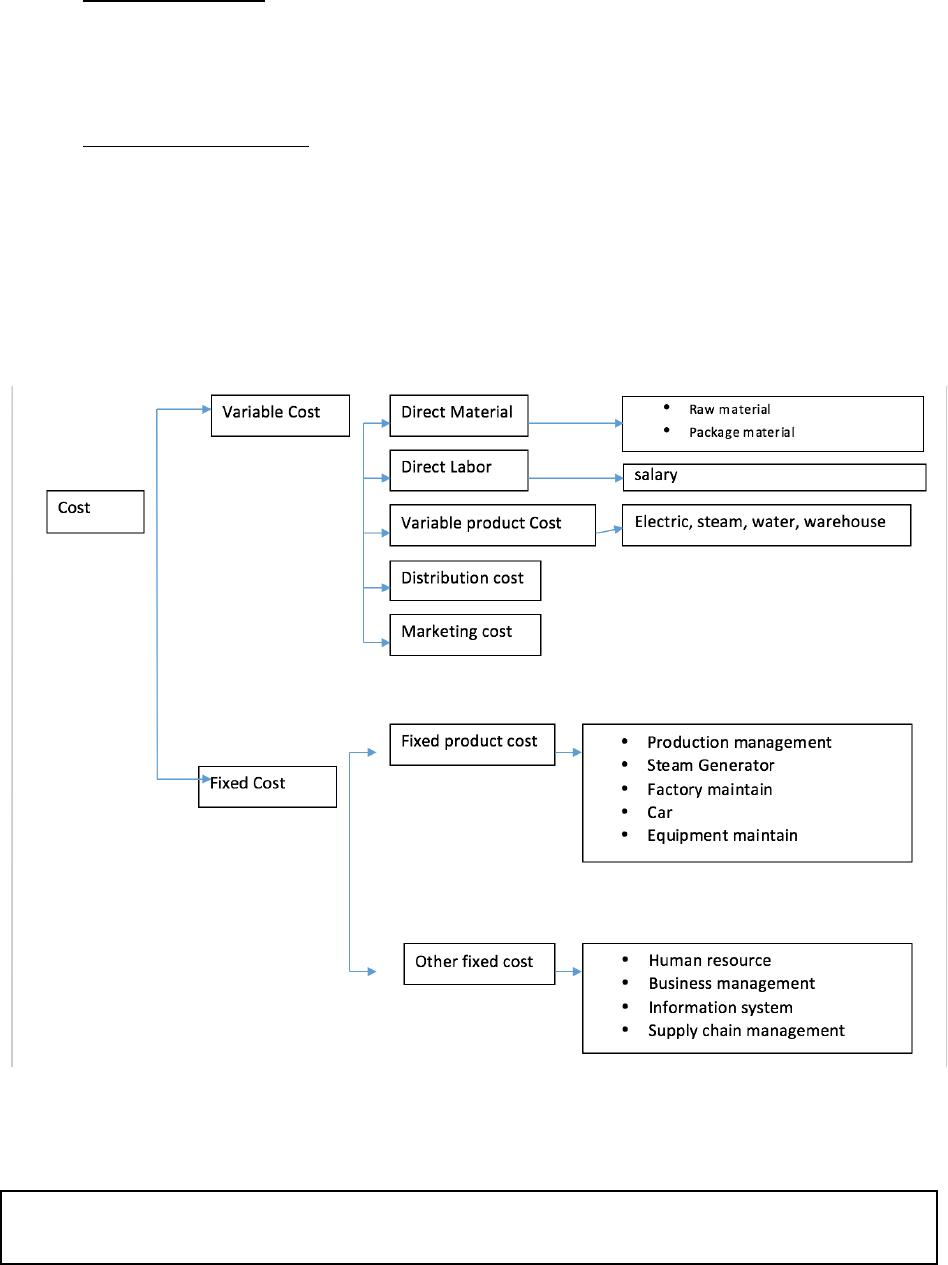
Below is an image to show how these terms relate to the Fine Foods case.
Memorandum for Part 1:
To: Colleagues and Management of Fine Foods
From: Nicole Snyder and Cindy Chang
Fine Foods Case Study 5
Date: March 18, 2017
Re: Analysis of current product costing approaches
Dear Coworkers,
It has come to our attention that the current product costing process at Fine Foods is as
follows:
1. All costs are allocated to the products.
2. Direct calculated costs are added to the product including raw material, packaging
material, and direct production salaries.
3. Costs that are incalculable called variable manufacturing costs are added based on
estimates.
4. Fixed production costs, aka overhead, are allocated to the entire factory if they use
this service by either product group or individual products based on selling weight.
Current Concerns:
● Many of the fixed costs are allocated based on product weight which is unfair for
products with a higher density such as special order item MP.
● Power, steam, water and warehouse costs are allocated based on an estimation.
Overestimation could inaccurately cost products, such as MP.
● Special orders are sometimes accepted when capacity is already met within the
production departments.
● Currently, top management costs such as business administration and information