UH BAUER SCHOOL OF BUSINESS – STUDENT PROJECT
Holocaust Museum Houston, Time Tracker Application
Business Case Documentation
Carl Scott
10/2/2013
Contents
Executive Summary ……………………………………………………………………………………………………. 2
Introduction ……………………………………………………………………………………………………………….. 3
Alternatives ……………………………………………………………………………………………………………….. 4
1. ClickTime ………………………………………………………………………………………………………… 4
2. Tsheets …………………………………………………………………………………………………………… 5
3. Toggl ………………………………………………………………………………………………………………. 6
4. Time Star …………………………………………………………………………………………………………. 7
5. MS Outlook Journal …………………………………………………………………………………………… 9
6. Access Forms…………………………………………………………………………………………………..10
7. Blackbaud ……………………………………………………….………………………………………………11
Analysis of Alternatives ……………………………………………………………………………………………….12
Alternative Requirements Matrix ………………………………………………………………………………..12
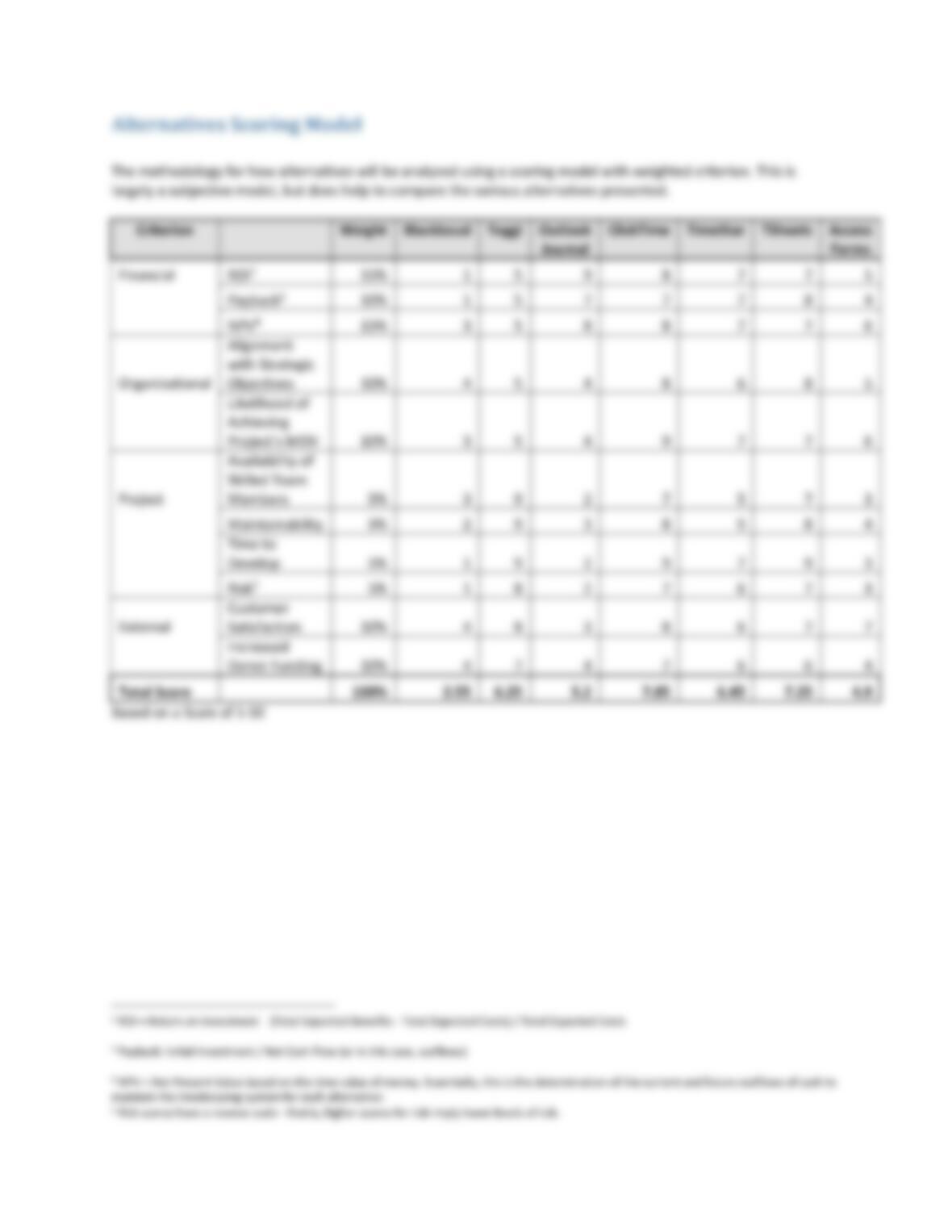
Alternatives Scoring Model ……………………………………………………………………………………….14
Proposed Recommendation …………………………………………………………………………………………16
ClickTime ………………………………………………………………………………………………………………16
Executive Summary
The Holocaust Museum Houston would like a simple, user-friendly application to track employee time against
HMH projects. The organization is new to time tracking and sees opportunity to streamline and automate the
process from current manually entered and independently maintained Excel spreadsheets.
This technology enhancement aligns with the organizations goals to obtain more grant income. Reporting
employee time against projects will increase the organizations’ charity rating, thus increasing grant income. The
less overhead required in maintaining this reporting process, the more measurable organizational value will be
achieved. This project will decrease employee waste on timesheet activities, increase timesheet reporting
accuracy, and build business intelligence capabilities for more efficient operations.
The project considered several solution options and performed alternatives analysis on stand-alone time tracking
applications as well as add-on options to existing HMH implemented software applications. The stand-alone
applications considered include:
• TimeStar
• Tsheets
• Click Time
• Toggl
The stand-alone application options offer mobile, cloud-based services but not fully integrated with the Financial
Edge financial reporting application utilized by HMH.
The existing software add-on solutions considered include:
• Access Forms
• MS Outlook Journal
• Blackbaud PlugIn
The software add-on options offer a familiar platform increasing user acceptance, and easier, consolidated
integration with FinancialEdge and existing maintenance provider plan but found to have high upfront
customization and implementation costs. Each user, business and functional requirement was assigned a
sensitivity rating, weighted risk and evaluated against each solution alternative.
Following this analysis, the project team found ClickTime most appropriately satisfied the project requirements
and recommends moving forward with implementation. This solution had highest user and functional
requirements ratings and least risk of schedule and budget overruns with the best chance for user acceptance.
ClickTime basic meets all of the requirements and many of the items on HMHs wish list. Based on other similar
options described in this document, the one thing that separates ClickTime from the rest is the premise that it was
built with Non-Profit project time keeping and fundraising in mind. All others were born from small business.
Introduction
The Holocaust Museum Houston having previously worked with University of Houston, approached UH MIS
Department after implementing a new process to track time against project work into the organization. These
implemented changes coincide with a shift in the Executive Director role. The Executive Director seeks to improve
the charity rating of the organization with accurate time tracking against projects. HMH members involved on the
project include Ira Perry, IT Manager, Tracey Daniel, Controller and Tamara Savage, Public Relations.
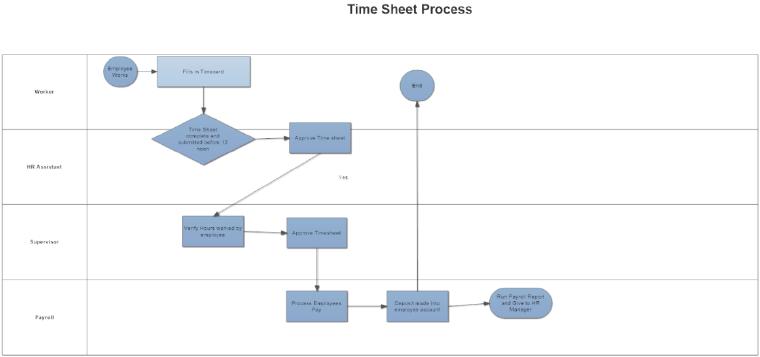
Currently, HMH supports a 20 person staff using Excel spreadsheets to individually document and save to a share
drive. There are two reporting pay periods per month, which are not based on a 40 hour work week, and a
spreadsheet template which consists of time period, date, employee name, Project #, Project Description, and
time entry fields. There is no auto populated Project Codes or Department codes provided in spreadsheets or
automated report roll-up or report generation. Another separate project summary spreadsheet is populated
manually and provided to Admin for import into the BlackBaud Financial Edge application.
The organization having never tracked time sees opportunity to streamline the reporting process. They would like
entries documented in a single, central repository and implement automated reporting, if not automated
integration with Financial Edge. The current process is labor intensive at user level, lacking domains, and labor
intensive at the manager level with roll-up and reporting.
The project’s measurable organizational value (MOV) is predicated on more accurate and less time consuming
project tracking, and building business intelligence capabilities for more efficient operations. Improved accuracy
will lead to better reporting and increased charity rating, leading to increased donor funding, which is in alignment
with the Executive Director’s organizational goals. This will also cut overhead costs with less employee waste on
timesheet activities. Reducing the reporting manager’s effort from 5 minutes per card will result in $700/year
savings and reducing the employee’s timesheet activities by 2 minutes per card will result in $300 in for a total
estimate savings of $1,000. HMH will also be able to more easily track and analyze where time is being spent to
allow adjustments as needed for more efficient allocation of resources.
The Business Case Documentation will communicate a common understanding of the business needs and
alternatives considered for a tracking application at HMH. HMH can then verify these requirements and consider
our analysis in making their decision.
Alternatives
The following is a list, and brief description, of the alternatives researched and selected to provide the best
opportunity to meet the requirements for a project time tracking application as stated by HMH. Each alternative is
listed in descending order of potential best fit, beginning with the most viable option based on objective and
subjective analysis.
1. ClickTime
ClickTime Basic is a web-based service that provides easy time tracking and resource management for all levels of
employees. Users can enter time either directly online or on their desktops for automatic upload when the user
goes online. Managers can run reports on employees, clients, jobs, and tasks.
Benefits for Organizations
• Generate reports to show grant-makers and funders the specific results of their projects
• Calculate the wage cost of projects or initiatives
• Detail the total proportion of each person’s time dedicated to a particular project
• Predict staffing headcount required to execute prefunded projects
Major Capabilities
• Simple time-entry interface: The web-based timesheet simplifies entering time and descriptive notes at
the task level.
• Reports: More than 50 reports can be run and are built into ClickTime.