Cao 1
Bin Cao
Professor John J. Capka
FIN 2100 – Financial Management
26 March 2016
Financial Statement Analysis Project
Fin 2100 – Spring 2016
Companies Profiles
The companies I chose for comparing and contrasting some financial ratios and further
made some meanings are Merck & Co Inc. (MRK) and Johnson & Johnson (JNJ.N). These two
companies are the health care industries and operate globally. Merck was incorporated on 1970
and focused on the fields of pharmaceutical and animal health. Johnson & Johnson was
incorporated on November 10, 1887 and engaged in the fields of consumer, pharmaceutical, and
medical devices.
Total Debt to Equity
The total debt to equity ratio, focusing in the angle of the capital structure of a company,
shows the meaning of how much of a company’s assets are financed with borrowed money
(bonds and preferred stock) and how much are financed by the owners (common stock). The
decisions about a firm’s debt-equity ratio also is named capital structure decisions. Likewise, this
ratio is an indication of how much financial leverage uses by a firm. The financial leverage refers

Cao 2
to the extent to which a firm relies on debt. The more debt financing a firm uses in its capital
structure, the more financial leverage it employs, and the more risk the owners face since the
EPS and ROE are much more sensitive to changes in EBIT. Alternatively, the lower the debt-
equity ratio is, the smaller amount money borrowed is used to make profit, the smaller the
financial leverage the firm uses. If a firm’s debt-equity ratio is 0.25 that would mean 20 percent
of the firm’s assets are financed with borrow money. For the health care industry, 8.88 percent is
the average debt-equity ratio (note that leverage ratios of www.reuters.com are expressed as
percentages). This average indicates that, in the health care industry, the average firm finances
about 8.16 percent of its assets.
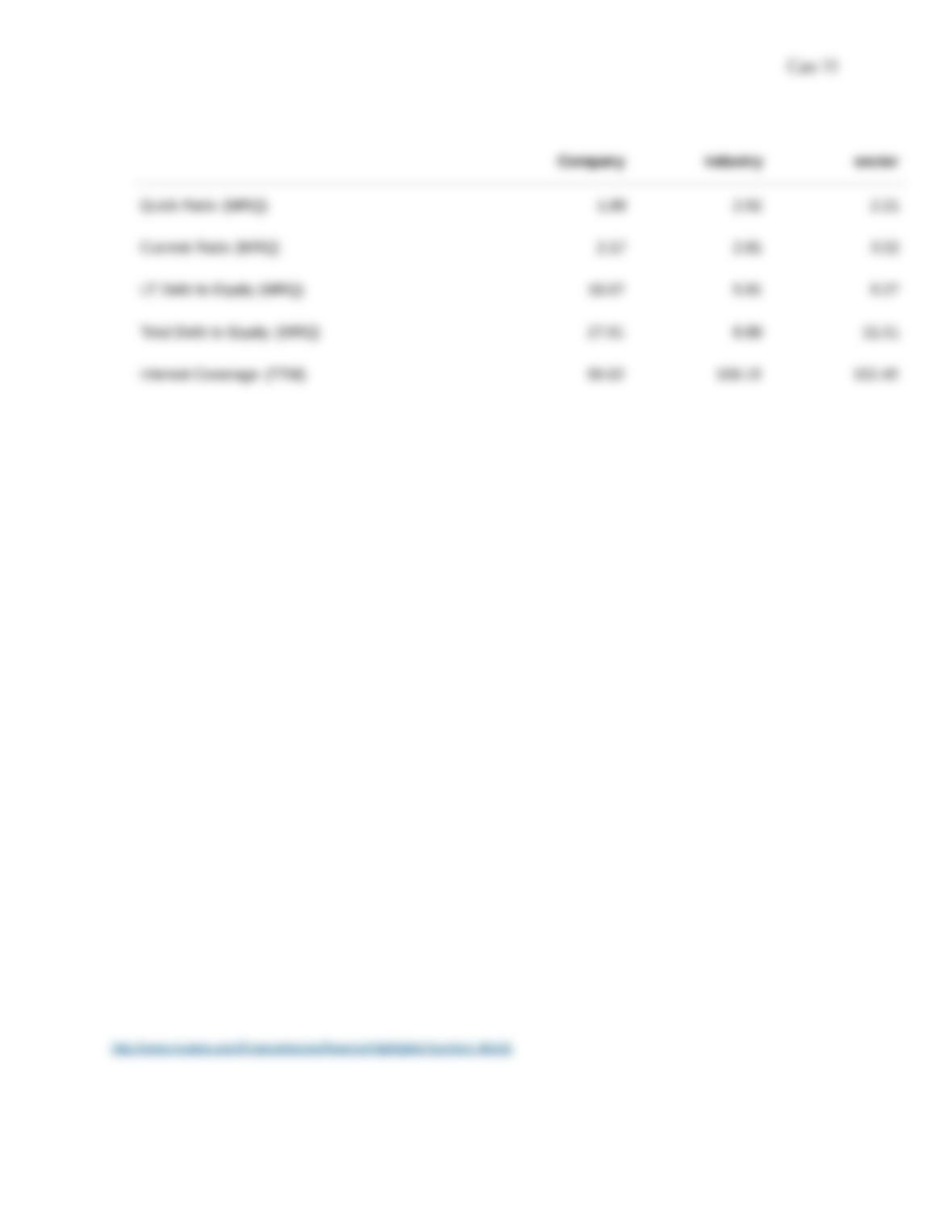
The Merck’ debt-equity ratio is 59.36 that indicates 37.25 percent of its assets are financed with
borrowed money. This ratio is beyond the industry average a lot and indicates Merck has used
financial leverage much more than the average industry used. Johnson & Johnson’s debt-equity
ratio is 27.91 that means 21.82 percent of its assets are financed with borrowed money. This ratio
is also above the industry average a lot and indicates the higher financial leverage than average
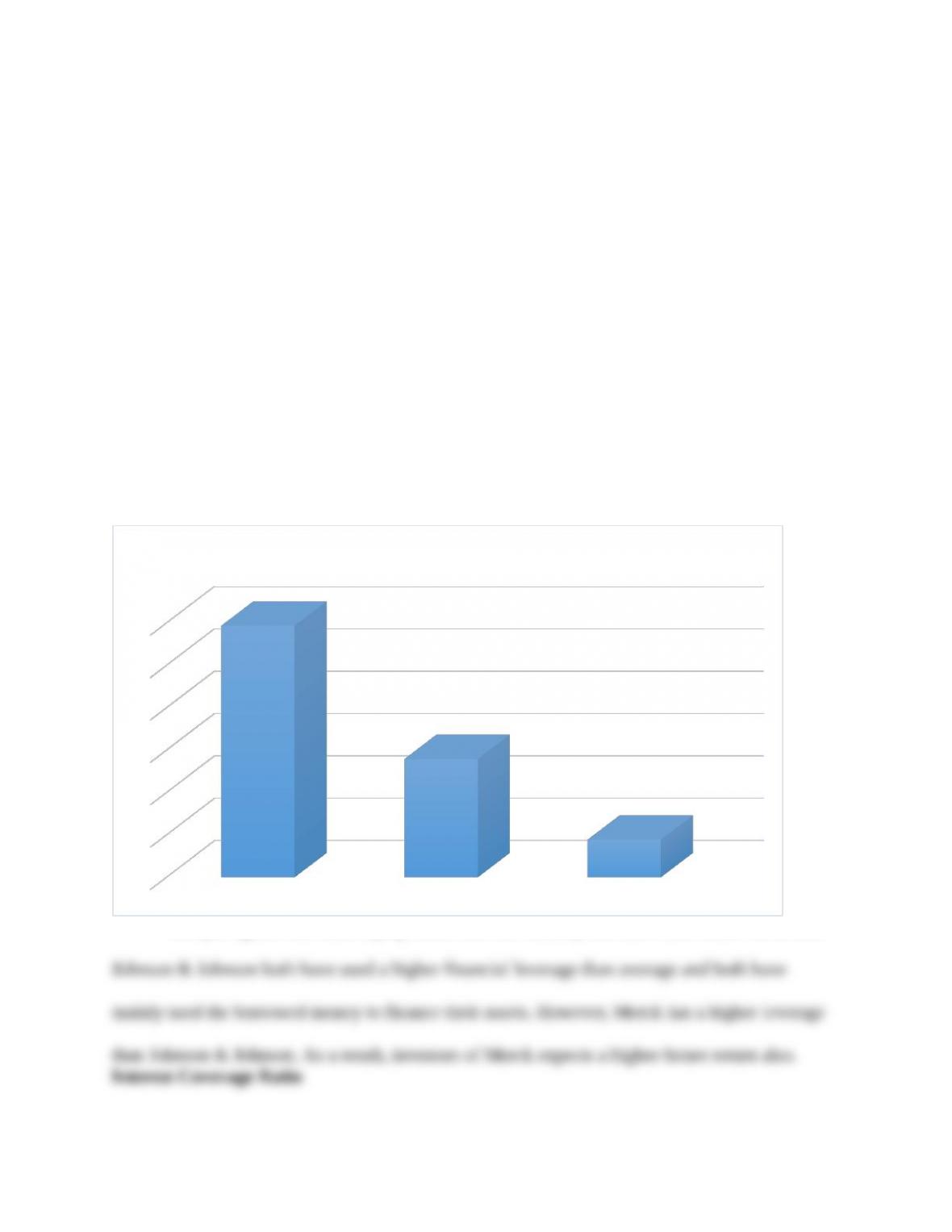
Cao 3
that Johnson & Johnson has used.
Merck Co Inc Johnson & Johnson Industry
0
10
20
30
40
50
60
59.35
27.91
8.88
Total Debt to Equity
Comparing the total debt-equity ratios with the industry and each other also, Merck and