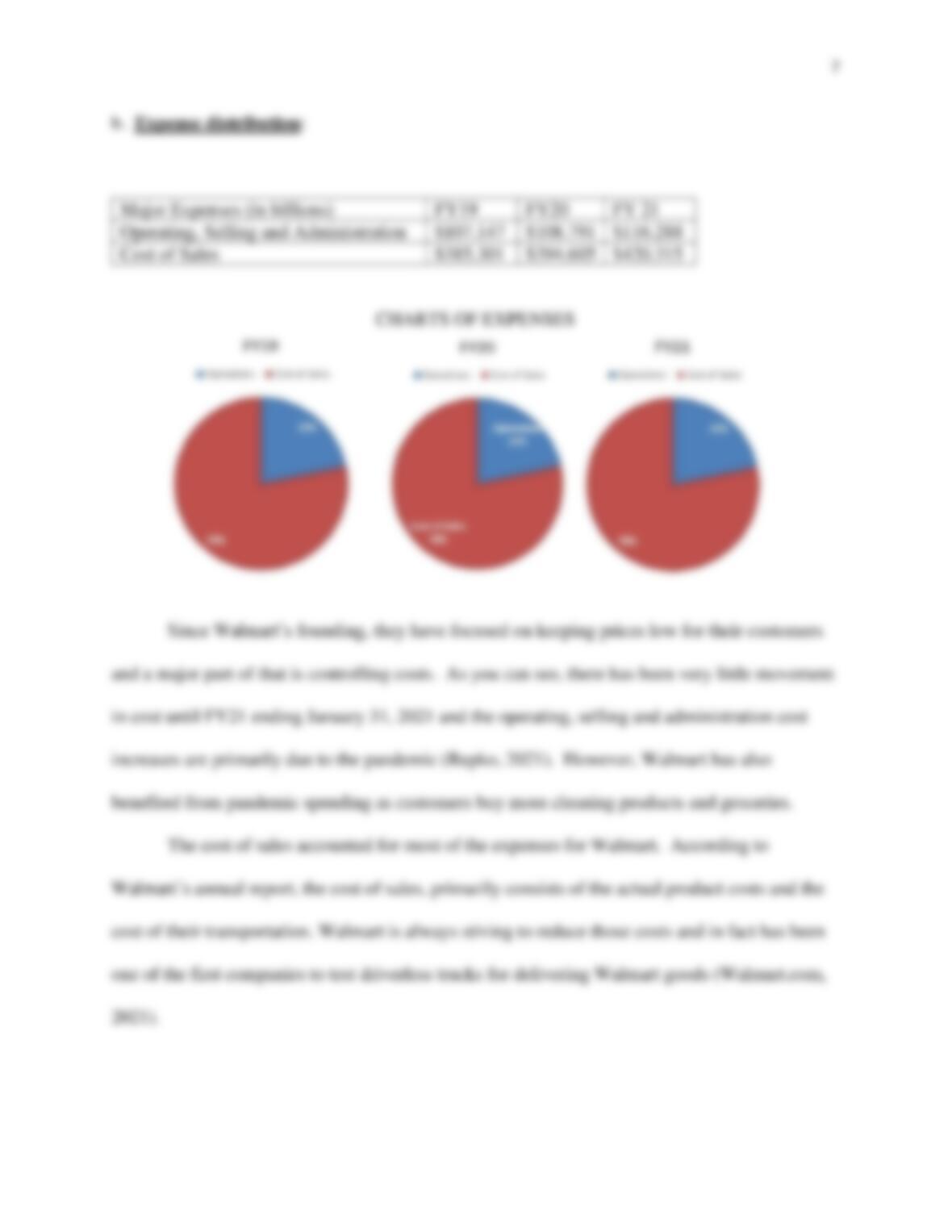
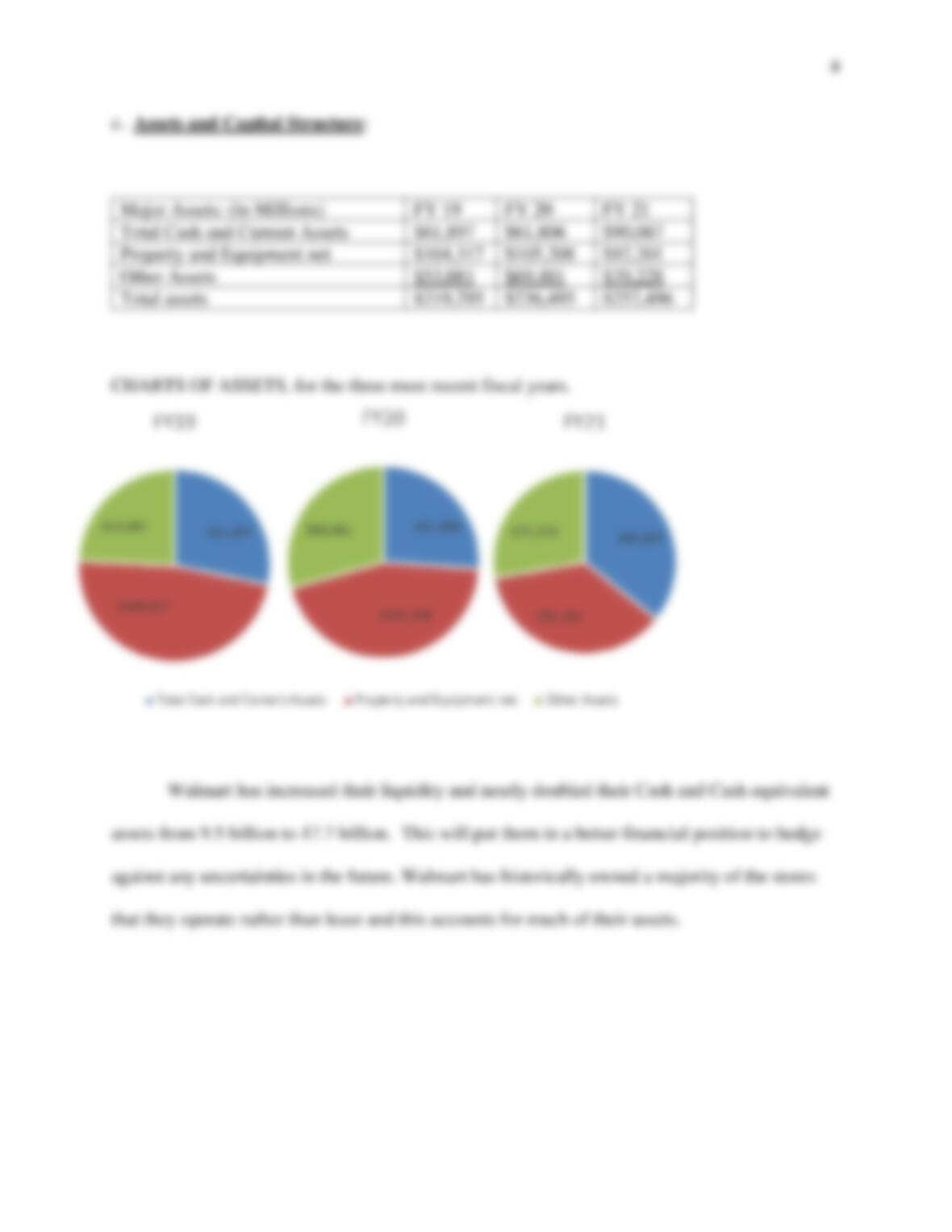
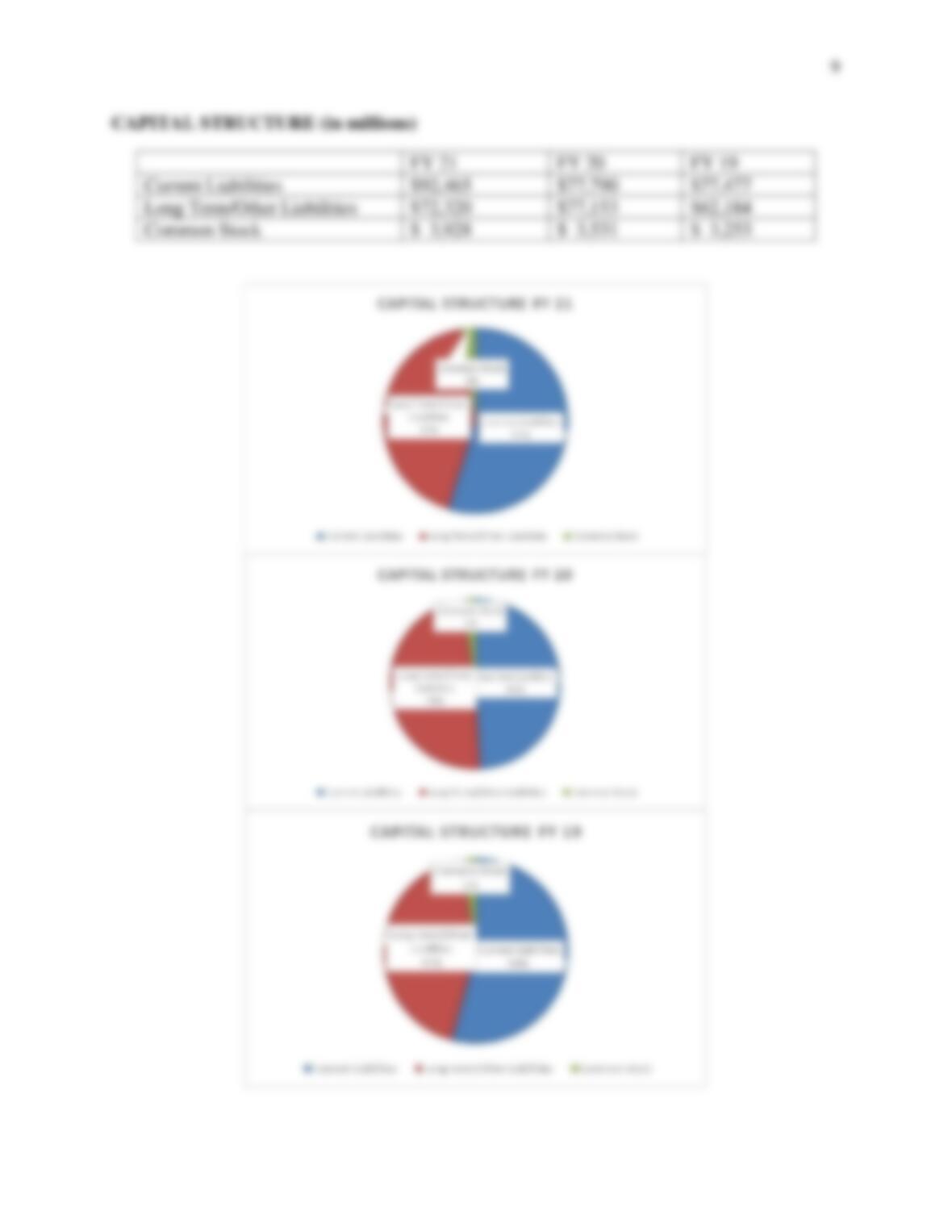
1
Financial Analysis of the Walmart Inc. Company
702 S.W. 8th Street, Bentonville, AR, (479) 273-4000
Webster University
FINC 5880: Advanced Corporate Finance
May 12, 2021
2
PART I, INTRODUCTION
Sam Walton started Walmart in 1962 in the town of Rogers, Arkansas after having ran a
successful dime store for 12 years in Bentonville, Arkansas (Walmart.com, 2021). Walton’s idea
was to create a store based on lower prices and better service. The Walmart business grew and
eventually went public in 1970 to fund further expansion. Currently Walmart is the largest
private employer and employs 2.2 million people in 25 countries. Sam Walton also opened the
first Sam’s Club membership warehouse store in 1983 to compete in the warehouse club market
for business customers.
Walmart operates in the “General Retailers” industry, however due to their competition they are
also trying to grow their presence in online retail sector. Walmart also has vast real-estate
holdings and owns about 85% of their 5,542 properties in the U.S. and can generate rental
income from other co-located businesses in their stores. The number one selling item at Walmart
has been bananas since at least 2013 and they sell more than 1 billion pounds every year.
According to their Securities and Exchange Commission (SEC) filings as of March 2021
Walmart had 2.817 billion shares of common stock outstanding and no preferred stock. They
have bought back and retired 150 million shares in the last 3 years. The board of directors also
recently authorized another share buy-back program of up to 20 billion dollars.
Walmart Inc.’s primary U.S. competitors are Costco, Target, Dollar Tree, Kroger and of course
Amazon Inc. Although Amazon is focused more in the online retail sector, they are considered
the primary competitor to Walmart. Amazon has been steadily gaining market share from
Walmart and has even entered the retail grocery space with the acquisition of Whole Foods. In
3
my opinion Amazon is not a good comparison due to their Amazon Web Services operations
which averages a 35% profit margin compared to the retail industries average profit margin
being under 5%.
Walmart has been expanding into the online retail business by growing their primary website of
Walmart.com, but they have also been acquiring online retail companies including Moosejaw,
Flipkart and Jet.com. Walmart was also able to move even more into the digital realm by buying
a 7.5% stake in the social media company TikTok Global (Sozzi, 2020). This will allow Walmart
to use the data collected by TikTok to better plan their inventory and market products to younger
customers.
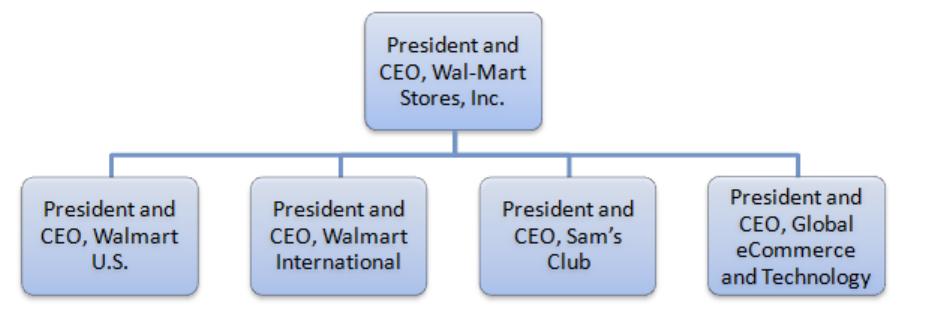
Walmart Inc. has five CEOs as shown above and a hierarchical organizational structure. This is
almost out of necessity due to the size of their operations. Walmart with their 2.5 million
employees is only slightly smaller than all uniformed military personnel in all branches including
reserves of the U.S. Armed Forces.
4
Due to Walmart’s acquisitions and operating model, they can be classified in multiple industries.
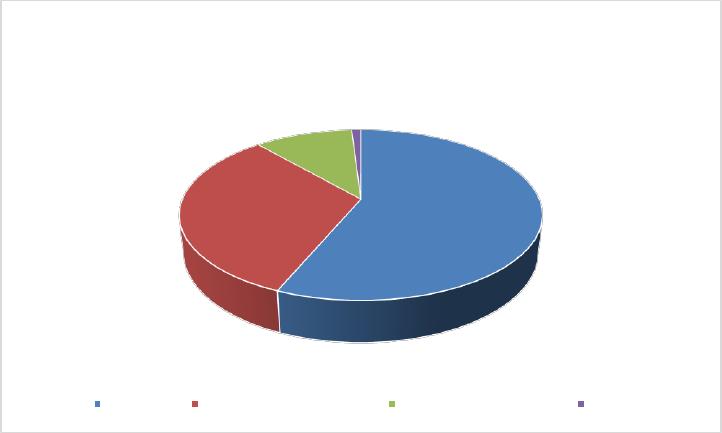
Surprisingly, according to their sales distribution by category below, Walmart sells the most
products in the grocery section.
As you can see, the general merchandise category is the next greatest category behind groceries.
Therefore, I also plan to use the “Warehouse Clubs & Supercenters” industry for some of my
comparisons.
$208,413
$119,406
$38,522 $3,622
FY21 Walmart U.S. Net Sales by Category
(in Millions)
Grocery General Merchandise Health and Wellness Other
5
PART II, FINANCIAL ANALYSIS
(Walmart’s fiscal year starts on February 1st through January 31st the following year.)
a. Sales and Income Record: (in Millions)
—————– Fiscal Years —————————
2015 2016 2017 2018 2019 2020 2021
— Sales 482,229 478,614 481,317 495,761 510,329 519,926 555,233
— Percent change in
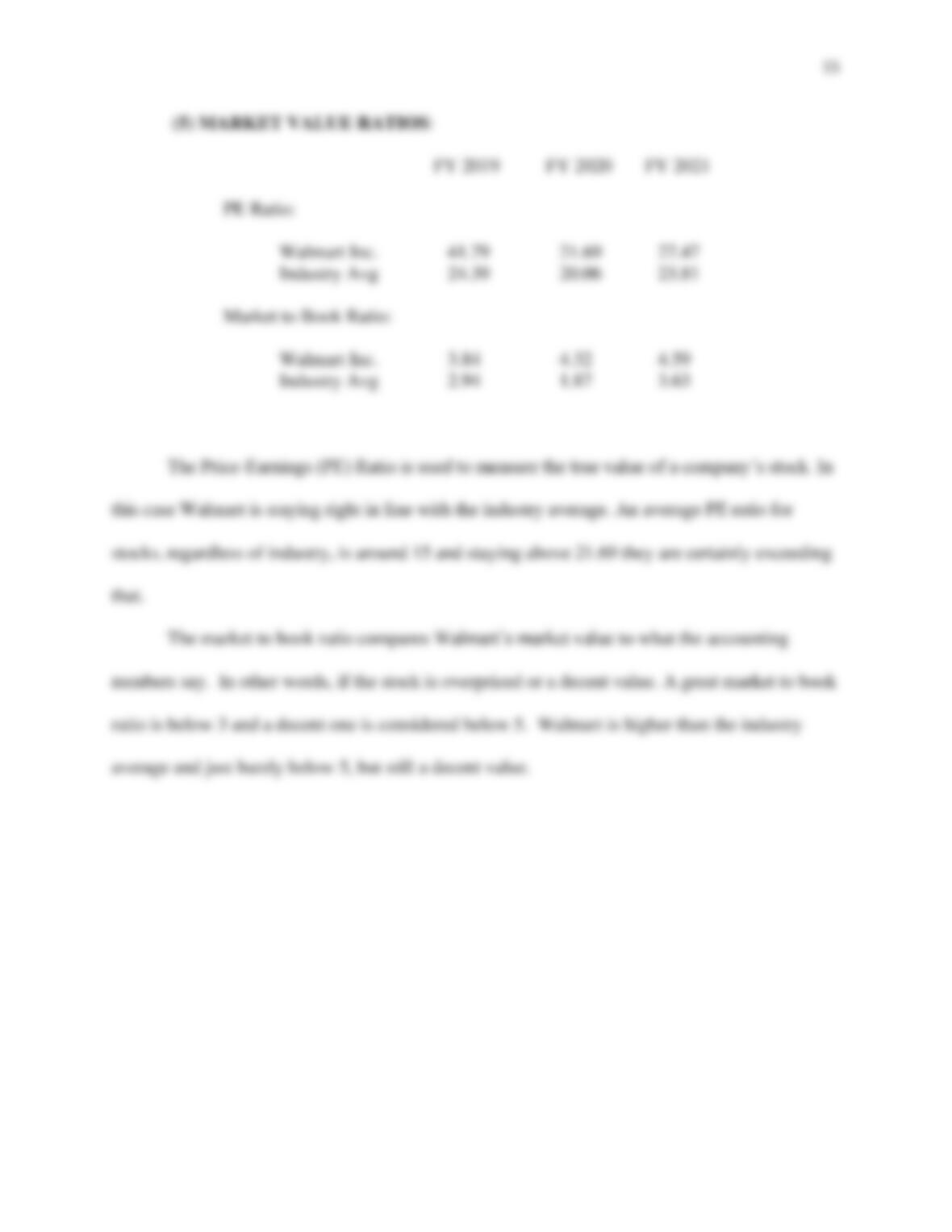
sales each year -0.8% 0.6% 3% 2.9% 1.9% 6.8%