AD1101 Financial Accounting – Seminar 9 (Group 6)
Liabilities
Bharade Aditi
Derrick Tan Rui Yang
Ng Shang Yu
Wong Yan
Yeo Wen Qing
#WKWPride

01
Content summary
A quick recap on the
week’s content
03
SEMINAR QUESTIONS
Presenting our answers to
Seminar Questions Set 9
02
Kahoot!
Best part of our
presentation
04
CONCLUSION
A brief conclusion to our
presentation
ACTIVITIES OF A BUSINESS
3
investing
The purchase of
long-lived assets
which generate future
cash flows
2
financing
Transactions/events
through which the
business obtains its
resources
1
operating
The core of the
business, and its
day-to-day operations
Where does the entity get its money from?

SOURCES OF FINANCING
1. Debt Financing
2. Equity Financing
–Through Retained Earnings
–Through Common Stock
Debt instruments
An entity borrows funds in
exchange for an obligation to
pay (borrowed funds) in the
future, with interest
E.g.: Bonds,
(Trade/Accounts/Notes) Payables
Equity instruments
An entity issues shares or taps
into retained earnings
(earnings not paid out to
shareholders as dividends)
E.g.: Stock/shares
Debt vs equity instruments
vs
No dilution of existing shareholders’ ownership, and
company profits if returns > cost of borrowing
No legal obligation to distribute profits, and
profits can be reinvested into the entity
Solvency risks (inability to pay) leading to bankruptcy Dilution of existing shareholders’ ownership
Assets = liabilities + owners’ equity
Where the
company has
spent the
money on
(e.g.:
inventory,
land, holding
as cash)
CAPITAL STRUCTURE
How much of
the money is
taken from
third parties?
OR
How much is
owed to third
parties?
How much of
the money is
taken from
shareholders?
OR
How much is
owed to
shareholders?
Assets = liabilities + owners’ equity
How a firm finances its overall operations and growth using different sources of
financing.
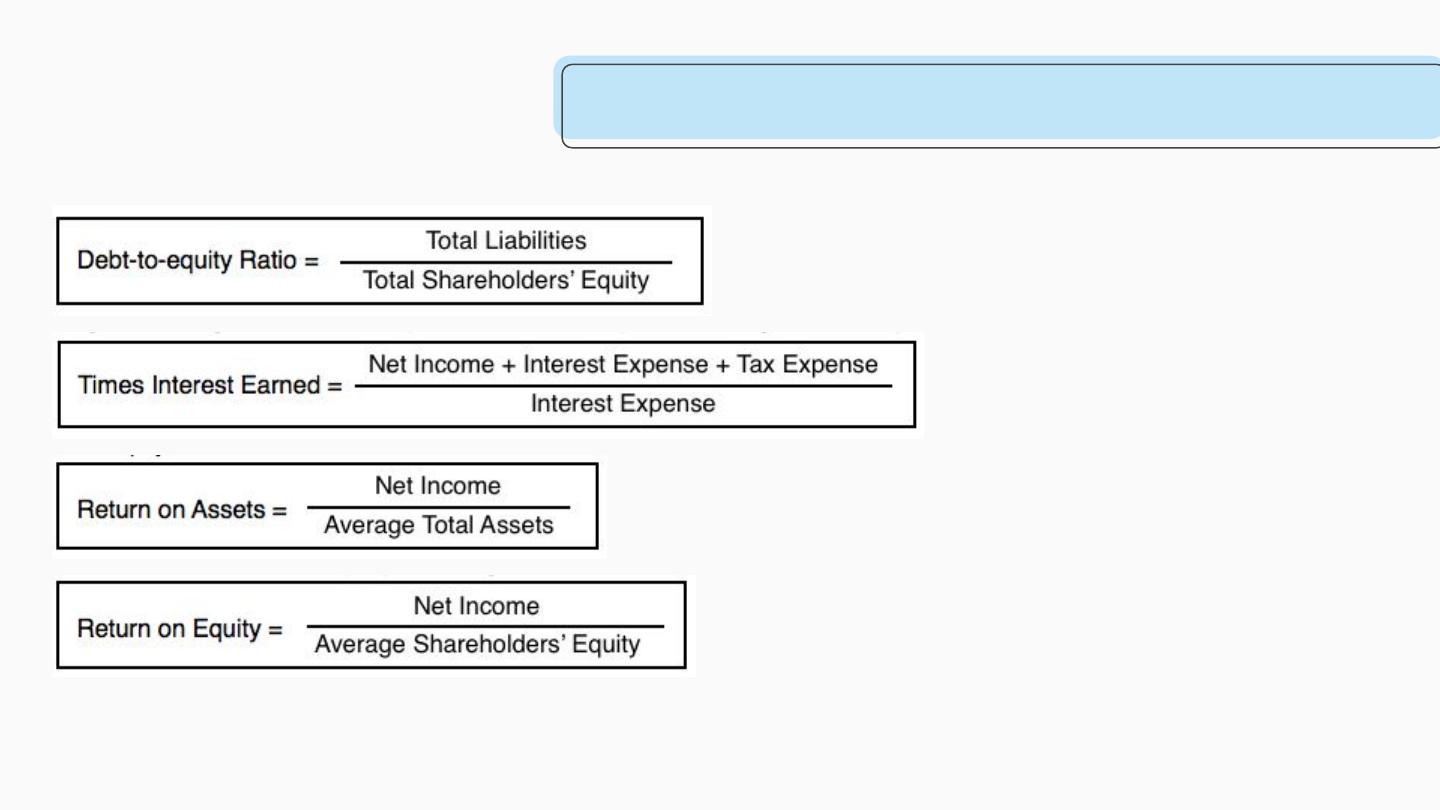
Indicates the proportion of equity and debt the company
has used to finance its assets
Measures the company’s ability to
meet its debt obligations
A FIRM’S CAPITAL STRUCTURE INDICATORS
Indicates how profitable a company is relative to its total assets. It
gives an idea of how efficient the management is in using its assets
to generate earnings.
Measures an entity’s profitability by revealing how much profit
it generates with the money that shareholders have invested
Obligations that an entity has to third
parties, which generally results in an
outflow of economic resources
LIABILITIES
OR
Third party’s claims to the entity’s
resources
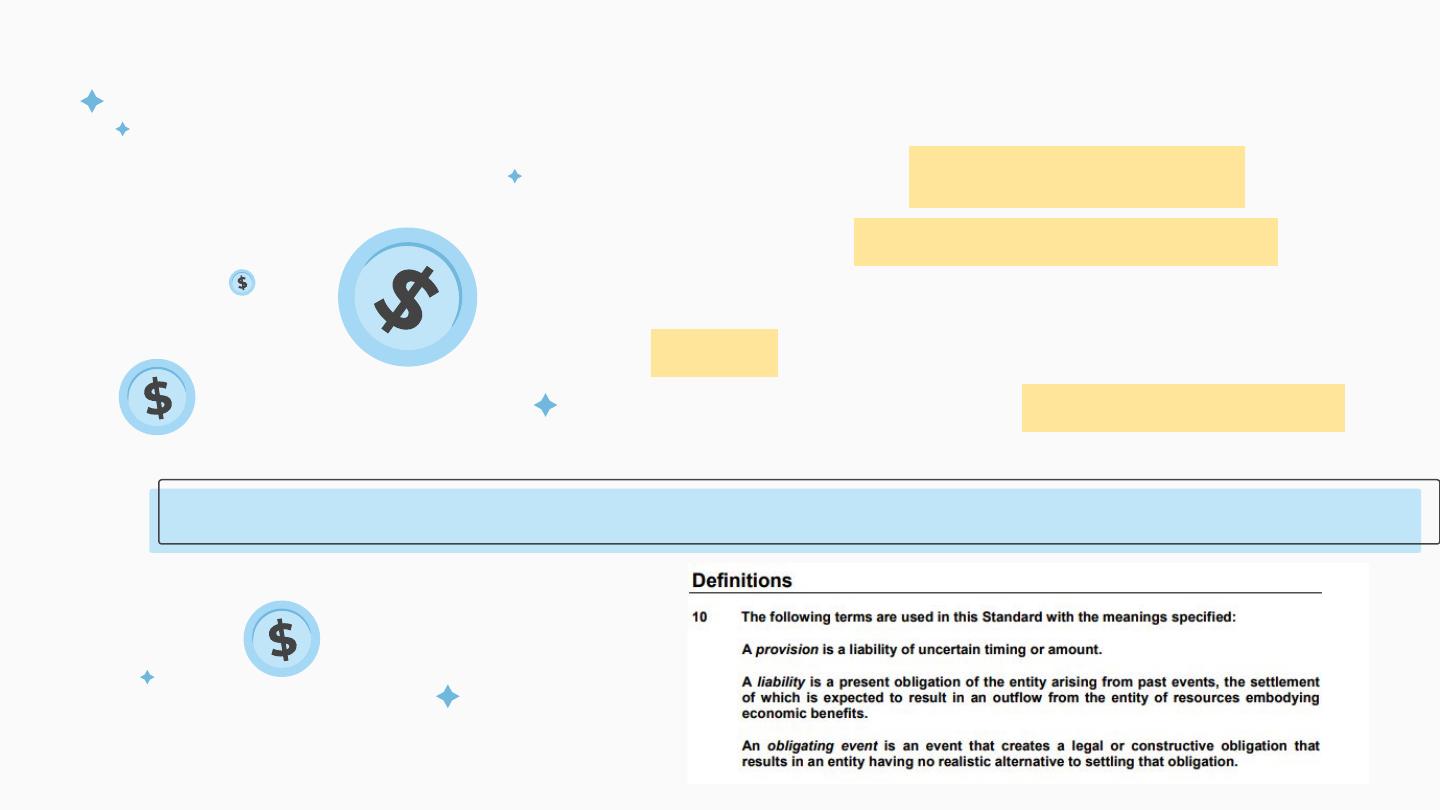
Liabilities are present obligations of the
enterprise arising from past events, the
settlement of which is expected to result in
an outflow from the enterprise of resources
embodying economic benefits.
FRS 37, paragraph 10
CURRENT LIABILITIES
–Company expects to settle within a normal accounting cycle
–Company holds the liability primarily for trading
–Liability to be settled within 12 months from transaction date
–Company cannot extend settlement of liability past 12 months
NOT A CURRENT LIABILITY?
non-CURRENT LIABILITIES
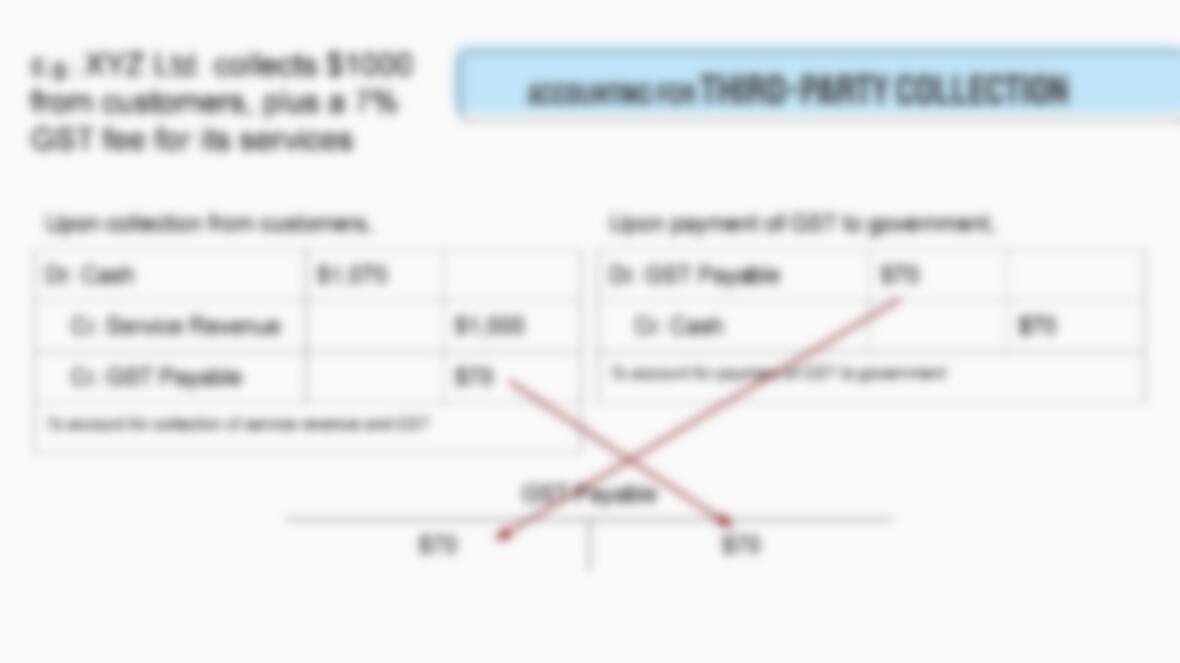
Payables Third-party collection
Collection on behalf of others (e.g.: GST)
Accounts/Notes/Trade/Loans payable
and leases etc.
Types of Liabilities
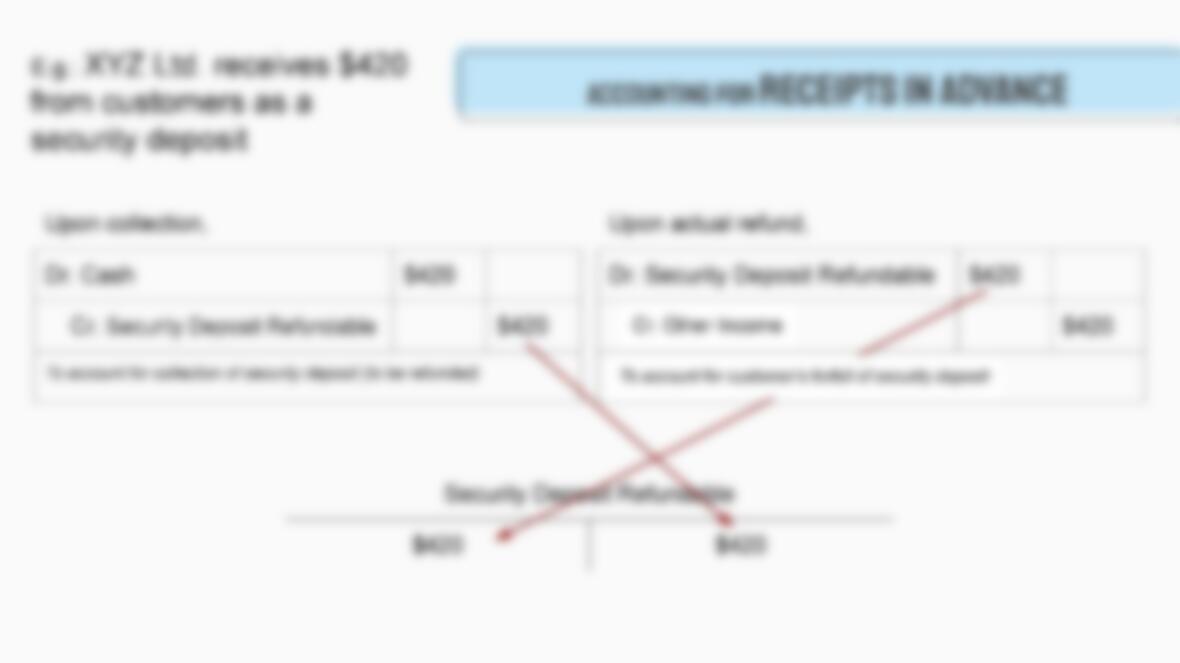
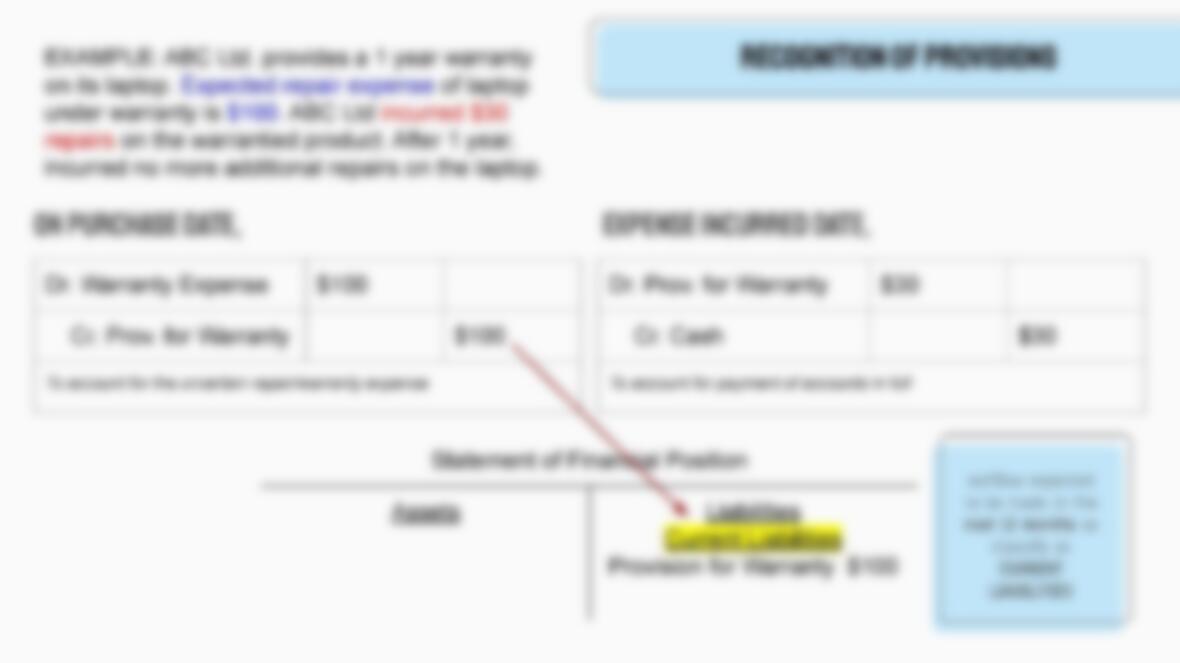
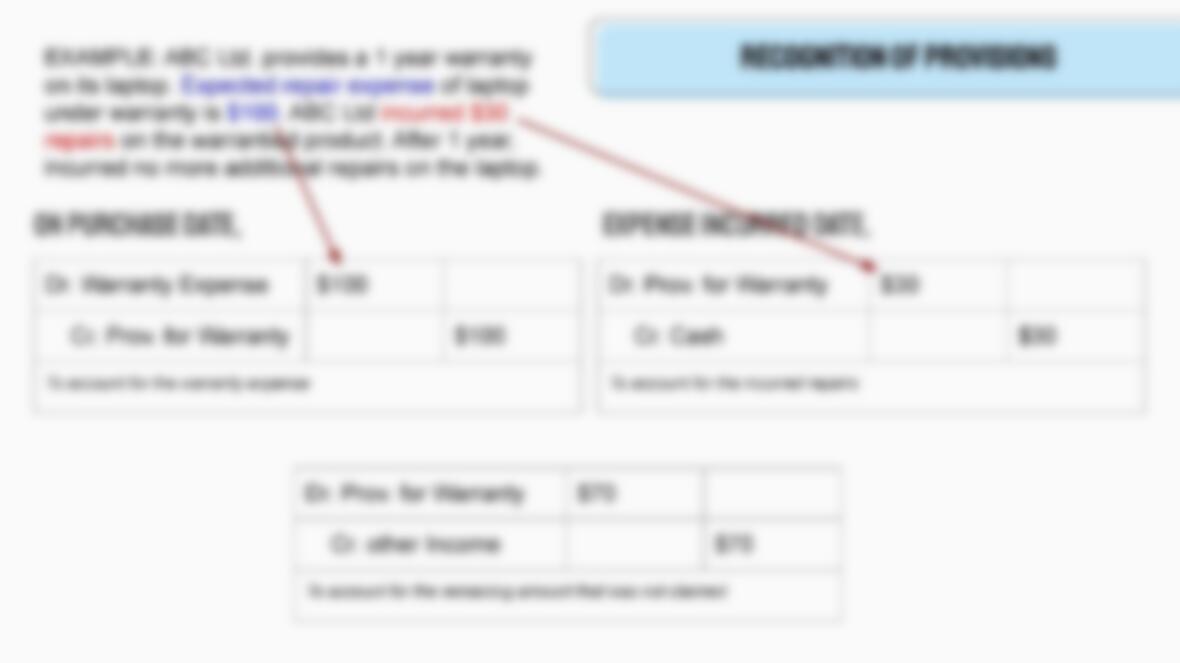
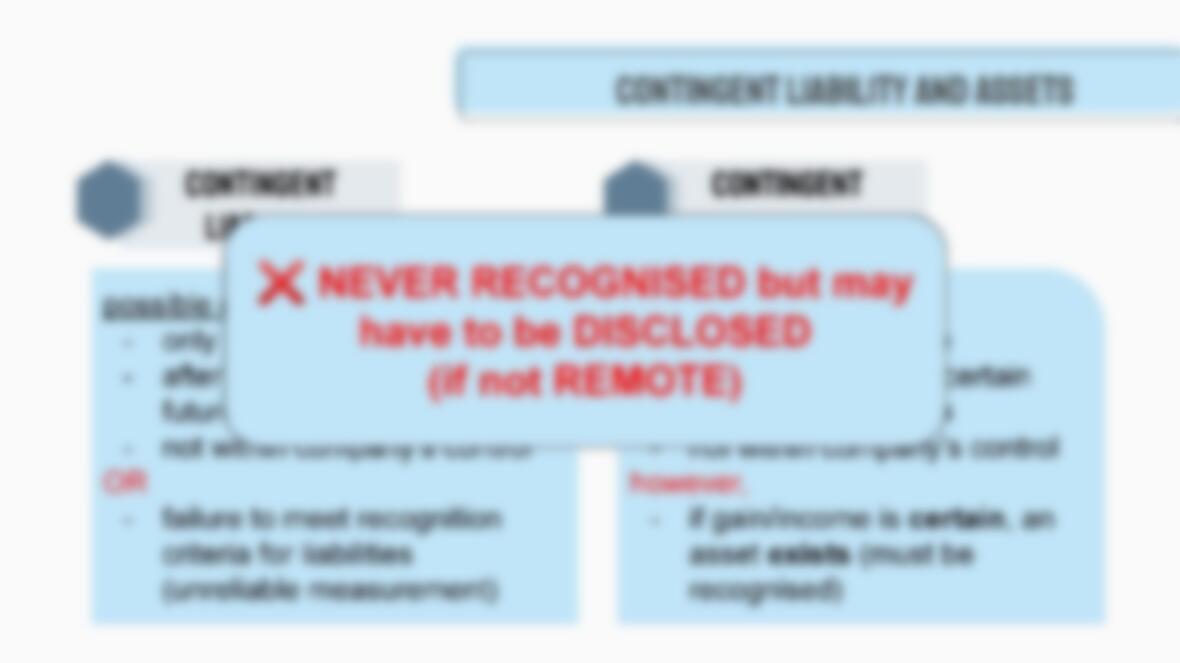
Receipts in advance Provisions & Contingencies
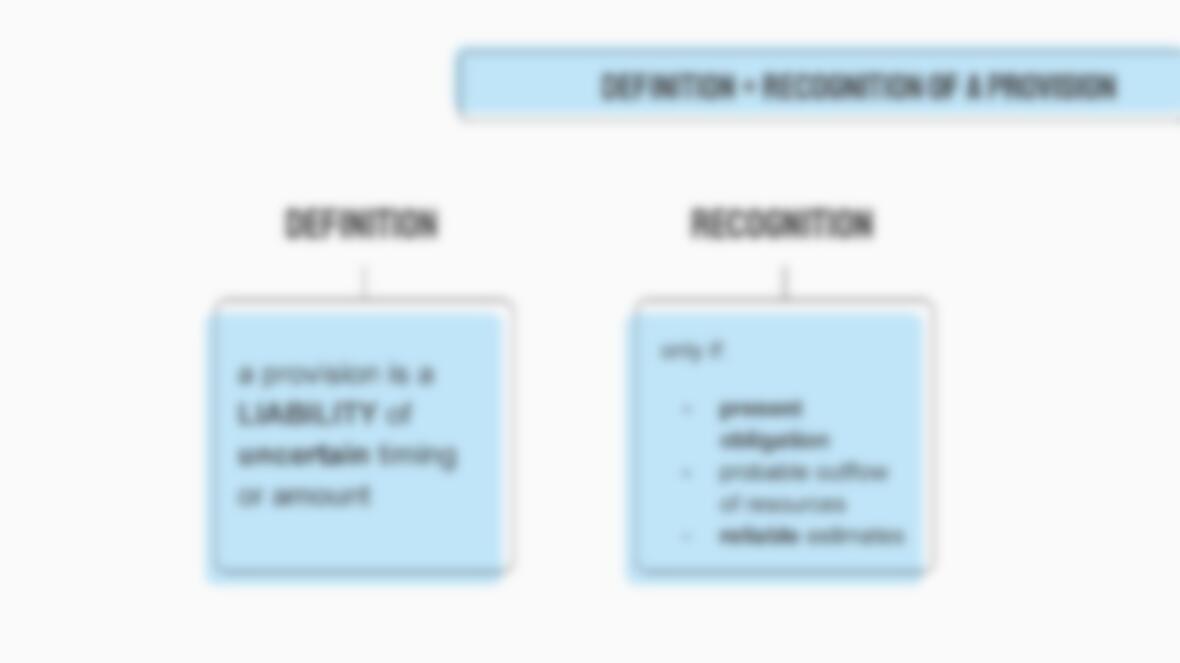
Liabilities of uncertain timing and amount
Deposits, unearned service revenue
etc.
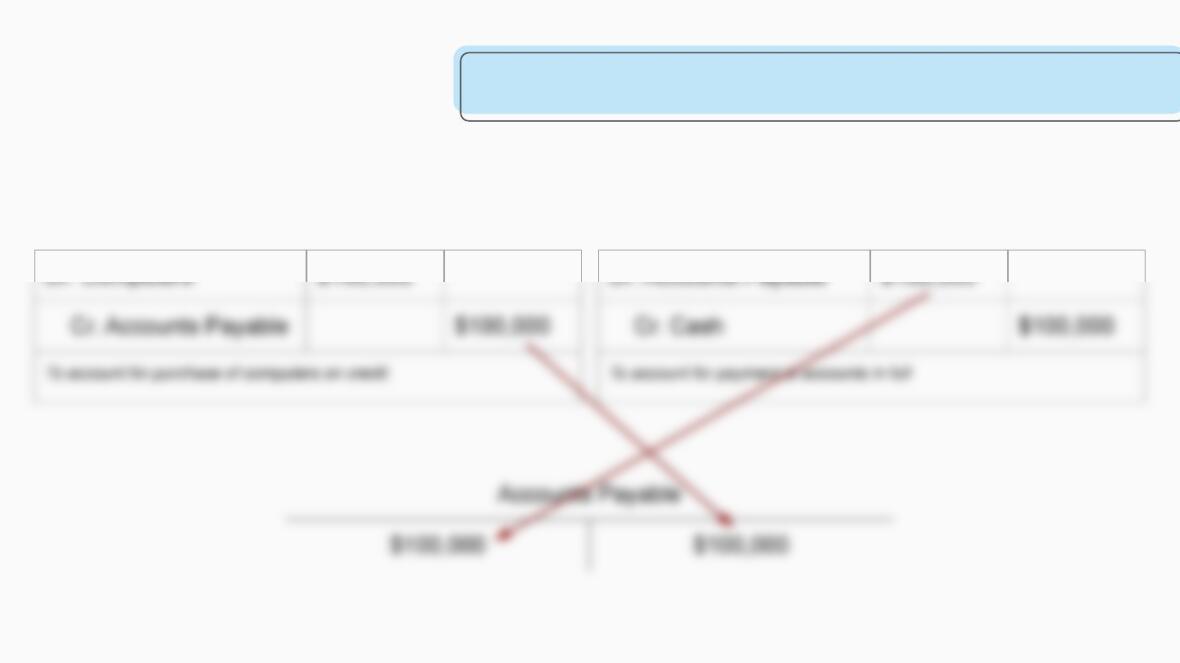
Accounting for PAYABLES
E.g.: XYZ Ltd. purchases 100
computers for $100,000 on
credit
Upon Initial Purchase, Upon payment of Accounts,