The Corporation
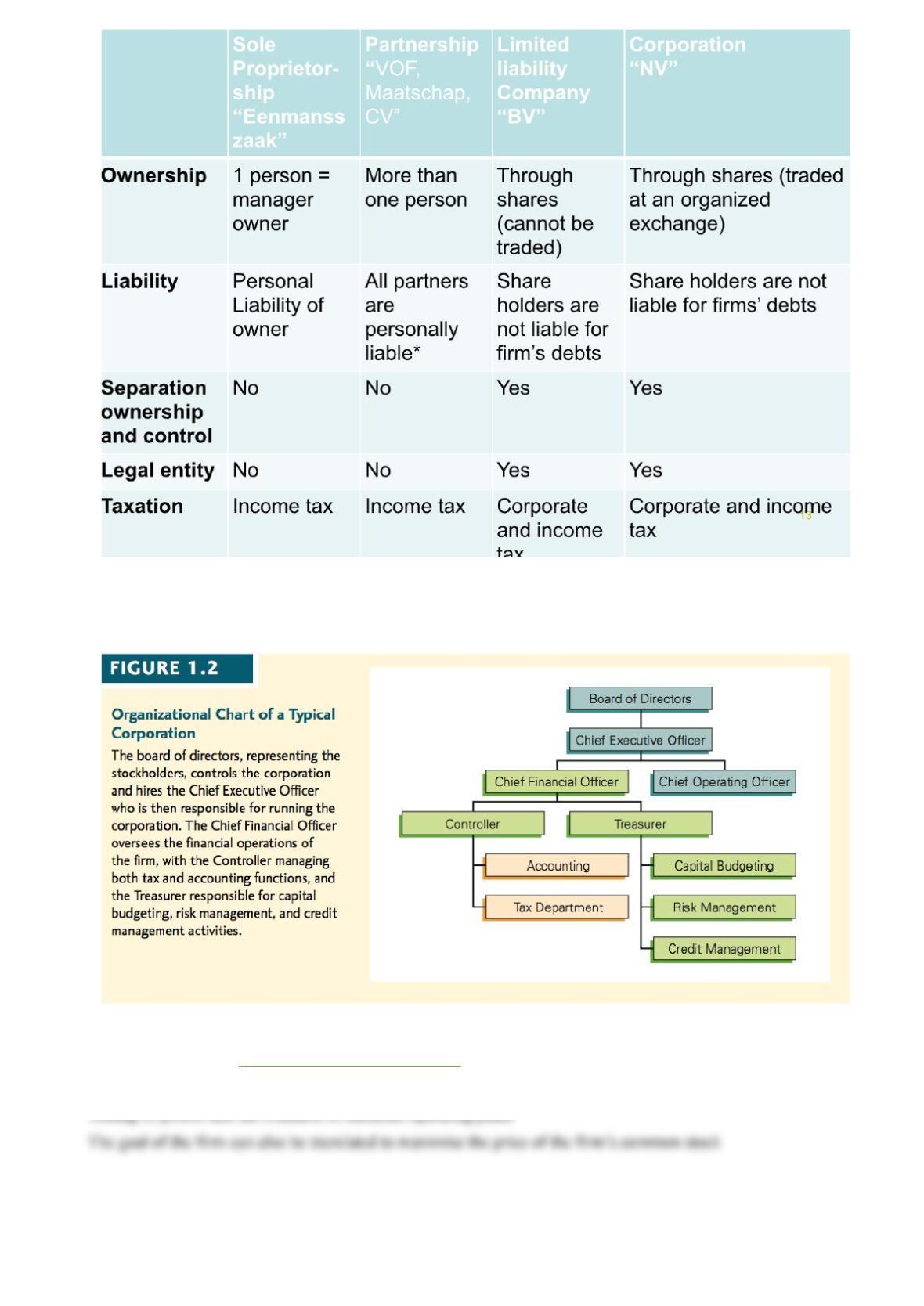
Four types of firms:
Sole proprietorship:
A business owned and run by one person
Key characteristics:
•Straightforward to set up (many new businesses use this organisational form)
•No separation between the firm and the owner — the firm can have only one owner
•The owner has unlimited personal liability for any of the firm’s debts — repay the loan from personal
assets
•Life is limited to the life of the owner, difficult to transfer ownership
Partnership:
Identical to a sole proprietorship except it has more than one owner
Key features:
•All partners are liable for the firm’s debt
•Partnership ends on the death or withdrawal of any single partner
Limited partnership: the partnership with two kinds of owners, general partners and limited partners
General partners have the same rights and privileges as partners in a (general) partnership (Private equity,
company fund, personal liable)
Limited partners have limited liability — their liability is limited to their investment (Pension funds, no
personal liability)
A limited partner’s interest is transferable and has no management authority
Some old and established businesses remain partnerships or sole proprietorships. Usually these firms are the
types of businesses in which the owners’ personal reputations are the basis for the businesses.
Examples: law firms, groups of doctors, accoutring firms (Partnerships)
The first two types of firms: low cost of formation
Limited Liability Companies (LIC):
A limited partnership without a general partner
All owners have limited liability, they can also run the business
Corporations
It is legally defined, artificial being, separate from tis owners
Ownership of a corporation
The entire ownership stake of a corporation is divided into shares known as stock
The collection of all the outstanding shares of a corporation is known as the equity of the corporation
Shareholder have limited liability
The Goal of the firm: Maximise stockholder’s wealth
Profit maximisation does not reflect