11
School of Business
Administration
University of Miami
Capital Structure:
Taxes & Financial Distress
FIN 613

2
Notes Outline
In these lecture notes we will learn the background necessary
to choose the optimal capital structure of a firm based on tax
and bankruptcy considerations.
Specifically, in this lecture we will:
›Define capital structure
›Describe the conditions under which capital structure is irrelevant
›Analyze the effect of taxes on the capital structure decision
›Analyze the effect of bankruptcy costs/financial distress on the
capital structure decision
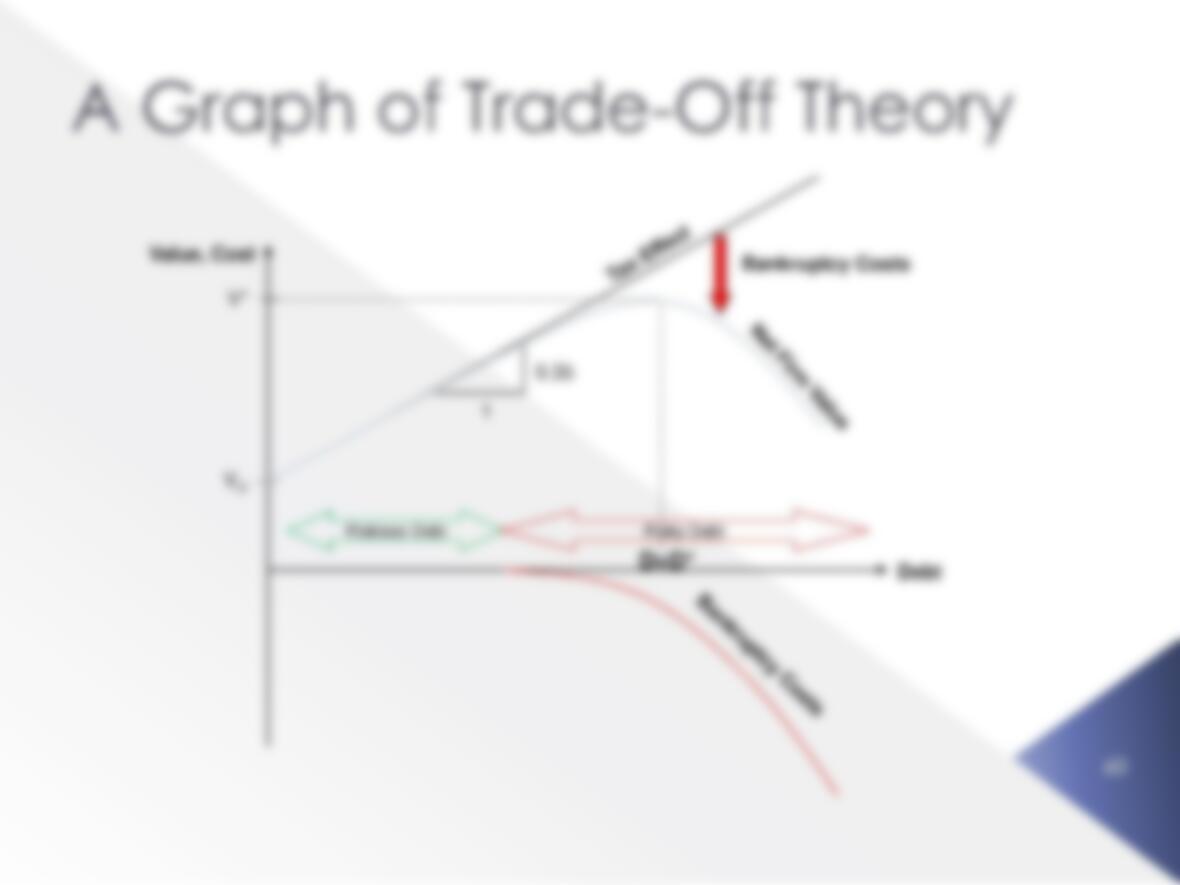
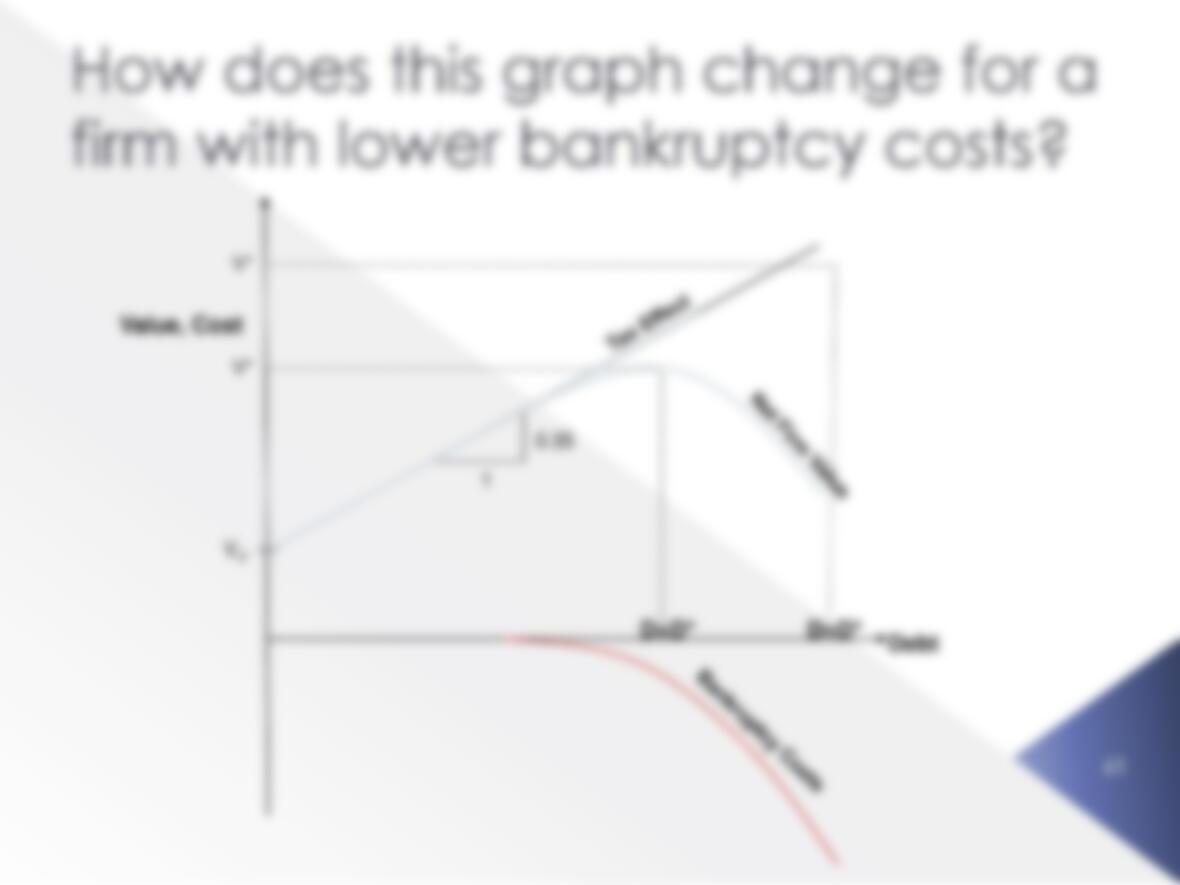
›Describe the (tax shield–bankruptcy cost) trade-off theory of
capital structure
›Make predictions of the (tax shield–bankruptcy cost) trade-off
theory of capital structure

3
What Is Capital Structure?
Capital Structure is the mix of different securities a firm uses to
raise capital
The optimal capital structure is the particular combination of
securities that maximizes the firm’s overall market value, its
Total Market Capitalization
›One goal of the CFO and Treasurer is to find the Optimal Capital
Structure
›We will focus primarily on the optimal mix of equity and debt
Capital Structure is one of the oldest—and still unsolved—
questions of modern finance
›In fact, one often hears that modern finance began with the first
economics-based theory of capital structure, the famed
Modigliani and Miller paper (1958)

4
The amount of debt in a firm’s capital structure is called its
leverage
Letting D be the market value of debt and Ethe market value
of equity, leverage can be measured as the ratio of debt to
value:
Or, debt to equity
𝐷
𝐷 + 𝐸 =𝐷
𝑉
𝐷
𝐸

5
Empirically, leverage is an
important consideration:
The average proportion of debt in the capital structure of
firms in the S&P 500 has been relatively stable, ranging 30-50%
of total capital for more than 35 years despite major
economic events
A large proportion of firms target a leverage ratio and
periodically rebalance their capital structure to return to
that target ratio
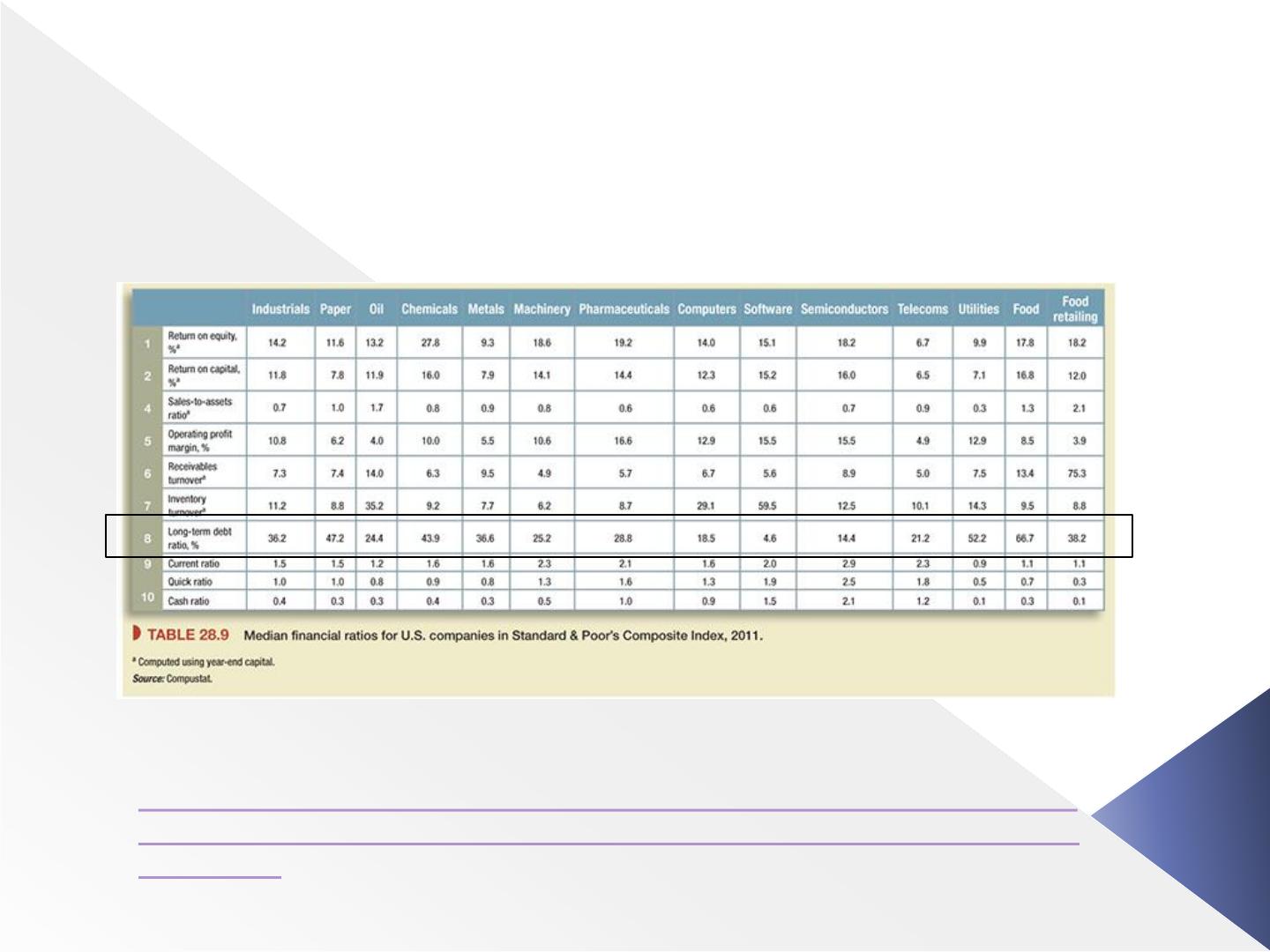
However, debt as a percentage of total capital varies
widely by industry, as the following table from Brealey,
Myers, and Allen (2014) shows:
Also see:
http://biz.yahoo.com/p/industries.html;_ylt=A0LEVvwI7qVUSHoAJxoP
xQt.;_ylu=X3oDMTBzajE3bzE3BHNlYwNzcgRwb3MDMTAEY29sbwNiZjEE
dnRpZAM-
6

7
Not only is leverage targeted, but that target varies greatly
with the business activities of the firm and its assets
Let’s take a look at a subset of industries:
8
Capital Structure for Selected Industries
Above Average
Leverage
Below Average
Leverage
Airlines
Software
Hotels & Resorts
Semiconductors
Utilities
Biotechnology

Question: Why do you think each of the industries in the
previous table are in the above- or below-average leverage
category?
Issues to consider:
›Likelihood of Bankruptcy
How stable are the cash flows? (Stable cash flows are necessary to
maintain large amounts of debt)
How dependent are the cash flows upon a product development
lifecycle?
How sensitive is the product demand to the business cycle?
›Value of Assets (Collateral) in Bankruptcy
Could the assets of the firms in the industry be efficiently
liquidated/sold without a fire sale?
How standard/attractive and, hence, easily marketed are the
assets?
9

10
Can Capital Structure Be Irrelevant?
Financing decisions don’t matter in perfect capital markets:
›Prices of securities are efficient/fairly priced
›There is never a loss of firm cash flows to outsiders/third parties
No Taxes
No costs to financial distress/bankruptcy costs
›There are no “agency costs/benefits”
Managers always act in the shareholders’ interest and maximize
shareholder wealth
Shareholders don’t seek to gain at the expense of bondholders
›There is no “asymmetric information”
Corporate insiders have no information advantage over outside
market investors

Consequently, most of the critical issues affecting the
leverage decision can be captured by adjusting a firm’s
unlevered value, VU, for market imperfections
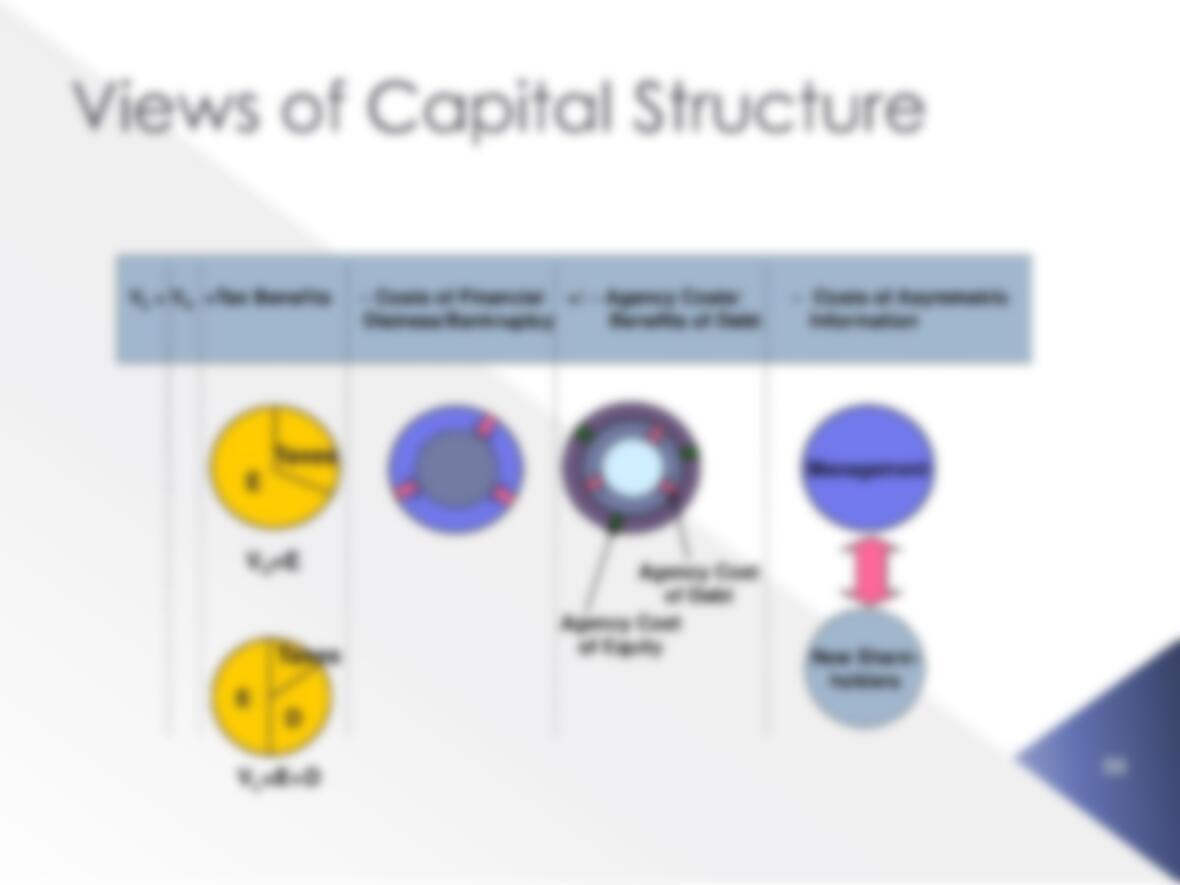
Our focus will be on the trade-off theory of capital structure
that captures the critical imperfections of:
›Taxes
›Costs of financial distress/bankruptcy
11

Notation
As the returns to the firm (ROA) vary, the returns to leveraged
equityholders (ROE) vary more
Consequently, with debt financing, shareholders will demand
rU= The all-equity or unlevered cost of capital (Brealey, Myers, and Allen
denote this as r)
rE= The equity cost of capital (rUequals this value when the firm is all
equity)
rD= The cost of debt capital