MINISTRY OF EDUCATION AND TRAINING
UEH UNIVERSITY
COLLEGE OF BUSINESS
~~~~~~*~~~~~~
SCHOOL OF MANAGEMENT
FINAL ESSAY
STRATEGY IMPLEMENTATION
Lecturer: MS. LE THANH TRUC
Class: ADC01 – K45
Name: TRẦN HÀ VI
ID Number: 31191027453
HO CHI MINH CITY – 2021
TABLE OF CONTENT
I. Aligning Business Units ……………………………………………………………………………………………………. 2
1.1 Corporate Scorecard vs Business Unit Scorecard ……………………………………………………………….. 4
1.1.1 Business unit scorecard ………………………………………………………………………………………………. 4
1.1.2 corporate scorecard ……………………………………………………………………………………………………. 5
1.2 Vertical and horizontal alignment ……………………………………………………………………………………… 6
1.3 Cascading Through Strategic Themes ………………………………………………………………………………… 8
1.4 Vertical Alignment Sequencing ………………………………………………………………………………………. 10
II. Align Support Units ……………………………………………………………………………………………………….. 11
2.1 Service-Level Agreement (SLA)……………………………………………………………………………………… 11
2.2 Support Unit Strategy Map……………………………………………………………………………………………… 12
III. Align Employees (Motivating employees) ……………………………………………………………………….. 13
3.1 Communicate and Educate About the Strategy ………………………………………………………………….. 14
3.2 Link Personal Objectives and Incentives to the Strategy …………………………………………………….. 18
3.3 Develop Employee Competencies……………………………………………………………………………………. 20
CORALLE STUDIO…………………………………………………………………………………………………………….. 22

1
Introduction
The design of a management system for aligning business unit strategy with operations is the book’s
primary focus on. However, because most firms have several business and support units, the management
system must also consider how strategy is implemented across these many organizational units. The
system must align personnel with the strategy in addition to aligning organizational units with the
strategy. Successful strategy execution is exceedingly improbable unless all employees understand the
strategy and are driven to achieve it. The third stage of the management system is to align organizational
units and workforce.
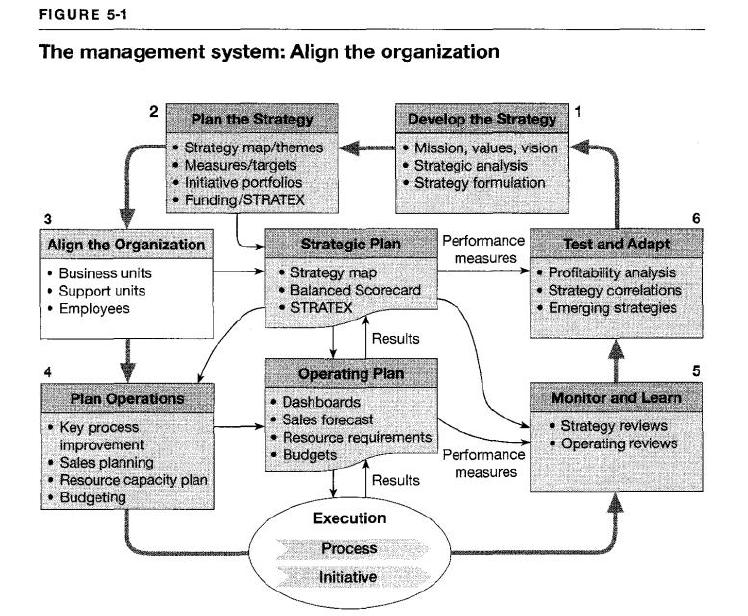
As indicated in Figure 5-2, the three subprocesses for aligning organizational units and workers with the
strategy are discussed in this chapter. 1 Alignment and The Strategy-Focused Organization are two of
our previous books that go into great detail about aligning organizational units and workers with the
strategy. We outline the fundamental aspects of the alignment processes discussed in earlier research in
this chapter. 2
2
I. Aligning Business Units
The corporate strategy explains how the company aims to generate more value from its many
business units than if they were run separately, with their own capital and governance structure. “A great
corporate strategy is not a randomly selected collection of individual building bricks, but a deliberately
built system of interrelated elements,” Collis and Montgomery write. All of the factors [resources,
businesses, and structure] are linked in a great corporate plan. The nature of the firm’s resources—its
unique assets, talents, and capabilities—drives this alignment.
In an eight-rower shell, corporate headquarters is the coxswain. Working individually, eight
strong, motivated, and skillful rowers will make some progress around a racecourse. However, if their
individual efforts are misaligned and poorly coordinated, they may actually make slower progress than a
smaller shell with only one rower. Tn brings value by gaining an awareness of the competitive
environment as well as the individual’s strengths and limitations, and then using that knowledge to create
a cohesive action plan. The strategy coordinates and uses the individual rowers‘ talents and contributions
in order to outperform smaller, potentially more nimble competition.
3
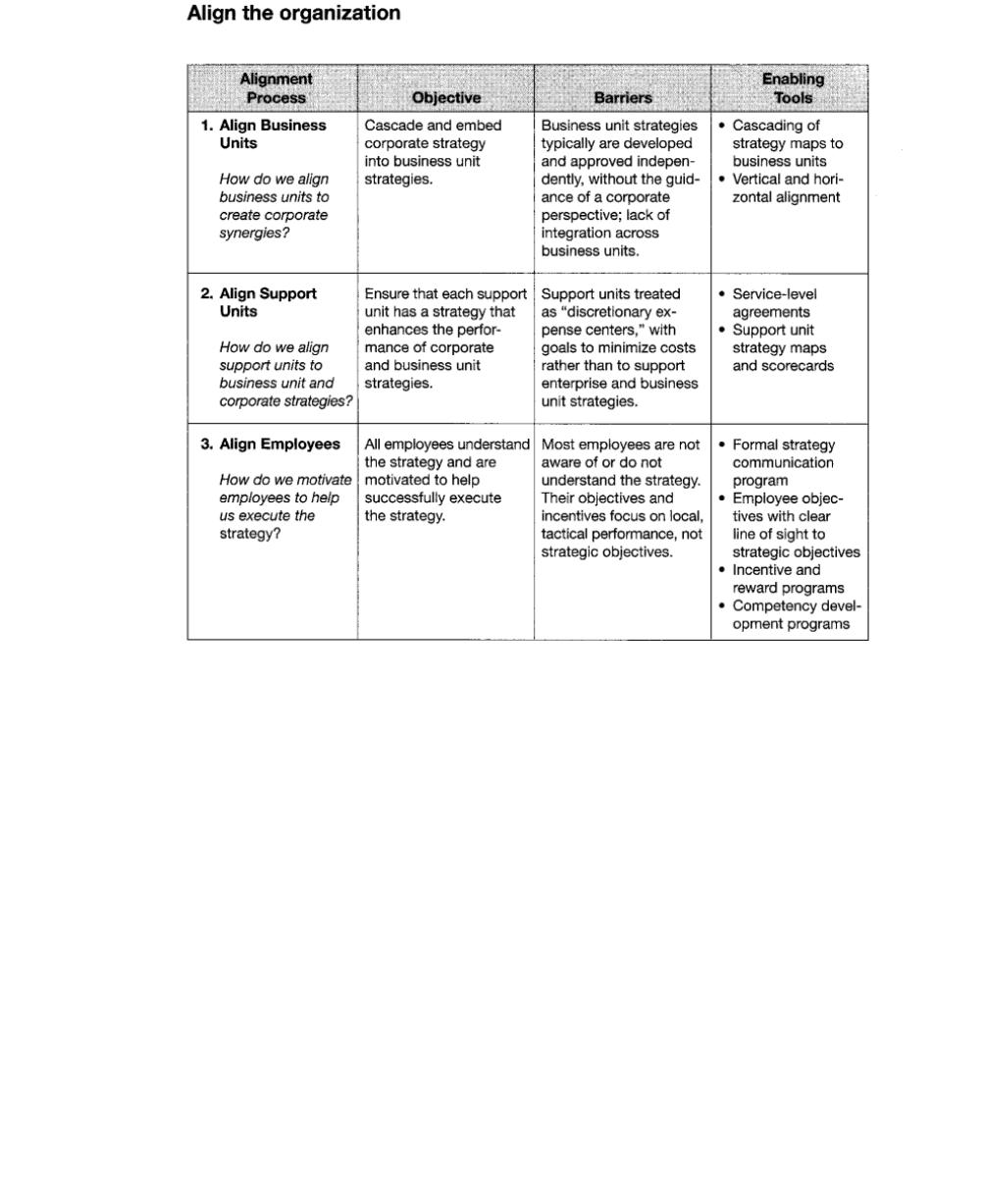
Executives should link the company‘s strategy to the strategies of its different business and
functional units, as well as align and motivate people, to reap the full benefits of an organization with
many businesses and functions. Companies must respond to three questions at this point:
a) How do we ensure that all business units are all on the same page?
In most cases, the strategy is determined at the level of the individual business unit. However,
most businesses are made up of many business units or operations. The corporate strategy outlines how
to integrate the strategies of the various business units in order to achieve the synergies that are lacking
in units that operate separately.
The company strategy is described using a strategic map that illustrates the particular sources of
synergies. Managers then unfold this map vertically to the business units, whose strategic maps can then
depict the objectives linked to their local plans as well as those incorporated into the corporate strategy
and the strategies of other business units.

4
b) How can we match the support units’ strategies with the business unit’s and the company’s?
Executives frequently perceive support units and corporate personnel operations as discretionary
spending centers, or overhead departments whose goal is to reduce operational costs. As a result, the
support units’ strategies and operations are out of sync with the company’s and the business units they
are expected to support.
Support units must match their strategies with the company‘s and business units’ value-creating
strategies in order to execute the strategy successfully. To specify the set of services they will deliver,
the support units should negotiate service level agreements with the business units. The establishment of
strategic maps and BSC for support units based on service level agreements allows each unit to define
and execute a strategy that improves the existing strategies.
c) How do we encourage employees to help us in putting the strategy into action?
Employees, in the end, are the ones who enhance procedures and carry out the strategy‘s projects,
programs, and initiatives. They must be aware of it and comprehend it in order to successfully link their
daily activities to the plan. Employees benefit from formal communication programs because they can
better comprehend the strategy and be motivated to achieve it.
Personal goals and staff incentives are aligned with strategic corporate objectives and business
units by managers to boost the communication program. In addition, training and professional
development programs employees in gaining the skills they need to carry out the strategy successfully.
1.1 Corporate Scorecard vs Business Unit Scorecard
1.1.1 Business unit scorecard
The following steps are involved in defining an organization’s strategy:
1) Identifying the target market for the company – local, national, or worldwide.
2) Identifying the target market. Age group, income level, and other factors all play a role.
3) Determining the crucial internal processes required to attract and retain those customers.
4) In the other viewpoints, determining the person and organizational competencies required.
Porter describes strategy like doing things differently than competitors or doing the same things
in various ways. The balanced scorecard allows the organization to look at things from the perspective
of stakeholders rather than stockholders. Stockholders are the owners of a company’s stock, and they are
often most concerned with the company’s profitability, focusing mostly on financial performance.
Stakeholders are persons who are impacted by a company’s decisions, such as investors, creditors,
managers, regulators, employees, customers, suppliers, and even lay people concerned about the
company’s global citizenship. This is why balanced scorecards can incorporate social responsibility
criteria. To have a better understanding of how these types of factors might fit within a balanced scorecard
framework.
1.1.2 corporate scorecard
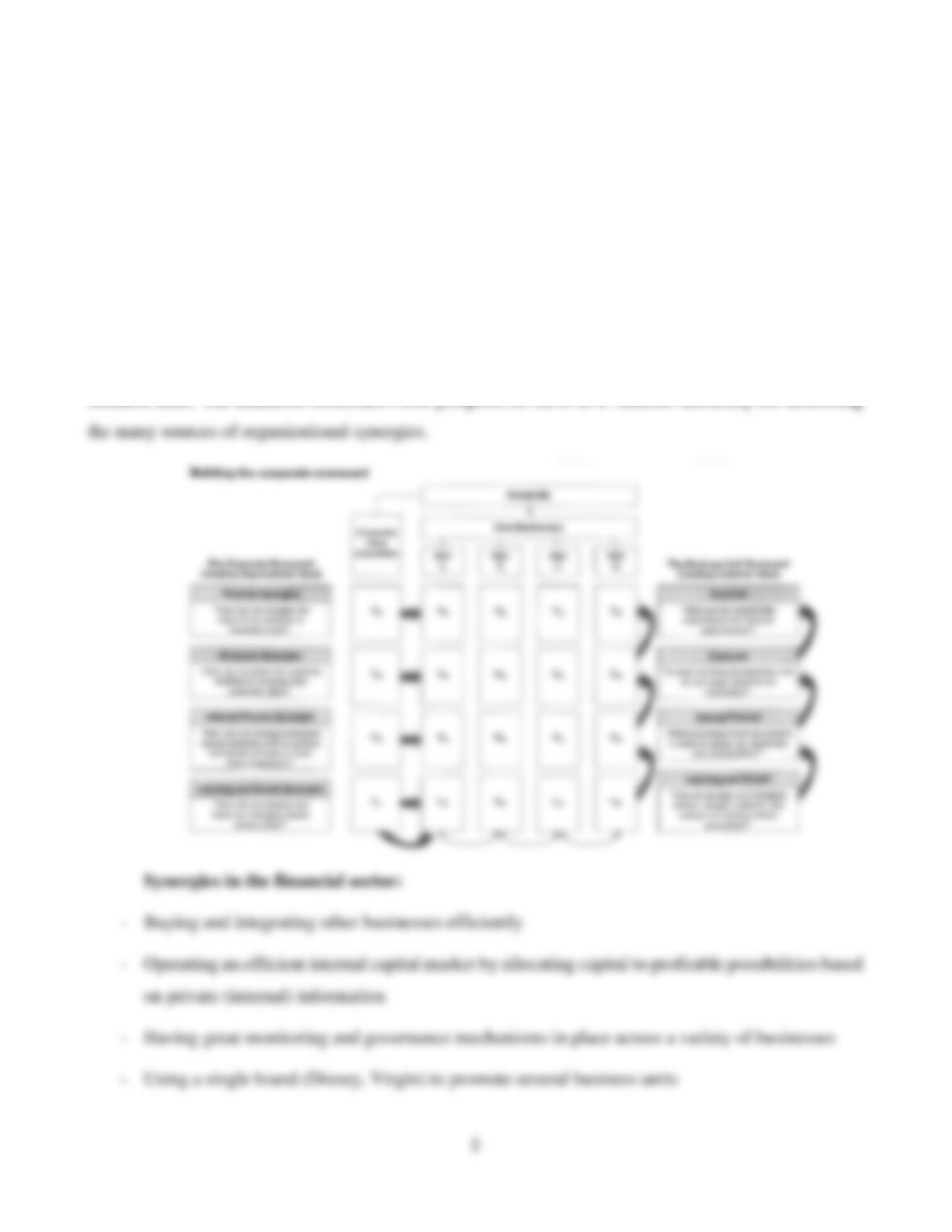
Corporations achieve synergy in a variety of ways by combining their various operating and