PROD 315
Prof. Pannirselvam
Review for Exam 3
Exam 3 will cover chapters 6, 12, 14, and 7. The exam will consist of 50 multiple-choice
questions that cover the concepts and tools in these chapters.
Chapter 6: Lean Systems
Examples of Waste
– Overproduction = manufacturing an item before it is needed
– Inappropriate processing = using expensive high precision equipment when a simpler
machine would suffice
– Waiting = wasteful time incurred when product is not being moved or processed
– Transportation = excessive movement and material handling of product between
processes
– Motion = unnecessary effort related to the ergonomics of bending, stretching, lifting, and
walking
– Inventory = excess inventory hides problems on the shop floor, consumes space,
increases lead times, and inhibits communication
– Defects = Quality defects result in rework and scrap, and add wasteful costs to the system
I the form of lost capacity, rescheduling effort, increased inspection, and loss of
consumer goodwill
– Underutilization of employees = failure of the firm to learn from and capitalize on its
employee knowledge and creativity impedes long term efforts to eliminate waste
Continuous Improvement (Kaizen)
– Spotlighting areas that need improvement.
– Excess capacity or inventory hides underlying problems
– By decreasing the inventory, they are able to spot inefficiencies and then fix them so that
the new lower inventory level can be set
Supply chain considerations
o What are they? What kind of waste do they eliminate?
Lean Systems elements
– What are they? What kind of waste do they eliminate?
– Small lot size (relation to Setup reduction, inventory, quality)
o Reduces the average level of inventory relative to large lots
o Pass through the system faster than large lots
o If any defective items are discovered, examining the rest of the batch is quick due
to the small lot size
o Prevents overproduction
o Can create waste. Long setup times, idle workers
– Closer supplier ties
o When companies have low inventory levels, they count on their suppliers to make
frequent deliveries, have short lead times, arrive on schedule, and be of high
quality
– Process considerations
– Pull flow vs. push

o Push – Uses forecasts of demand to produce items before the customer orders it
(Fast Food)
o Pull – Customer orders food, and then the chef makes it then, not before.
(5-Star Restaurant)
– Quality at source
o When defects are spotted, they are resolved right then and there instead of
pushing the problem down the line
o Poka-yoke = Example: a company makes different parts of a product in such a
way that allows them to be assembled only one way, the right way
o Andon = Gives machines and machine operators the ability to signal the
occurrence of any abnormal condition such as tool malfunction. Could be in a
form of audio alarms, blinking lights, or LCD text displays
– Uniform workload
o Uniform daily workloads
o Heijunka = The leveling of production load by both volume and product mix
▪ Mixed model assembly = produces a mix of models in smaller lots
▪ Second Heijunka option uses a lot size of one.
– Standardization of components and work processes
o Highly repetitive work patterns.
o Increases the total quantity that must be produced for that component.
o If a product had 1,000 components, you would try to see if you could get it down
to 100 components. Make the work standardized like an assembly line
– Flexible Workforce
o Having employees able to do more than one task.
o Helps relieve bottlenecks
o Able to fill in for people either sick or on vacation. May not be as efficient as the
person they are replacing, but is helps relieve boredom
– Line flows and automation
o Reduced costs
o Greater profits
o Greater market share
– 5 S Practices (5S)
o Sort = Separate needed items from unneeded items and discard the unneeded
5.
Sustain
4.
Standerdize
1. Sort
2. Straighten
3. Shine
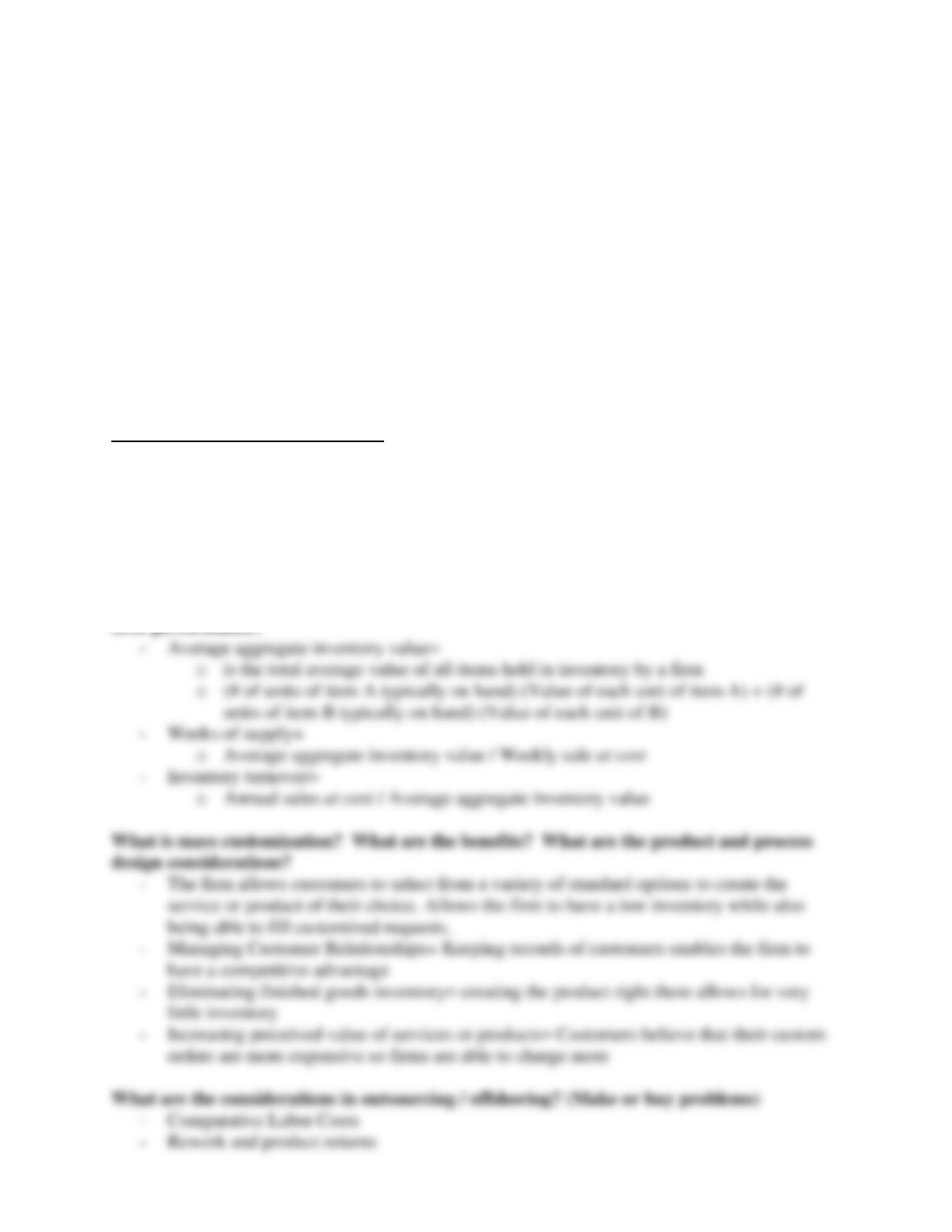
o Straighten = Neatly arrange what is left, with a place for everything and
everything in its place. Organize the work area so that it is easy to find what is
needed
o Shine = Clean and wash the work area and make it shine
o Standardize = Establish schedules and methods of performing the cleaning and
sorting. Formalize the cleanliness that results from regularly doing the first three
S practices so that perpetual cleanliness and a state of readiness are maintained
o Sustain = Create discipline to perform the first 4 S practices, whereby everyone
understands, obeys, and practices the rules when in the plant. Implement
mechanisms to sustain the gains by involving people and recognizing them
through performance measurement system.
– Total Preventive Maintenance
o Can reduce the frequency and duration of machine downtime
o Having workers being in charge of maintaining their machines. Have them
routinely check them for failures
Chapter 12: Supply Chain Design
Supply chain decisions in services and manufacturing
– Services – Provide support for the essential elements of various services the firm delivers.
– Manufacturing – Control inventory managing the flow of materials. Suppliers identified
by position in supply chain “Tiers”. Suppliers and customers. Usually involves
international supply chains
What are the measures for inventory investment? How does inventory investment affect