Kayla El-Hage
Professor Eric Hoogstra
FIN 350 02
November 15, 2021 Chapter 18 and 19
Chapter 18 Outline
Investment Decision Making
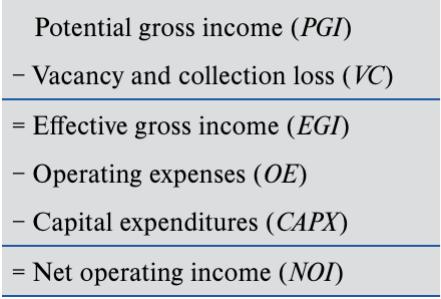
NOI is an important determinant of a properties’ investment value. NOI is the annual “dividend”
expected to be produced by the property.
Many components of commercial properties wear out faster than the building itself, and will be
replaced many times during the building’s economic life. Investors expect to incur retenating
expenses when the lease expires and the space needs to be made ready for occupancy. The
improvements can be as minor as painting the walls or as large as complete renovations.
Evaluating the Cash Flows Estimates
1. Are the sources of income and expenses appropriate?
2. Have the trends for each revenue and expense item been considered?
3. What about comparable properties?
4. What are the prevailing social and legal environments?
5. How is the demand and supply of properties similar to the subject property likely to
change?
Partnerships and Other Direct Forms of Ownership
Before-tax cash flow (BTCF) represents the expected total cash flows available for dist. To
equity investors after the payment of operating expenses, capital expenditures, and debt services.
Pro rata share
An amount proportionate to the ownership interest of an investor.
Effects of Income Taxes
After-tax cash flow (ATCF)
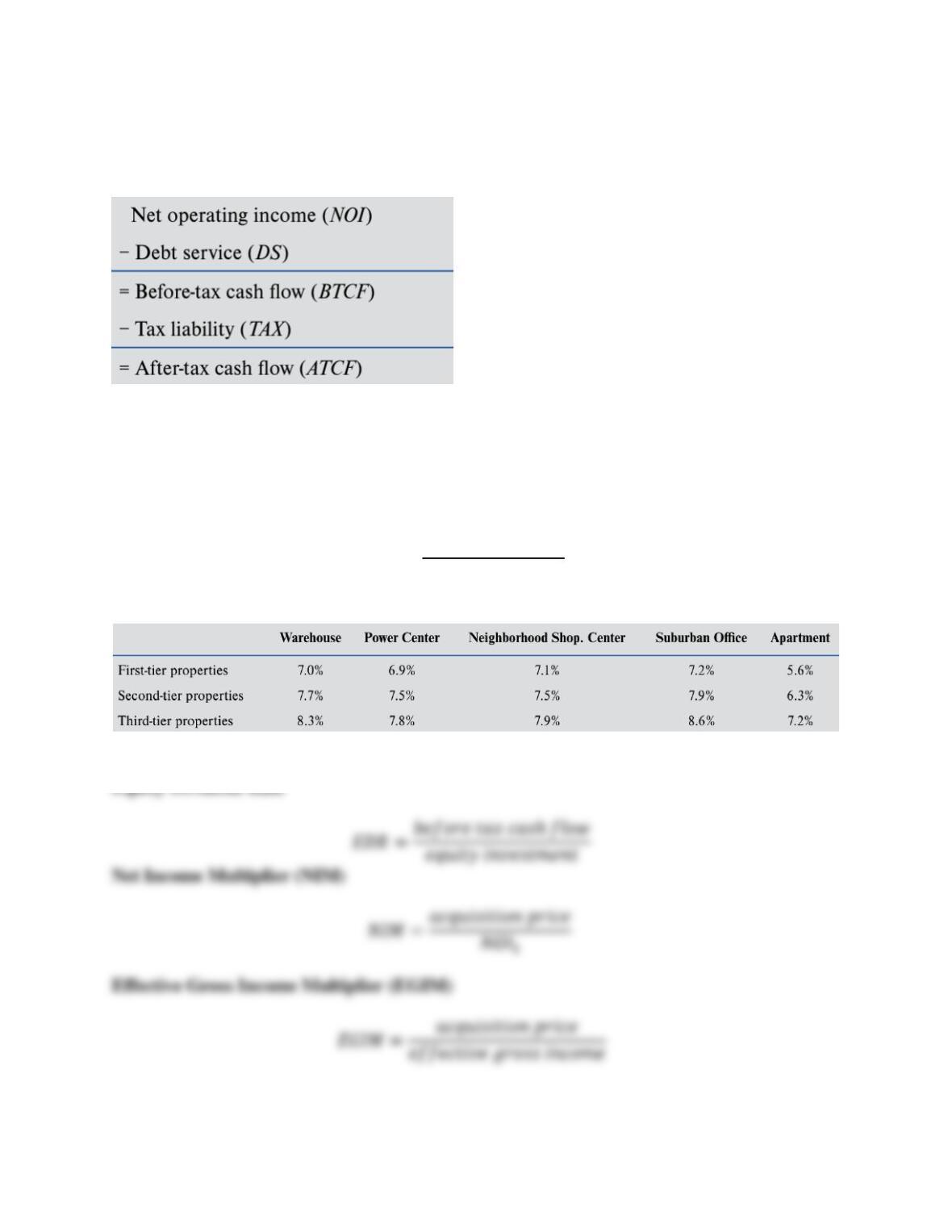
The residual claim on the property’s cash flow after the mortgage lender(s) and the state and
federal government have collected their share.
Single-Year Investment Criteria
Profitability Ratios
Capitalization Rate
𝑅𝑜=𝑁𝑂𝐼1
𝑎𝑐𝑞𝑢𝑖𝑠𝑖𝑡𝑖𝑜𝑛 𝑝𝑟𝑖𝑐𝑒
Where NOI is estimated NOI over the next year.
average cap rates by property type and quality of property