Ashraf Hani Abuelidam
An assessment of the practicality of a proposed multicultural
and technologically-advanced restaurant based in Amman,
Jordan.
FEASIBILITY
STUDIES
Instructed by
Professor Osama Al-
Qal’awi

1
“We aspire to create a restaurant that provides a welcoming and inclusive
atmosphere by incorporating elements of every culture, background, race
and country. We have a vision that embodies the various aspects of modern
life and brings back nostalgic snapshots from the past.
A self-service, technologically-advanced restaurant to us means little cost
with great value & an original outlook into the world of dining.”
—A statement by the author.
Commented [1]: This sounds wrong no? “provide an
atmosphere from every culture” is definitely not
something i’ve ever heard
Commented [2]: What do you suggest as an
alternative?
Commented [3]: “provides a welcoming and inclusive
atmosphere by incorporating elements of every culture,
background, race and country.”
technically there should be an “into” at the end there
but idk what it would refer to? into design and menu of
the restaurant?
But if not, maybe it can stand on its own too
Commented [4]: Edited. Thank you.

2
TABLE OF CONTENTS
Vision………………………………………………………………………..…………………………………………………………………….
03
Restaurant Sketch………………………………………………….…………………………………………………………………….
04
Environmental Study………………………………………………….……………………………………………………………..
05
Legal Study…………………………………………………………………………………………………………………………………….
06
Market Study…………………………………………………………………………………………………………………………………
08
Technical
Study…………………………………………………………………………………………………………………………….
10
Business Model Canvas………………………………………………………………………………………………………………
19
Value Proposition
Canvas………………………………………………………………………………………………………….
23
SWOT Analysis…………………………………………………………………………………………………………………………….
24
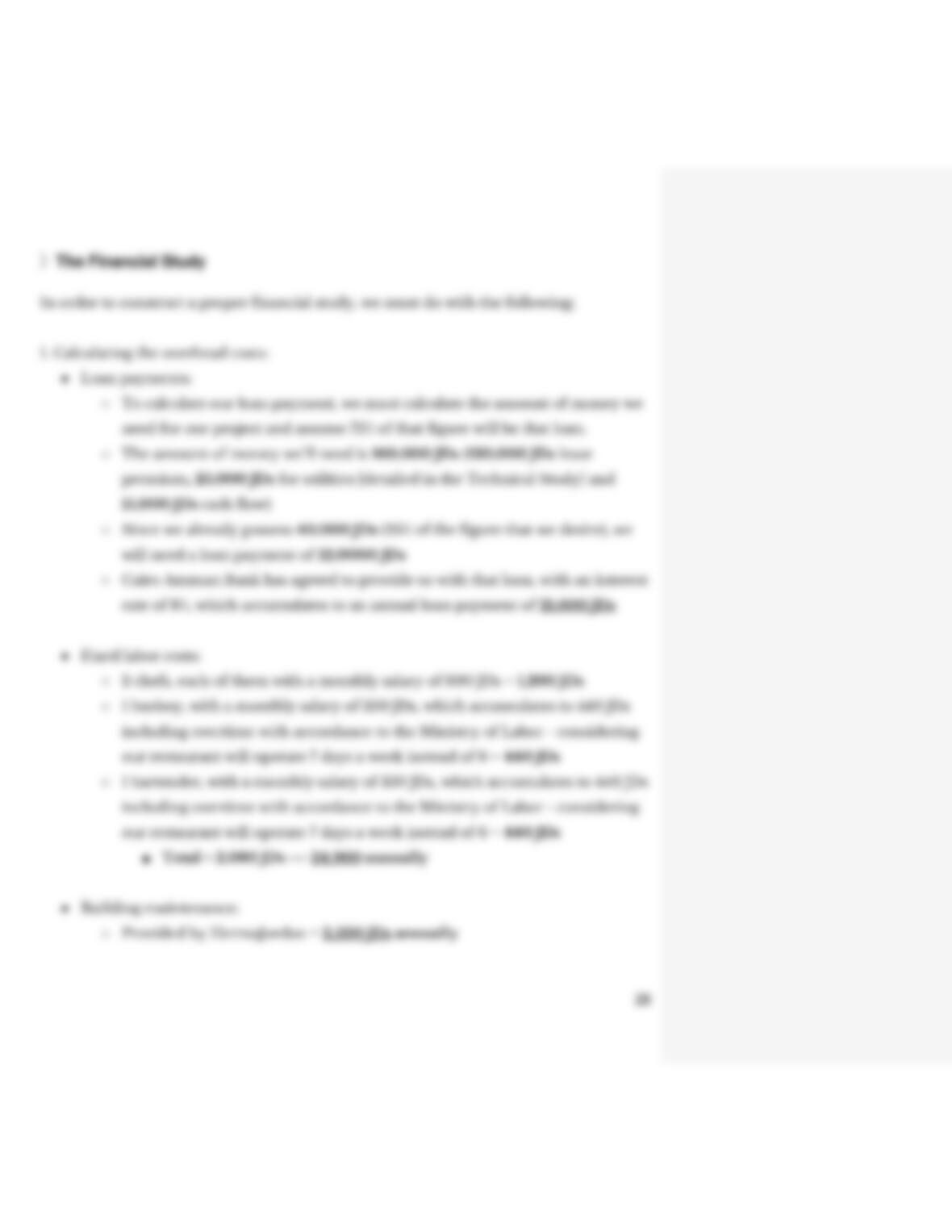
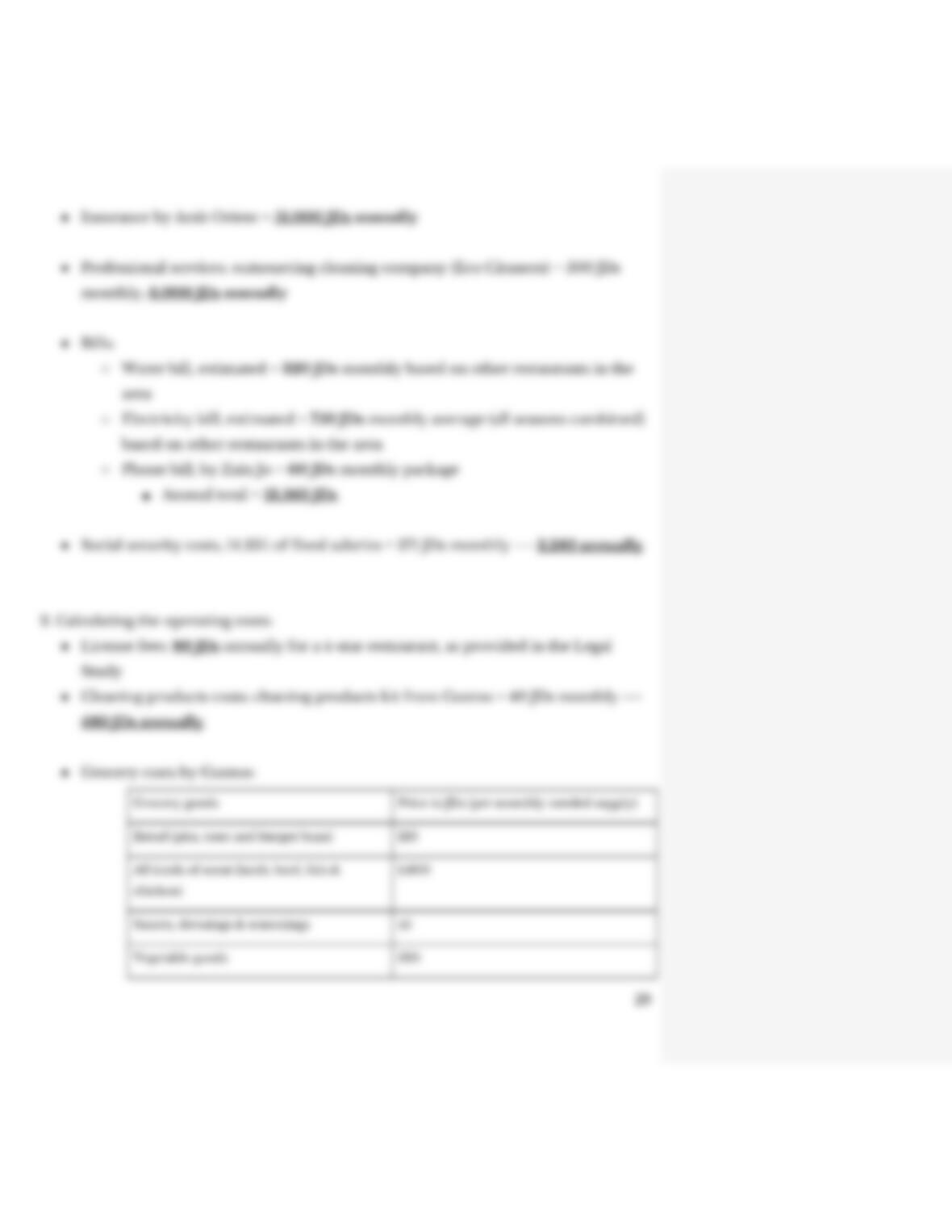
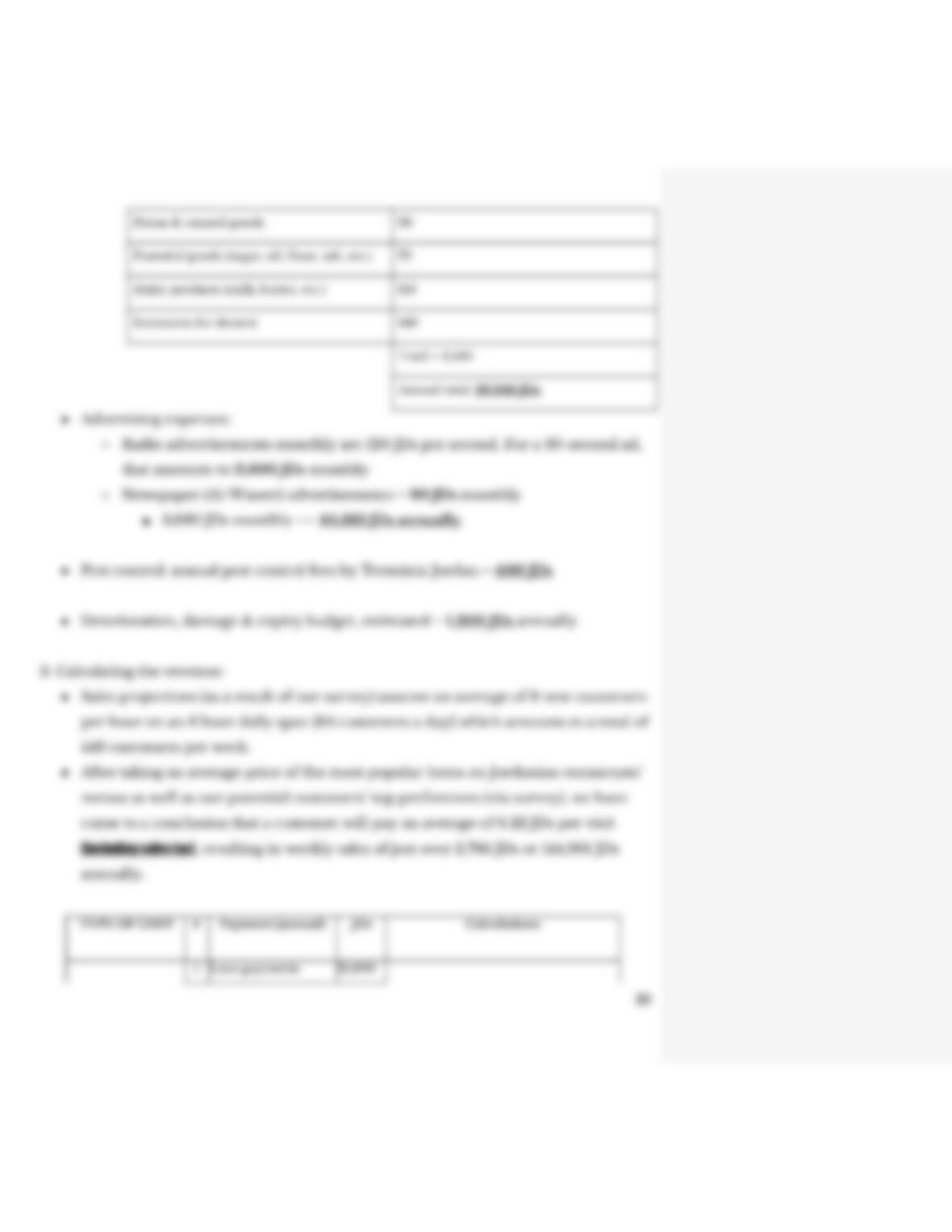
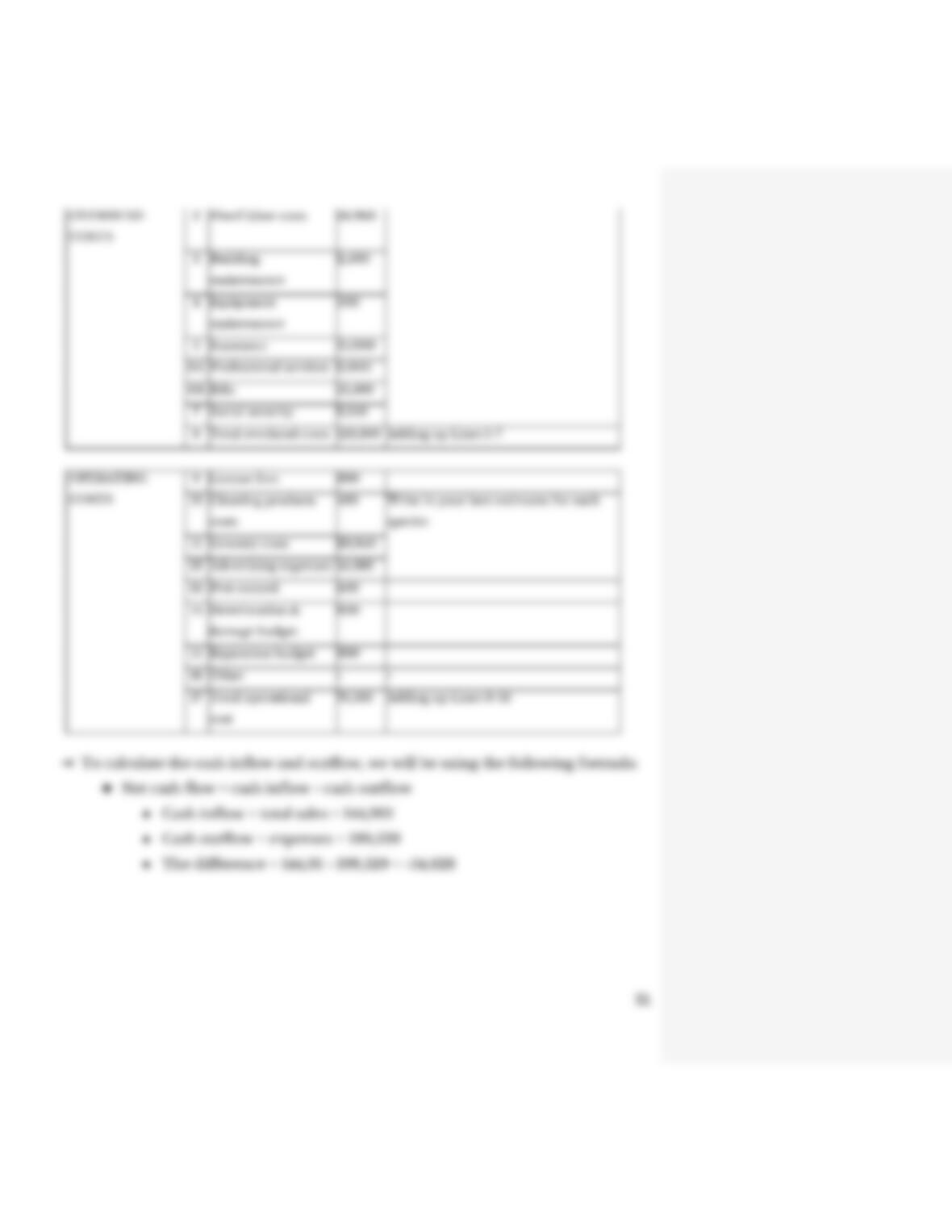
Financial Analysis………………………………………………………………………………………………………………………..
26
Conclusion……………………………………………………………………………………………………………………………………..
30

3
〉Vision
➔ A middle-class restaurant based in Amman, Jordan.
➔ Meals and drinks are ordered via a MenuPad, as opposed to the regular printed
menu and human waiters.
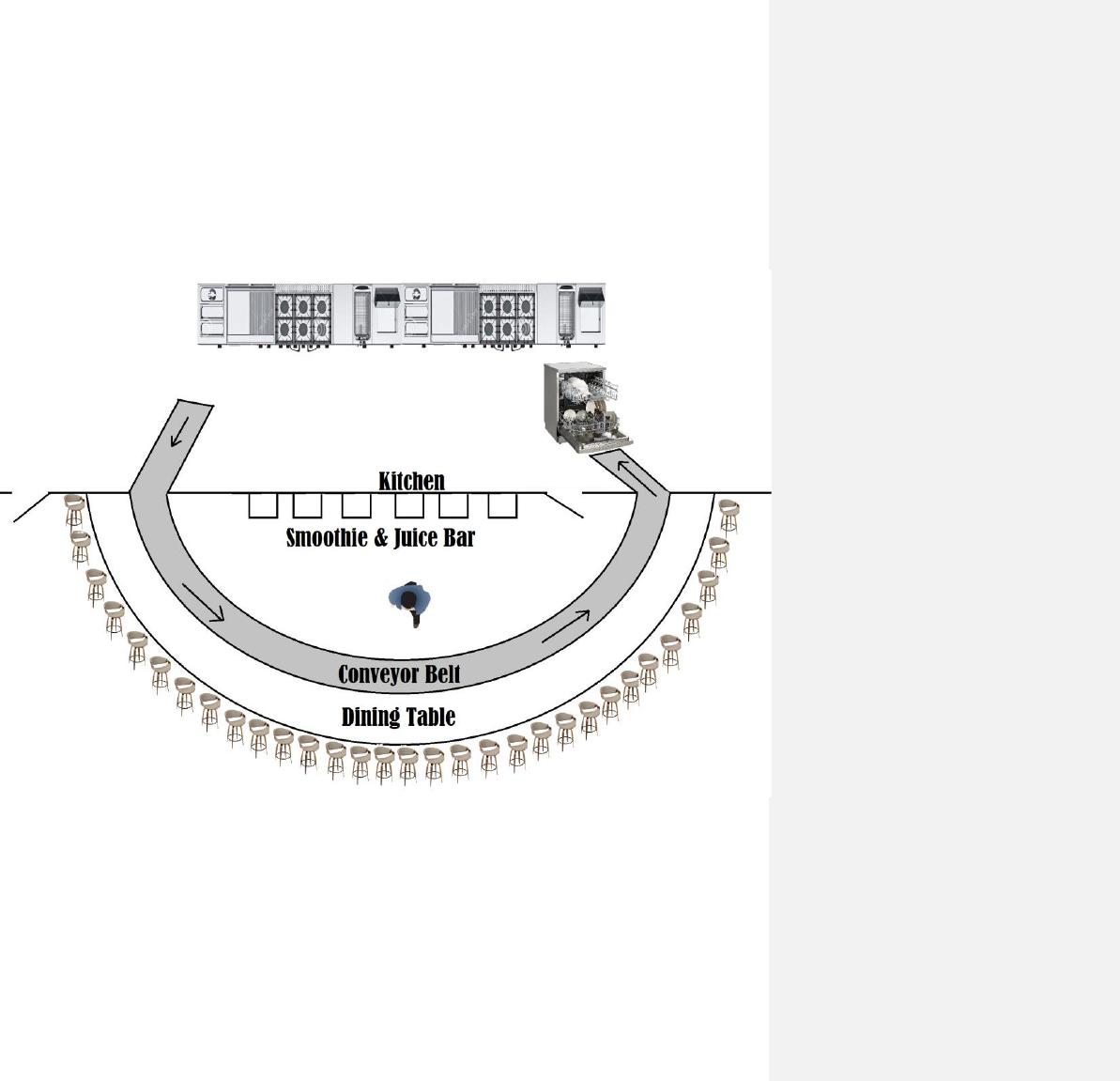
➔ The restaurant front is shaped as a half-circle (from now on, will be referred to as
“the semi–circle”), with food being served using a rotating conveyor belt.
➔ The restaurant serves the top two main dishes from every major country.
➔ The staff includes 2 chefs (with rotating shifts), 1 busboy/busgirl and a
smoothie/juice bartender.
➔ The content of the food and drinks is altered to fit the Islamic culture in Jordan,
with food being completely Halal and drinks being alcohol-free.
➔ Prior to ordering, the customer can choose up to 3 food samples from the
MenuPad, which will then be served by the rotating conveyor belt, and thus get the
chance to taste while contemplating, before making a final decision on what he or
she is going to order.
➔ In the middle of the semi-circle, right behind the rotating conveyor belt, there will
be a bartender serving various alcohol-free cocktails, smoothies, soft drinks and
hot beverages.
➔ The following segment is a sketch that we’ve drawn in order to clear up our vision
for this restaurant.
4
〉Restaurant Sketch
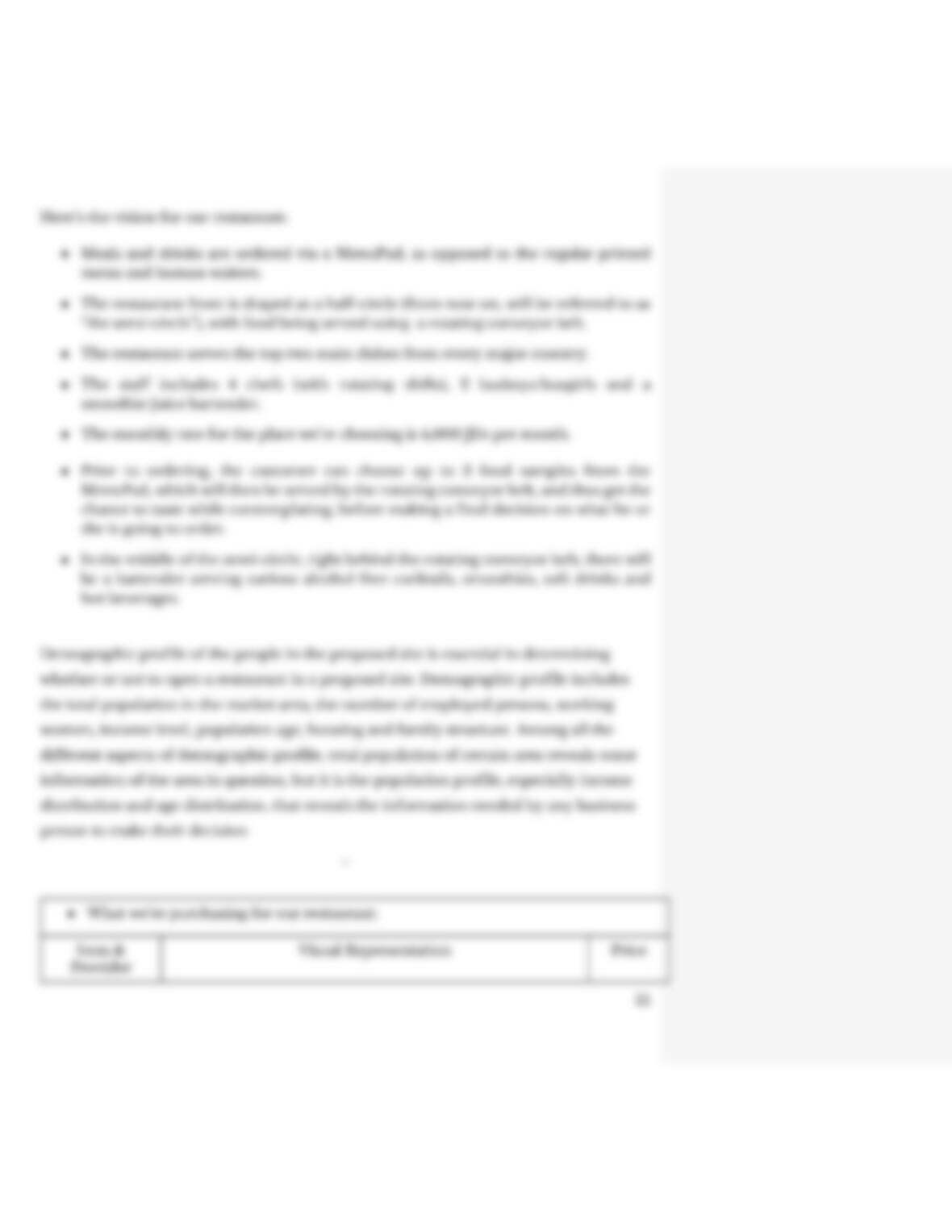
● The serving area equals to 180 square metres.
● The cooking, dishwashing and administrative area equals to 55
square metres.
● The customized rotating belt has a radius of 5 metres.

5
〉Environmental Study
After making a comprehensive research and discussing with a few specialists on the topic,
we have conclusively established that opening a restaurant like ours would have very
minimal effect on the surrounding environment.
The following 5 steps are our combined effort regarding how we will be reducing the
minimal effect of our restaurant on the environment, and thus ensuring it will be an
extremely whitelisted project:
1. Replacing paper wipes, napkins and toilet paper with recycled chlorine-free paper.
2. Using kitchen mats that are completely recycled.
3. Take-out boxes will be made of materials that are recyclable.
4. Applying water-saving filters for our sinks and toilets.
One main extra addition we will be making sure our restaurant achieves is minimizing
wasted food. According to Science Daily, “An estimated 19 percent of total energy used
[…] is taken up in the production and supply of food” – we will ensure that the majority
of food leftovers in out restaurant would later be composted and turned into decayed
organic material used as a fertilizer for growing plants.
Another suggestion that we’re considering is recommending to the customers that we
wrap their extra food in a container for take-out, in the case that there’s enough leftovers.
This ensures that less leftovers are being dumped in an environmentally-unconscious
way.
〉Legal Study
Executive Summary
This study abides by the Jordanian Industry of Restaurants and Tourist Subsidies,
number 6 for the year of 1997.
Restaurant Licensing Conditions
According to article 5 of the aforementioned executive summary, the following are the
tourist restaurant’s licensing conditions:
1. Attaining a sign bearing the restaurant name in Arabic, English or both.
2. The sign must show the restaurant’s class/rating.
3. The menu must be presented in an internal sign.
4. Abiding by the the provisions of the Public Health Law and the regulations issued