INTRODUCTION
Siling labuyo, (Capsicum frutescence) is a small chili pepper cultivar native to the
Philippines. The cultivar name is in Tagalog and literally translated to “wild chili”.
Filipino cuisine is not generally spicy, but evolving taste and growing dining options
have pushed up demand for raw chili pepper, particularly in Luzon and Visayas.
(Business World, 2017)
For every Filipino knows hot pepper or siling labuyo (Capsicum Frutescens L.). It
can be found everywhere in the backyard gardens in provinces and a favorite
condiments of our lolo’s and lola’s. Siling labuyo is the famous ingredient of the
proudly pinoy dish “Bicol Express”. On the other hand it made fiercer with the
presence of siling labuyo in Filipino cuisine.
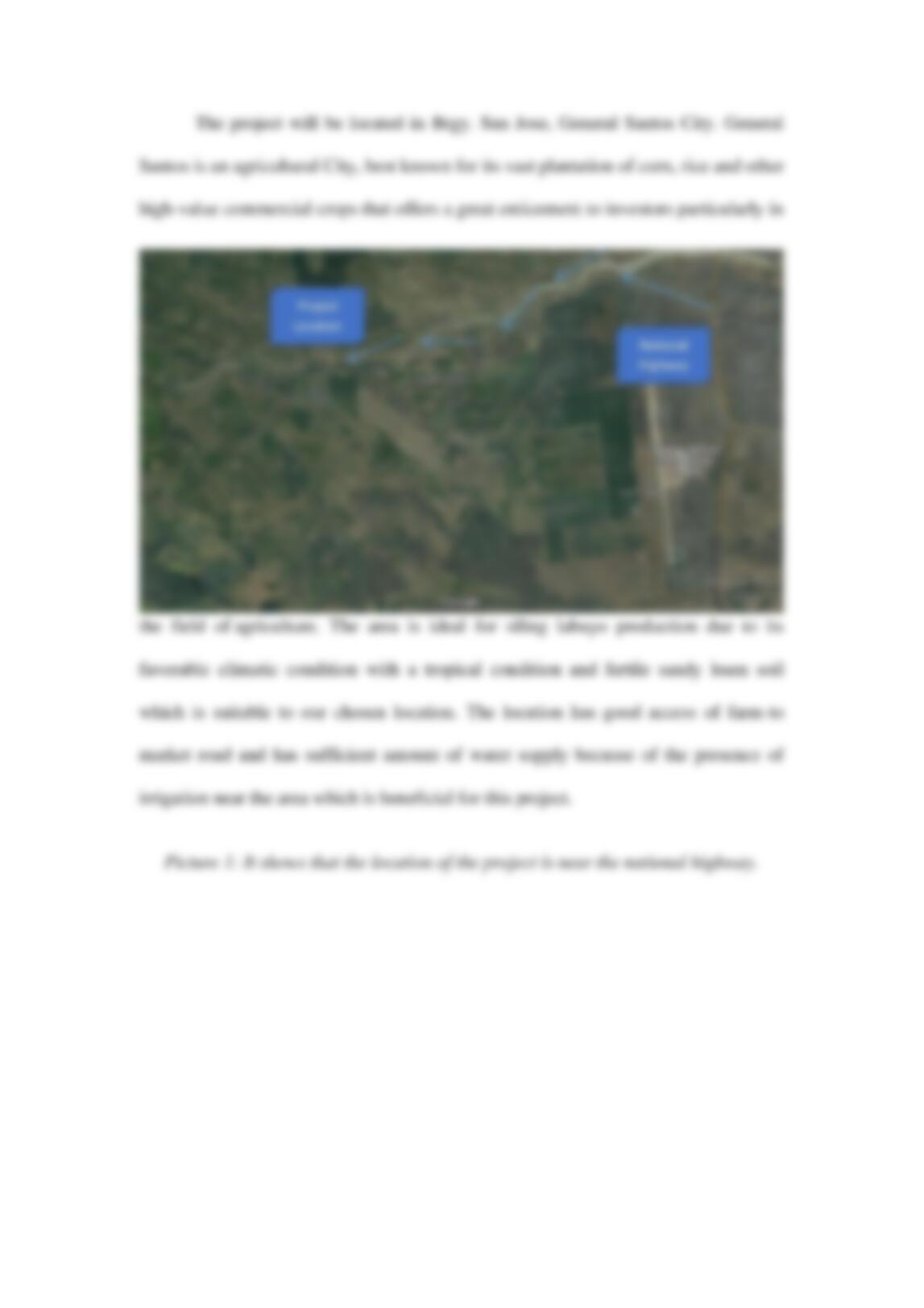
This proposed project will engage in siling labuyo production which will take
place in Brgy. San Jose, General Santos City. It will be named “Daro Capsicum
Production” which means reaping siling labuyo.
According to the Bantay Presyo of the Department of Agriculture, the prevailing
price of siling labuyo last January 2021 reached Php 1000.00 per kilo. Producing and
supplying siling labuyo in the local will be a great opportunity for growers due to its
high demand but insufficient supply.
The main objective of the project is to bridge the demand and supply gap, and to
improve the economic status of the owner and the people who will be directly and
indirectly involved in the project’s operation and also provide for a temporary
employment for the people situating at Brgy. San Jose. It will also open doors for
many possible growers of labuyo as it will become their basis on assessing the
feasibility of siling labuyo production.
MARKET STUDY
I. PRODUCT DESCRIPTION
The Daro Capsicum Production will be planting a Taiwan/Pinatubo F1
Variety of Siling Labuyo in T’boli, South Cotabato. Taiwan variety is ideal for
production because it has lesser heat than the native siling labuyo but is popular
with retailers due to its color and shape which are more consistent and
aesthetically pleasing. Also, siling labuyo have a longer shelf life than the native
one.
The price of Taiwan Labuyo went as high as Php 1000.00 per kilogram (kg)
due to a deficit in production in the Cagayan Valley region and Central Luzon,
according to the price-monitoring unit of the Agribusiness and Marketing
Assistance Service (Amas) in selected markets in Metro Manila. Based on the
monitoring of the Agribusiness and Marketing Assitance Division (Amad) in
Cagayan Valley, there is a low level of supply in Nueva Vizcaya and Isabela.
Central Luzon also suffers from a shortfall in the supply of sili. The decrease in
production was due to the series of typhoons that hit the region.
Because of the circumstances, the merchant of siling labuyo discover
contract cultivators in Mindanao to supply the demand of individuals and other
processing companies that utilizes labuyo as ingredients to their products.

IIa. DEMAND
⚫ Historical Demand of Siling Labuyo
Year
Historical Demand (kgs)
2016
2600
2017
2600
2018
2600
2019
2600
2020
2600
*The data was based from the demand of Glaiza’s Vegetable Stand
Table 1: Historical Demand of Siling Labuyo
Table 1 shows the historical demand of siling labuyo based from the demand of
the contract buyer of Glaiza’s Vegetable Stand and from the demand of the Mr. Ivan
Aprongao.
IIb. PROJECTED DEMAND
⚫ Projected Demand of Siling Labuyo
Year
Projected Demand (kgs)
2021
2600

2022
2600
2023
2600
2024
2600
2025
2600
*The data was based from the projected demand of the contract buyer and other buyers of
Glaiza’s Vegetable Stand
Table 2: Projected Demand of Siling Labuyo
Table 2 shows the projected demand of siling labuyo that is projected to be
constant because of the fixed demand of Glaiza’s Vegetable Stand and the demand
from the middleman, Mr. Ivan Aprongao that is projected to be also constant.
IIIa. HISTORICAL SUPPLY
⚫ Historical Supply of Siling Labuyo
Year
Historical Supply (kgs)
2016
1820
2017
1820
2018
1820
2019
1820
2020
1820
*The data was based from the supply of Glaiza’s Vegetable Stand

Table 3: Historical Supply of Siling Labuyo
Table 3 shows the historical supply of siling labuyo. It was noted that the supply
from year 2016 to 2020 was constant since Glaiza’s Vegetable Stand can only supply
35kgs per week.
IIIb. PROJECTED SUPPLY
⚫ Projected Supply of Siling Labuyo
Year
Projected Supply (kgs)
2021
2600
2022
2600
2023
2600
2024
2600
2025
2600
*Projected supply was based from the supply of Glaiza’s Vegetable Stand
Table 4: Projected Supply of Siling Labuyo
Table 4 shows the projected supply of siling labuyo. It was projected that the
supply from year 2021 to 2025 is constant because of the agreement stipulating that
Glaiza’s Vegetable Stand will provide 50kgs of labuyo per week to its buyer.
IVa. DEMAND AND SUPPLY ANALYSIS
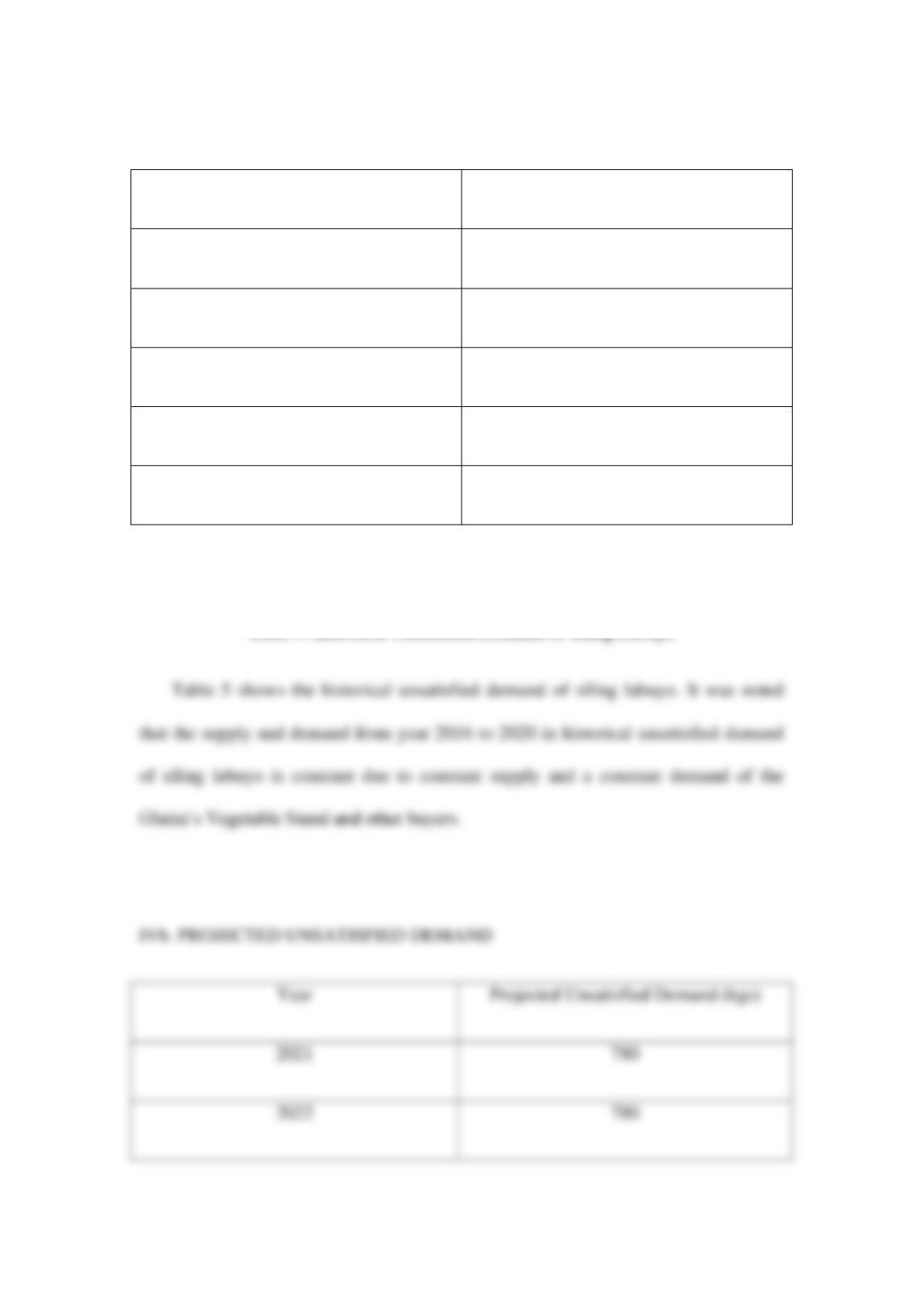
⚫ Historical Demand and Supply Analysis of Siling Labuyo
Year
Historical Unsatisfied Demand
2016
780
2017
780
2018
780
2019
780
2020
780
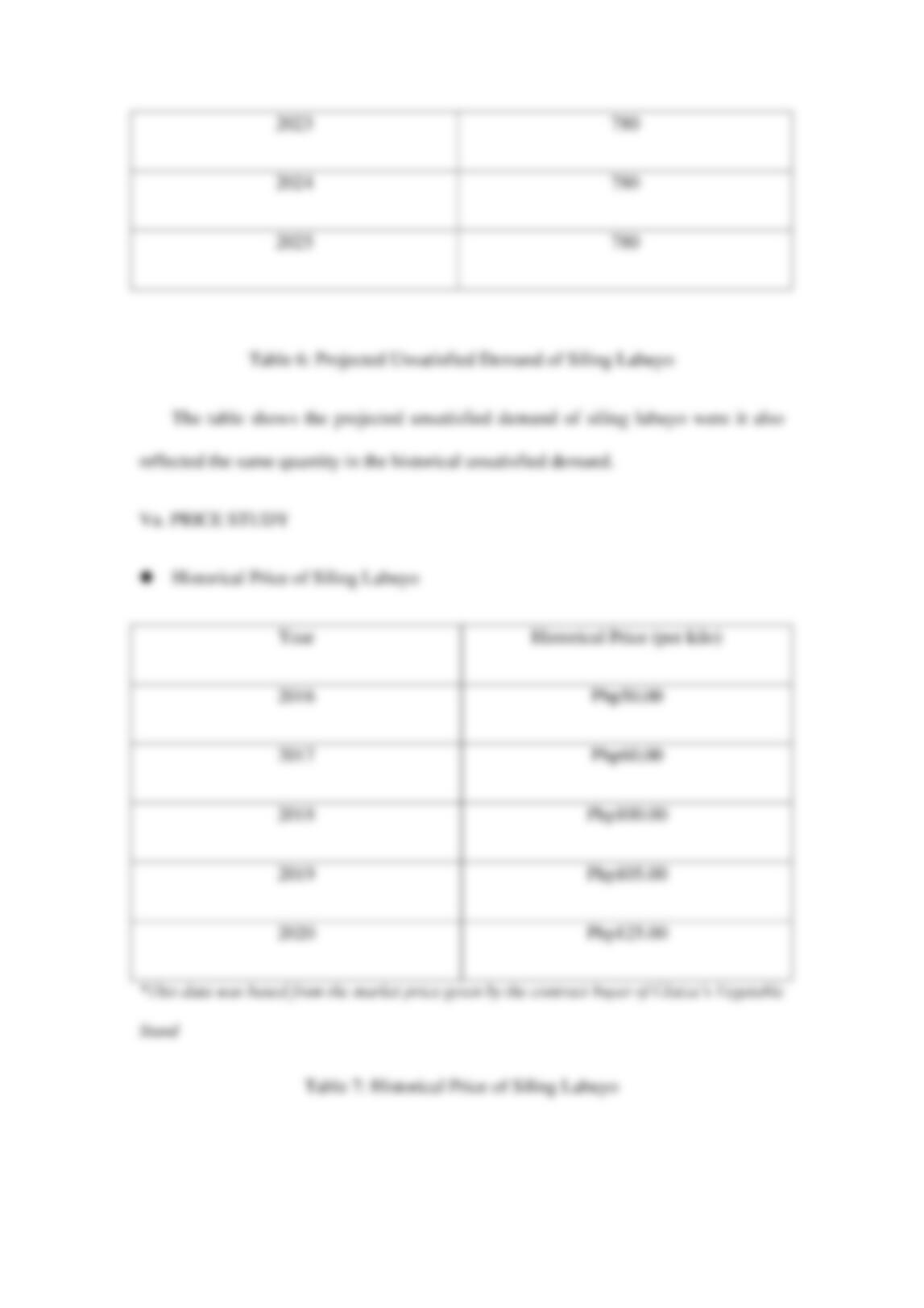
*This data was based from the difference of the supply of Glaiza’s Vegetable Stand and the demand of
the contract buyers and other buyers